EMMA STROUDE OUTLINES THE TRAJECTORY AND ONGOING CONCERNS OF HER FIGURATIVE PAINTING PRACTICE.
In 1991, with a foundation course under my belt, I made my way from the North of England to London, where I later graduated with a BA in Painting from Chelsea College of Arts and a Postgraduate Higher Diploma from The Slade School of Fine Art. My third-level education was guided by extraordinary artists. Clyde Hopkins, Mali Morris, Freya Perdue, Brian Dawn Chalkley, and Noel Forster were among my tutors at Chelsea, while Tess Jaray, Ian McKeever, Lucy Jones, and Jock McFadyen tutored at The Slade. I wasn’t taught to ‘draw’ or to ‘paint’ through theory or demonstration; learning came from conversations with tutors and peers, who guided me on where to look and who to read. They challenged me to try harder, dig deeper, and fail better. I learned the necessity of committing to the work – something that proved a serious challenge in following years.
Once in Dublin, the need to make ends meet, and a sincere interest in young people, led me to teaching. While rearing a young family, I worked for Youthreach for 12 years before my body refused to continue. Vicarious trauma. Compassion fatigue. Burnout. I realised I had denied myself my own identity as an artist and this was the price. In 2012, I committed myself fully to my art practice. Some may see such a hiatus as a negative thing, but I don’t – the years in between shaped me.
Life drawing re-engaged me with my practice and, although it took a while to surface in my painting, curiosity of the human body emerged as my central focus: how we experience it, how we communicate, and our responses to the bodies of others. Being awarded the Irish Arts Review/Ireland-U.S. Council Portraiture Prize at the RHA in 2021 led to commissions in King’s Inns (Ireland’s oldest school of law) and the Seanad, honouring women in Irish history.
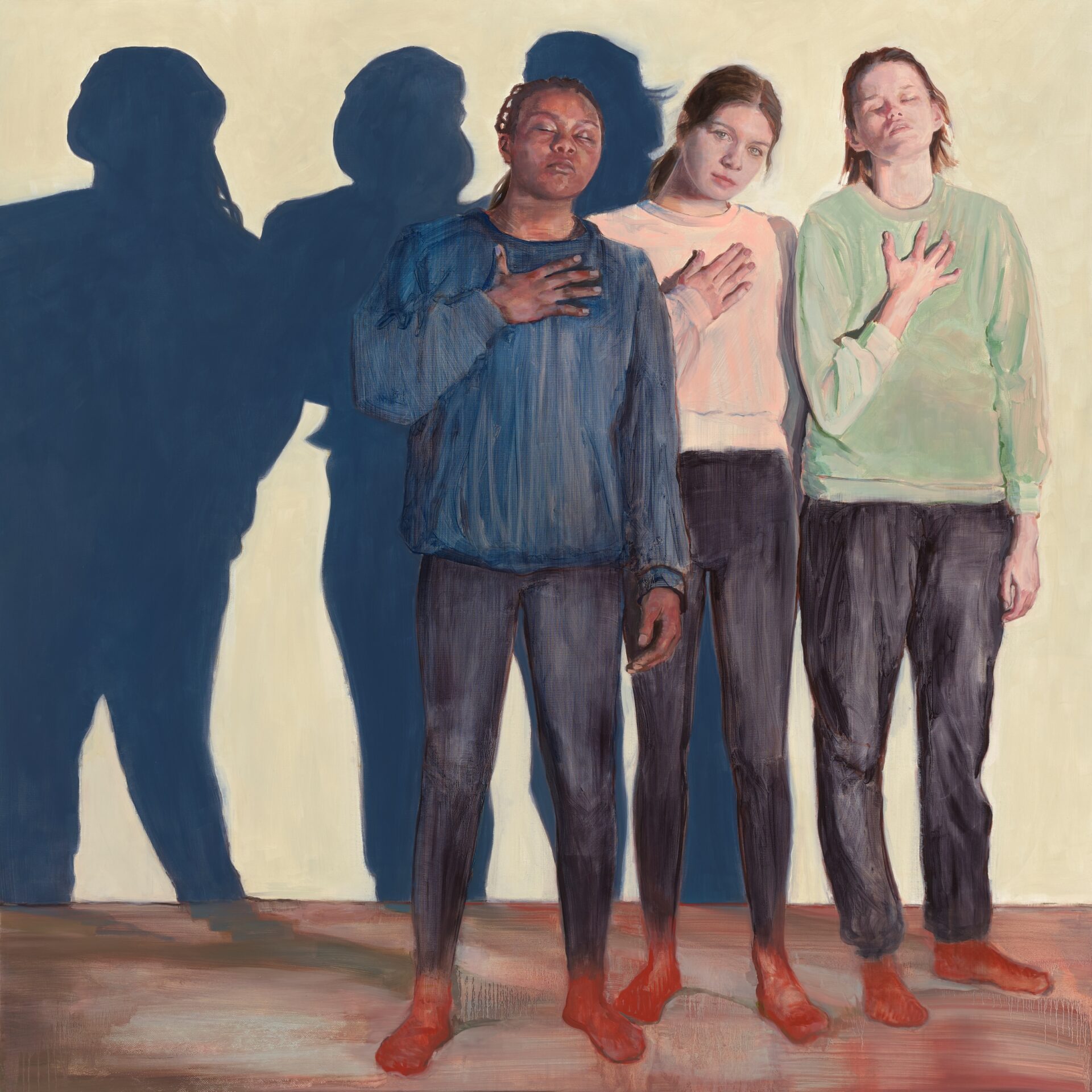
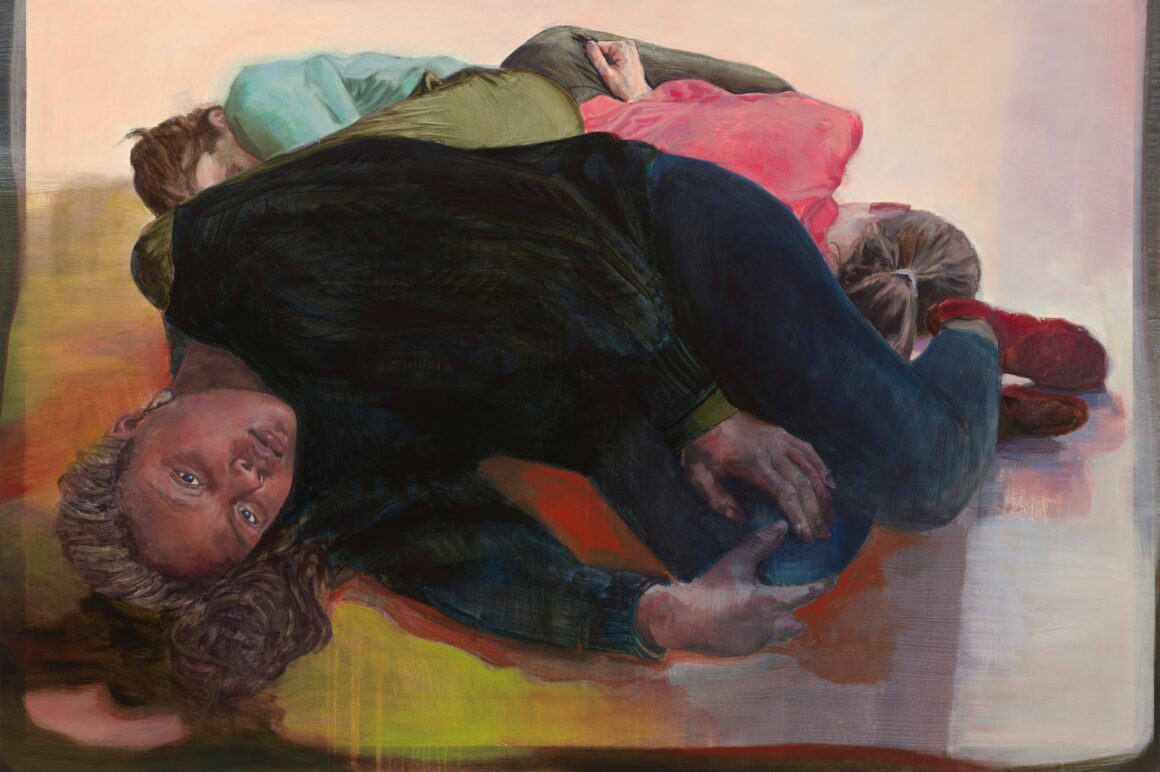
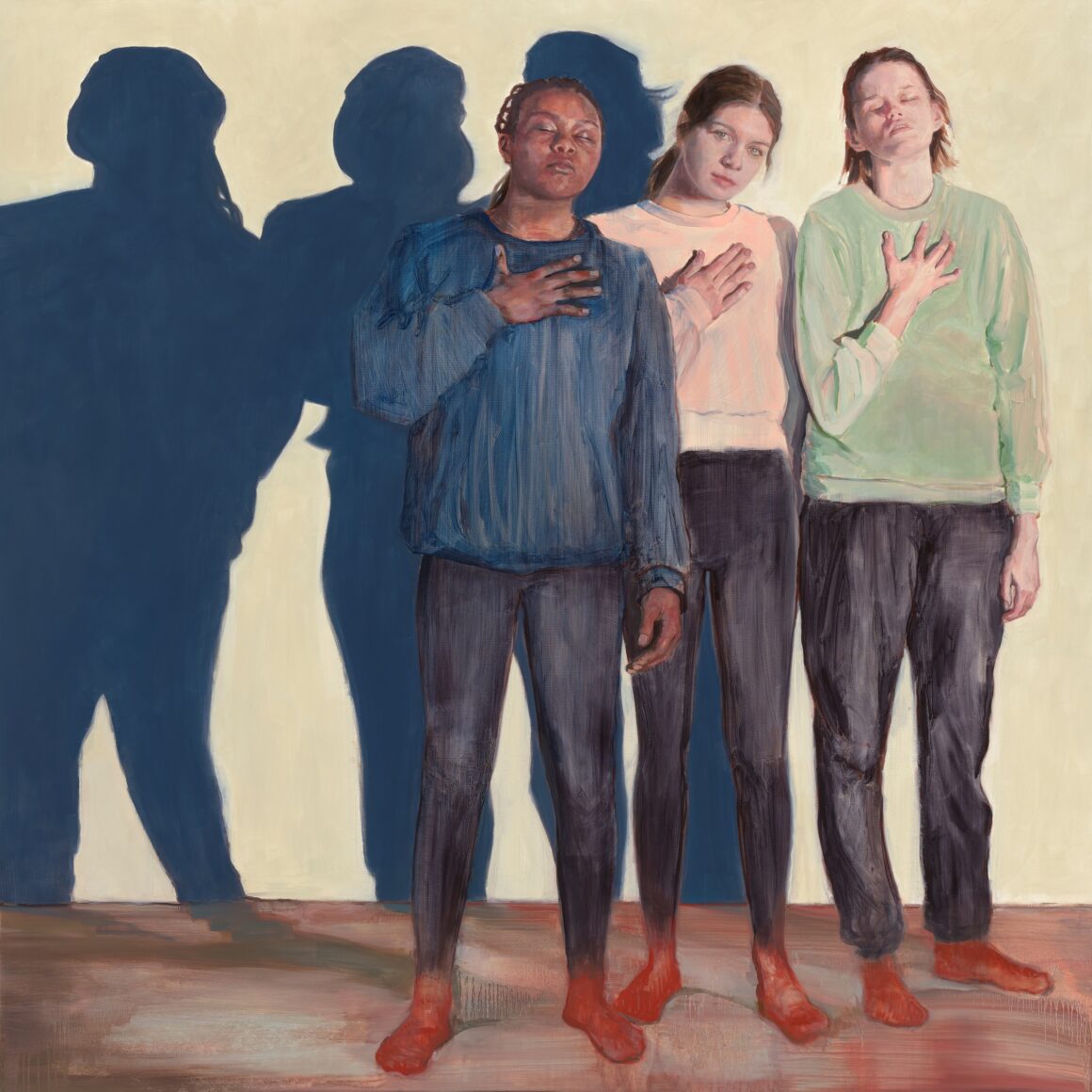
Collaboration with performing artists became key to my process. Together with acrobats and actors, I have explored bodily expression of themes of uncertainty, taking up space, potential, reframing shame, vulnerability, and power. Source materials developed in sessions are starting points for investigations in charcoal and paint. Researching links (suggested by pose and theme) to archetypes, narratives embedded in our cultural DNA, or other artists’ work, leads to further learning, enriching each piece. The resulting work explores embodiment of emotions, describing the challenges of women who face the restrictions of a patriarchal society.
Lively conversations with my mentor, Dr Tamsin Cavaliero (Department of Social Sciences, ATU Sligo) and her guidance towards a deeper understanding of my themes have become integral to my practice. My recent solo exhibition at Claremorris Gallery, ‘Slow Heat’ (27 September – 25 October 2025), took its title from Virginia Woolf’s use of heat as metaphor for the energy necessary for transformation. I painted the performed experiences of three female bodies, exploring questions of women’s potentiality, their ability to endure, acknowledgement of their innate capabilities, and the need to move beyond preconceptions. In the work, young women undergo transformation, while protecting each other and themselves. They experience love, loss, and hope without shame, and they invite the viewer to do the same.
With thanks to Custom House Studios + Gallery and Sligo Arts Service, I am currently on residency at AIR Niederösterreich in Austria, where I have collaborated with a dancer from Vienna to produce a new series of drawings, titled ‘Room to Become’. These works are included in the group exhibition, ‘Kulturpreise des Landes Niederösterreich’, which continues at NÖDOK, St. Pölten, until 11 January.
Three decades their senior, my own experience is poured into the youthful bodies of my subjects. My understanding of the challenges that may await them informs the content of each piece. The figures experience the necessity of enduring discomfort, uncertainty, fear, the lure of the void, collapse, and loss. Emotions are expressed unashamedly and without apology. A purposefully unfinished aesthetic suggests their potential to develop and evolve further, offering hope and room to become.
Emma Stroude is a visual artist based in County Sligo.
emmastroude.com