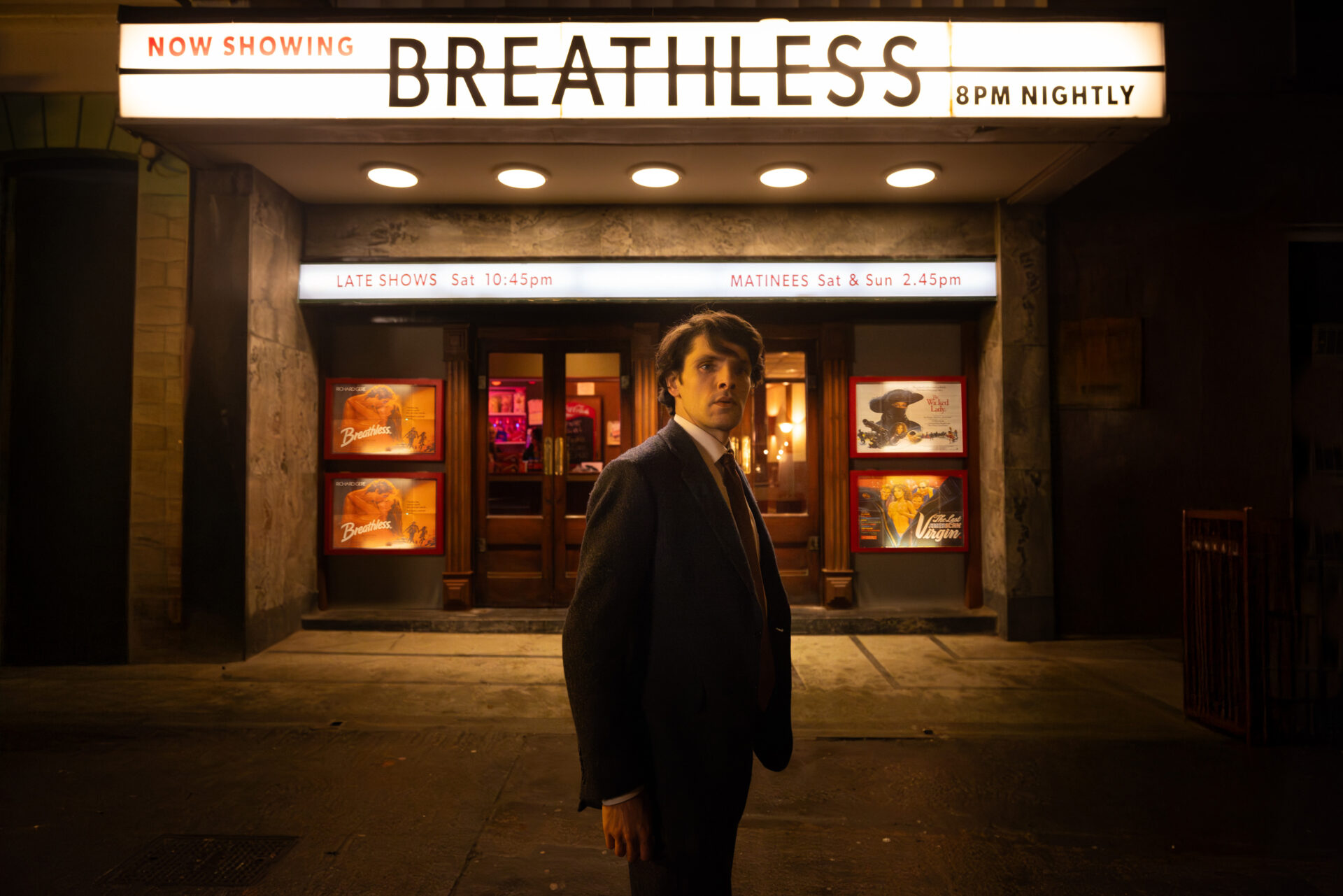
THOMAS POOL REPORTS ON THE OPENING NIGHT GALA OF THE DUBLIN INTERNATIONAL FILM FESTIVAL AND REVIEWS THE WORLD PREMIERE OF ‘ONCE UPON A TIME IN A CINEMA’.
As the bus lumbered up Dublin’s O’Connell Street, past the Carlton, on a rainy evening in February, an elderly woman sitting next to me turned to me and said, with great sadness, “That used to be a cinema. It was like a cathedral. Now look at it.” Today’s Carlton, a dog-eared casino, is no cathedral. O’Connell Street Upper is blighted, semi-derelict, and, quite literally, lifeless. According to some commentators, only one person still lives on O’Connell Street. What happens to a community that loses its third spaces – the places where people can gather outside of work or the home – is despairingly evident when one looks out the bus window at the Carlton casino.
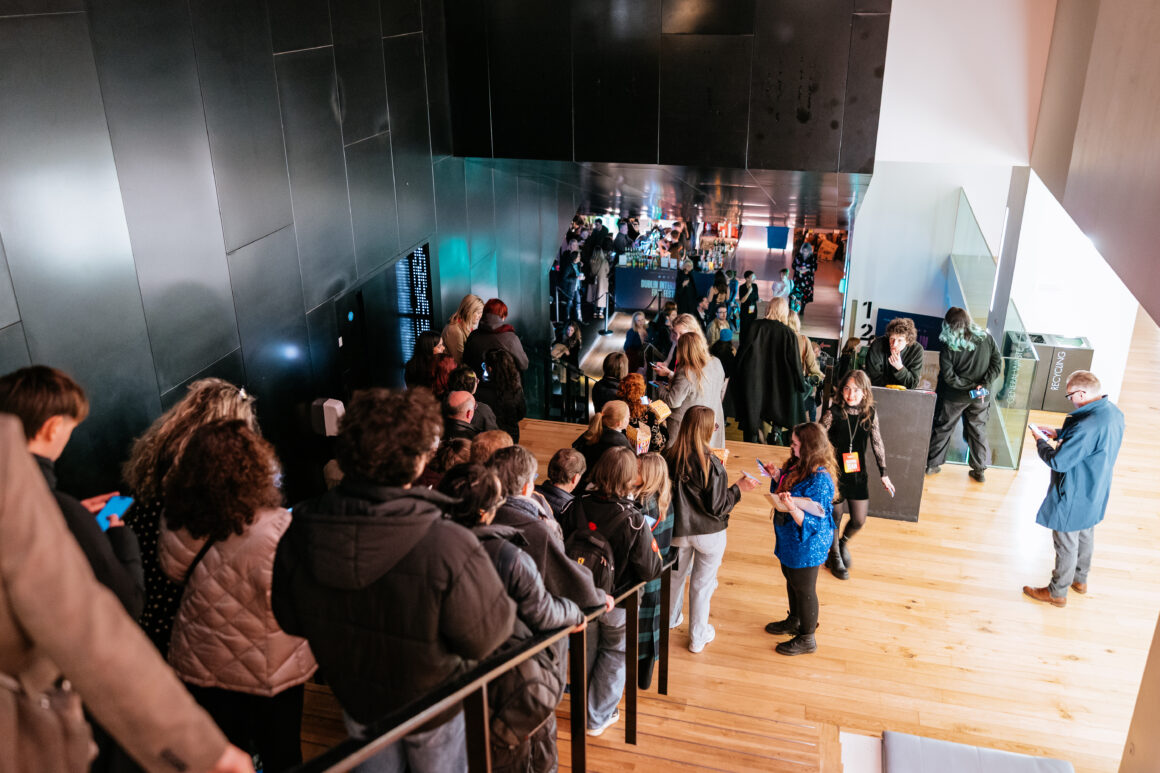
On the evening of 19 February, however, the Light House Cinema, on Smithfield’s cobblestoned square, certainly felt like hallowed ground. Each year, the Dublin International Film Festival transforms the Light House into a site of pilgrimage for Ireland’s cinephiles. The festival opened with a gala and the world premiere of Limerick filmmaker David Gleeson’s Once Upon a Time in a Cinema.

The gala did not lack for glamour, but piously abstained from the cardinal sin of Dublin fashion: glitz. Lent had just started, after all. There were no flashy Met Gala-esque gowns on this red carpet, and most attendees embraced the effortless-chic aesthetic of the ‘Dublin Creative’. With Peroni and wine flowing freely, the buzzy crowd soon took their seats.
In less capable hands, Once Upon a Time in a Cinema could have been as sentimental and maudlin as its title would lead you to believe. However, under Gleeson’s direction, audiences were given a punchy, tight, classic-with-a-twist tale with a political undercurrent that nips like a static shock when you leave the theatre.
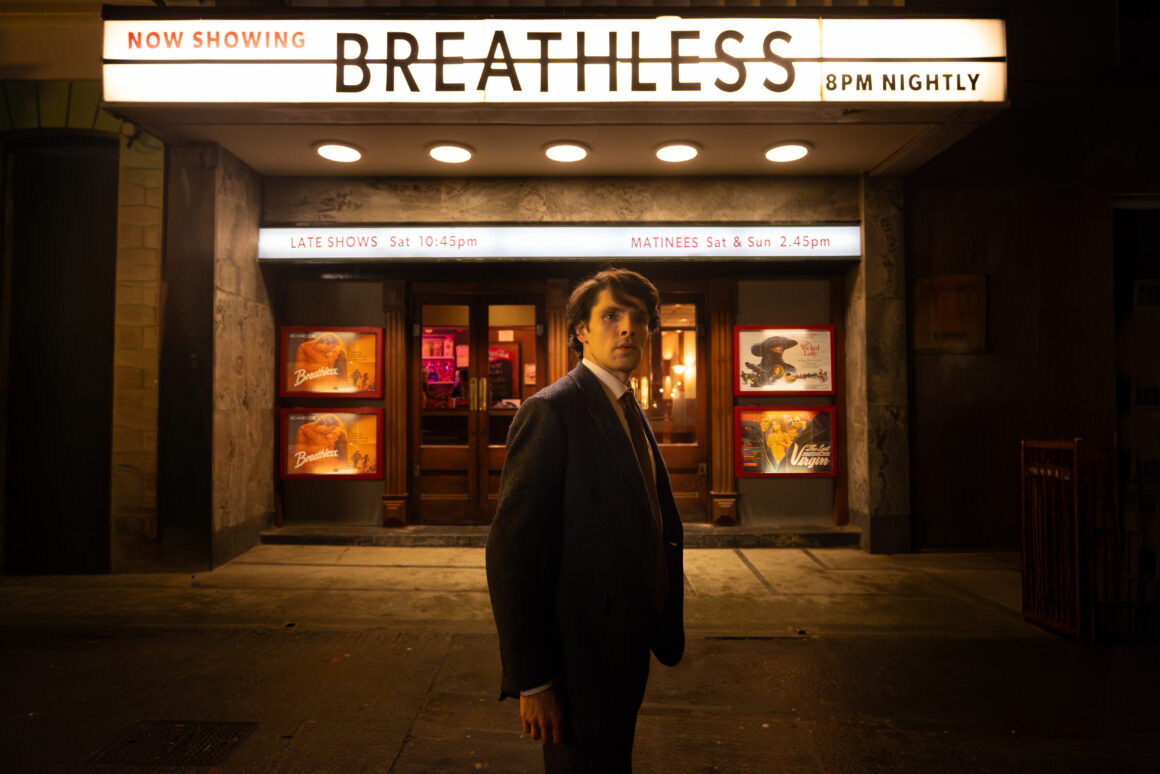
The son of a cinema owner in Limerick, Gleeson drew a lot from his own childhood experience in making this film, he told the crowd ahead of the screening. Cinema attendance peaked in Ireland in 1946, and to him, the current post-Covid anxieties of cinema proprietors are nothing new – first there were movies on the TV, then home video, then DVDs, then Netflix and the streaming wars, and on and on it goes. But, the cinema endures. Why?
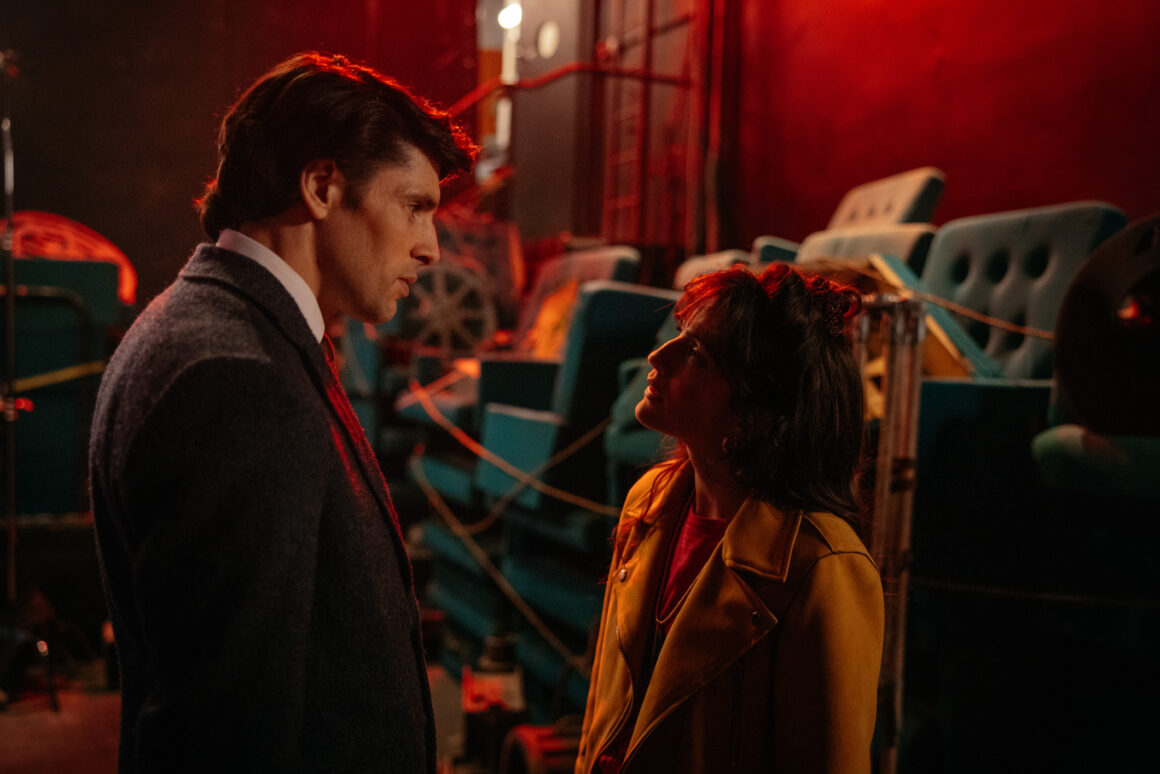
The film opens in 1980s Limerick with Earl Clancy, played by Colin Morgan, discussing the impending sale of his cinema with his brother, Gerald, played by Calam Lynch. When Earl says he’ll miss the theatre like a hole in his head, we don’t believe him; and it’s clear that he doesn’t quite believe himself either. Earl and Gerald fill the classic roles of elder and younger brother. Earl, the eldest, is set in his ways, wears out-of-fashion wool suits, and is seemingly obsessed with Yazoo’s hit song, Only You. Gerald is forward thinking, has stylishly repurposed his father’s old jacket, and is ready for something new.
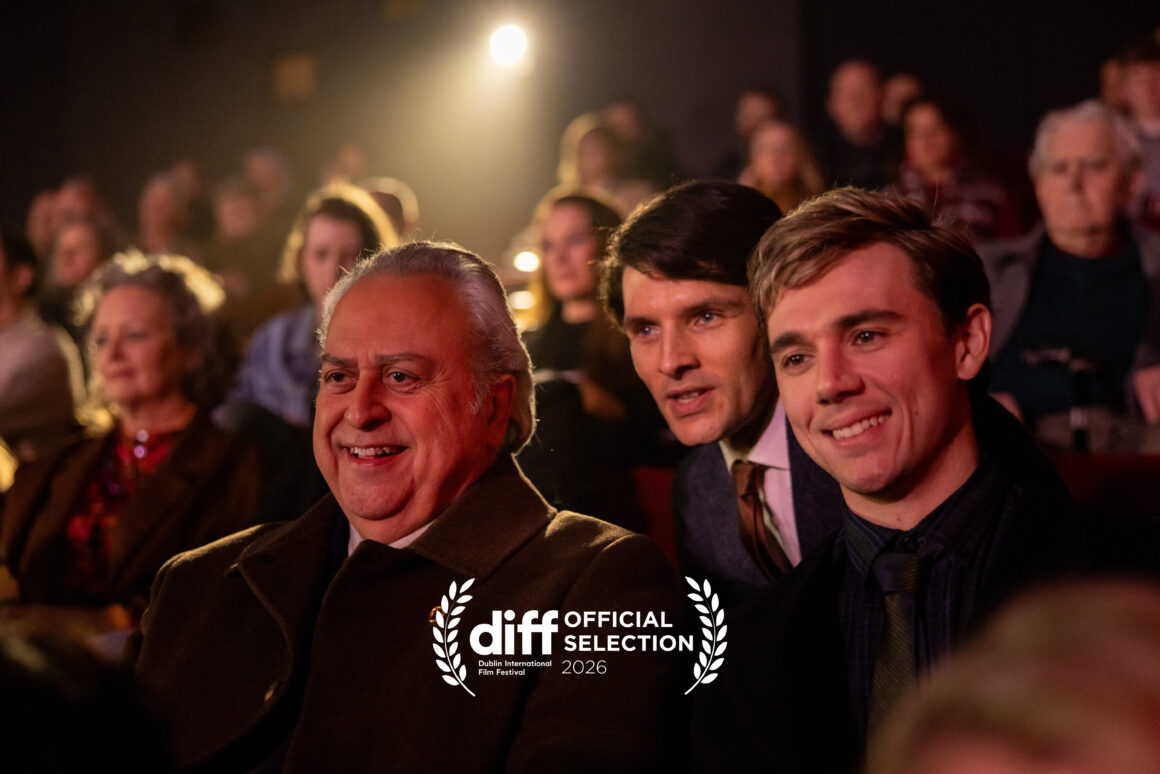
They plan to sell the cinema to a former associate of their late father, a shady politician and crooked businessman named Harry Conway, who is in town from Dublin that night, and is eager to close the sale. To prove that the cinema is in fine working order, and ready to be seamlessly handed over, the brothers Clancy invite Conway to the 8pm showing of Breathless (1983), starring Richard Gere. But with a break-in the night before, and nearly £100 missing from the register, the boys are on edge and eager to make sure the night goes off without a hitch. When Earl pops into the projection booth, to make sure the film is ready, he sees that Jack, the projectionist, is drunk on the job. The comedy of errors snowballs from there.
Earl spends the night in a sprint. Between pampering the greasy Conway, fending off a plumber he’s stiffed on his bill, chasing down rats, sleuthing for the thief, kicking out rowdy teens, confiscating weed, ignoring fines from the fire marshal, a leak, a convict out for revenge, and enduring the rolling blackouts of 1980s Ireland, all while trying to instil some fatherly wisdom and bond with his teenage daughter, Early Clancy is a portrait of a man on the ropes. But through it all, he is clearly at home. He can command an errant lightbulb with a look, can perfectly time the changing of the film reels, and walks through the town like he’s the mayor; everyone on the street knows his name and he knows theirs. He is as much a fixture of the community as his theatre is.
Despite it clearly being more home to him than his actual home, a point of contention between him and his daughter, Earl is still intent on selling the place. The brothers, while saddled with the theatre by their abusive late father, do in fact possess a keen sense for business. With a new bypass being constructed, they plan on opening a 24-hour petrol station, and watch with their feet up while the stress-free cash rolls in. Conway, however, is far shrewder than the brothers and has no intention of running a falling-down cinema.
Earl’s breaking point finally comes after a trio of revelations about Conway, his brother, and his daughter. Embittered by a sense of familial betrayal, the cinema truly does begin to feel like an anchor around Earl’s neck, and we believe him, at last, when he says he’s going to sell. Besieged, he takes shelter in the projectionist’s booth, and looking for relief, enjoys the joint he confiscated earlier. Sometimes all you need is drugs, recession-induced infrastructure failure, a brick through your window, and a crowd holding their lighters aloft in the darkness, serenading you with your favourite song, to make you realise what’s important in life. With community bonds reforged, and brother and daughter back at his side, Earl Clancy chooses the local road, not a bypass.
Stepping out onto Smithfield Square, the politics of the film only zap you then, when you look left towards The Cobblestone pub. While set in the 1980s, the film is a scathing indictment of contemporary Irish urban policy. In the cold night air, you realise that the Conways of Ireland, not the Clancys, are winning. With great rapaciousness, they have swallowed up our third spaces – our pubs, our restaurants, our nightclubs, our artist spaces, our cafés, and yes, even our cinemas. Where will we congregate when the last of our cultural cathedrals have been torn down, and the streets are filled with nothing but casinos, hotels, data centres, and tourist gift shops?
“No one ever fell in love at a petrol station”, Earl Clancy says at the close of the film. All love needs is somewhere it can grow, love can bloom in the darkest of places, even in the last row of a cinema.
The Dublin International Film Festival runs from 19 February to 1 March 2026. Tickets are available at diff.ie
Once Upon a Time in a Cinema is slated for general release on 1 May.
Thomas Pool is the Content and Production Editor of The Visual Artists’ News Sheet and the Commissioning Editor of the miniVAN.