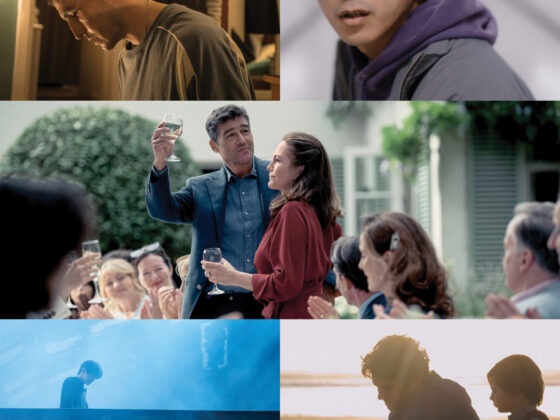
EMMA BATTLEBURY OUTLINES A SCREENING PROGRAMME OF EXPERIMENTAL FILM ORGANISED BY AEMI.
‘Desire Lines’ is a touring programme by aemi – a Dublin-based initiative that supports and exhibits moving image works by artists and experimental filmmakers – that premiered at the Irish Film Institute on 22 January. As stated by Sara Ahmed in Queer Phenomenology: Orientations, Objects, Others (Duke University Press, 2006), desire lines “describe unofficial paths, those marks left on the ground that show everyday comings and goings, where people deviate from the paths they are supposed to follow.” The aemi programme brings together the work of contemporary Irish and international practitioners exploring forms of deviation and resistance, both individual and collective.
The city of Paris provides a seductive patina for Irish artist Chloe Brenan’s short film, Verdigris (2025). A mercurial blue-green oxidises the city’s monuments; it is a colour, the film notes, that resists regulation. In palimpsest-like layers, Brenan isolates Parisian infrastructure, revealing how spatial order has been historically shaped. Beginning with French architect Hector Guimard’s standardised Métro interiors, the film rises to street level, where this logic of uniformity finds its precedent in Georges-Eugène Haussmann’s 1853 redesign of Paris, which imposed linear order and funnelled movement along controlled axes. The film situates Parisian space as historically contingent, referencing the 1961 curfew imposed on Algerian residents, including psychogeographer and Situationist International member, Abdelhafid Khatib. Brenan’s closely cropped shots accumulate with textural fluidity and conclude with a desire line in Porte Dauphine, located in the 16th arrondissement, which subverts Haussmann’s rigid vistas.
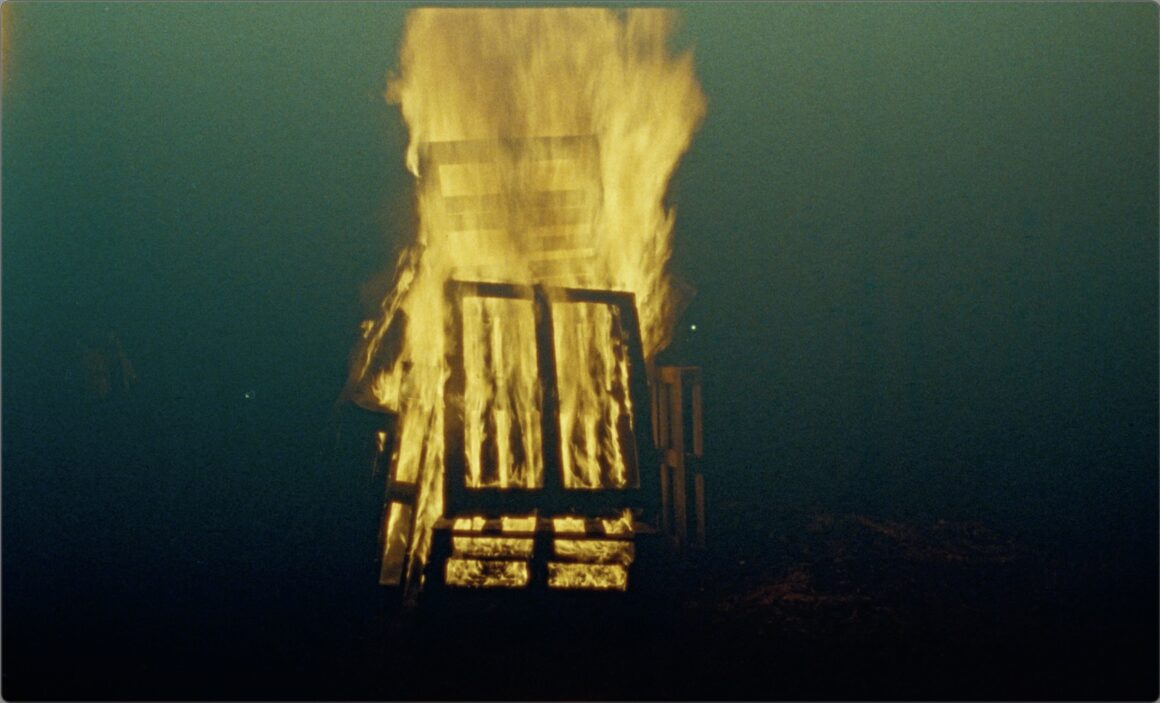
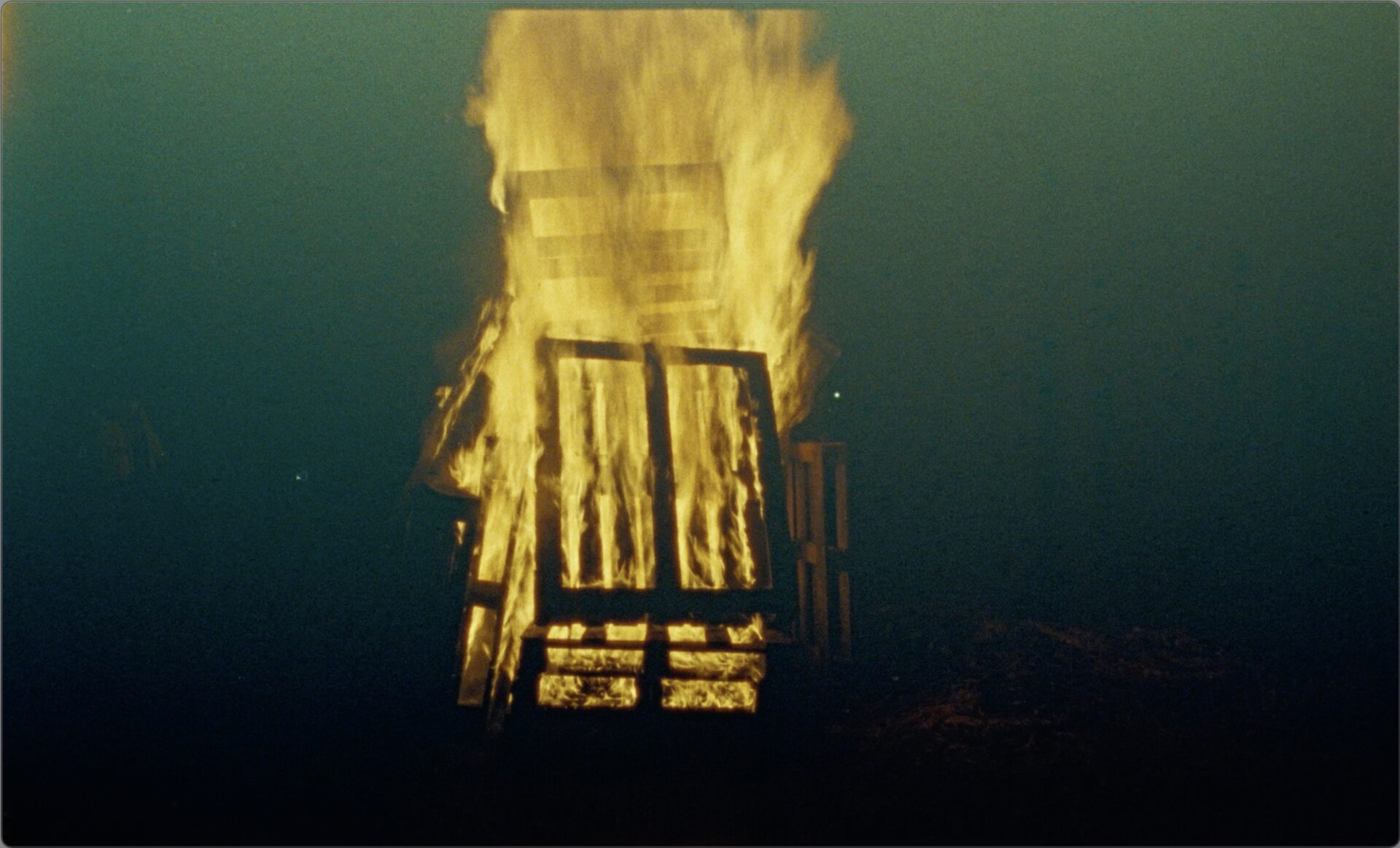
While Verdigris traces the city’s circulatory systems, Morning Circle / Morgenkreis (2025) by Basma al-Sharif, a filmmaker of Palestinian heritage, turns inward. In the apartment he shares with his son Adnan, Mr Abrahayman is interrogated by a disembodied German authority, which questions his origins and compliance: “Are you Muslim? Have you formed an attachment to our way of life?” The camera tilts with cloying surveillance as Abrahayman confronts an environment that conveys openness but denies expression, while Adnan experiences separation anxiety at school. The film climaxes with an emulsion-burned montage, blending footage of Gazans returning home with classroom scenes that dissolve into psychedelia, as Adnan escapes the kindergarten morning circle. The song Benhayyi Al-Baghbaghan (Salute the Parrot) offers a satirical nod to the obedience and mimicry of the exilic condition.
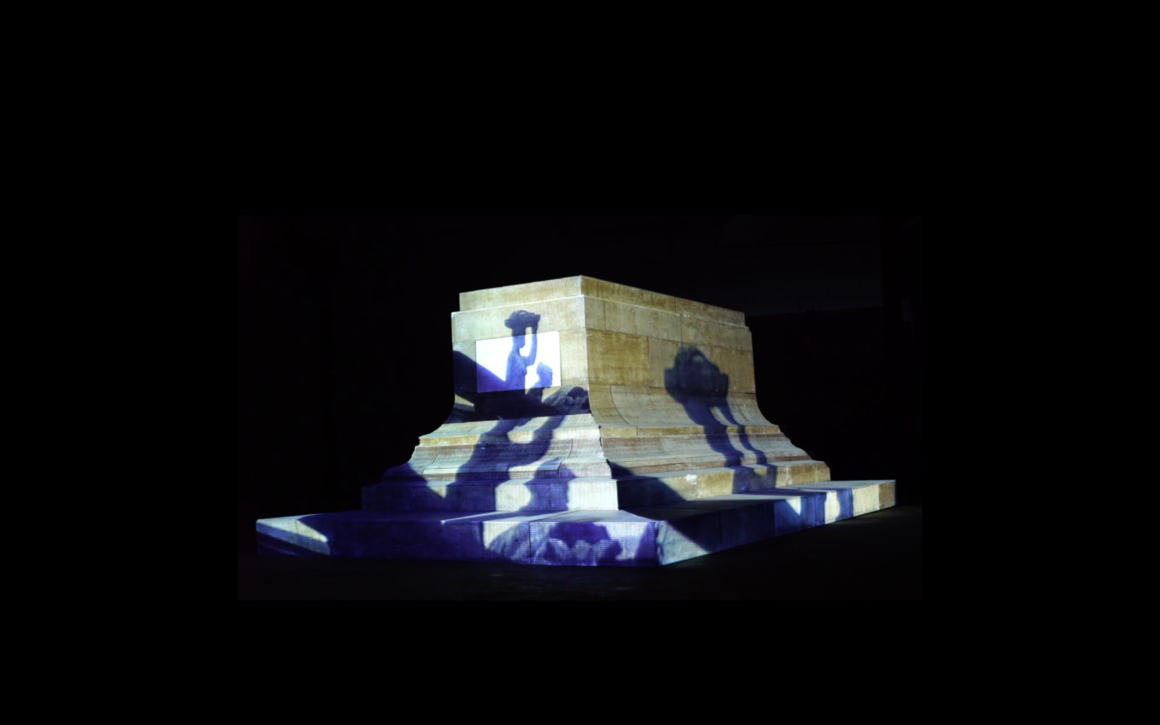
Speech for a Melting Statue (2023) by Collectif Faire-Part, an ensemble of Belgian and Congolese artists, unfolds across dual timelines, with two nations and a monument to King Leopold II eliciting opposing responses: a colonial history in stasis, and a Congolese refusal to sanction its commemoration. Located within walking distance of Matongé, a Congolese neighbourhood in Brussels, the statue undergoes a charged reappraisal amidst the Black Lives Matter protests of 2020. Meanwhile, footage shot in the early 2000s in Kinshasa (the capital city of the Democratic Republic of the Congo) shows another statue of Leopold II, long removed from public display, dangling from a crane. The film’s mise-en-abyme deepens geographically; near to Kinshasa lies a district called Matongé, after which the Brussels municipality is named. “Names usually travel in the other direction,” notes poet Marie Paule Mugeni, as she prepares a speech anticipating the statue’s removal. Archival footage of Kinshasa’s dismantled monument is projected onto the Belgian plinth – an act of quiet futurity, signalling that the colonial presence is no longer frozen in authority.
Irish artist Olivia Normile’s stop-motion animation, as above, so below (Limits and Demonstrations) (2025), presents a scaled-down world in which time is composed rather than captured. Cut-out shapes form shifting constellations, which multiply and disperse within the frame. This mediation between language and abstraction reappears in a second film by Normile, titled Body Diagrams (Limits and Demonstrations) (2025). Adopting a diptych form, a handwritten term appears on the right-hand side of the screen with a drawing on the left. Normile’s drawings reinscribe visceral experience, mapping embodied sensations and the limits of language.
In Eóin Heaney’s Parish (2024), the suburban landscape of Dublin’s Sandyford is rigged with psychological cues, revealing a republic stratified by religion, mythology, and imperial residue. Sites of previous Anglo-Irish authority sit in uneasy proximity to remnants of Republican violence, while folklore is punctured by accounts of contemporary crises. An ensemble cast “beats the parish bounds,” in a ritual used to conserve borders and memory. Flitting between Euro-trance and industrial soundscapes, the film’s dexterity of tone is held in tension through slippage between historical fact and pastoral surrealism. As the group surveys the land, history is activated. For one of the members, Pat, the journey becomes an excavation of memory, engulfing him in episodic dissociation. Ultimately, he finds solace in the group, just as Parish offers a detour from the privatised coping of modern life – less a lament for lost tradition than a reassertion of community.
Emma Battlebury is a multi-disciplinary artist and painter based in Dublin.