COMMISSIONING EDITOR THOMAS POOL INTERVIEWS COMEDIAN AND CAMPAIGNER AILISH MCCARTHY
Thomas Pool: How did you get your start in comedy?
Ailish McCarthy: In 2018, I joined the Gaiety School of Acting short course for comedy, because, when I went to college, I turned my back on being creative. But when I finished my masters, I thought “remember when you had fun?” So, the comedy course was a really good way to restart my creativity. I’d set aside time, three hours a week, to write, to laugh. It was a great course. I would recommend it to anybody. I think it’s still running, which is a great indicator of success for the school and those delivering the course.
At the very end of the course, we all got to present our ten-minute standup to friends and family. I then started to approach comedy clubs, asking if I could do a five or ten-minute set or participate in an open mic. After doing this for a while, I was approached by another club who asked me if I wanted to come and do a short set on their stage.
Then it just snowballed from there. I kept getting invited, I kept showing up, I kept on going. Then I started to apply for stages in Vancouver, Scotland, England, and all over Ireland.
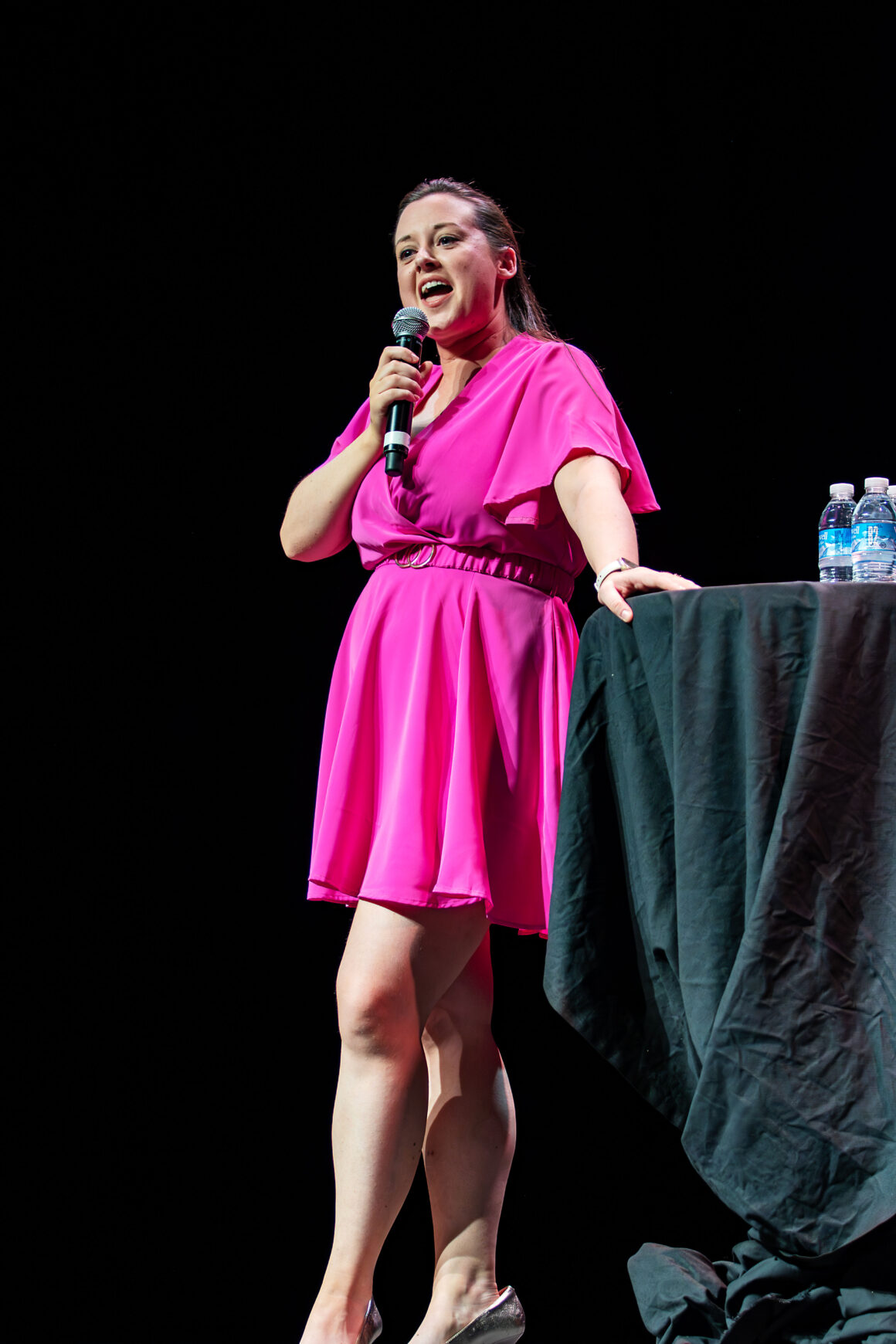
TP: You’ve been helping lead the campaign to get comedy included in the Arts Act. How did you first become involved in this effort, and how do you feel it is progressing?
AMcC: It was January 2023 and I wanted to write a show. I thought about applying for the Arts Council Agility Award, in order to develop and research the new show, with the aim of touring once it was finished. Then I learned that the Arts Council doesn’t fund comedy, so I shelved my idea of writing a show just to investigate this. I had a look at the Arts Act, and comedy wasn’t explicitly listed the way theatre, music, and visual arts are, despite the fact that it is a performing art form.
I wrote to the Department of Culture, Communications, and Sport, and wrote separately to the Arts Council of Ireland, to ask whether they regard comedy as an art form. The Department came back and said, yes, it is technically in the Arts Act under theatre as a subgenre. The Arts Council, however, came back to say that they don’t fund comedy because they don’t fund commercial arts. However, I noticed that there are other art forms that have a commercial aspect, like music, that they do fund. So, I began this crusade, to get comedy explicitly included in the Arts Act.
As an artist, I put my practice on the backburner to discover why this group of artists are being excluded. Thankfully, I got some support from Minding Creative Minds at the very beginning. They gave me a platform at their annual summit to discuss art forms that are also feeling excluded, like musical theatre or line dancing. Their director, Emma Olohan Sarramida, introduced me to TD Aengus Ó Snodaigh in 2024, and I spoke to him about the dilemma comedians in Ireland were facing.
There’s nothing explicitly stating that comedy should be excluded from Arts Council funding; I think this was just a decision made years ago that hasn’t been challenged. Aengus had the same view as me, and after the general election, he was assigned to the Committee of Arts and Culture, where he worked to put forward an amendment to the Arts Act to explicitly include comedy.
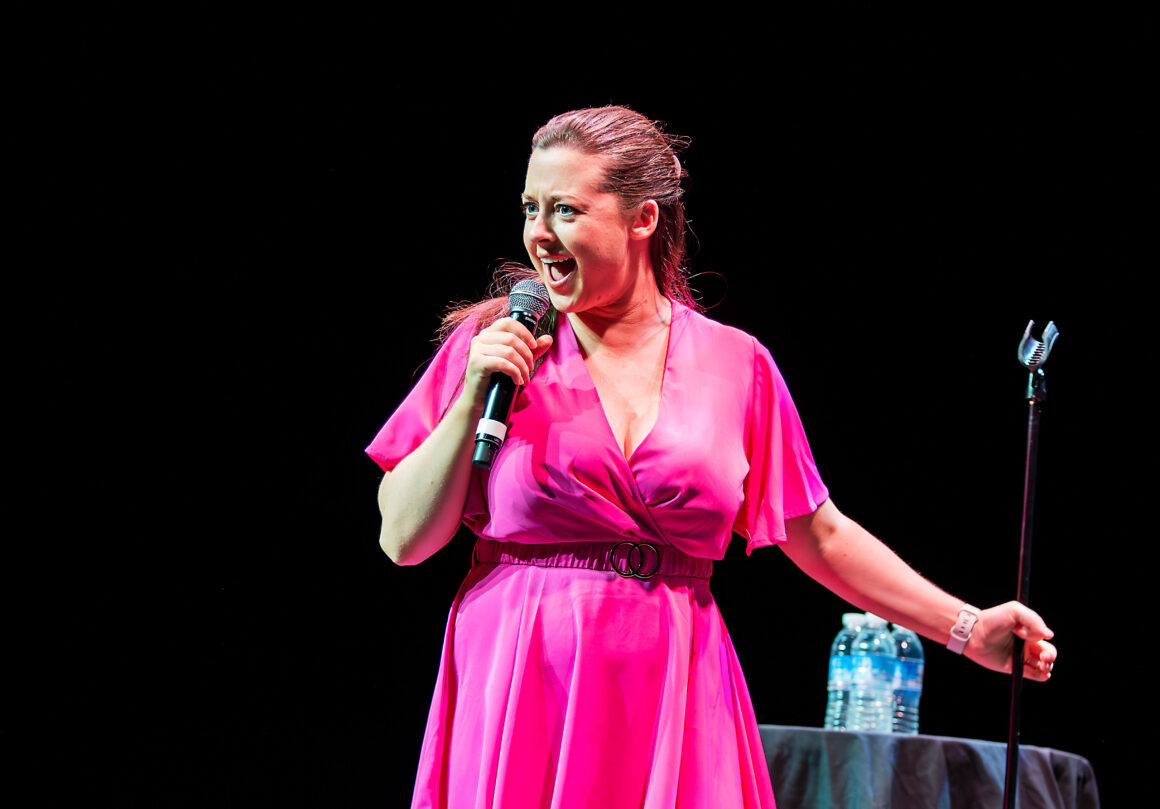
We started to get support from TD Brian Brennan of Fine Gael. The new Minister for Culture Partick O’Donovan has also been very supportive of the amendment. It’s great to see opposition and government coming together to state that comedians are artists and that they should be funded and supported.
Then in November 2025, it just took off. I had an interview with Joe.ie. I think I got something like 90,000 views in 48 hours, which then meant that Prime Time took up the story, and I had an interview with them that got around a quarter of a million views. Then it got onto BBC, the Financial Times, and Sky News, which was great, because initially, I was finding it difficult to get the word out.
Then in December 2025, after two years of campaigning, the Arts Council made a statement that they’re going to start including comedy in their existing schemes. I’m also aware that they have advertised for a panel of comedians to review applications. Culture Ireland has just announced that they’re looking for panellists, to review upcoming applications to include comedy in their funding.
It’s phenomenal. It feels like a totally different climate to when I started this campaign. A lot of comedians I know who have emigrated are saying that they might actually move home now. I can’t wait to hear about the first recipient of comedy funding, whoever it may be. I hope I get a ticket to their show!
TP: Your debut stand-up show for Scene+Heard in February, titled ‘Me, Myself, and Ireland’, focuses a lot on this issue. Can you walk us through your process in creating this performance?

AMcC: I love Scene+Heard. The festival promotes new work and is a springboard for getting into other festivals around the country, or even to international festivals. I had applied because I felt like this was a good, happy, inspiring, and uplifting story, and given the climate of the world right now, we kind of need those.
It was a huge challenge for me because, even though I’ve been doing comedy for six or seven years, this was my longest show yet. It just kind of made sense to me that my first show would be a biographical standup of how I tried to get the Arts Council to recognise comedy.
I think the first draft I made just wasn’t enjoyable to sit through, and thankfully, I had the awareness of realising that I’m very close to the issue, and it was too cathartic. So I scrapped the first draft, and then asked myself: “What do I want the audience members to take away from this?”
I realised that what I’m effectively doing is creating a playbook for an art form to be recognised within the funding structures of Ireland. So, if someone in the musical theatre space wanted to know how to do that for themselves, they should come to this show. It would be like a tutorial for them.
My comedy is very particular to an Irish audience, so I don’t do well when I travel over to the UK. I remember I once made a joke during a set in the UK that their country had become more dog friendly because they now have a new King Charles. The audience completely turned against me! So, I do better at Irish gigs than I do in the UK.

I’m very good at observational comedy, in terms of Irish culture, so a lot of ‘Me, Myself, and Ireland’ was sticking to that voice. It was something I was very, very proud of. There’s also a couple of visual jokes in there as well. I was very nervous because I felt a lot like the Australian break-dancer, Ray Gun, at the 2024 Olympics. She had loads of qualifications in dance, but unfortunately, when she performed, the reaction wasn’t positive from the public. And now breakdancing is no longer considered a sport within the Olympics after that performance. The stakes were just as high for me, as someone who was campaigning for comedy to be recognised as an art form! But the performance was so well received. A member of government attended the show in an individual capacity, and members of The Arts Council staff came to the show as individuals too and really enjoyed it. That was my goal. I wanted anybody who came to the show to feel uplifted. It was a good news story. But it was even more fulfilling when people enjoyed it.
I’m very excited to be touring the show. I’ve already spoken to venues in Clonmel, Sligo, Bray, and Dublin and I’m talking to somebody in Kilkenny currently. I think it’s a really uplifting show and it’ll probably tour for one or two years. But I’m taking a step back from the crusade – I just want to be an artist and a comedian now. But I’m really happy with the results, that comedians now feel like they’re being supported.
TP: Lastly, are there any other projects you’re working on? What’s next for you?
AMcC: I’m doing a radio and podcasting course at the moment – I love radio. I was presenting a show with Mary Claire Fitzpatrick for six months last year, and it was something I really enjoyed doing. I think in terms of comedy, it’ll really help – one hand feeding the other and so on. And then I have a wedding coming up in September, so I have enough on my plate at the moment!
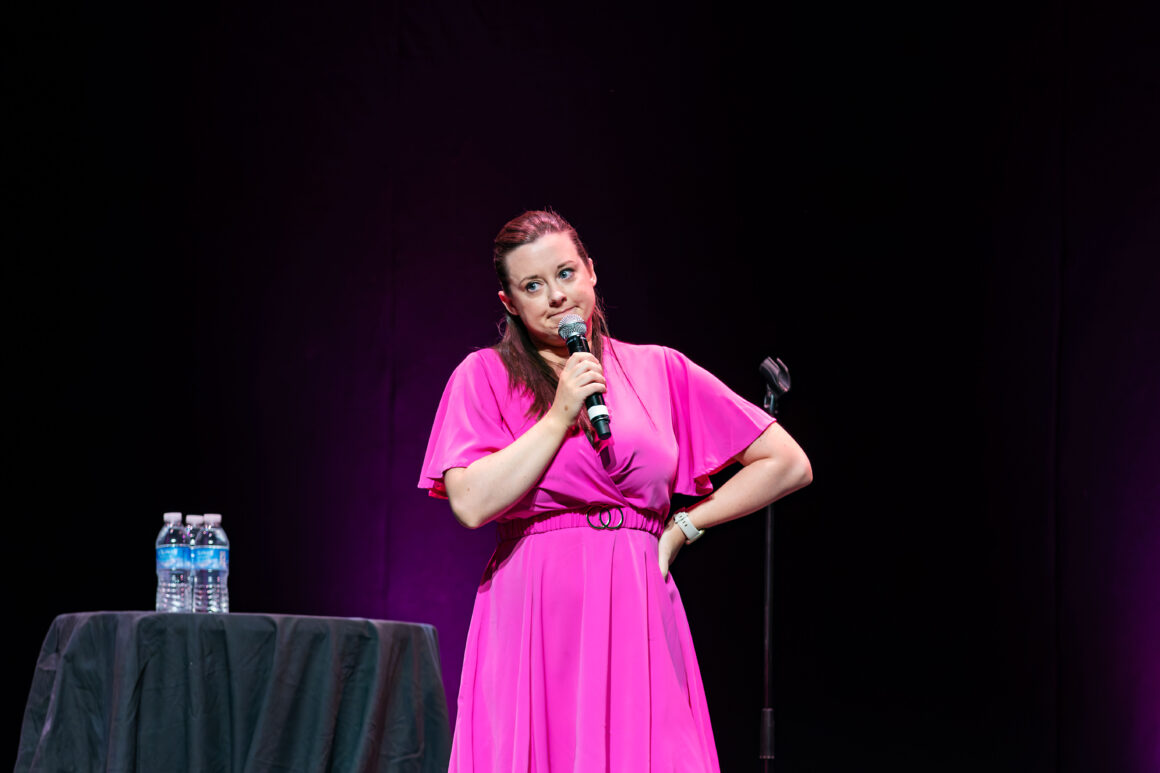
Ailish McCarthy is a comedian and one of the campaigners for the recognition of comedy in the Arts Act.
Thomas Pool is the Content and Production Editor of The Visual Artists’ News Sheet and the Commissioning Editor of the miniVAN.