WRITER AND COMEDIAN LAUREN O’NEILL INTERVIEWS COMEDIAN, ACTOR, AND WRITER MARIA CUNNINGHAM ABOUT HER ACT, PARTICULARLY HER STYLE OF ‘CLOWNING’.
Lauren O’Neill: How did you become interested in comedy through the style of clowning?
Maria Cunningham: I studied acting in the Gaiety School. In first and second year, we did a week of clowning with Raymond Keane. I had never thought about pursuing clowning before that. I went in wanting to be an actor, and came out wanting to be an actor, clown, and a writer. I think ‘clown’ will always influence my acting. It’s opened up a whole new set of tools to play with regarding acting.
Clowning is this artform based in connection, honesty and failure. It plays with the most fundamental and base level parts of being a human. There’s loads of improvisation and connection with the audience. It’s less like a performance and more like a conversation between the clown and the audience.
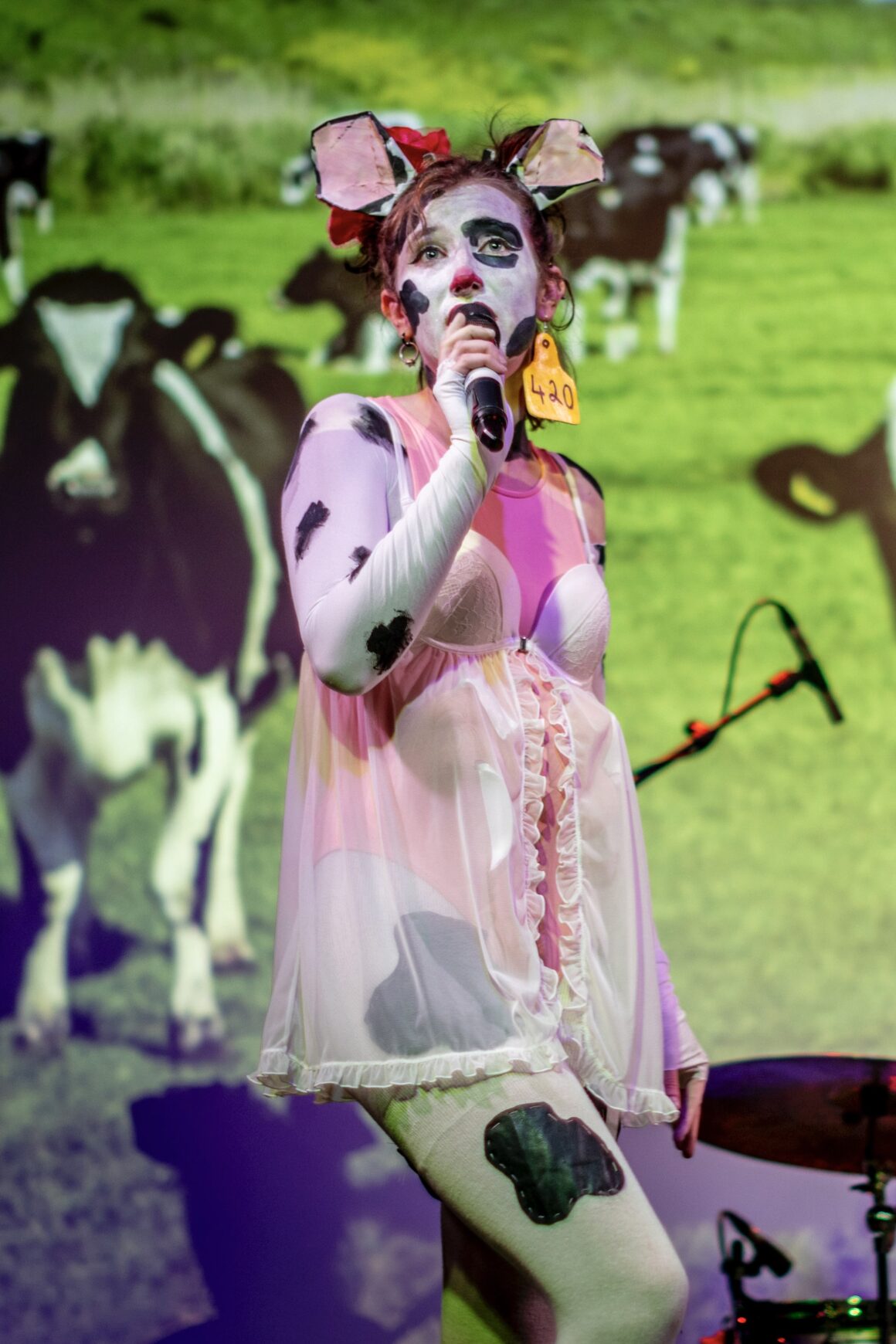
In terms of work, there’s more control with clowning, because I make my own work. A lot of acting is auditioning and asking for permission to act, hoping that someone will give you a role – unless you write your own play or make your own film, which is something I love doing. But clowning is something you can just get up and do, whether at an open mic or a fundraiser cabaret night.
LON: How do the aesthetic demands of clowning influence your creative process differently to stand up?
MC: For me, the very first thing that happens in the process of creating a comedic character is collecting things. I’ll be in a charity shop and I’ll find an object that I like or a piece of clothing that interests me. I’ll get it, not knowing what I’ll use it for. I have this collection of things and the next step is thinking about what I would find enjoyable and exciting. If I want to crowd surf, how am I going to make that happen? What character can I create to help Maria crowd surf? It’s a really fun way of creating work because you’re just following an impulse to facilitate a sensation that you wish to feel.
I’ll watch a really good stand-up show and think “this is magic.” I have no idea how this is working because I don’t really write structured jokes. The way my brain works is visual comedy. At home, instead of writing jokes, I’m doing freaky movements in my mirror.
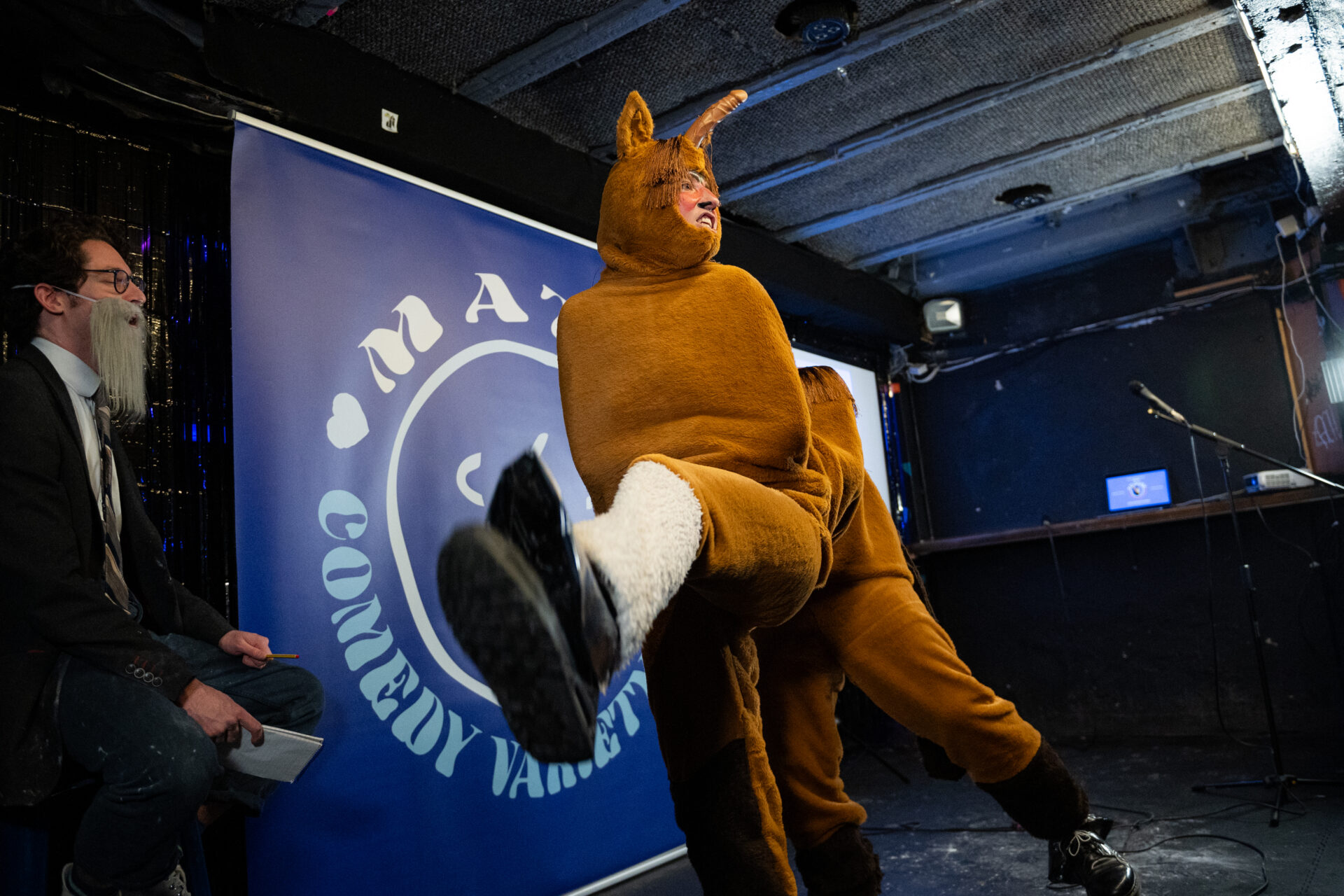
Sometimes I include props and costumes that have the potential for failure, if they fall off or break or move in a weird way – that influences the comedy more. For a clown, failure is a gift. When something doesn’t work the way you want it to work, that’s the real magic. Making my own props and costumes is an important step because it allows me to slow down, sit still, and meditate. The more elaborate the costume, the more potential there is for mishaps, which is what I love.
LON: Does the scripting of shows influence costuming, or do the jokes stem from the visual identity of the characters?
MC: The words tend to come last for me. I wasn’t confident in secondary school English class. Structured writing was never something I was good at. Clowning appeals to me because it feels more natural for me to create a visual or physical joke. A stand-up comedian might write down a joke and ask “is that funny?” It’s the words and the structure of it that might be funny. I’ll try something on in the mirror and I’ll wonder whether that’s funny or not. I’ll start with the visual concept. Maybe the way it moves influences the movement of my body, and, having a background in dance and circus acrobatics when I was younger, I’m confident in experimenting with my physicality and my movement. The costume will always inform the physicality and the physicality will always inform the costume.
LON: The performances often incorporate adult or suggestive themes. What draws you to explore this, particularly through costume design?
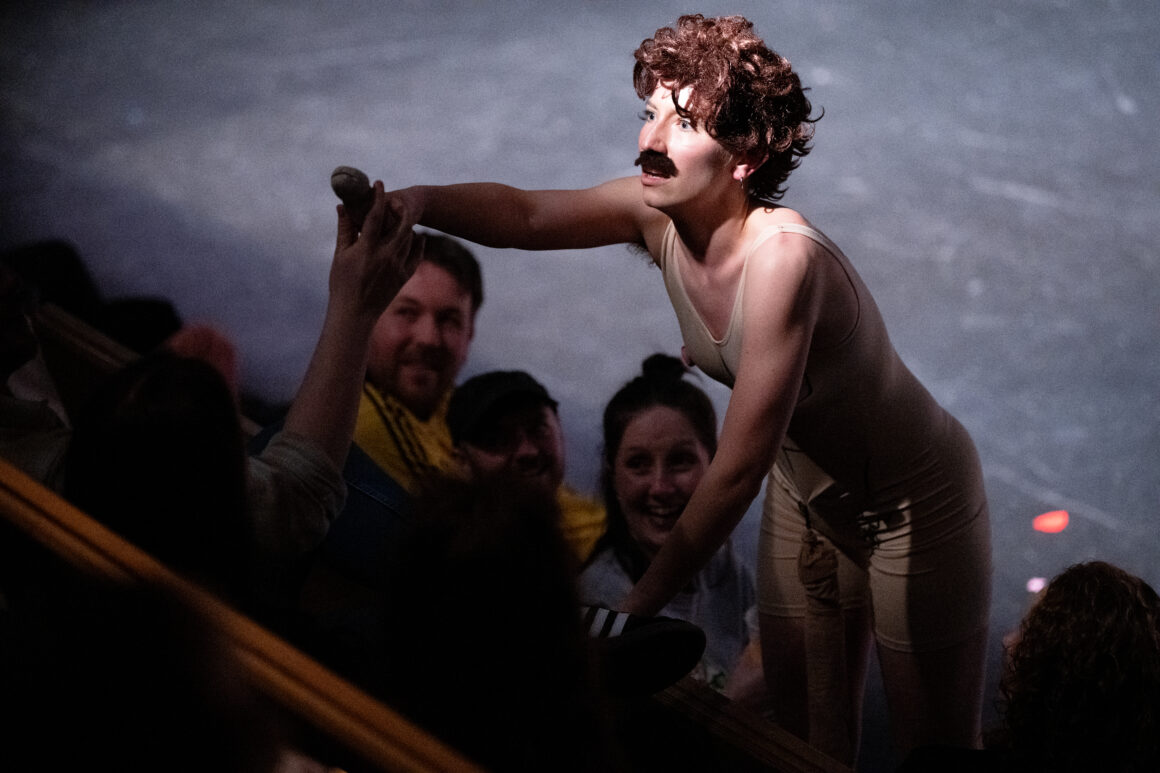
MC: I like to make work that deals with taboo themes because, as a woman, growing up in Ireland, I’ve learnt that shame is a very useful tool for an oppressor. I don’t want to sound too intense here, but shame and secrecy are really useful to silence people. As a performer, you have an incredible opportunity to take a theme or subject and put it into the spotlight.
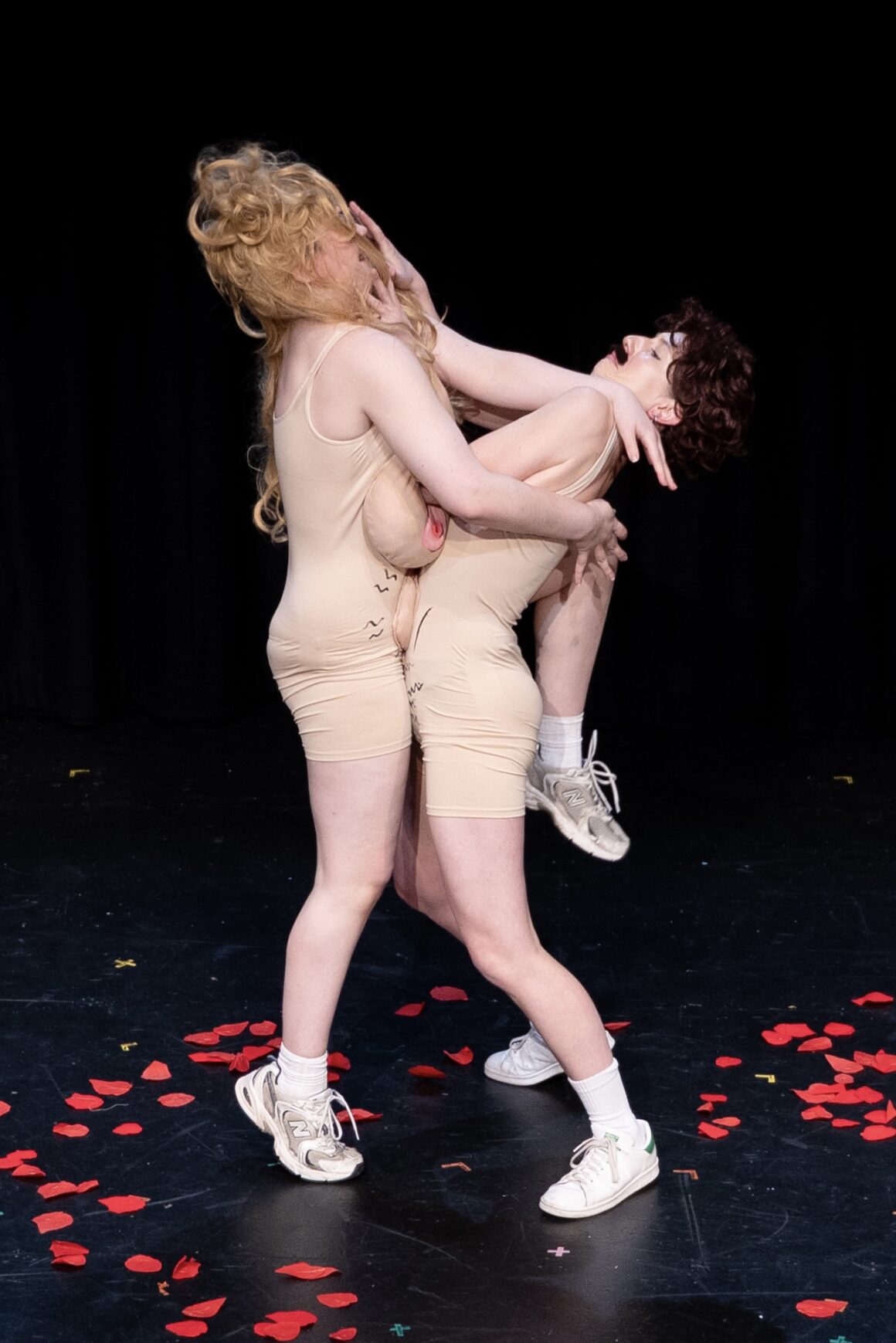
For example, by putting our show ‘Porno’, a clown show about the communication around sex, into the spotlight, we’re trying to release some of that shame. Especially with comedy, you can amplify the scenario and make it absurd. You can have the big boobs and the big vagina and everything is kind of over the top, so it allows people to laugh while we’re still discussing those kinds of themes. That’s why the absurd visual aspects are helpful because they create a little bit of distance between people and reality and that makes the subject less scary.
From a technical point, if you’re thinking about making people laugh, it’s about tension and release. Tension is created in a room when you present a taboo subject. People are holding their breath, then when something ridiculous or unexpected happens, that tension is released and people laugh. That’s why it’s called comic relief, because it’s actual relief.
LON: How does audience interaction come into play during your act?
MC: The audience members will generally help Clown Maria to try to achieve something. We might fail miserably, which can be very funny, or we might succeed and the audience gets to enjoy the triumph. But there will always be a want for the character and a journey they’re trying to go on.
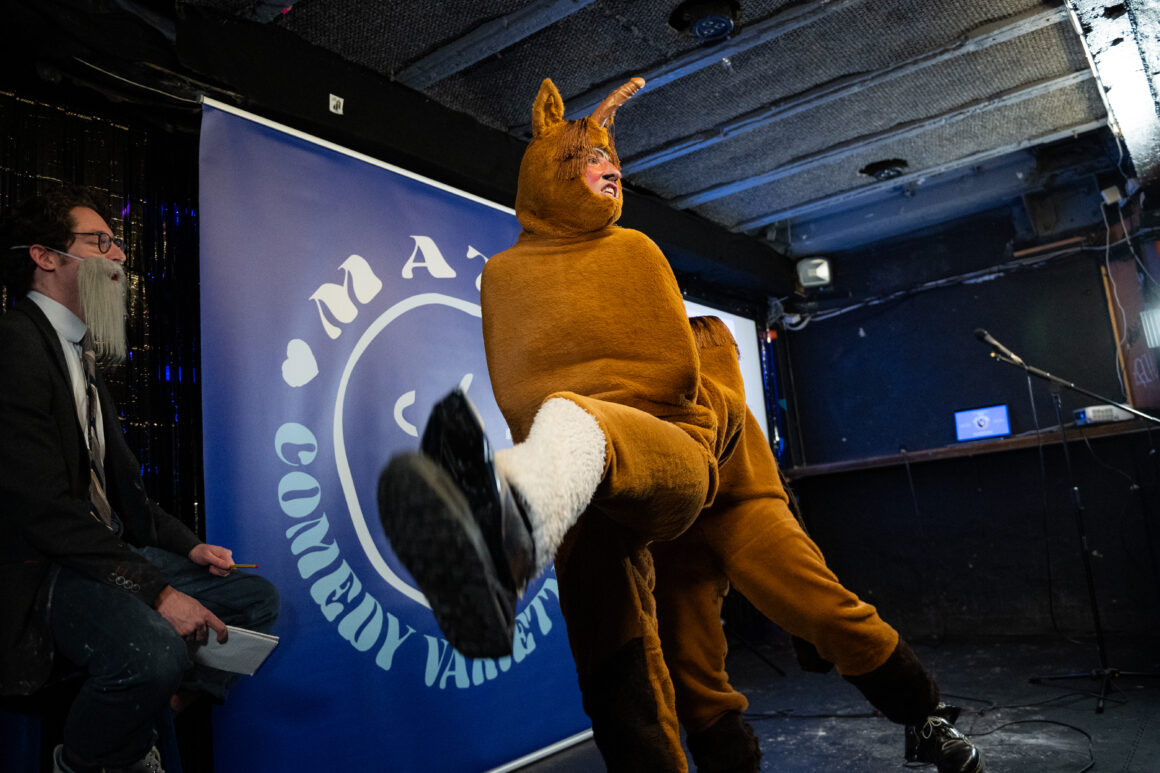
‘Porno’was created by me and my clown partner, Saorla Rodger – we have a clowning duo called Lipstink. The bulk of the show was improvised within a structure we had built. We wanted to focus on the fact that in Ireland, we grow up with very little sexual education in schools, and Irish people are typically not very confident at having those discussions. The concept was that we were Ireland’s top live sex stars and were on the last night of our nationwide tour. We go to attempt our big move and we have an accident, causing us to have concussion. We’ve forgotten how to have sex. There’s Giorgio and Amanda, they’re naked and they’re ready, but they don’t know what the steps are. So, we ask the audience to teach us how to have sex. It was so beautiful and hilarious to hear what people said. We wanted to play with how the words we use can be mixed up. People using innuendos made it funny and so easy to misconstrue the words and fully act out what they were saying, but without the understanding of what it actually meant, which created hilarious scenarios.
LON: Are there any upcoming shows you’re developing?
MC: My next performance will be in ‘The Hoes of Tralee’ run by The Wild Geeze. I’m currently further developing ‘Porno’ with Saorla and a new play ‘Dole Bots’into full length shows. I always post updates of shows that I’m making or performing in on my Instagram page.
Maria Cunningham is a comedian, actor, writer and clown.
Lauren O’Neill is a writer and comedian.