WRITER RUBY EASTWOOD INTERVIEWS CABARET AND CIRCUS PERFORMER BETTY BEOUR.
Ruby Eastwood: Tell me about your journey into cabaret.
Betty Beour: I was kind of a failed drama kid. I really wanted to be singing and dancing onstage. I wanted to be in Billy Barry’s stage school, but I didn’t have the money to go. I went to a few community drama classes, but I wasn’t getting any parts in the school plays – not any good parts at least. I played a yellow brick once in The Wizard of Oz! I still remember part of the dance. That was the first time I learned how to do a jazz square, so that’s an important skill.
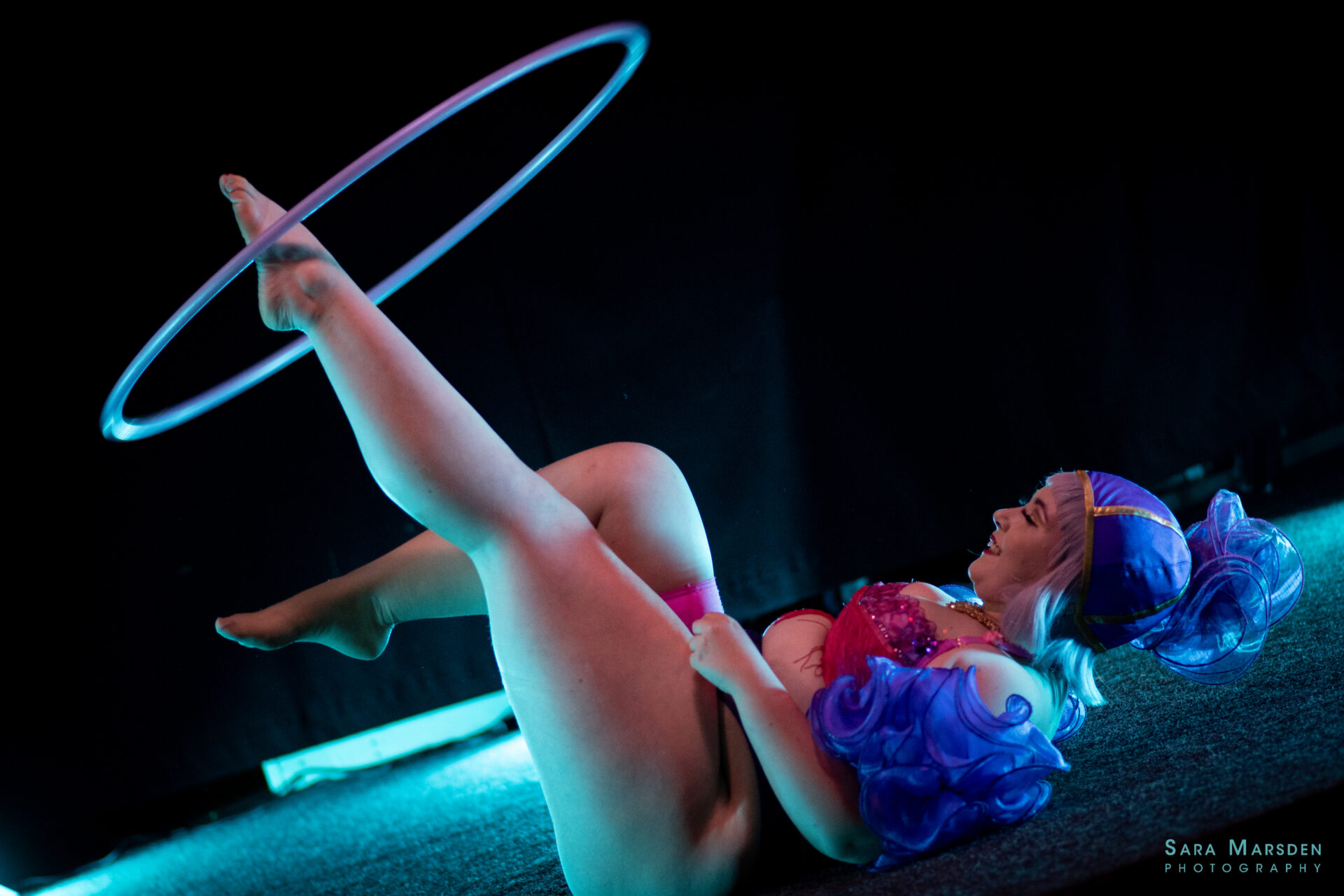
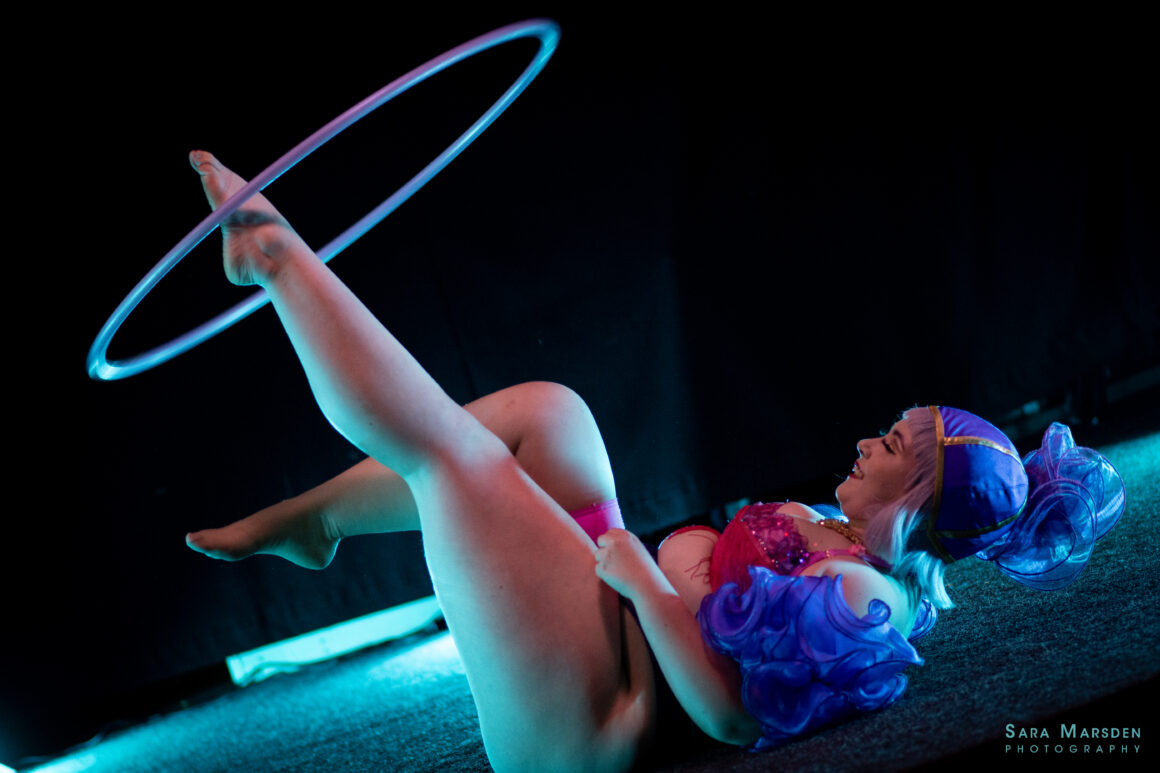
Then, when I was 17, I discovered hula hooping with my friends. I taught myself from YouTube tutorials and learned from the other girls in the park. I went to my first music festival when I was in fifth year and realised there was a whole community of performers. That was the first time people watched me as a performer, even though I wasn’t hired to perform. I didn’t put my hula hoop down all weekend.
I think it was when I went to that music festival that I decided I wasn’t going to stop. I met a bunch of people there and found out there were juggling festivals and circus conventions. I went to one in Belfast and became part of that community. It was such a big adventure.
I ended up kissing a boy who had been flown over to perform in the big show of the weekend. He told me he went to circus school, and I was like, “you can go to circus school? You can do a degree in circus?!” I was really amazed.
At that point I was 19 and in my first year of studying English and Culture in IADT. So, I dropped out and went to circus school at Circomedia in Bristol.
RE: What was circus school like?
BB: It was crazy. I am a plus-sized gal, and I was in a class with people who were training for the Olympics, real gymnasts. It was really disciplined, but also kooky and silly because it’s literally clown school. We studied mask and mime, which definitely come into practice now because burlesque is often a non-speaking endeavour – you’re emoting a lot with your face. I studied Marcel Marceau. We trained in a deconsecrated church, and people were playing show tunes on the organ at lunchtime. I got exposed to a lot of different people there and different ways of life. There were lots of kids who had been homeschooled. But I was just a working-class girl from Dublin.
The course was expensive because I wasn’t British; five grand for one year, and I had to pay for it myself. I was working at Wetherspoons while also going to circus school full-time. It was also my first time living away from home. It was the most broke I’ve ever been.
But Bristol is a city full of performers and artists, and I got exposed to shows that altered my brain chemistry forever. I saw a girl do a hand-balancing act about being a geologist who was sexually attracted to rocks. I thought, “I don’t know what this is, but I know it’s for me. This is where I belong.”
RE: I’m curious about the practical aspect. Is it something you’re able to do full-time?
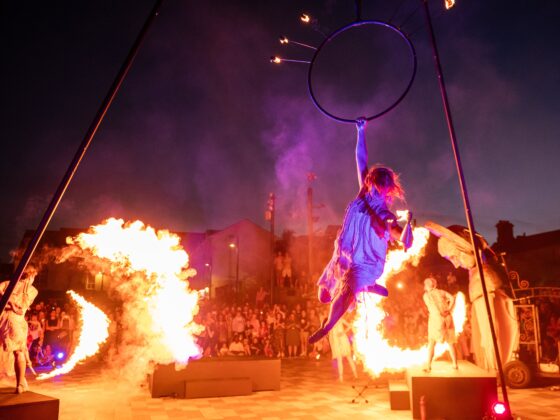
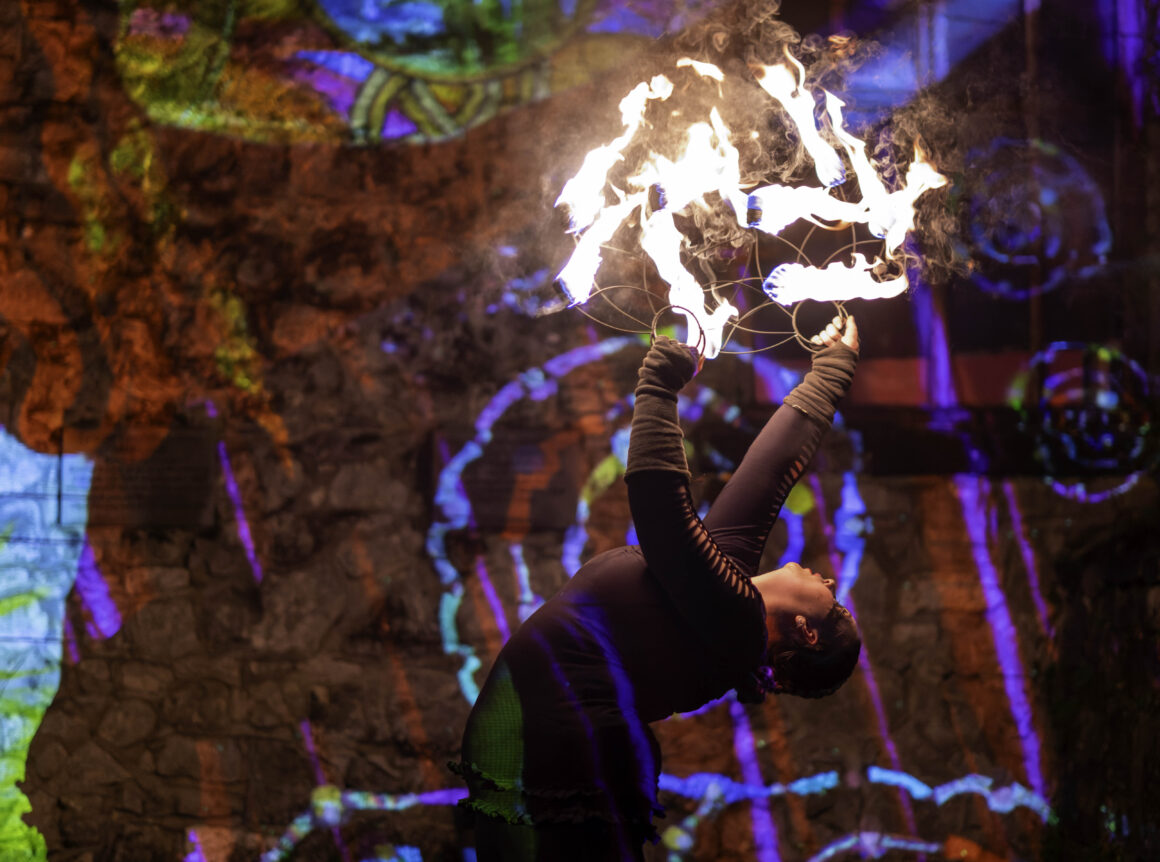
BB: That’s an important question. The money side of it. I remember when I was in circus school, they sat us down and told us, it doesn’t matter how amazing you are, unless you go to Cirque du Soleil, which is 0.1 per cent of people, you’re going to make most of your money from stilt walking. So, you’d better get good at stilt walking. They were mostly right. It’s a lot of side gigs, and the side gigs often pay more. I do a bit of stilt walking, I teach circus workshops, and I do a lot of walkabout entertainment and fire dancing at city festivals. I was doing life modelling for a long time, which felt natural because I work with my body.
I do a lot of children’s entertainment too: face painting, balloons, glitter. Obviously, I keep this very separate from my cabaret. I have two different personas and names because I have common sense. But that overlap is actually extremely common because there are similar skillsets involved: big sparkly costumes and wanting to connect with people.
Face painting and children’s performing really prop us up. Going into cabaret is money-losing. Burlesque is expensive. I got a bursary from the Arts Council three years ago, which was amazing. But now that I have transitioned more into cabaret, it’s harder to get funding. It’s Ireland, it’s taboo, but it’s also often seen as entertainment, and the Arts Council wants to fund more traditional arts. This year I’ve taken a horrible job at a factory, working crazy night shifts and day shifts on a production line. I’m saving up for a year because I want to take my career to the next level.
RE: How do you put together a show? Who are your influences?
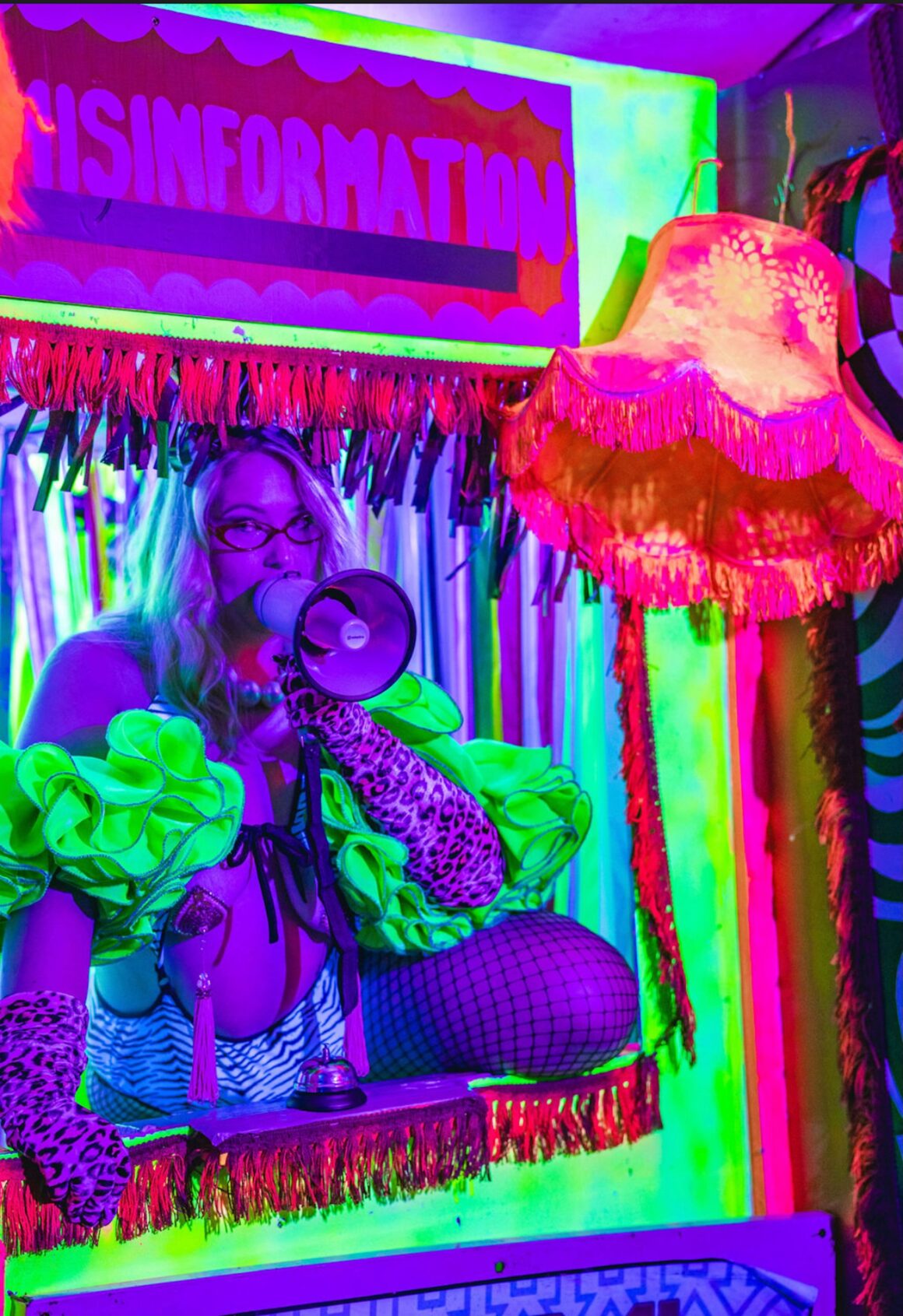
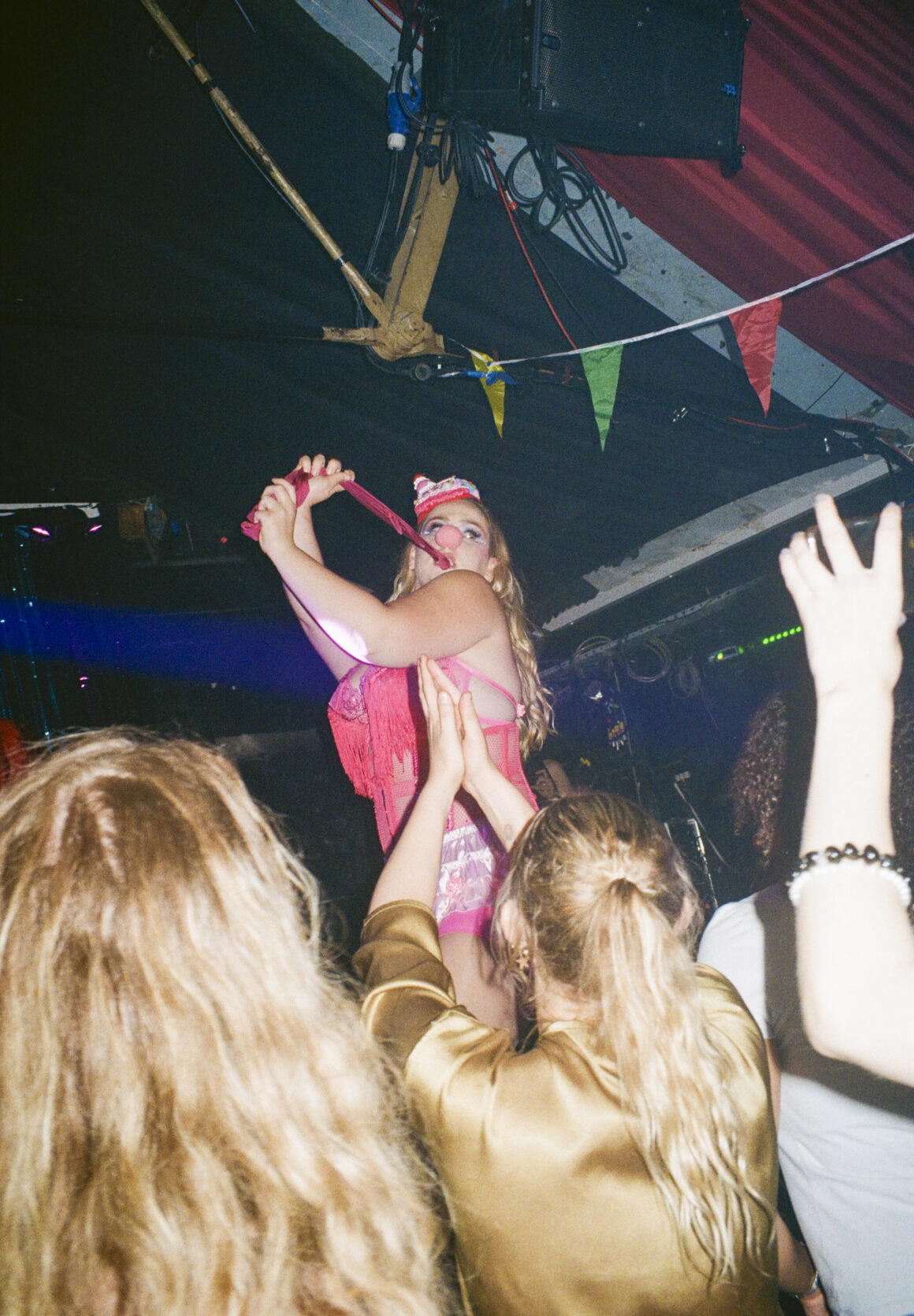
BB: For me, the costume comes first. That’s influenced by drag and old movies, and then I experiment from there. Once you know what the character looks like, you know who she is. Is she romantic? Is she sassy or domineering? What is her song? Is it slow and soft, or fast and sharp? Who are you embodying?
I buy the base and then bedazzle. I try to support local designers like Mary McGuinness in Kilkenny. Margaret O’Connor is a great milliner. I try to keep it Irish, interesting, and as sustainable as possible. My neighbour is Bella Agogo, the longest-performing burlesque performer in Ireland. She’s been doing burlesque for 20 years. She helped me lace up my first corset and taught me how to sew.
With burlesque, the costume is often the idea. The silhouette is very important. I’m influenced a lot by RuPaul’s Drag Race. I come from a very supportive queer family. My uncle, who I grew up with, is gay. I found out later in life that I’m bisexual. We’ve been going to Pride together since I was four years old.
My mum is a bit of a style icon as well. Any chance she gets to put on a sparkly hat and show up and show out. The apple doesn’t fall far from the tree. I was dressed up as Audrey Hepburn as a child because my mum was obsessed. Her friends were DJs. She and my uncle spent their 20s in London as ravers.
Now my mum is an accountant. When I told her I was dropping out of college, she wasn’t super impressed. Then when I transitioned away from classic circus into taking my clothes off, she definitely wasn’t super impressed. But she came around. I think she absolutely loves it now. If I’m doing shows in Dublin, my family make signs with my name in sparkly letters. I’m very lucky to have them.
Betty Beour is a Club Kid, international Cabaret Queen and Emerging Circus Artist from Dublin,Ireland. She shares her passion for self expression with the world at many queer nights across Ireland including: Dyke night, Ping Pong Disco and her residency at Rathaus Dublin. Betty has recently started producing her own Circus and burlesque cabaret accompanied by live jazz band @wearelavery keep an eye out for ‘Climbwallscabaret’ at Jazz and arts festivals around Ireland.
Ruby Eastwood is a writer and arts reporter.