AVRIL CORROON REPORTS FROM AMSTERDAM ON HER ONGOING RESIDENCY AT THE RIJKSAKADEMIE.
I am currently approaching the last six months of my two-year residency at the Rijksakademie in Amsterdam. The programme selects on average 23 to 25 artists from an annual open call. The application process entails a written application, portfolio, and video bio, and if pre-selected, two interviews. There is a €50 application fee. Half of the artists are living internationally, and the others are based in Netherlands prior to the residency. In general, artists are usually out of education and working professionally for a number of years.
Residents are supported with individual studios and workshop facilities in an old calvary barracks in east Amsterdam. The size and style of studios vary and are allocated by practice needs; however, this is not without competition. My studio is in the old stables, located beside a canal. The space has both brick and white walls, high ceilings, and big sliding doors to facilitate scale. For me, it’s a beautiful space to think and make in, with changing natural light throughout the day.
We receive a materials budget and modest but feasible monthly stipend inclusive of rent. Accommodation is provided, with priority given to international artists; these are mostly single flats and some shared apartments around the city. We’re encouraged to apply for state housing supplement, and health insurance is obligatory in the Netherlands.
The facilities at the Rijksakademie are the driver of the residency, with workshops and technical advisors in wood, metal, print, ceramics, casting, media, chemical, and paint. You can leave your studio with an idea, enter a workshop, and often the materials might already be at hand to get testing straight away. The levels of detail and specificity I’ve been able to achieve has been completely engrossing and exciting.
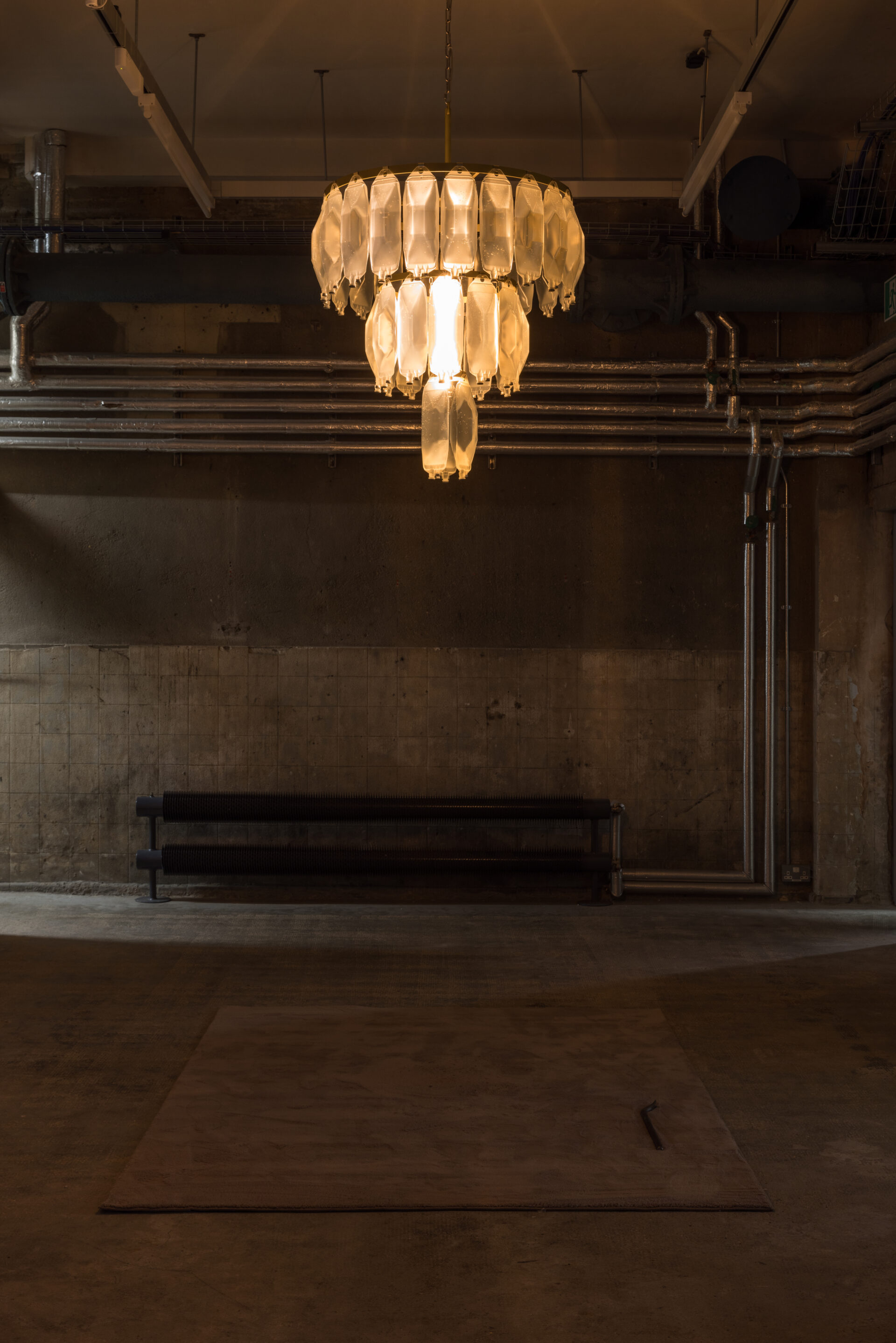
Lately, I’ve been working predominantly in the metal workshop, forging a series of crowbars, titled Pry (2026), from tool-steel and welding structures, to be lit from within and hanging from a ceiling, holding dehumidifier water in IV bags, titled Sublet Glory (2026). For both works, a number of tools were made specifically by Stephan Kuderna, the workshop technician: a tool to precisely bend bespoke laser-cut brass hooks; a chisel grounded for splitting the crowbar foot; and parts to bend the hot tool steel around for the leverage points. In the Media Lab, with the robotics and electronics technician, Mauricio van der Maesen, we made a lightbulb to the exact length and colour temperature I wanted but couldn’t find commercially. I’ve made multiple clamps to fit ceiling beams that Sublet Glory will hang from, sprayed the steel in the Paint Lab, and finally made the crates in the Woodshop. It’s been empowering to be so hands-on with every aspect of these works and has given me new practical skills and freedom.
On the theoretical and conceptual sides, residents sign up to receive studio visits from artists called ‘advisors’ who come semiregularly. These advisors develop engagement with studio practices and build upon previous conversations, offering criticality, questions and feedback. It’s invaluable to have artists willing to get into the research hole with you as you dig.
Sharing space with so many artists is naturally quite social. To break the ice, the residency year starts with a group bonding trip. Memorably, my first year trip was to the small Dutch island Schiermonnikoog, where we stayed in a very old traditional hotel and did quicksand walking tours, star gazing, and swam in freezing conditions. Many of us have moved to the Netherlands without existing networks or connections to the city, so community-making begins on residency. Cantina, the unofficial social workshop of the Rijksakademie, is where staff and residents gather to eat, talk, and exchange ideas. We are spoiled with a subsidised menu, and we eat by the canal in the sunshine at any opportunity. Friendships started here have sparked weekly morning writing groups, a coding club, and a burgeoning football team. Most importantly, we’ve inherited from alumni a weekly evening crit system and we go to plenty of shows and pubs together.
In terms of outcomes, we have three Internal Open Studios during the year. This is a valuable private opportunity to see each other’s work with all staff and advisors and usually a packed performance programme, followed by a celebratory dinner and party. More intensely, the Rijksakademie consolidates each year with a four-day public Open Studios. Despite this innocent sounding premise, it’s a whopping show of 50 solo presentations and events, receiving a footfall of 5000 visitors. This is a real beast; the pressure is high, entailing a lot of hard work and collaboration across the site. This year, Open Studios runs from 19 to 22 November. Then, come December, I hand back the keys to the castle, and see where I go from there.
Avril Corroon is an artist based between Dublin and London.
avrilcorroon.com