THOMAS POOL REPORTS ON IRELAND’S ANNUAL NETWORKING EVENT FOR VISUAL ARTISTS.
Visual Artists Ireland’s annual networking event took place on Friday 11 September at TU Dublin’s Grangegorman campus. With close to 400 attendees, it was the largest and most well-attended Get Together in history. The overall theme this year was ‘Life: Being a Visual Artist’, which offered artists the chance to learn directly from each other and other arts professionals, hear real-world experiences, and better understand the supports, protections and opportunities that have been hard won in recent years. Throughout the day, attendees availed of panel discussions, discursive sessions with Hettie Judah, artist talks, specialist clinics, and the ever-popular speed curating sessions.
Keynote
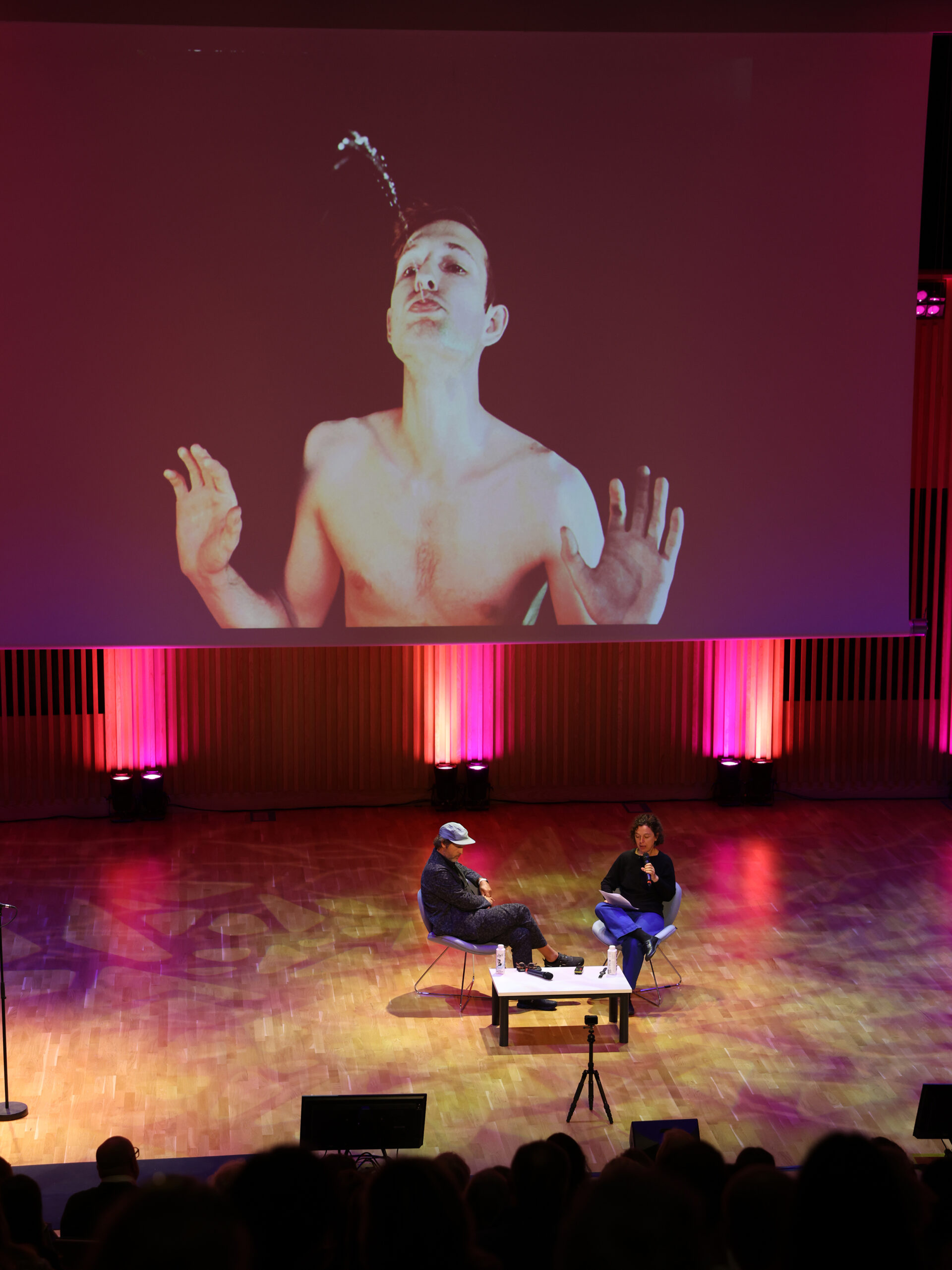
This year’s keynote presentation was delivered by Claire Fontaine, the Palermo-based feminist and conceptual art collective of Fulvia Carnevale and James Thornhill. Their talk touched on the fundamental questions of what it means to be an artist, as well as the perils and joys of being a married couple who work together professionally. They further discussed the conceptual, political and social commentary innate to Claire Fontaine’s practice, including their neon sculpture series, Foreigners Everywhere (2004), which was used as the title for the Venice Biennale 2024, and their light installation in a Venetian prison that contained a message of solidarity with the prisoners: “We are with you in the night”. That same message was later repurposed in Arabic and projected into occupied Palestinian territory from Israel. For their work In God They Trust (2005), they described making the blades that were then concealed within modified American 25-cent coins, as a commentary on paranoia and surveillance since 9/11 – the 25th anniversary of which was coincidentally that same day. Also mentioned was Flag (Negative) (2016), featuring Donald Trump’s distinctive profile cut from an American flag, which seems evermore relevant ten years later.
Panel Discussions
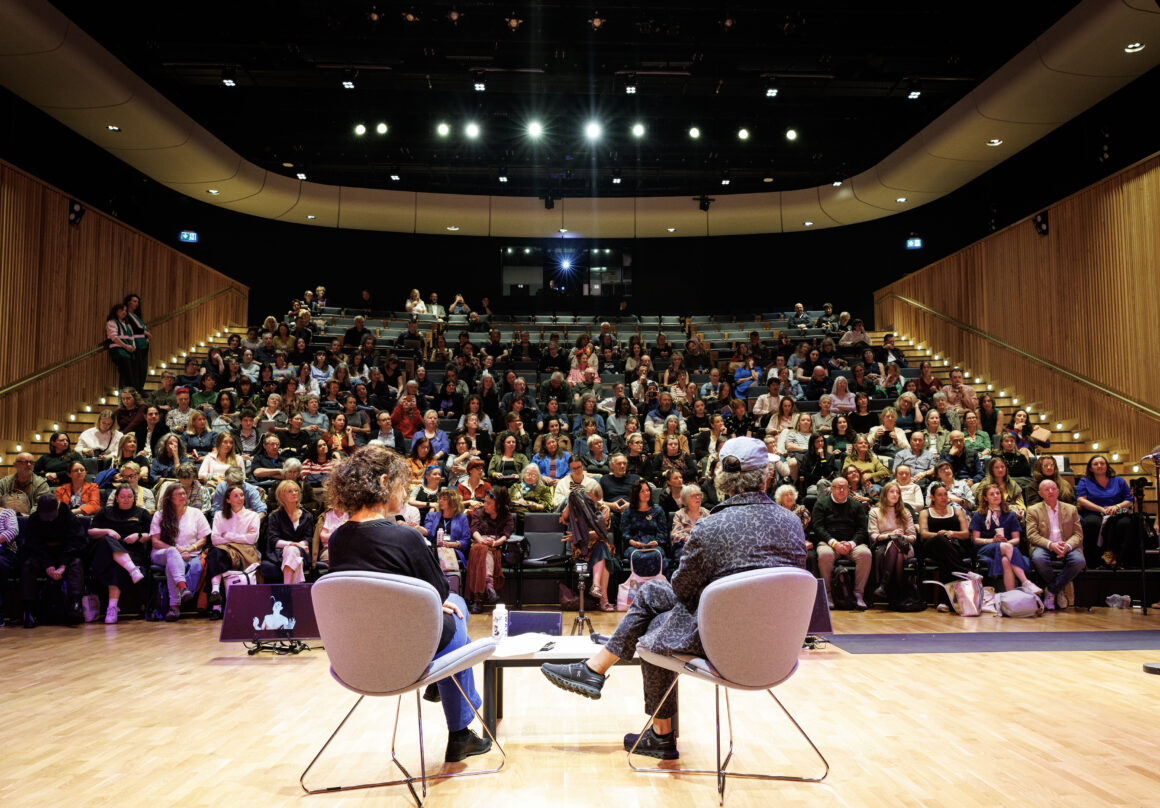
The first panel discussion of the day sought to explore the role of archives within artistic practice. Coined by American art critic and historian, Hal Foster, in his seminal essay for October (Issue 110, Fall 2004), ‘Archival Impulses’ describes practices in which artists operate as archivists. Frank Wasser spoke about his research on the Stanley Kubrick Archive, housed in University of the Arts London (UAL), including the filmmaker’s exacting specifications on the design of his archive, and the custom-made ‘Kubrick boxes’. Mairéad McClean spoke about her use of film, sound, installation, photography, and drawing to explore memory. She collects different kinds of archival material from a wide range of sources, with found footage, historical and family archives, filmed performances and televisual media all featuring in her work. John Beattie spoke about several projects including Shadowing the Archives (2021–23), made during his residency at the National Archives of Ireland, which involved working with records damaged during the Four Courts fire of 1922, as well as his fondness for the Japanese martial art of Aikido, with his repurposing of tatami mats into display tables. Marianne Keating spoke about her work exploring overlapping Irish and Jamaican histories, including shared legacies of colonialism, migration, and indentured labour, noting that while knowledge of the Irish movement to Jamaica has largely disappeared from memory, many places in Jamaica still have Irish names.
The second panel, ‘(Re)Establishing Your Practice’, presented contributions from artists who have recalibrated their practices in new settings – whether moving to different countries or shifting towards or away from urban centres. They explored concepts of diaspora and home sickness, while also considering how to establish critical discourse, infrastructure, and community in new locations. Joanna Peace discussed her work Orcharding, moving her family to the west of Ireland in 2025, creating workshops for survivors of gender-based violence, and how orchards act as sites of loss. Chloe Austin’s performance piece was delivered to convey ideas of translation as a site of negotiation, and the colonial erasures of the Welsh and Irish languages. Vivienne Griffin discussed their Fulbright scholarship to New York City, which opened up new artistic worlds, with subsequent moves to London and Belfast helping to further evolve their practice. Diaa Lagan, a Syrian-Irish artist based in Dublin, discussed his use of calligraphy, Islamic and Irish themes in his work, as well as his recent exhibitions at The LAB and The Chester Beatty Library.
The third and final panel, titled ‘Critical Spaces’, took place in the afternoon with discussion of spaces established by artists out of necessity and in response to perceived needs. Lauren Morrison, a current co-director of Catalyst Arts in Belfast, spoke of its founding in 1993, and how it quickly gained a reputation as a cultural bastion during The Troubles. She also discussed current organisational priorities and the opportunities Catalyst offers artists for exposure, peer-learning, and community. Fiona Cashell, who received her MFA from Stony Brook University on Long Island, New York, advocated for artists undertaking various residencies over the course of one’s career. She shared her own experiences at Art Farm in Nebraska, and VCCA in Virginia, and how the community bonds forged during a residency are essential for combating isolation. Orla Whelan, who is currently working on her latest artist book, discussed setting up AtHomeStudios – a collective of artists with home studios, who can gather, discuss works, and cultivate a sense of community. Catherine Barron shared her personal experiences of ‘artistic surrender’. After her marriage ended and she became homeless, a repetitive strain injury rendered Barron unable to hold a brush, so she surrendered her work as a paint-based artist and expanded her ways of making, rebuilding her life and career from the deepest canyons of despair.
Artists Speak
There were two sessions of ‘Artists Speak’, morning and afternoon, with presentations by three artists in each group. The first session featured Volodymyr Topiy, a Ukrainian multidisciplinary visual and performance artist based in Ireland. His presentation focused on his interdisciplinary projects that bridge traditional icon painting with contemporary art and live performance, and through which he explores memory, spirituality, identity, displacement, and the relationship between personal experience and collective history. Majella Clancy is a painter based in Belfast. In 2012 she completed a practice-based PhD at Ulster University, where now she lectures in Fine Art Painting. Her presentation outlined recent exhibitions at the Royal Academy Summer Exhibition (London), Outset Gallery (Galway), John Moores Painting Prize Exhibition (Liverpool), and her solo show, ‘Matter Out of Place’, at Ulster University Gallery in Belfast last year. Clancy also presented an extract from her chapter ‘The Oblique Gesture: Painting Gender and Materiality after de Kooning’, which will be published in The Routledge Companion to Contemporary Painting (Taylor & Francis Ltd., 2027). Sian Costello is a multidisciplinary artist based in Limerick. Her presentation conveyed how she uses her own body to intertwine the roles of artist and model, using this corporeal research to reflect on her own lived female experience as well as interrogating the legacy of the figurative painting tradition.
The afternoon session featured Manar Al Shouha, a Dublin-based painter who was raised in Damascus, Syria. She shared details of her figurative practice, which examines self-recognition, human relationships, and the tension between inner experience and outward identity. Manar received the RHA Homan Potterton Award (2026) and is currently artist-in-residence at TBG + S. Her work was recently shown in London’s Royal Academy Summer Exhibition, and the Hennessy Craig Exhibition. Mark Garry is an Irish educator, artist, curator, writer, and occasional musician. His presentation explored how his multifaceted practice prioritises the poetic over the didactic, and how research elements are subtly embedded, driven by a fundamental interest in observing how we navigate the world. Mark has exhibited widely internationally, and was one of the artists who represented Ireland at the 2005 Venice Biennale. Working across installation, sculpture, sound, photography, video, and found materials, Conor McFeely’s work investigates fractured narratives, countercultural histories, and structures of ideological, architectural, and psychological control. His presentation focused on material curiosity and media experimentation, among other research interests, with improvisation integral to his process.
The After Sessions & Closing Remarks
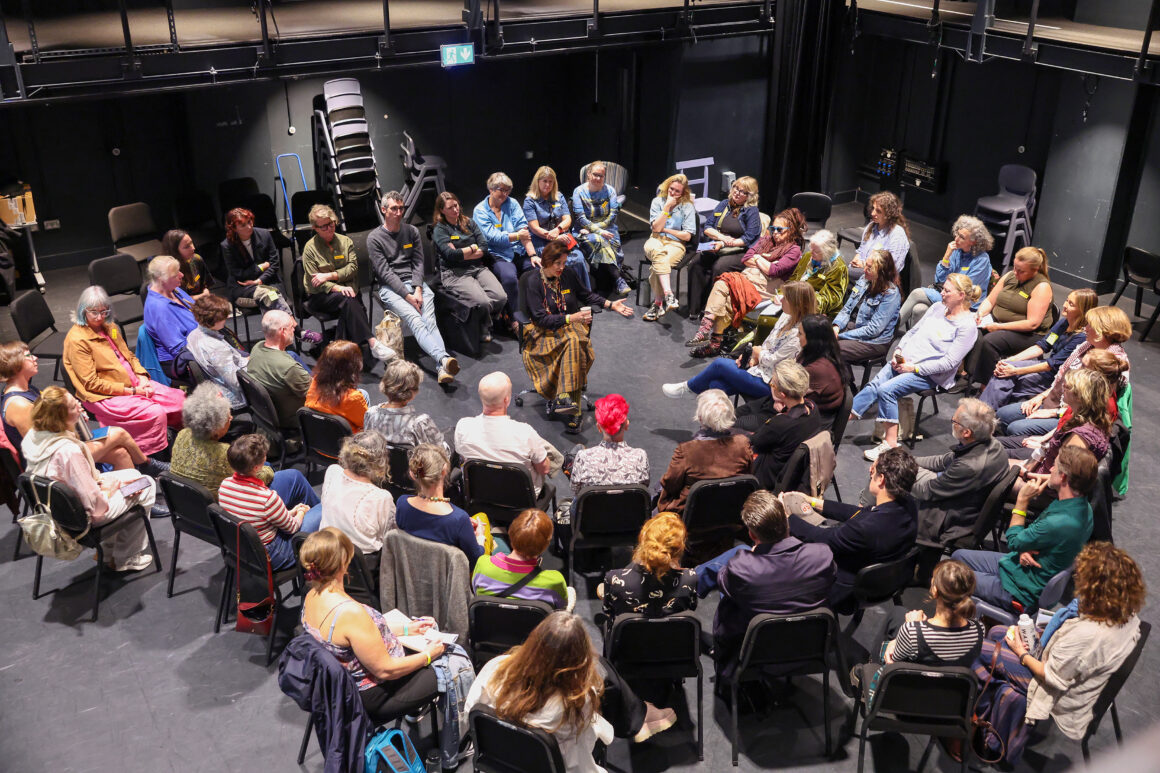
As part of the promotional tour for her new book, How to Enter the Art World …After (Hoxton Mini Press, 2026), London-based writer and curator, Hettie Judah, hosted morning and afternoon iterations of The After Sessions – conversations on art, creativity, and navigating the “art multiverse.” In the spirit of the book, The After Sessions operate almost as group mentoring sessions in which attendees can learn from one another. In emphasising a space of trust, these sessions are not recorded. Sitting on a rotating chair in the centre of the Black Box theatre space, Judah responded to questions posed by the assembled attendees. Though not intended as a confessional, this intimate format drew directly on Judah’s extensive knowledge of artist’s lives and careers, accumulated through artist-centred research. Questions posed by audience members spanned many topics, from barriers to cultivating a sustainable art practice, to the different ways in which artists use their studios.
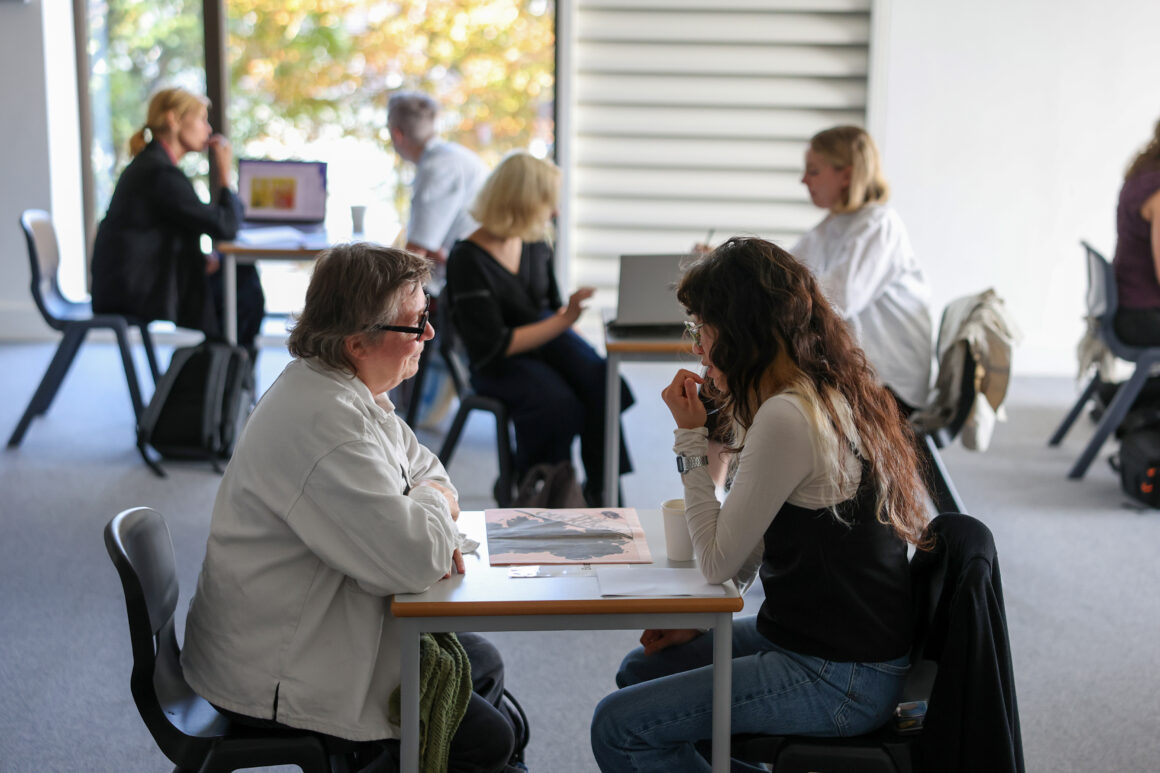
The ever-popular Speed Curating returned for Get Together 2026, allowing attendees to book one-to-one sessions with curators to introduce their practice in a fast-paced but friendly environment. Specialist Clinics offered advice across a range of topics relevant to the professional careers of artists, from working with local authorities and regional art centres, to creative coaching and generating exhibitions. The eventful networking day was infused with so many moments of collective interest and joy, in response to this robust showcase of contemporary practice. To conclude the event, there was a raffle draw for a €250 voucher to Evans Art Supplies.
Online Conference: Navigating Power in Contemporary Curating
Following the success of last year’s two-day event, VAI hosted an online curatorial conference, titled ‘Navigating Power in Contemporary Curating’, on Thursday 17 September. Drawing on their research and expertise, six esteemed international curators variously examined how exhibitions are assembled, the relationships that inform this work, and the kinds of influence, criticality, and forms of attention they produce.
The first presentation, ‘Cukrarna Gallery, Ljubljana: Between Memory and the Contemporary’, was delivered by Alenka Gregorič, an art historian, curator and writer based in Ljubljana, Slovenia. Since 2021, she has been artistic director of Cukrarna Gallery, part of the Museum and Galleries of Ljubljana (MGML). Gregorič’s presentation traced the history of Cukrarna Gallery, including a disastrous fire when the building served as a sugar warehouse, and its transformation from a historically charged site into a dynamic contemporary art space. She reflected on the relationship-building, artistic exchange, and public engagement that framed heritage not as a static force but one that is constantly in flux. Gregorič also discussed a major research-based project, ‘ART VITAL – 12 Years of Ulay / Marina Abramović’, which she co-curated with Felicitas Thun-Hohenstein.
‘The Politicisation of Institutional Programming’ was presented by Ralph Rugoff, Director of the Hayward Gallery in London from 2006 to 2026. In addition to developing the overall programme during this period, Rugoff curated major exhibitions, including monographic shows on Jeremy Deller, Tracey Emin, Hiroshi Sugimoto, Kader Attia, Louise Bourgeois, and Tavares Strachan. In 2019, Rugoff served as Artistic Director of the 58th Venice Biennale, ‘May You Live in Interesting Times’ and in 2015 he curated the 2015 Lyon Biennale, ‘La Vie Moderne.’ Among other things, Rugoff discussed the intense fiscal pressure art institutions have come under since the Covid-19 pandemic, with operating costs nearly doubling to mount an exhibition, creating a prohibitive risk in showcasing new, unknown artists. One approach he devised was to programme group exhibitions that featured a well-known artist, or an appealing theme, that could support emerging artists while still attracting audiences.
The third presentation, ‘L’Internationale: A Mission Statement in Times of Emergency’, was delivered by Nick Aikens, a curator, researcher, editor and educator. He is researcher at HDK-Valand, University of Gothenburg, and Managing Editor for L’Internationale Online. Aikens has a PhD from HDK-Valand, and was previously curator at the Van Abbemuseum (2012–2023). His talk was structured around the seven-point mission statement of L’Internationale, a European confederation of 16 museums, arts organisations, universities, and research centres, founded in 2009. Framed by the “urgency of the present conjuncture” and a “need to rethink the public sphere in times of genocide, militarisation, and ecological collapse,” the presentation outlined the importance of rejecting fascism, extractivism, and neocolonialism, and “confronting them in the cultural field,” in response to the current landscape of “intersecting polycrisis.”
The fourth talk, ‘Lahore Biennale 03: A Case Study for 21st Century Globalism’, was given by John Tain, Director of Curatorial Affairs at Carnegie Museum of Art in Pittsburgh, USA. This presentation focused on ‘Of Mountains and Seas’, the third edition of the Lahore Biennale, which he curated in 2024. Tain discussed the history of Lahore, its importance in Pakistan’s art history, and the impacts of climate crisis on the region. In 2022, unprecedented monsoon rains submerged nearly one third of Pakistan, killing thousands of people and displacing millions. Tain reflected on the ‘conjoined emergencies’ of environmental collapse, the impacts on local communities, the logistical limitations in which he developed the biennale programme, and the function of the biennale in such challenging, almost unsurmountable circumstances.
The afternoon session commenced with ‘Queering Exhibitions’ by João Laia, Artistic Director of the Contemporary Art Department of the Municipality of Porto. As former chief curator at Kiasma in Helsinki (2019–24), curator of the 12th Gothenburg Biennial (2023) and the 14th Baltic Triennial at the CAC in Vilnius (2021), and co-curator of the Lithuanian National Pavilion at the 60th Venice Biennale (2024), Laia outlined his curatorial methodology of “queering as an exploratory positioning.” This involves a “de-centering of the visual” in favour of strategies that “activate a broad sensorial range.” According to Laia, sensory encounters can include performative practices, building temporary social forums, and exploring theatre, music and time-based practice. In response to an audience question, Laia noted that as a curator, he is more focused on the moment of encounter, rather than the task of recording it for the archive.
The sixth and final talk was given by Nato Thompson, entitled ‘Art, Politics, Influence, and the Meaning of Public Programmes When Trust Is Low’. Thompson’s “multi-hyphenated career” includes curation, writing, and cultural production, with projects exploring the intersections of art, politics, public life, and social imagination. He is the founder of The Alternative Art School, a global online school and community for artists, and the Artistic Director of Art Market Productions, where he develops public programmes and artist projects for fairs in New York, San Francisco, Seattle, and Atlanta. With public trust in institutions hitting record lows across the world, Thompson discussed the importance of outreach and bringing art to the public. He discussed several projects he produced as artistic director of Creative Time, including ‘Doomocracy’ (7 October – 6 November 2016) – an immersive theatre production, presented in a Brooklyn Army Terminal to coincide with the 2016 US presidential election – which he described as a carnival attraction and “political funhouse of horrors.”