
JOHN GRAHAM REVIEWS THE CURRENT EXHIBITION BY MOHAMMED SAMI AT THE DOUGLAS HYDE GALLERY.
The Artist’s Eye programme at the Douglas Hyde Gallery invites exhibitors in Gallery 1 to select artists for Gallery 2. The Baghdad-born, London-based painter Mohammed Sami has chosen the Dutch artist Bas Jan Ader. Designed to show the importance of influence, the pairing is instructive, and even more so if you put the separate exhibition titles together. Suggesting a stymied address, ‘To Whom it May Concern – I’m Too Sad To Tell You’ offers a plaintive note that illuminates both practices.
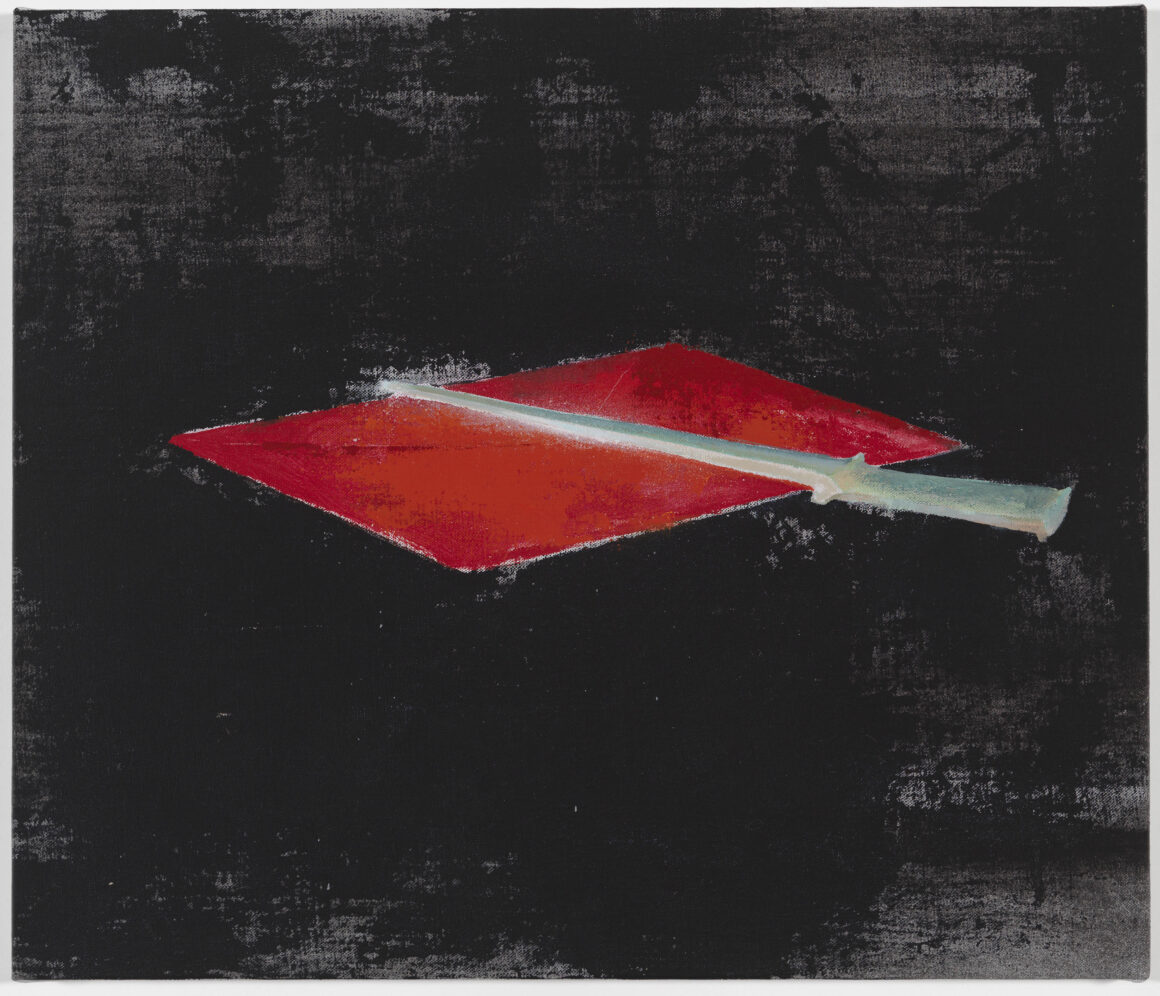
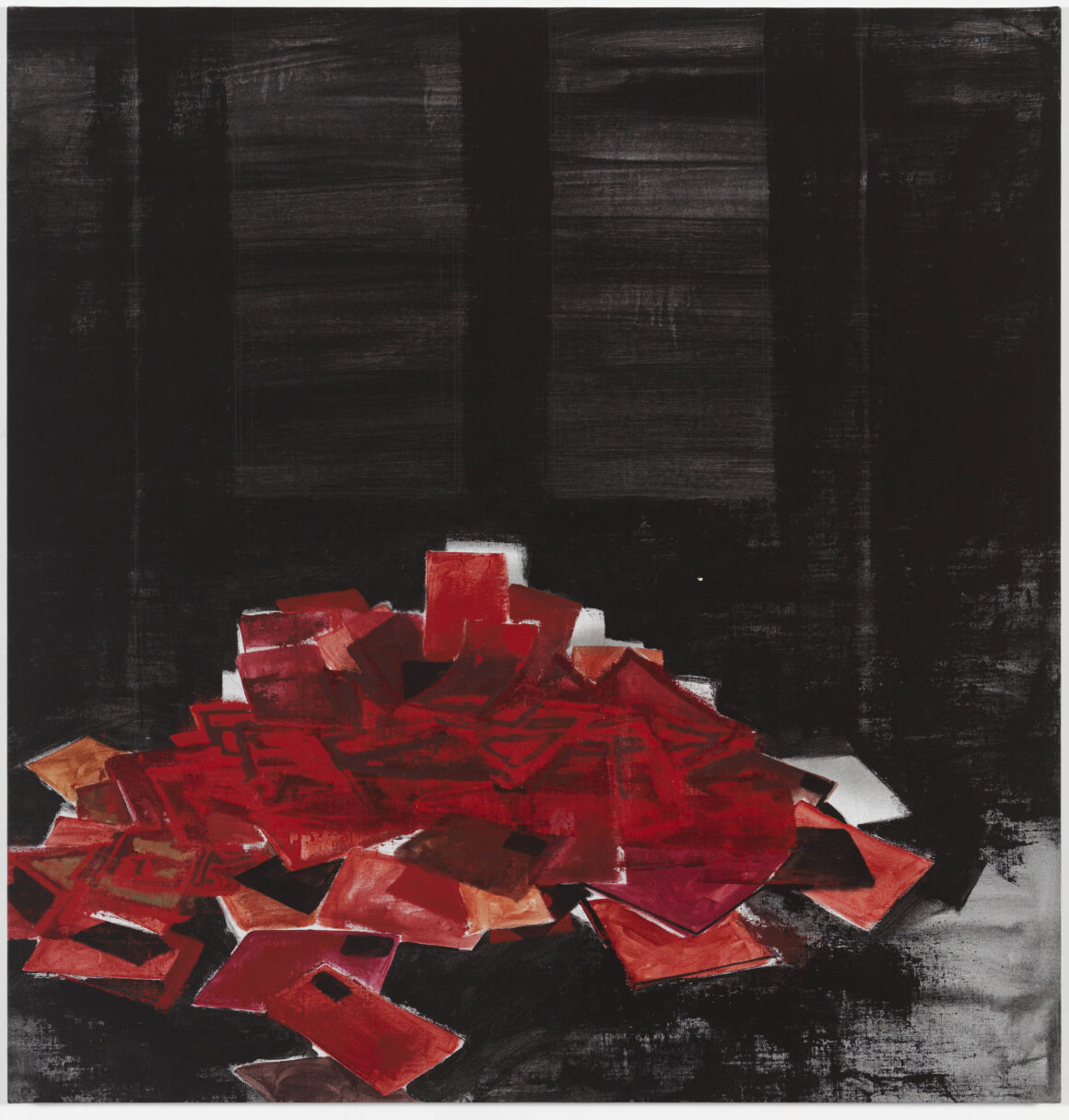
Sami makes very big paintings showing ostensibly very little, their outward appearance bristling with dark interiors. A painting called Law Books (2023) is almost three meters high and consists of a painted brick wall. The painstakingly modular surface has eruptions of red, a seeping wound or inferno. I wrote ‘blood shadow’ in my notebook, but that doesn’t have to mean anything. Unless the bricks are stacked volumes, the ‘Law Books’ of the title remain a mystery. We can speculate about analogies, but the only certainty is that Sami’s titles do a lot of work.
In a series of well-known short films, Bas Jan Ader rolls off rooftops and cycles into canals with an absurdist insouciance. In the wake of his final work, In Search of the Miraculous (1975), the artist’s corpus persisted but his corporeal presence disappeared. Projected onto a suspended screen in Gallery 2, his three-minute black and white film I’m too sad to tell you (1971) is formally similar to Andy Warhol’s 16mm Screen Tests but is their dramatic obverse. As though foreseeing his own cult, Ader’s ‘living portrait’ eschews studied nonchalance for performed emotion, an agitated close-up of weeping. In the absence of bodies – a feature of Sami’s work too – the human stain, the bodies’ leftover presence, seems everywhere.
Directly opposite Ader’s work in Gallery 2, a vertical painting is called The Operations Room (2023). Rattan chairs are gathered around a circular table. From the acutely downwards point of view, a patterned carpet is a scramble of brushy marks. With a title suggesting military planning, the painting’s sickly palette of violets and maroons is punctuated by a creeping lacunae, a shadow leeching across the table like the dark side of a forbidding moon.
A smaller painting from 2020 shows a trompe-l’oeil tabletop in a blood-red room. A potted monstera casts a shadow that looks more like a burn. The plant itself (named from the Latin word for monstrous or abnormal) has a sinister aspect too, its perforated leaves like spooky masks. Though the subject is cryptic – the painting is called Still Alive – Sami’s mark-making techniques are plain to see, with paint sprayed, smeared and dragged across the surface as though the material itself was unyielding.
A nominee for this year’s Turner Prize, the Iraqi painter’s work has become increasingly visible, with an accompanying narrative of trauma at once represented and repressed. A dichotomy of the visible and the invisible also plays out on the canvases themselves, a game of hide and seek, reflecting, perhaps, a culture of control being challenged by protean image making.
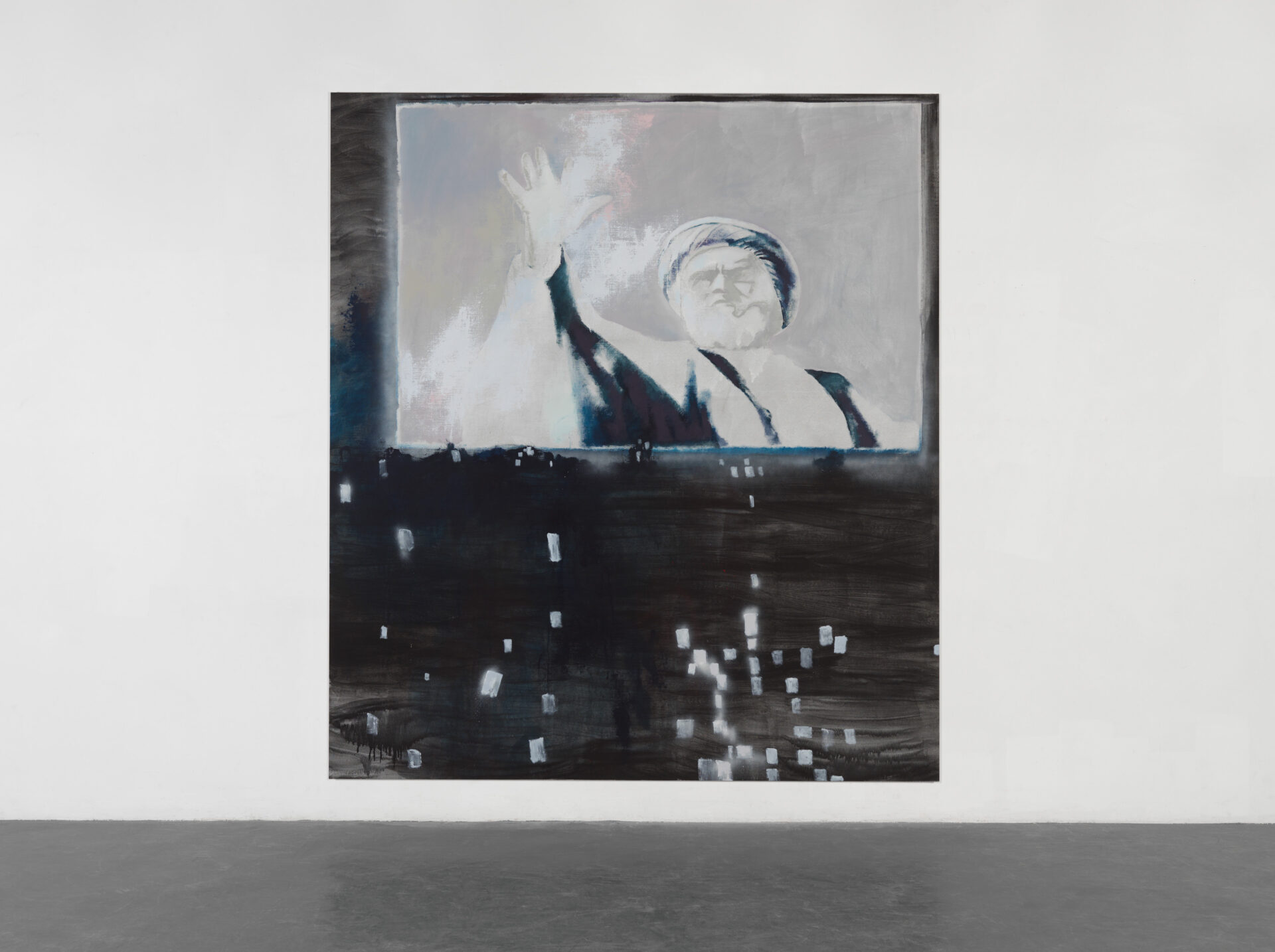
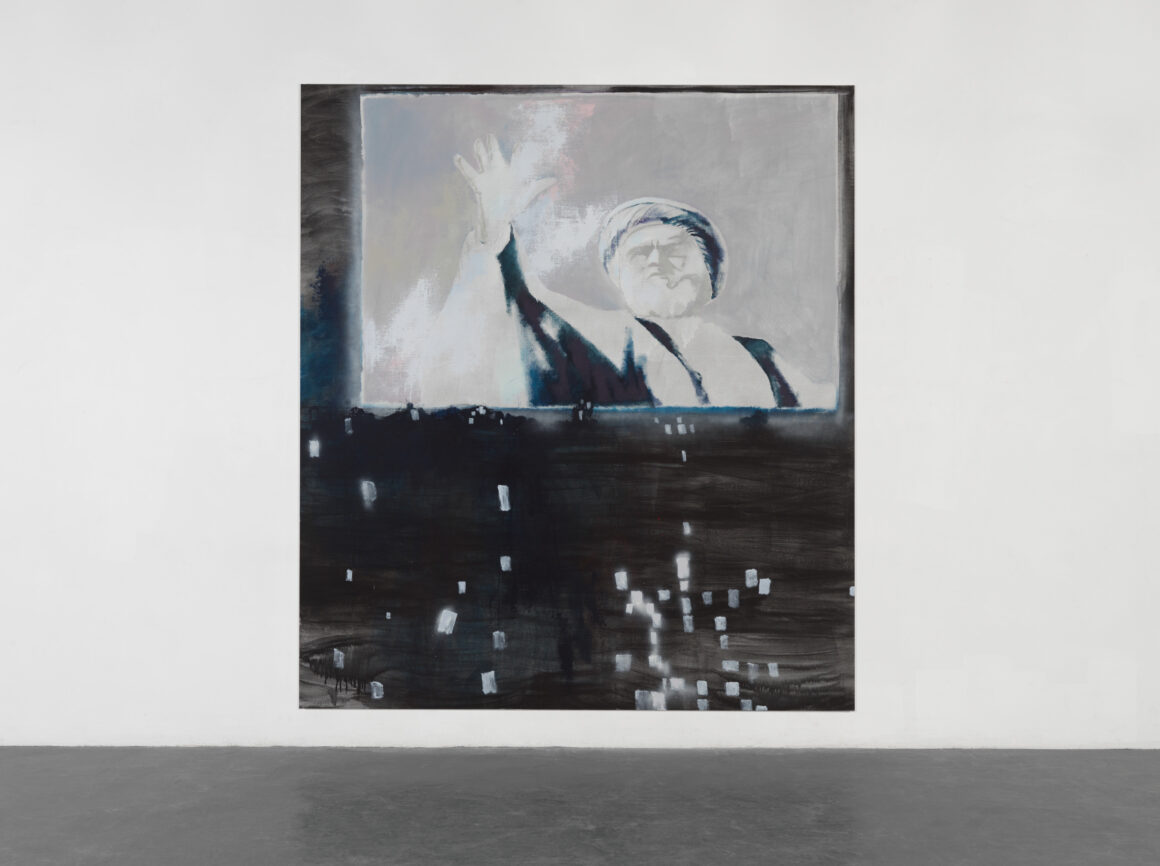
An exception to the embargo on human figures elsewhere, the familiar figure of Ruhollah Khomeini occupies the top half of a large painting on the back wall of the gallery. Supreme Leader of Iran from 1979 until his death ten years later, Khomeini became better known in the west as simply The Ayatollah. He appears here as a painted projection, an illuminated untouchable, looming over a vast assembly. That his audience is rendered by a loose brushing of liquid blacks testifies to Sami’s economic mark-making and my own willingness to see what isn’t there. Called Brick Game (2024), the title refers to a version of Tetris. An irregular host of white shapes could be bricks ascending in the manner of the outmoded video game but are more suggestive of mobile phones being held aloft. That reading is inconsistent with Khomeini’s era, but the era of painting is always now.

Born in 1984, Sami came of age in the presence of war. In the gallery setting, the raised hand of the Iranian leader could be understood as a welcome or a warning. The work by Ader conveys a similar ambivalence. As legacy and troubling continuance, both practices mine a difficult past to fashion an infinity of traces: Sami’s haunted surfaces, Ader’s exit ghost.
John Graham is a Dublin-based artist and writer.

