Photo Museum Ireland
29 April – 29 June 2025
Two concurrent solo exhibitions at Photo Museum Ireland use the photographic image to explore traces of magic, performativity, and the suspension of reality, as well as the thresholds between interior and exterior realms.
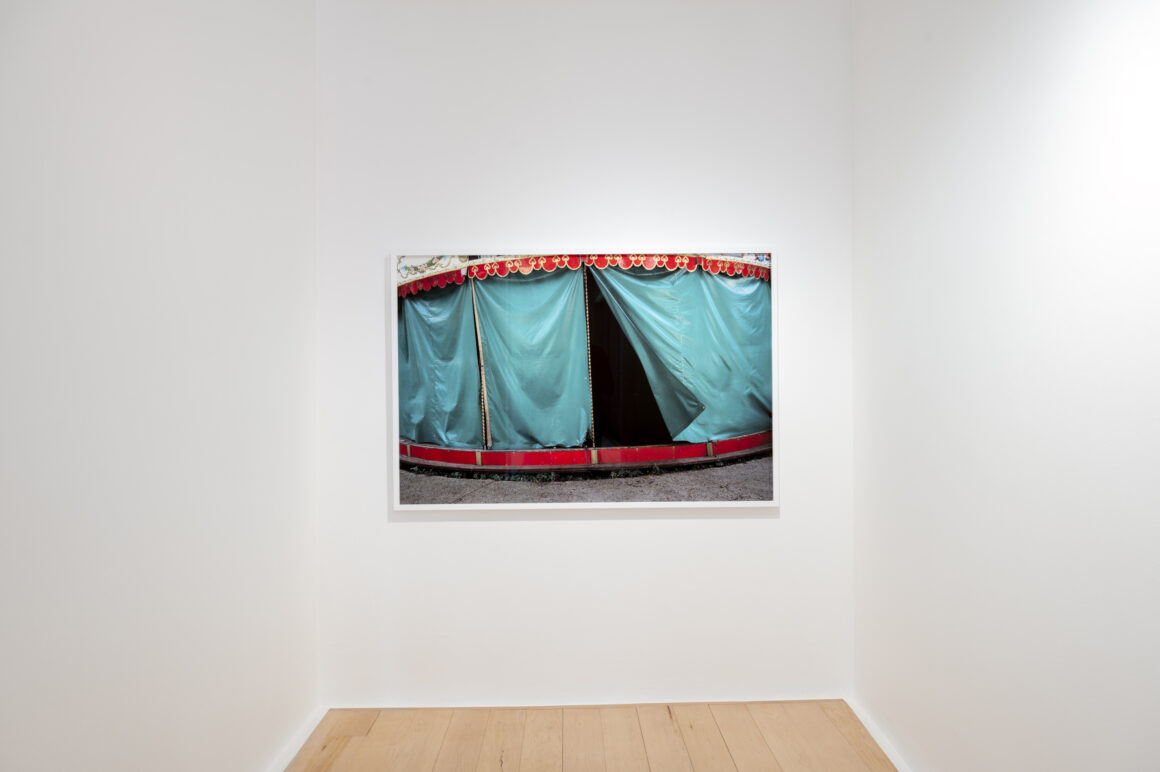
Sharon Murphy’s solo exhibition presents a series of photographs depicting theatrical décor, circus tents, and Parisian carousels during quiet moments that open up a dialogue on performativity in life and in art. The exhibition title ‘Mise en Abyme’ – a French term which translates literally as ‘placed into an abyss’ – refers to a self-reflective and infinitely recursive art historical device, whether a painting inside a painting, a film in a film, or a photograph within a photograph.

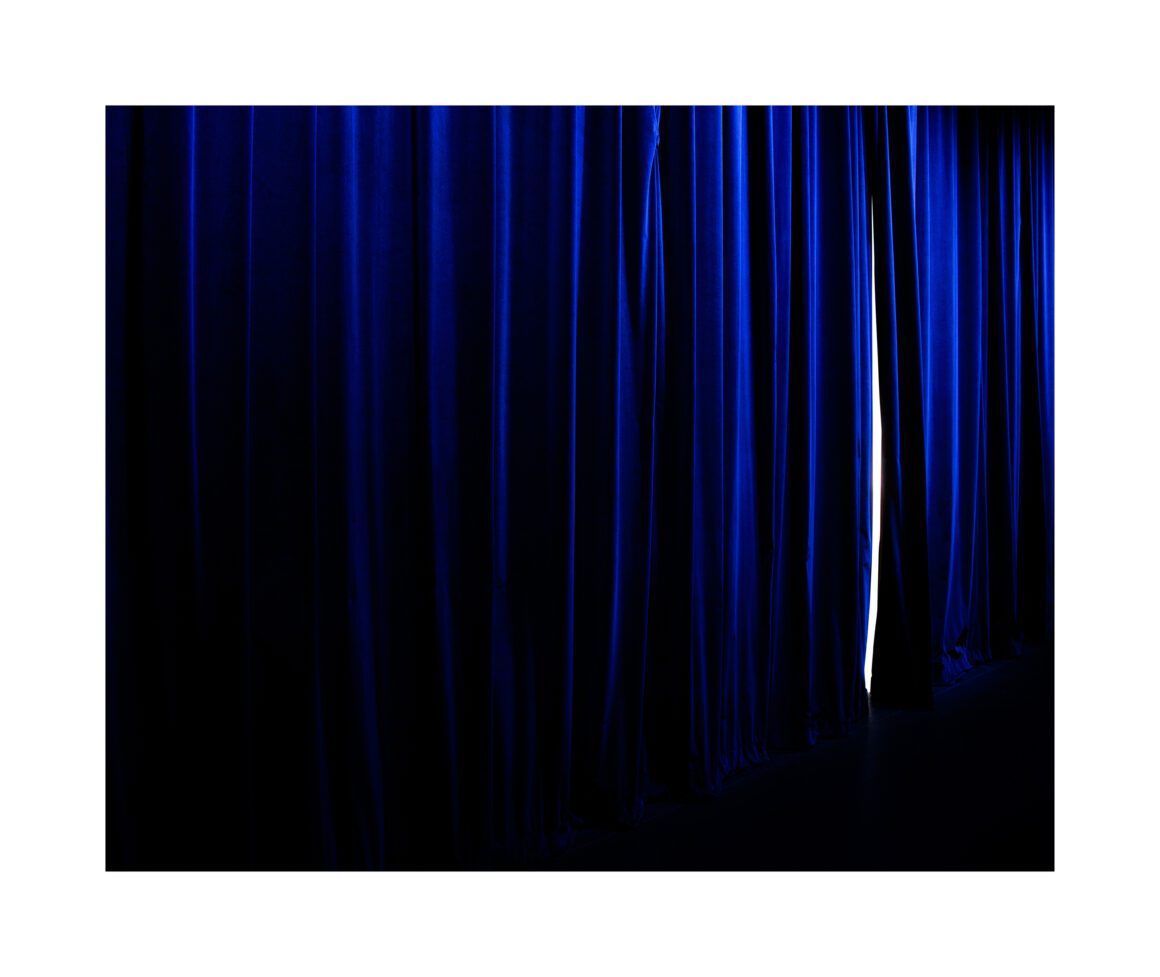
Murphy uses this concept to document the boundaries of performative spaces; the thresholds at which normal life is suspended. For example, Interval I (after Lucio Fontana) and Interval II (after Lucio Fontana) are two large, pigment inkjet prints, depicting velvet stage curtains – the first red and the second blue. Anyone who has ever been to the theatre knows this view of closed curtains, charged with energy, ready to be pulled back at any moment for the performance to begin. In Murphy’s images, the curtains hold their form, prompting effervescent anxiety and anticipation in the viewer, who considers the act of revealing, and perhaps even the process of viewing art, more generally.
The titles refer to Lucio Fontana, an Argentine-Italian artist, active in the 1950s and 60s, who is best known for slashing his canvases – a radical gesture intended to jolt the viewer out of passive observation to confront paintings as objects in space, not just surfaces for representation. In both pieces, Murphy has erased any visual information from the negative space occurring between the closed curtains, creating a white shape that resembles a tear or rupture in the surface of the image.
Placed between these two photographs is a large canvas, titled Le Rideau (meaning ‘the curtain’). This four-metre-tall photographic print holds a life-size image of a white tarpaulin curtain, rippling in waves from the eyelets gathered at the top. Murphy draws our awareness to the material relationship between medium and image by rippling the actual printed canvas in a similar fashion. This creates an interdimensional doubling effect – a common trope of the mise en abyme – as the ripple-fold of the tarp is echoed in both the printed and sculptural forms.
This duality – between concealing and revealing, illusion and disillusion – evokes questions like: Can a photograph ever display a true representation of the object portrayed? How much control does the artist exude when guiding the viewer’s gaze over surfaces? And what is the deeper relationship between the artist and viewer when highlighting our voyeurship?
Murphy also shows us images of stopped carousels, wrapped in tarpaulin with doors closed or slightly ajar, alluding to a performance turned off. Is performativity something that rests solely behind doors, or does it extend outside these parameters and onto, for example, a printed image? The cyclical nature of ‘Mise en Abyme’ is beautifully rendered through the artist’s robust yet playful exploration of phenomenological tautologies that break the fourth wall of viewership to highlight the arenas of performativity which permeate our everyday lives.
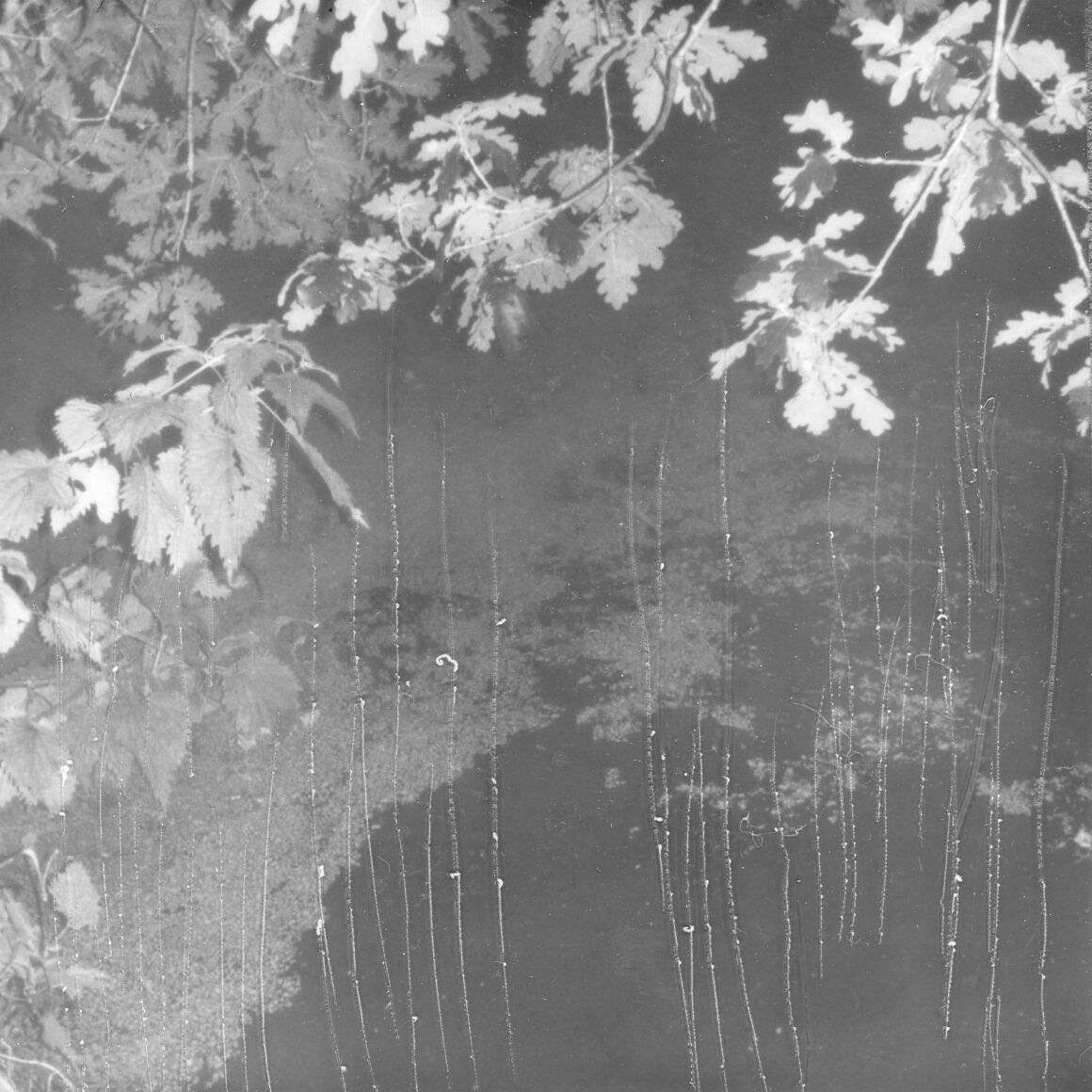
Emma Spreadborough is a Northern Irish artist and recent graduate of Swansea College of Art, who works predominantly in photographic media. Her first solo exhibition in Ireland, titled ‘You Mustn’t Go Looking’, occupies the upper floor gallery space. A series of black and white photographs, spotlit by coloured lights, portray scenes that seem at once dream-like and theatrical, strange and familiar. Two characters – an older man and a younger woman – are documented enacting various scenarios: winding twine around the index finger, sorting decayed leaves, or wrapping objects in white sheets.
These actions could easily form part of some pagan tradition, ancient folk custom, or superstitious ritual, performed by communities throughout the centuries. A stated influence on the artist is the Northern Irish playwright, Brian Friel, whose writings often explored themes of magic and the supernatural in Irish cultural history. One considers how certain belief systems have been erased by controlling forces, from Christianity and The Reformation to Capitalism and The Troubles. I wonder whether Republican and Loyalist communities on either side of Belfast’s Peace Walls once performed the same rituals for prosperity, happiness, or perhaps even peace?
Spreadborough’s photographic images are arranged in small groupings, the first foursome setting the tone with mystery and intrigue. Startled by a flash, the older man stands in a darkened garden in stockinged feet, holding a large branch. Next, there is a close-up of his balding head from above, being cupped by two young hands. Then a close-up of his face, eyes closed, and next to that, a semi-abstract photograph of leaves floating in water.
In this way, Spreadborough conjures sprawling narratives between the sequenced photographs, while blurring the boundaries between documentary and fiction. There is also an inherent tension between contained domestic spaces and the seemingly chaotic exterior realm, with this uncanny presentation prompting deeper consideration of the not-so-distant past and the rituals that bind us.
Ella de Búrca is an artist and Assistant Lecturer at NCAD.
elladeburca.com