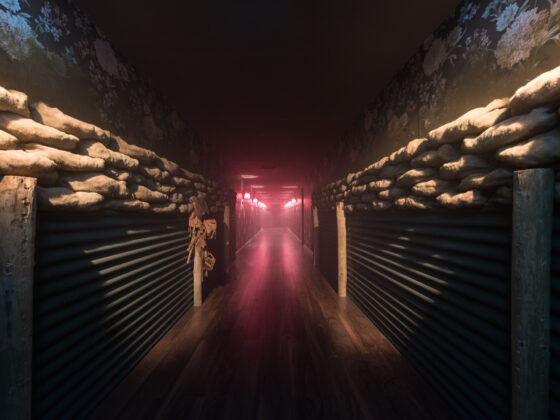
I started working in film in 2016, though, like most who work in film, I had my favourites that drew me in long before then, like Labyrinth (1986), The Lord of the Rings (2001-3), Alien (1979). All those worlds were so filled with depth and purpose – so textured and believable, you could almost smell the air. Teams of people create worlds and make audiences contemplate, escape, and maybe even see something truer about themselves. I wanted to be part of that; I wanted to create.
I began in graphic design for advertising and newspapers for a few years. Then, I accidentally found myself working in film in Los Angeles. I was creating posters, props, fake brands, and signage that needed to look like it had existed for decades – all the things developed for a film to make the world believable. I won’t lie: it was technical, fast, and sometimes soulless. Then I discovered scenic art. Hand-painting effects that give sets their breath of life brought me a huge sense of accomplishment. A single glaze, a fake rust patch, the texture of soot where a character would naturally brush against a wall. It all felt like storytelling through surfaces.

Over the years, I worked in almost every role across the art department. That full-circle experience shaped how I approach design, not as hierarchy but as orchestra. When I art direct or design a set, I feel like I’m composing a melody; drawing, drafting, researching, and guiding construction and scenic teams to bring an imagined world into being. There’s something poetic in the translation – a line on tracing paper becomes a wall, becomes a shadow, becomes emotion.
Working across every department also kept me humble. You quickly learn that no vision survives without the painters, plasterers, dressers, buyers, or runners. These are the people who built the worlds that raised me, and I’ve always carried the deepest respect for that collective craft. My job as an art director, as I see it, is not to impose but to conduct, to make sure every note of someone’s skill is heard, and to make other people’s lives easier.
Not every production has been glamorous. I can’t even remember them all: the long nights, the endless coffee, the weather, the horrible producers. Some sets collapse in my memory into a blur of sawdust and deadlines. But a few remain luminous.

One of my favourites was a small production produced by Keith O’Grady. It wasn’t a career maker or something that would let me retire early, but the experience itself was beautiful. When a production understands its limitations and respects its crew, you feel it in the final work. Everyone’s energy aligns; the world you’re building becomes cohesive because it was built on care.
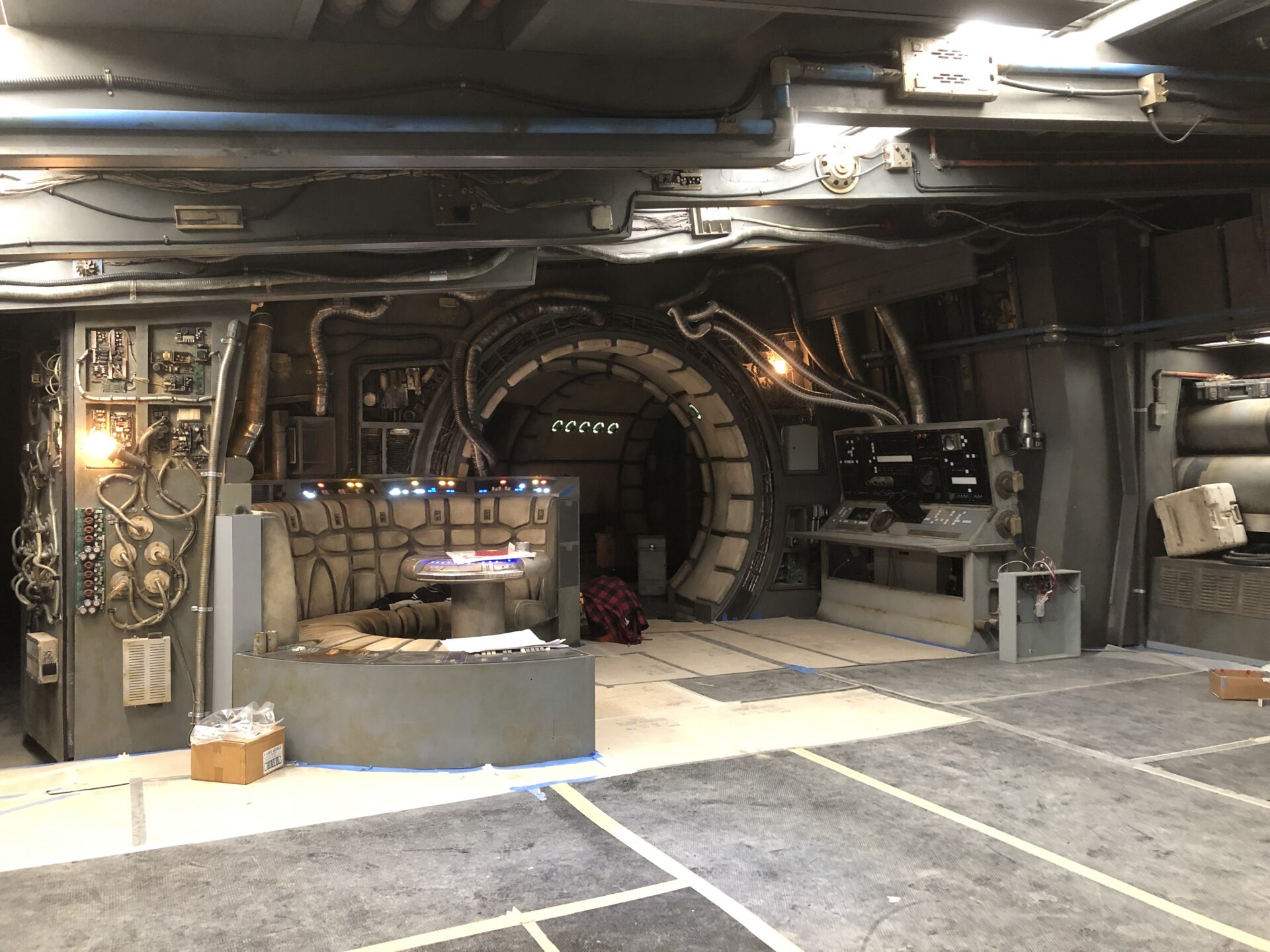
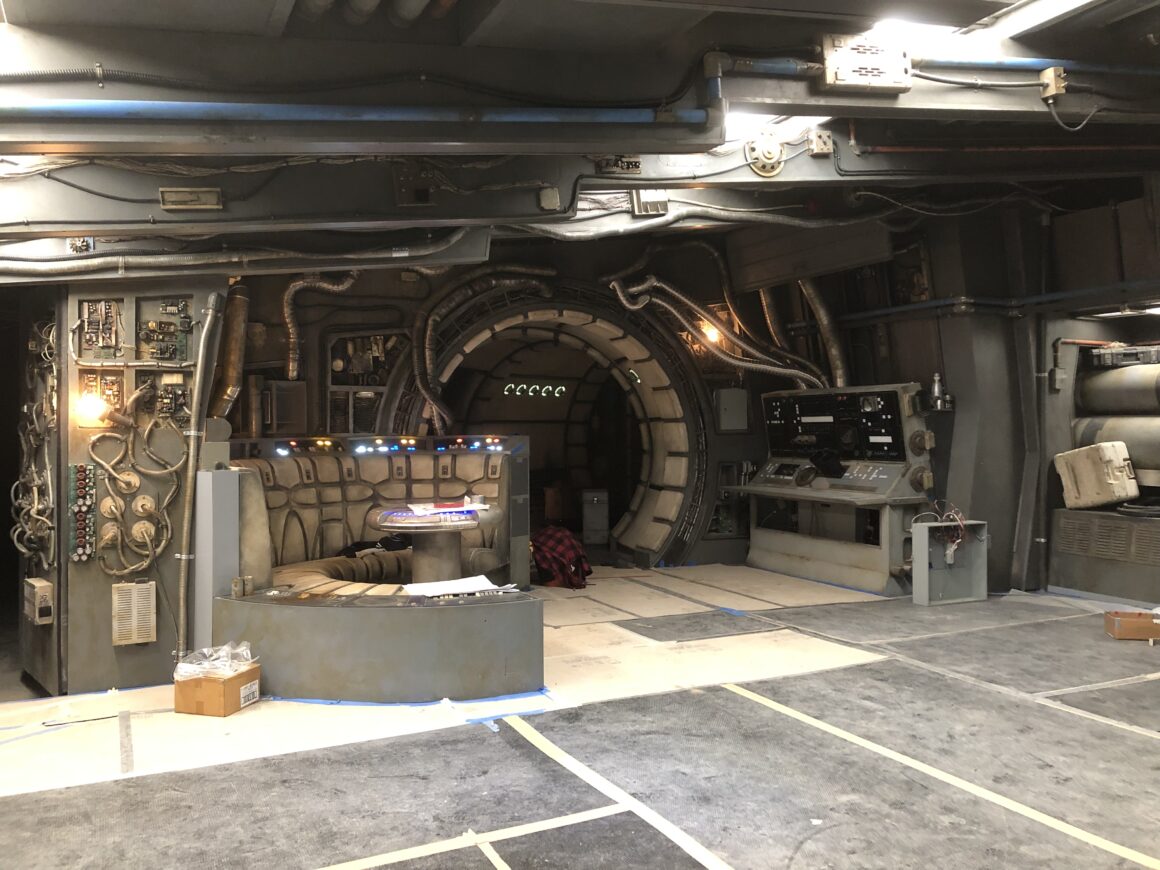
Then there’s the one I still brag about – my pièce de résistance, as far as my younger self is concerned – a motion simulator attraction called Millennium Falcon at Star Wars: Galaxy’s Edge in Disneyland, California. I was part of a small team of scenics that brought the life-size ship and its environment to life. It was hard going, miserable at times, and physically demanding, but we were all so proud. Standing beneath the hull, hand-painting panels and weathering metal that would soon be touched by thousands of visitors every day, I felt that rare mix of exhaustion and wonder that makes this line of work addictive. You’re painting mythology on a one-to-one scale.
Film work is transient; you live in months, sometimes weeks. But the lessons stick. You learn speed, precision, diplomacy, and the ability to find beauty under fluorescent lights at 2am. You learn that every day is a school day. Between productions, I’ve always kept those muscles active through my own practice: Illustration, stained glass, interior and set design for local projects. Each discipline feeds the other. Glass teaches me light and patience, and film teaches me rhythm and problem-solving.
Scenic work, in particular, taught me to love imperfection: the crack in the plaster, the way grime settles unevenly on a wall, how mould looks in a damp room. Those ‘flaws’ are the fingerprints of life, and I chase the same feeling in my artwork now. Whether I’m painting on glass or designing a space, I think about how light will travel, how a viewer will move through the world I’m shaping.
I’m drawn to working-class materials, to Americana, to things that feel lived-in and unpretentious. Maybe that’s why set work always felt like home; there’s no separation between hand and idea. You’re literally making something solid out of thin air. Even the most fantastical world still needs screws, paint, and people who know how to build.
Art directing taught me that collaboration is its own art form. You learn to read people as much as drawings: who is silently fixing problems, who’s losing light, who needs to be heard? The best days on set aren’t when something looks perfect; they’re when everyone on the floor feels like part of a single creative heartbeat. Those feelings are unmatched.

In the years since, I’ve been folding those values into my own projects back home in Ireland, from stained glass panels that evoke feeling in the lighting, to interior spaces designed like living sets, to anti-fascist or feminist imagery that reclaims the visual language of power and spectacle. I’m fascinated by how design can make ideology visible; how a space can signal inclusion or resistance, simply through materials and light. How design is used to translate the world around us.
Right now, I’m developing a series of glass works inspired by medieval symbolism and contemporary politics, exploring the meaning of the word ‘illumination’. I want to merge the devotional aura of stained glass with the immediacy of film; light as message, surface as world-building.
Looking ahead, I’m interested in how art direction can evolve outside of film – including how we can protect it from the inevitable impacts of AI – into community installations, markets, and public art that carry the same cinematic logic of world-making. After years of building other people’s stories, I’m now building my own, smaller perhaps, but with the same belief that spaces can make people feel something real.

At its heart, art direction is about care, for the story, surfaces, and the people who build the illusion with you. Whether it’s a galaxy far away or a corner shop in Belfast, the goal is the same: make it feel true.
Aíne Lynn-McEvoy is a multidisciplinary artist and designer whose work reflects contemporary culture through bold illustration, glass, and scenic art grounded in material process and place.