AENGUS WOODS INTERVIEWS ALEANA EGAN ABOUT HER MOTIVATIONS, PROCESSES, AND MATERIALS.
Aengus Woods: Can you describe your process a little for me? When creating a sculpture, do you have a plan or do you work more intuitively?
Aleana Egan: I would say my process in the studio is cyclical and intuitive; it’s hard to delineate where one thing begins and another ends. There’s an accumulative effect that occurs, and the pieces are shaped not just physically but over and over in my mind; in dreams and waking life. Alongside, I sometimes work with cabinet maker, Flan Hedderman. This collaboration has shaped the way I make a plan, as each new piece leads to something else. I need to relate an idea to him which contrasts with the interior way of making in the studio; I find these interactions complimentary and generative.
AW: You utilise an expansive range of materials in your work from fabrics of various texture and hue to wood, metal and plastics. What draws you to particular materials?
AE: The old things that make their way into the work are often objects that I have had for a long time. I had never thought of them as material for artworks but for some reason, at that time, they are the right component for that particular assemblage. Mostly, the materials have a level of porosity; they are not sealed. I’m thinking of cotton, linen, cardboard, papier-mâché, wood and even pigment and oil paint have various states of porosity, depending on what you mix them with. I like colour that seems to be held within. Often, that’s why a certain item of clothing will find its way in. It’s a gestalt thing; I couldn’t separate the colour from the shape.
AW: Colour seems to have a shifting presence in your work, waxing and waning with time and circumstance. There is also perhaps a distinction to be noted between the inherent colour of materials used and colour applied by hand. How do you understand your working relationship with colour? What is its relevance and significance?
AE: I was thinking recently about making a particular colour for a painting and it being like spotting someone in a crowd, a specific blue that catches your eye or a memory of a friend’s shirt. Colour in regard to clothes and fabric is, for me, blended with dreams, films, music and painting. As a reservoir of colours, they are all in flux. I often have someone in mind when mixing colours in paint; it is a colour I am trying to achieve that I associate with them either through clothes or shades I know they like. I do this with painters too: Gwen John, Joan Mitchell, Prunella Clough, Lucy Stein, Carole Cullen. When I say their names to myself, I see different colours for each artist. I would say I am drawn to worn out colours – things that look like they have been through the wash many times. That also introduces texture, light and opacites; all those qualities are inseparable when thinking about colour.
AW: I am interested to know how you think about what we might awkwardly call ‘inspiration’. I know that works of literature, cinema, and music frequently seem to play some kind of generative role for various works of yours. Yet these works do not seem to be simply responses. If anything, it seems more like some kind of process whereby elements are isolated and then fixated or meditated upon. Can you talk a little about your relationship with those works that inspire you or provide source material?
AE: I indeed think that inspiration through other artists, musicians and writers is a process that never stops and is fluid. When something resonates, I internalise it; this has a permissive affect that changes how I continue in my own practice. I love the image of what Annie Ernaux has said about “an invisible chain” of artists and writers that have informed her work. I think it’s more like that: ongoing, relational, resonant, and motivating! “Notice what you notice,” as Allen Ginsberg said. When something is affecting, it gives me more confidence in my own inner life. Marion Milner has been an important figure for me. Her theories on creativity are an endless resource. She was a believer in creative work in its most expansive sense. She practiced not imposing presumptive hierarchies onto her preoccupations.
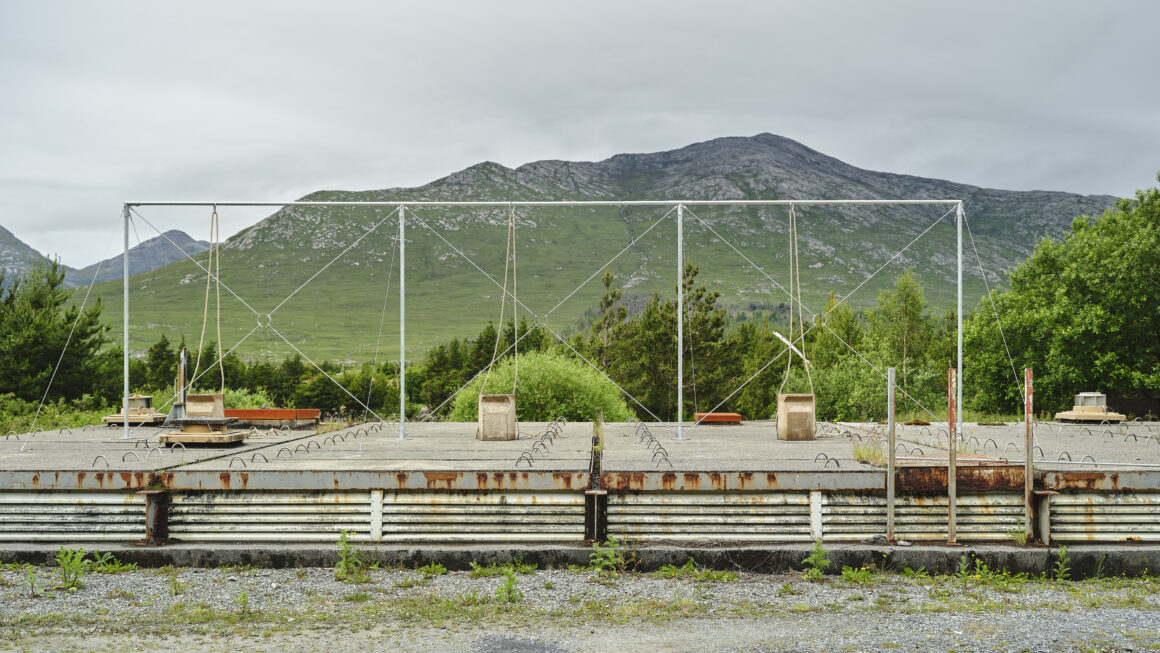
AW: Your works are frequently very responsive to site, the recent show at Interface being a good case in point. Is there a distinction for you between working in that kind of responsive, site-specific manner and working within the more conventional confines of the white cube?
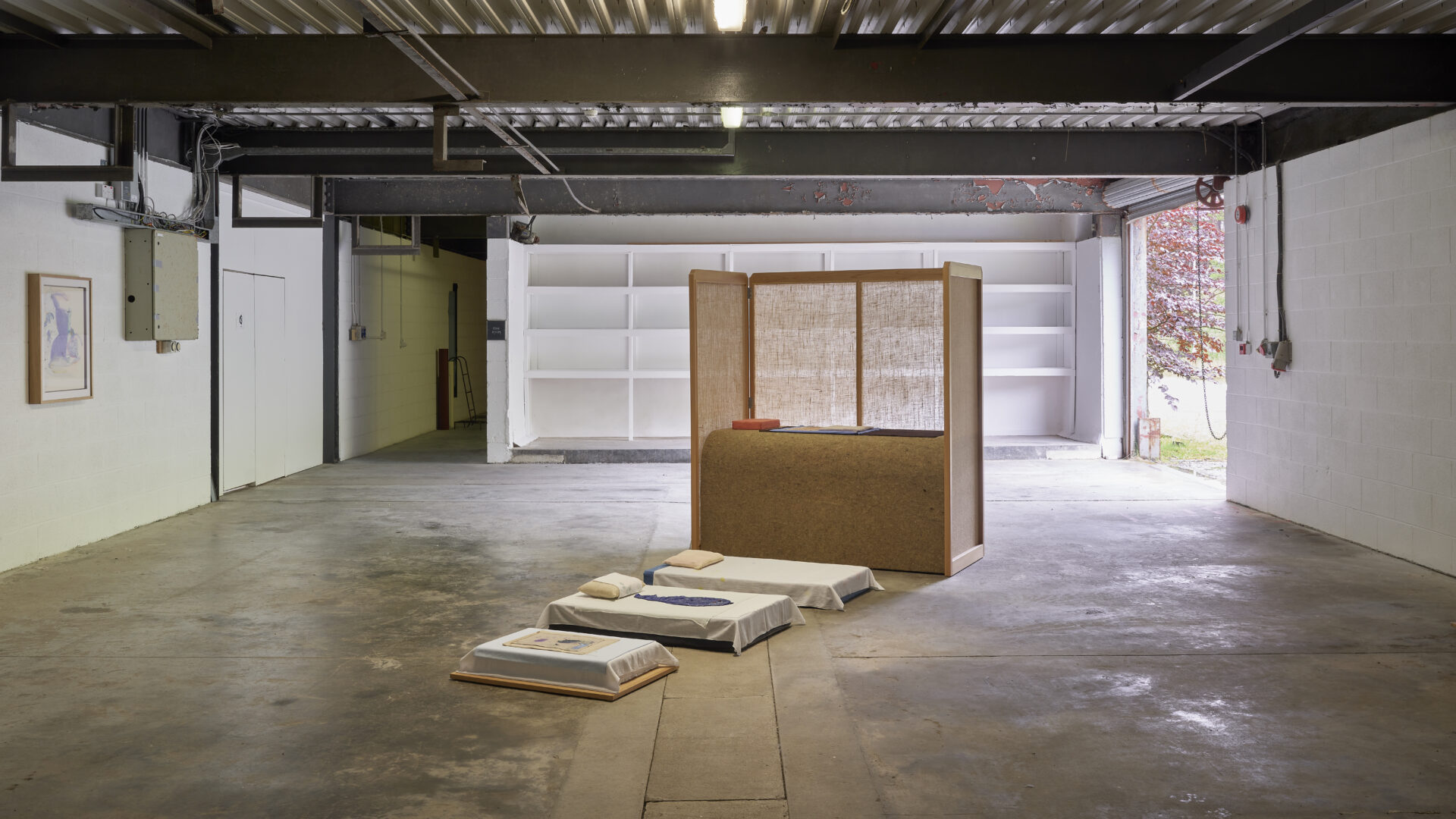
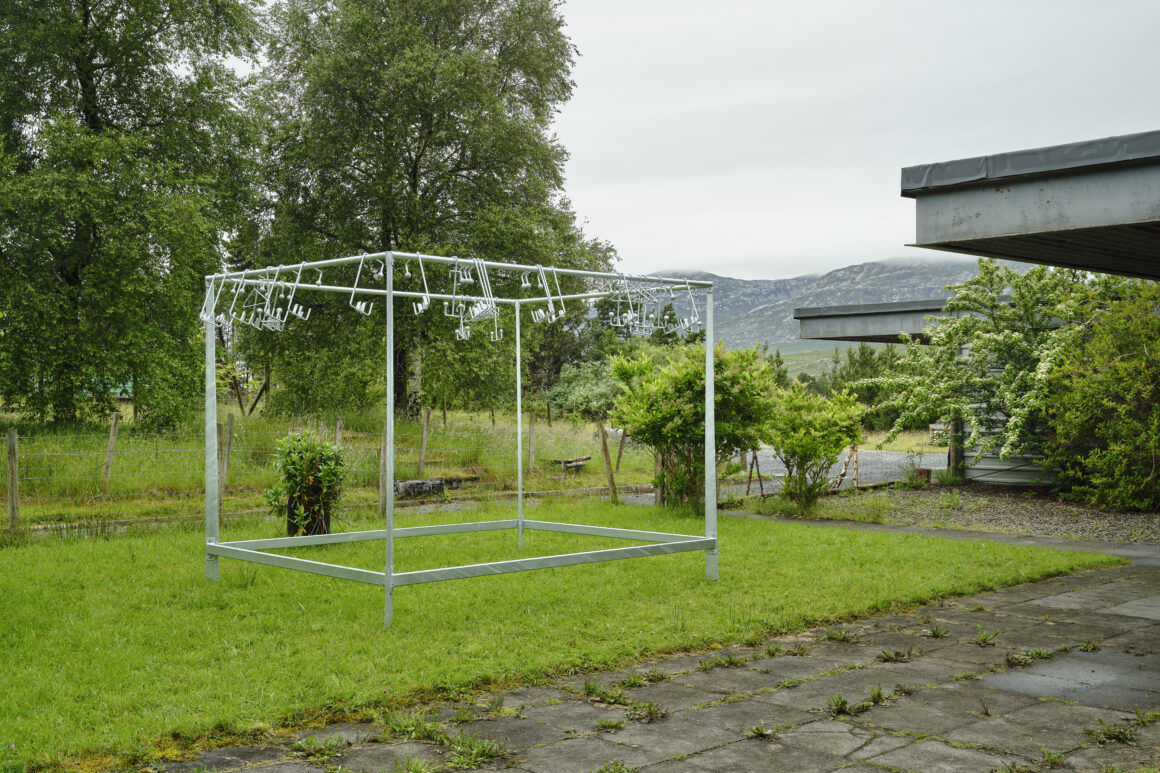
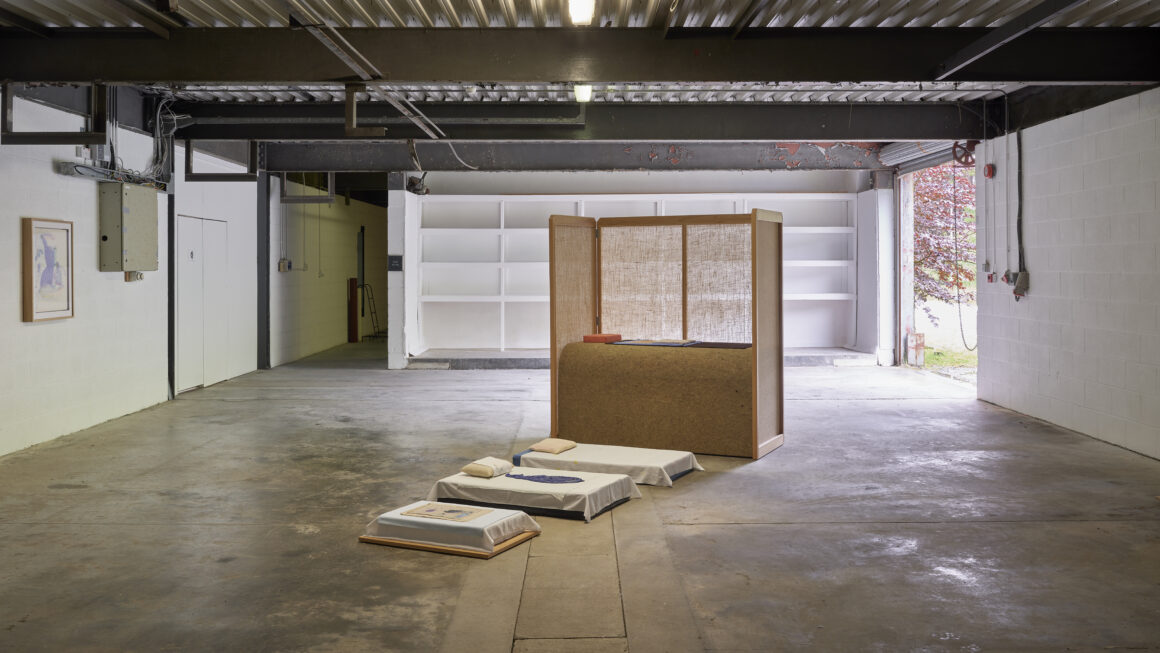
AE: I think it’s about making exhibitions, which are, amongst other things, a set of circumstances and relationships. Often a title is useful early on as a container for this grouping and can set a tone for associative thinking. In the case of ‘A maritime child’ at Interface, it was unusual to get to work in such an expansive way onsite. It was exciting to work with the confines of the interior and exterior environments; they each had particularities that I responded to materially.
AW: How do you know when a sculpture is complete? How do you understand this completeness in regard to your practice of reusing or remaking artworks?
AE: It’s a feeling of completeness usually. The reusing of parts of previous works is temporal and often comes about through an invitation to participate within a certain context. I like the idea of older works being enveloped into new ones.
AW: How do you understand the relationship between your sculptural works and your drawings/paintings? Are they distinct processes for you, working towards distinct ends, or is the relation between them more complicated?
AE: I think they are interrelated, but it is hard to write about it as an artist. As a viewer of paintings, I am often struck by areas that feel like missives from the past. It’s important to me to stay tuned in to non-rational practices; a painting has its own language that doesn’t translate easily. I value this evocation rather than interpretation.
Aengus Woods is a writer and critic based in County Louth.
@aengus_woods
Aleana Egan is an artist based in Dublin.
aleanaegan.com
Egan’s site-specific exhibition, ‘A maritime child’ curated by Michael Hill, was presented at Interface Inagh from 11 July to 16 August as part of Galway International Arts Festival.
interfaceinagh.com
Egan’s solo exhibition, ‘dove passages’, will run at Kerlin Gallery from 4 September to 3 October.
kerlingallery.com