EILEEN MAC DONAGH OUTLINES A SCULPTURE RESTORATION PROJECT IN HAZELWOOD, SLIGO.
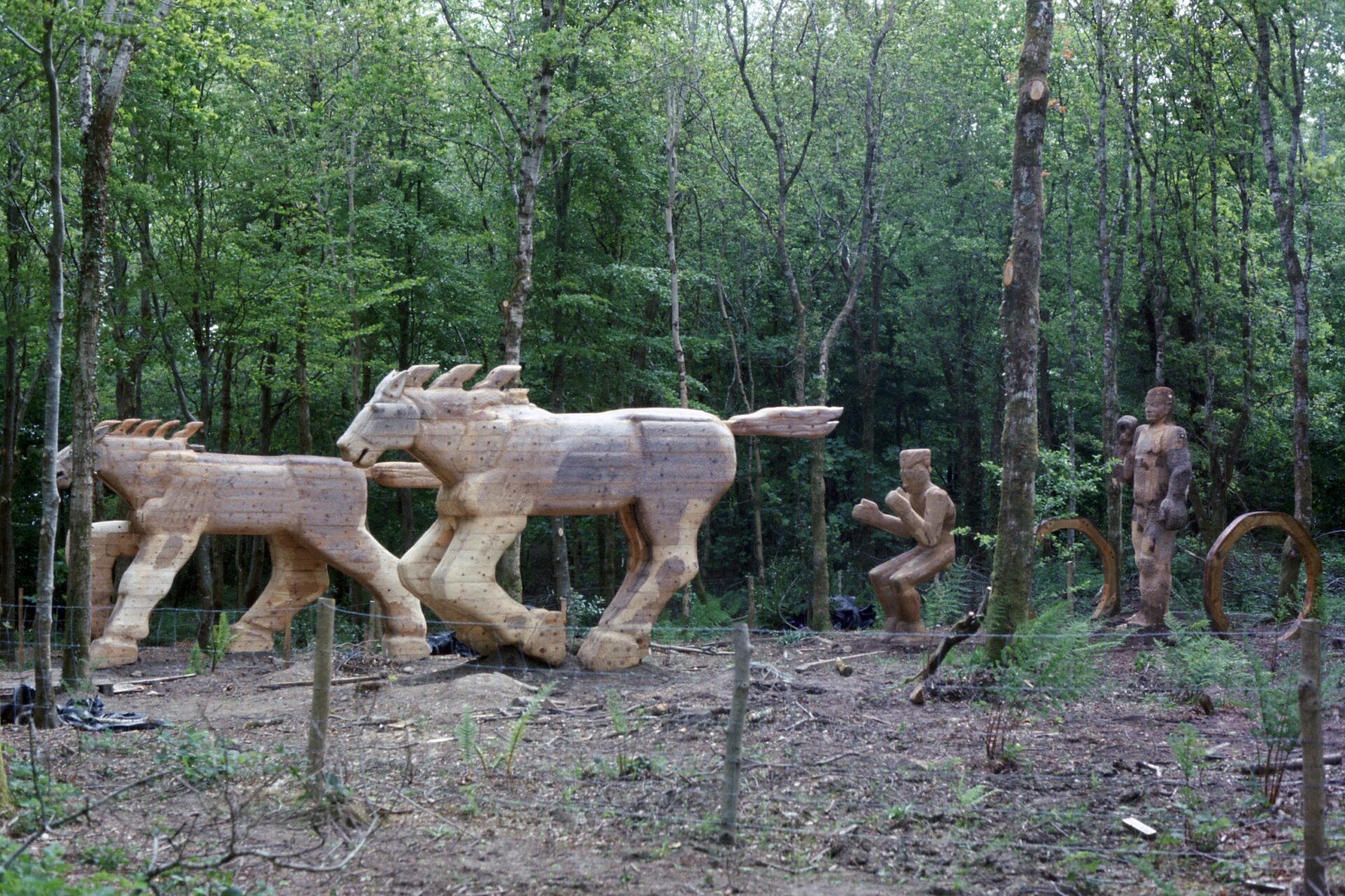
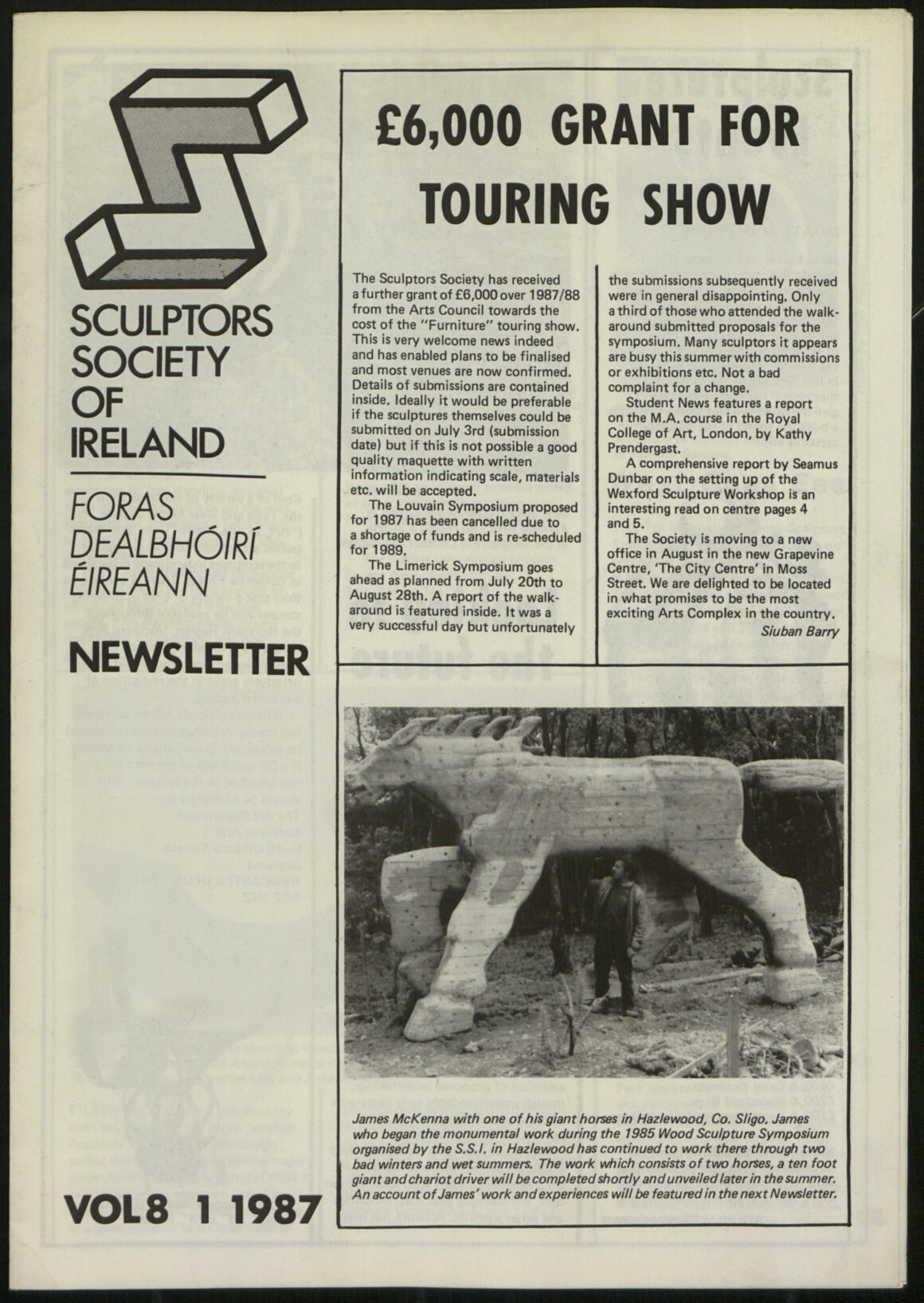
In 1985, a sculpture symposium run by the Sculptors Society of Ireland was held over a three-week period, involving 13 sculptors producing 14 sculptures that were sited along the lake walkway in Hazelwood Forest just outside Sligo town. James McKenna, an invited artist, started work on a sculpture extravaganza that included two horses, a charioteer, and warrior, executed on a heroic scale. It took James two and a half years to complete the suite of four. This was truly an extraordinary achievement, not fully appreciated at the time. In fact, the likes of this symposium, producing 14 works on a large scale, has never since been replicated. A whole generation of youngsters grew up seeing and engaging with these sculptures. Being one of the sculptors involved in the symposium, I can say we all knew and accepted that they would eventually rot and decay back into nature.
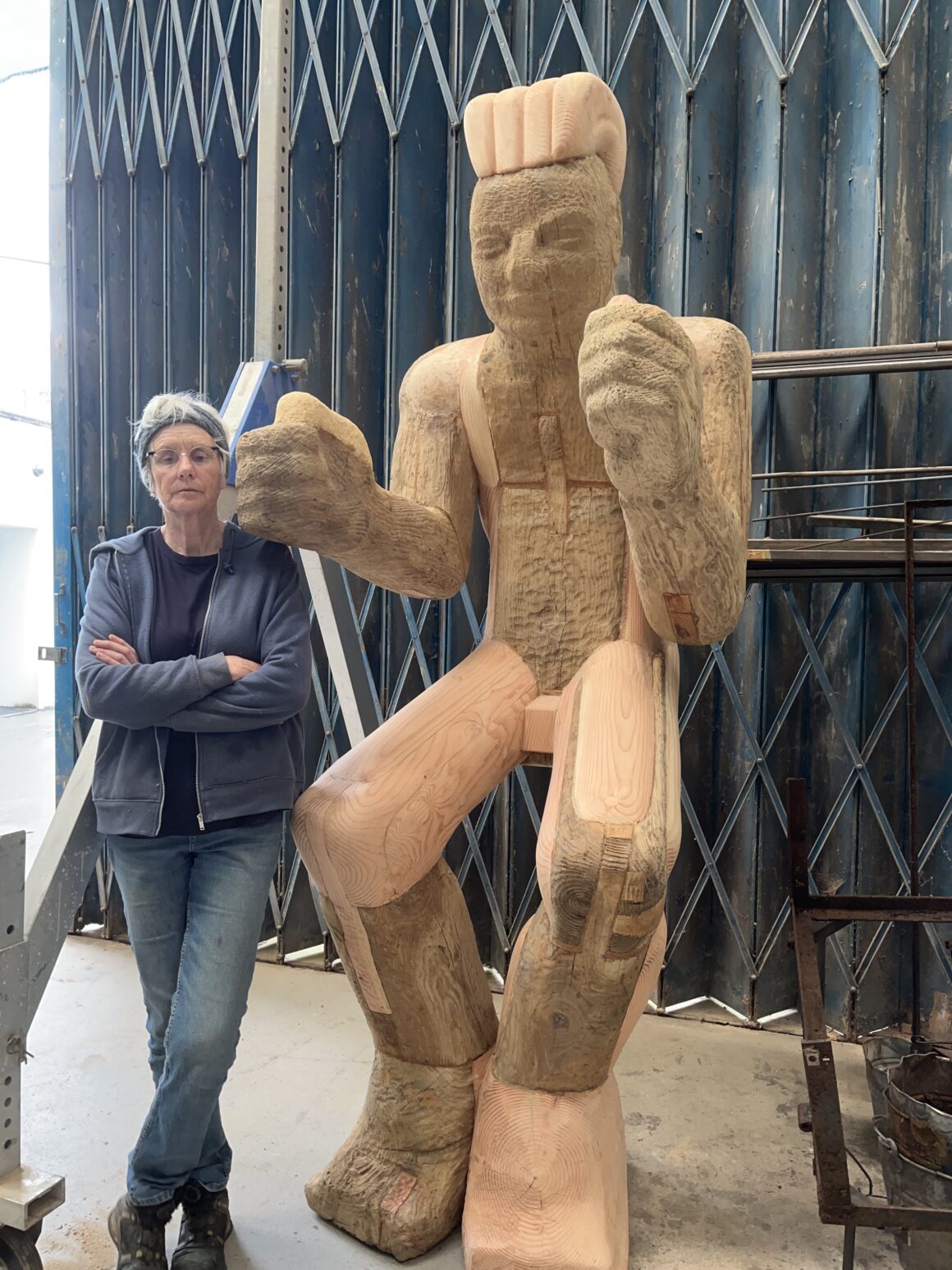
Over 40 years later, one of McKenna’s figures, the Charioteer, survived in a sad pile on the forest floor. Local man and frequent visitor to Hazelwood, Barry Cosgrove, who had grown up with these sculptures, came across forest workers clearing the area, where the scattered remains of the sculpture lay. Enquires were made and permission to remove the pieces for safe keeping granted and so began the process of conserving and restoring the Charioteer. Barry tracked down Jackie McKenna and I, who were both involved in the original symposium, to see if restoration was viable. Remarkably, most of the body and limbs were still intact. They were treated to a specialised soft power wash for wood and came out very well, with a lot of the detail still distinct, even the marks from James’s hand tools still visible.
photographs courtesy of the author.
Before I get into the restoration of the sculpture, a word first about its maker James McKenna. He was a remarkable sculptor, poet, and playwright who was active in many arts movements around the country from the 1960s on, including the Irish Exhibition of Living Art (IELA), the Irish Independent Artists, Project Arts Centre, the Sculptors Society of Ireland, and others. He worked in all kinds of materials, producing small and large-scale monumental sculpture in plaster, wood, stone, cement, brick, and bronze, depending on the finances available.
In his later years, James developed his own distinctive style of creating monumental sculptures by means of construction of smaller elements to make up the whole. He never possessed or used a drill, chainsaw, or any mechanised tools, nor did he have a camera of any description or any way of recording what he made. In fact, James cycled from Dublin to Sligo for that symposium in 1985. His tools, including a handsaw (the old type, with wooden handle), were strapped to the frame of his bike, together with his auger (for the many hundreds of holes he drilled), mallet, and chisels, secured amongst his belongings.
The Charioteer was constructed from baulks of Douglas Fir around 20cm2 by various lengths for the limbs; the body was constructed similarly from larger blocks. I can’t be absolutely sure, but it may be that James intended to construct the sculpture in this simple way but then added 5cm planks to these baulks and carved muscle into them. They were glued and attached with coach screws that eventually rusted and decayed the wood underneath which had to be meticulously removed and repaired before reassembly could take place. This was a very slow and tedious process that clocked up many hours, and in some cases, days, restoring just one limb.
The main body of the figure was intact but needed a lot of repair. All the rusted bars pinning it together were removed and replaced with oak dowels/stainless steel fixings. The thighs, legs, and feet were glued, attached, and bolted using stainless steel threaded bar. When the figure was reassembled, muscle was added and shaped, similar to the original. The pose of the figure suggested that it was not balanced and would need to be anchored to the ground, in order to stand upright. However, this was not the case; when the feet were finally added, it did indeed stand by itself.
The work was carried out at Leitrim Sculpture Centre, where we not only had the space to work on such a large project, but also technical support on hand when needed. My appreciation of the work that went into the production of this epic sculpture, Ghost Riders In The Sky (1985–6), grew with every day I worked on it. I have always maintained with sculpture that the drive and desire to make it has to supersede the effort required by a long way. It can be an overwhelming task and in the case of James’s Hazelwood sculptures, especially so. Whilst working in the environs of the forest undoubtably had its beauty and romance, it also had rain and midges, and I can only imagine there were many desolate days.
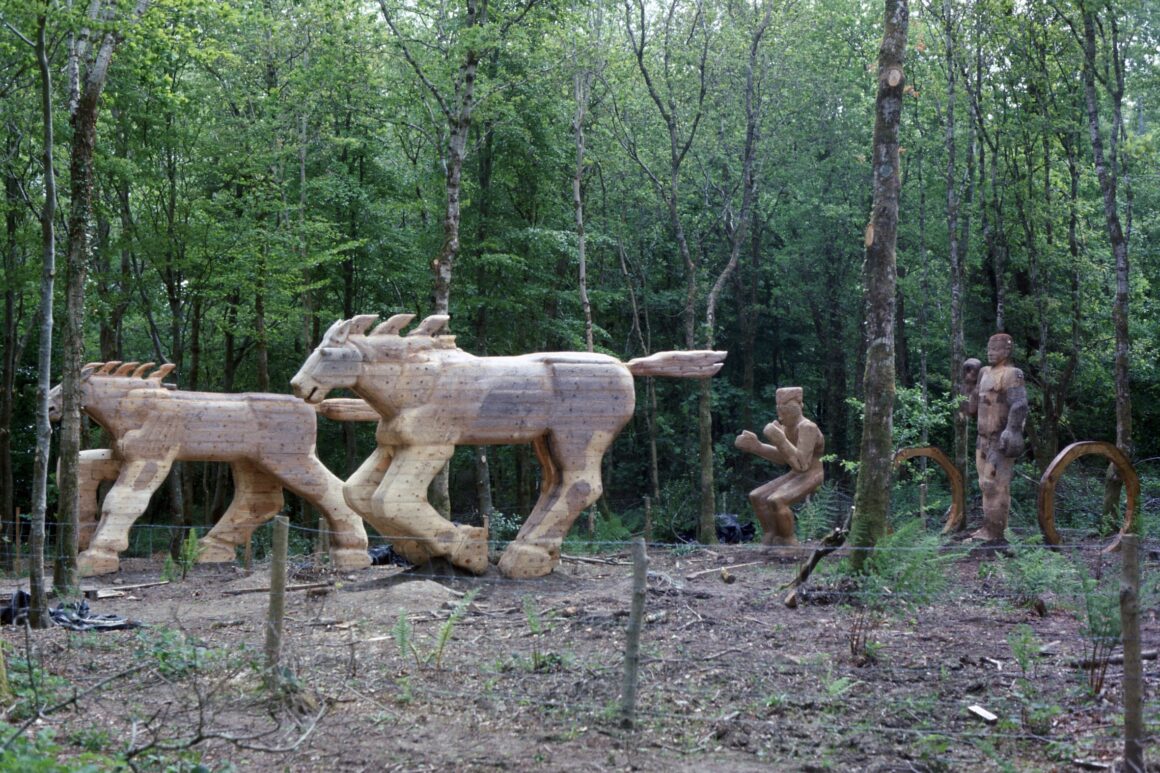
To preserve this piece is to preserve the whole sculpture to memory. It will not be complete until a suitable location indoors is found for it to stand testimony to the courage, skill and perseverance of an artist to take on a project of this magnitude, modestly and quietly under the canopy of the trees.
Eileen Mac Donagh is a sculptor based in Sligo.
Acknowledgements: Sligo County Council, Creative Ireland, Coillte, Leitrim Sculpture Centre, and Friends of James McKenna.