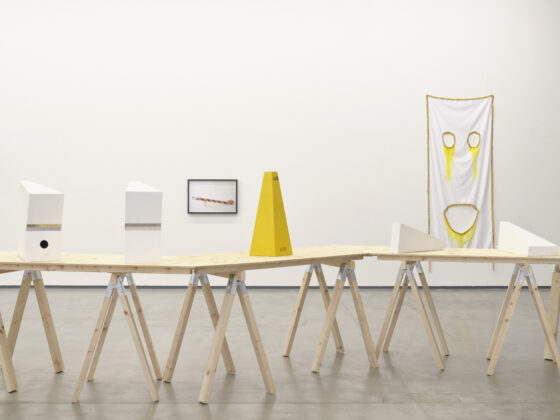
JOANNE LAWS INTERVIEWS SINÉAD KEOGH, CURATOR OF THE 24TH EDITION OF TULCA FESTIVAL OF VISUAL ARTS.
Joanne Laws: As curator of this year’s TULCA Festival, you have devised a programme, titled Veruca Salt, which harnesses the spirit of punk, 50 years after its inception. Where and how did your curatorial research begin?
Sinéad Keogh: A lot of my research starts with a community. I’ve done a lot of work within the gothic, alternative, and queer communities previously. I had the idea of a punk feminist show for about four years, and I have been working on the TULCA programme for two years. I love the energy and DIY attitude of that community and engaging with older punks is refreshing in how they approach life. There is a lot to be said for that level of independence and attitude. I thought about who is working now that fits with this ideology, and which women-focused groups are looking to make change that I can engage with. Hopefully people will see this in the programme.
JL: Interestingly, you reference the evolution of the Irish punk scene, and specifically women punks of the 70s and 80s, who raged against the misogyny of church and state. Which artists and musicians were you looking at, and in what ways are they contributing to the TULCA programme?
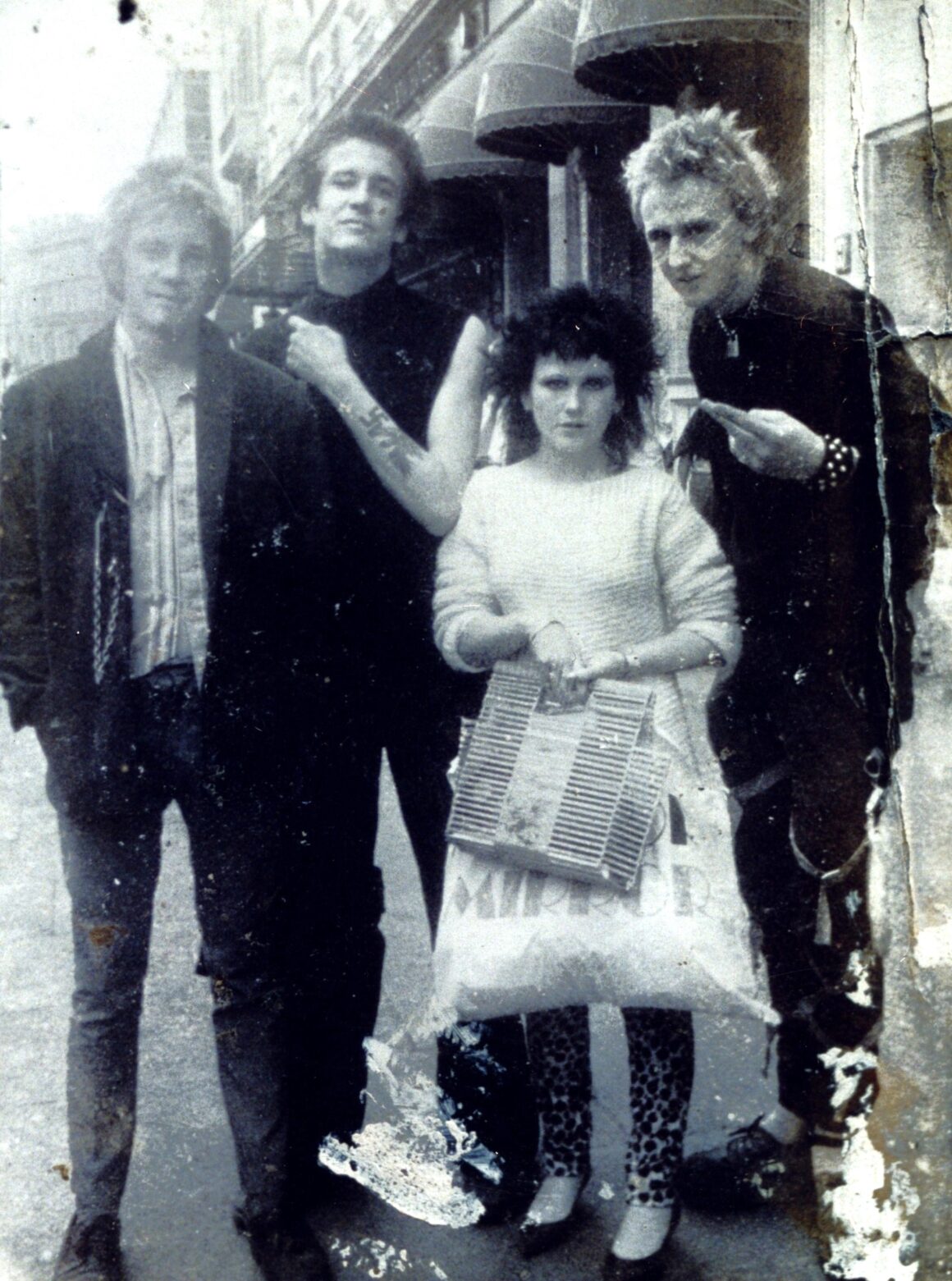
SK: In terms of the OG women punks of the 70s and 80s, it was important that the programme was not performative and featured real members of that community. We have the wonderful Vivienne Dick, a critical member of the no wave and punk filmmaking scene in New York. I interviewed Kathy O’Donoghue (the singer of Ireland’s first all-women punk band, The Boy Scouts) for the publication, and she will be giving a speech at the festival launch. Sara R Phillips, who was in the punk band K-Scope, has also written a piece about her experience. Following them, there are younger punks, such as in the women-led punk night at Róisín Dubh with Molly Vulpyne, Ria Rua, and 50 Foot Woman, as well as a range of other alternative artists, including Dolorosa de la Cruz and Breda Lynch. We are also delighted to be working with Garry O’Neill – a collector and curator of Irish youth culture history, and editor of books including Where Were You? Dublin Youth Culture & Street Style 1950–2000 (Hi Tone Books, 2011) – who has allowed us to show archival images from his collection of Irish women punks in the 70s and 80s.
JL: In the current moment, defined by the Epstein Files, Gisèle Pelicot, and the Cornell University allegations, it seems fitting that Veruca Salt is a “punk and women-led proposition” that seeks to explore contemporary female rage through a shared ethos of punk, DIY culture, and collective action. How has this anger informed your exhibition-making decisions?
SK: It would be avoidant to say that the punk community’s first-wave roots were idealistic; in many countercultural groups or gangs, there is a degree of violence. I was interested in the notion of “female rage” and how anger can be used as a tool for change. Sinéad O’Connor once said: “Anger is the first step to courage.” Sometimes, something has to move you so deeply that you react with anger, and this propels you. In the TULCA programme, I am very honoured to be working with the Tina Collective – who are Emma Allen, Treasa O’Brien, and other artists, survivors, and punk feminists based in Galway. This project has been co-ordinated for TULCA by Domestic Violence Response Galway with Evelyn Glynn. They have devised a few key engagements, including the Rage Room, a singular installation within the 126 Artist-Run Gallery. The collective say:
Visitors are invited to write, draw, respond, and leave their mark on the space. Through these collective acts, the installation becomes a living testament to the power of women supporting women, transforming isolation into solidarity and replacing the damaging narratives of abuse with shared acts of recognition, resistance, and care.
We also have a very special screening at EYE Cinema of A Place of Rage (1991), with introduction and Q&A with the filmmaker, Pratibha Parmar. The film celebrates the contributions and achievements of prominent African American women. Within the context of civil rights, Black Power, lesbian and gay rights, and the feminist movement, the film features Angela Davis, June Jordan, and Alice Walker.
JL: What are some of the other artworks that audiences can expect to encounter across the festival venues as part of this year’s exhibition programme?
SK: I would first like to mention my friend the artist Shota Kotake’s work. His sculpture Life-Size Little Match Ball-Jointed Girl (2010), one of his last remaining sculptures, will be presented at Galway Arts Centre. The work is about empathy and bringing focus to issues surrounding child poverty, which is all too present in Ireland today. We are very honoured to show Broken T (2025) by the iconic and respected artist, Guggi. Audiences will also encounter many local artists and engagements. Another really special piece is a photograph, titled MOMMY QUEEREST (1979), by Del LaGrace Volcano of their mother, Jeannine Della-Grace, at a Punk Night in San Luis Obispo, California, in 1979.
JL: Can you share some anticipated highlights from the festival’s events programmes?
SK: There are a many community-led events in the programme, including a screening of the documentary film, Guggi (2026), a vinyl sharing and listening event with the punk community, and a lecture by Ruth Griffin on ‘Feminist Rebellion through Dress’.
TULCA Festival of Visual Arts: Veruca Salt, curated by Sinéad Keogh, runs from 6 to 22 November across various venues in Galway City.
tulca.ie