Luan Gallery
27 June – 7 September 2025
When is an experience of an exhibition so resonant that its viewing becomes an act of participation? With ‘Soft Surge’ at Luan Gallery in Athlone, Aoife Banks has curated an evocative and affecting group show featuring works by women artists. Interrogating personal and cultural memory through a distinctly feminist lens, this exhibition is not amenable to passive viewing.
Shirani Bolle’s colourful textile sculptures – Thank You Very Much, Treaty, and Baby Blanket – (all 2025) and photographic installation, The Birthday Party (2024), offer explorations of intergenerational grief and inherited memory, infused with a legacy of traumatic experiences. The daughter of a Holocaust survivor, Bolle has created a deeply personal set of artworks that pay tribute to her mother, and to all women who experience loss and displacement.
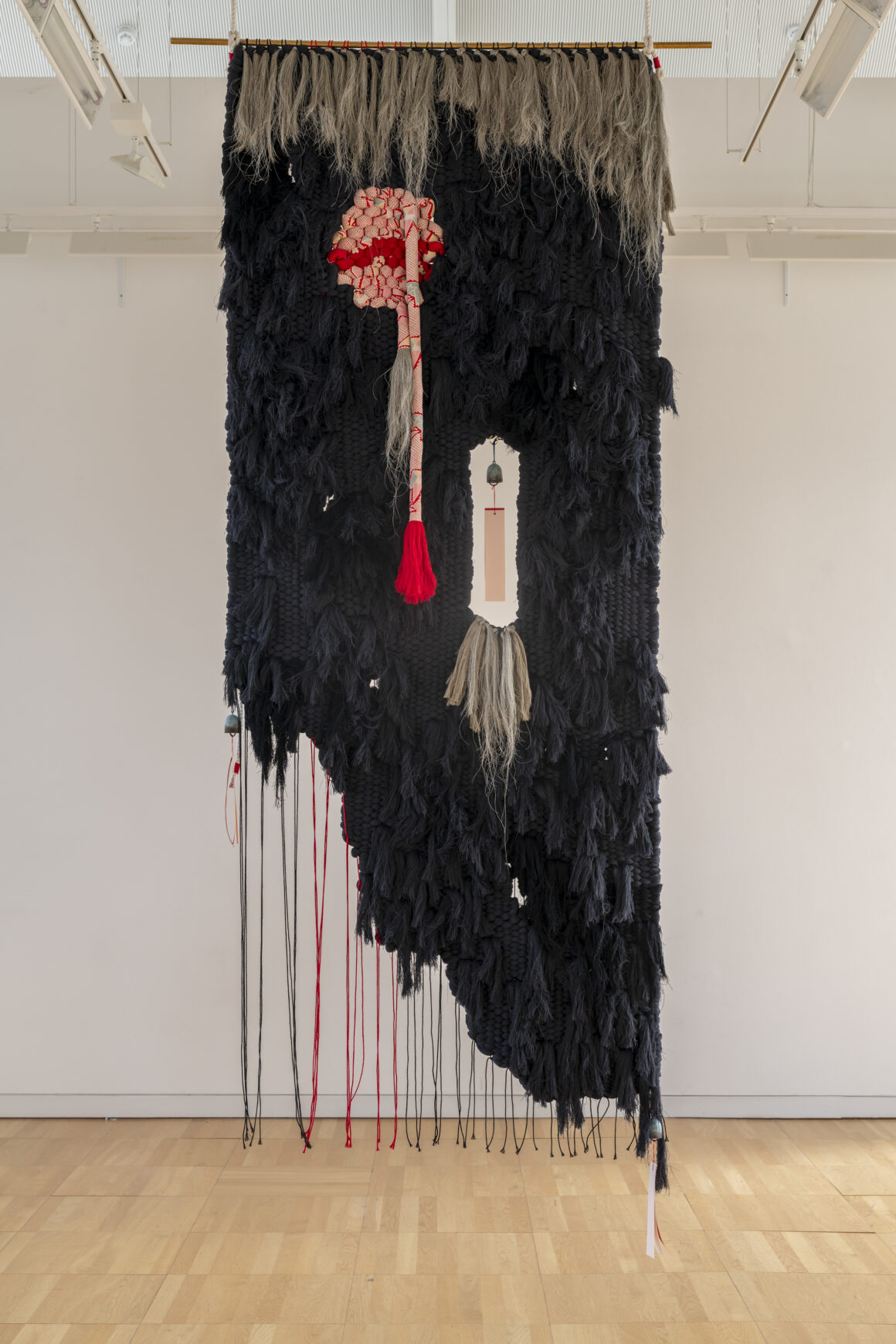
The memorialisation of grief and loss is further explored in Emily Waszak’s newly commissioned work, Obaachan I (2025) – a large-scale, handwoven, textile sculpture, made from waste yarn, and suspended from the ceiling. With references to her Japanese heritage, the artist draws on ancestral weaving practices to reclaim the importance of ritual for processing of grief. Like all of the presented works, there is much to engage with, both aesthetically and conceptually.
As one moves through the exhibition, the ideological depth of the artworks becomes increasingly absorbing. It is impossible not to be moved by the personal experiences revealed, and by the reminders of female oppression and exclusion, rendered creatively in a multiplicity of approaches. Textile materials and traditional processes (such as knitting, embroidery, crochet and weaving) are repurposed here as radical forms of expression, which serve to reclaim the ancestral feminine principles of creativity, resilience, and interconnection.
Mythological and classical references infuse the exhibition, nowhere more clearly than in Ursula Burke’s intricate and beautiful textile works, Embroidery Frieze – The Politicians (2015–24), The Politicians (2017–18), and Truncheon (2019). The artist mines classical and art-historical sources to shine a light on contemporary politics, including post-conflict scenarios, while drawing on the cultural memory of violence and war.
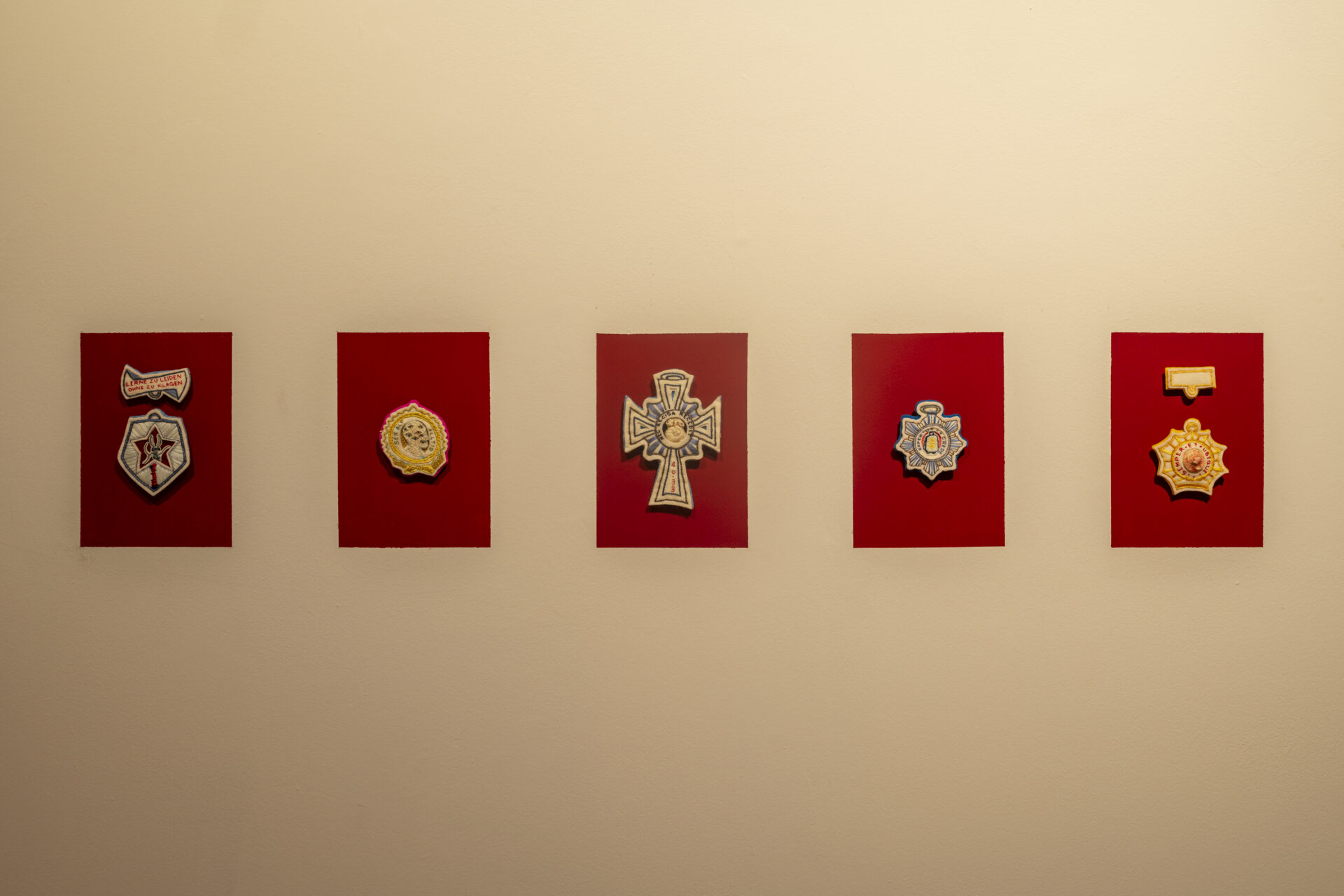
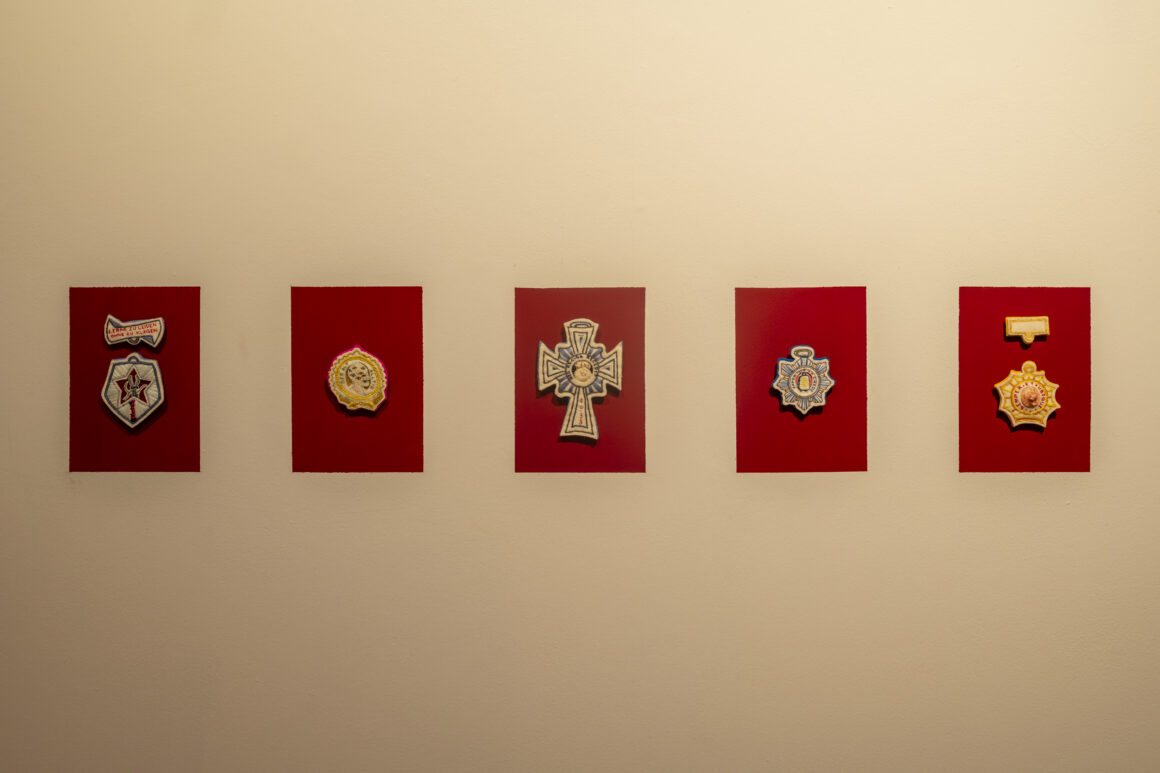
With Mother Medals 1–5 (2018) and The Assumption (2018), Rachel Fallon engages in critical correspondence between women’s historical, religious, and contemporary experiences. Using soft materials – including household sponge, embroidery threads, and wool – Fallon has created works that provide powerful commentary on patriarchal oppression, especially as it relates to the denial of women’s bodily autonomy, reproductive rights, and freedom.
Poised on a clothes rail and protruding from a wall, Lucy Peters’ series of snaking sculptures, Making it Laaaast (2022), also applies the subversive potential of textiles to reveal circular, exploitative connections – namely, between women working in clothing factories in the Global South, the pollution caused by the textile industry, and the naivety of young consumers. Painstakingly assembled by weaving and knotting strips of discarded garments, these large, soft, tactile forms appear as conduits, even harbingers, of the catastrophic impacts of fast fashion under late capitalism.
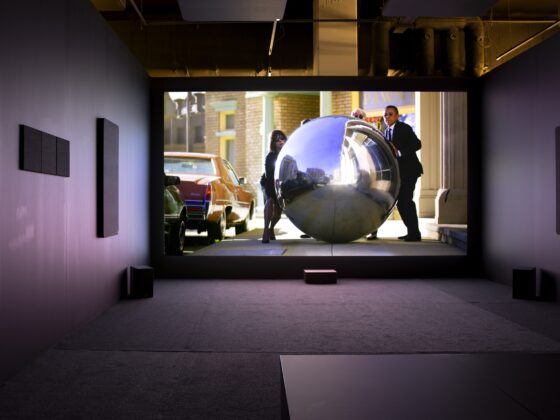
If the exhibition title, ‘Soft Surge’, refers to an inexorable force of feminine energy and resilience, this swell reaches a high point with Dee Mulrooney’s film installation, The State of Her (2025). In this newly commissioned work, the artist takes on the persona of vulva-clad Growler, becoming the embodiment and expression of generations of suppressed female rage. Through music, ritual, spoken word, and incantation, women’s power is celebrated and reclaimed.
The State of Her is a dynamic, totemic monument to the women and children who were incarcerated in mother and baby homes in Ireland. A handcrafted quilt from the Irish NAMES Project (1990) – the inclusion of which adds a powerful, commemorative thread to the exhibition – can also be seen as an enduring memorial, honouring lives lost to the AIDS epidemic, as well as the public act of collective mourning.
In highlighting that memory does not exist in isolation, but is shaped by performativity, as philosopher Judith Butler theorises, the exhibition prompts reflections on what might constitute a monument. With feminist and intersectional frames of reference, Banks’ curatorial approach proposes an alternative paradigm, rooted in active remembering. Thus, ‘Soft Surge’ extends the meaning and experience of a monument, from a static object to a dynamic, subjective, and participatory set of events. For its beautiful evocations of women’s lived experiences and shared rituals, this voluminous exhibition will remain in the mind and the heart for some time to come.
Mary Flanagan is a writer based in County Roscommon.