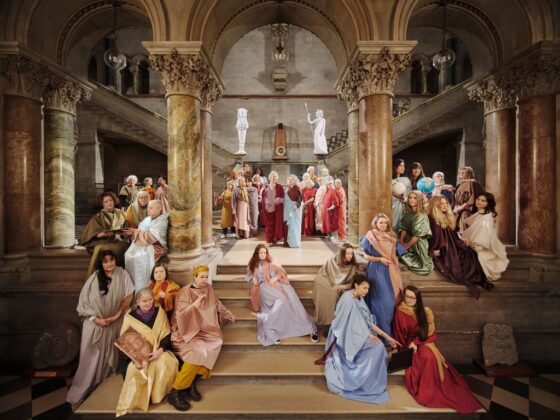
DR KATE ANTOSIK-PARSONS REVIEWS THE HAYWARD GALLERY TOURING EXHIBITION CURRENTLY AT VISUAL.
Motherhood is a subject often idealised or hastily dismissed as unworthy of critical attention within contemporary art. However, ‘Acts of Creation: On Art and Motherhood’, curated by Hettie Judah at VISUAL Carlow (27 Sep 2025 – 11 Jan 2026), offers an important corrective. This impressive, large-scale, group exhibition brings together over 60 international artists from the 1960s to present day. Organised thematically by Creation, Loss, Maintenance and The Temple, it considers the richness and complexities of motherhood through art. A Hayward Gallery touring exhibition, staged at four UK venues over the past two years,1 in its current iteration for VISUAL, it includes additional works by Irish artists, which help to anchor the curatorial inquiry within the immediate landscape.
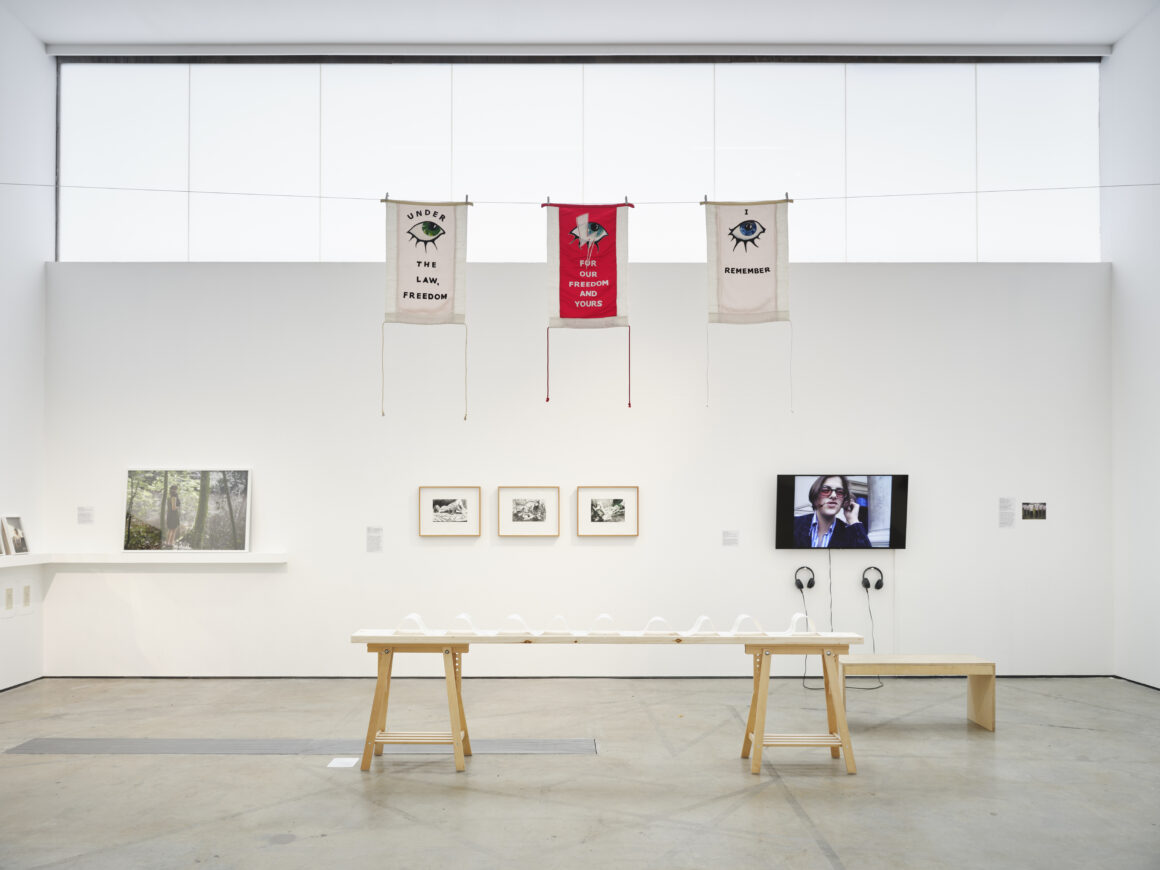
In Creation, wonderous and strange, sometimes monstrous, maternal bodies are imagined, as new selves emerge and interdependent relationships develop. Angela Forte’s tapestry, Birth of Two Selves (1994), envisions birth as a rupture and a continuance of the self. In Hermione Wiltshire’s vinyl images, Nicola Preparing for Birth (2008), pregnant bodies assume athletic labour poses, with birthing understood as both an event and a process. The Frankenstein-esque altered bodies of Annegret Soltau’s photographs evoke birthing interventions like episiotomies and c-sections. Liss LaFleur’s digital audio libretto But they can’t steal my joy (2022) queers maternal embodiment by translating spoken word into synthesised sound, encapsulating the experience of (m)others.
Inspired by neonatal intensive care experiences, Pauline Cummins’s video Becoming Beloved (1995) deals with autonomy, survival, and the unfolding connections between maternal and infant bodies. Similarly, Fani Parali’s Incubator/Flight (2022) – a delicate pencil drawing of a pre-mature baby resting solemnly in an iron-framed incubator – hovers between fragility and resilience. Other works, like Lea Cetera’s womb-shaped hourglass, and time-lapse textile images by Tabitha Soren, skew temporalities, with maternal time running counter to linear time.
In Loss, artists sensitively explore miscarriage, forced adoption, abortion, and death. In the unflinching Annonciation (2009-13), Elina Brotherus’s photographs navigate her journey through infertility treatments. Emma Finucane’s sculpture, Politics of the Womb (2017/2025), charts the legal restrictions of the (since repealed) Eighth Amendment of the Irish Constitution and its consequences for reproducing bodies, including maternal deaths and terminations for medical reasons. Patricia Hurl’s Study for Jingle Bells (1987) depicts a haunting emptiness in the aftermath of a stillbirth. Dealing with stigma, Paula Rego’s stark etchings, Abortion Series (1999), and Tracey Emin’s confessional video How It Feels (1996) offer candid insights into the lived experiences of abortion. Nearby, Rachel Fallon’s Aprons of Power (2018) gesture to the absences, and invisible (re)productive labour, of the women and girls sent to Magdalene Laundries and Mother and Baby Homes.
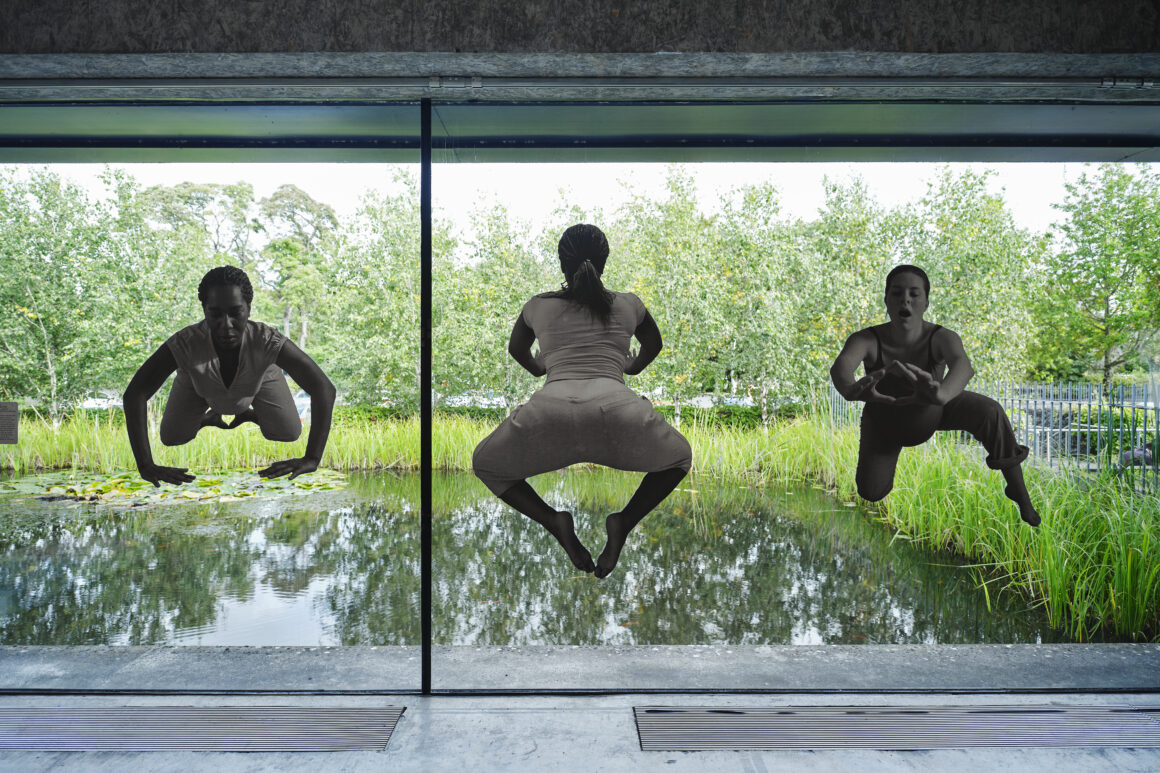
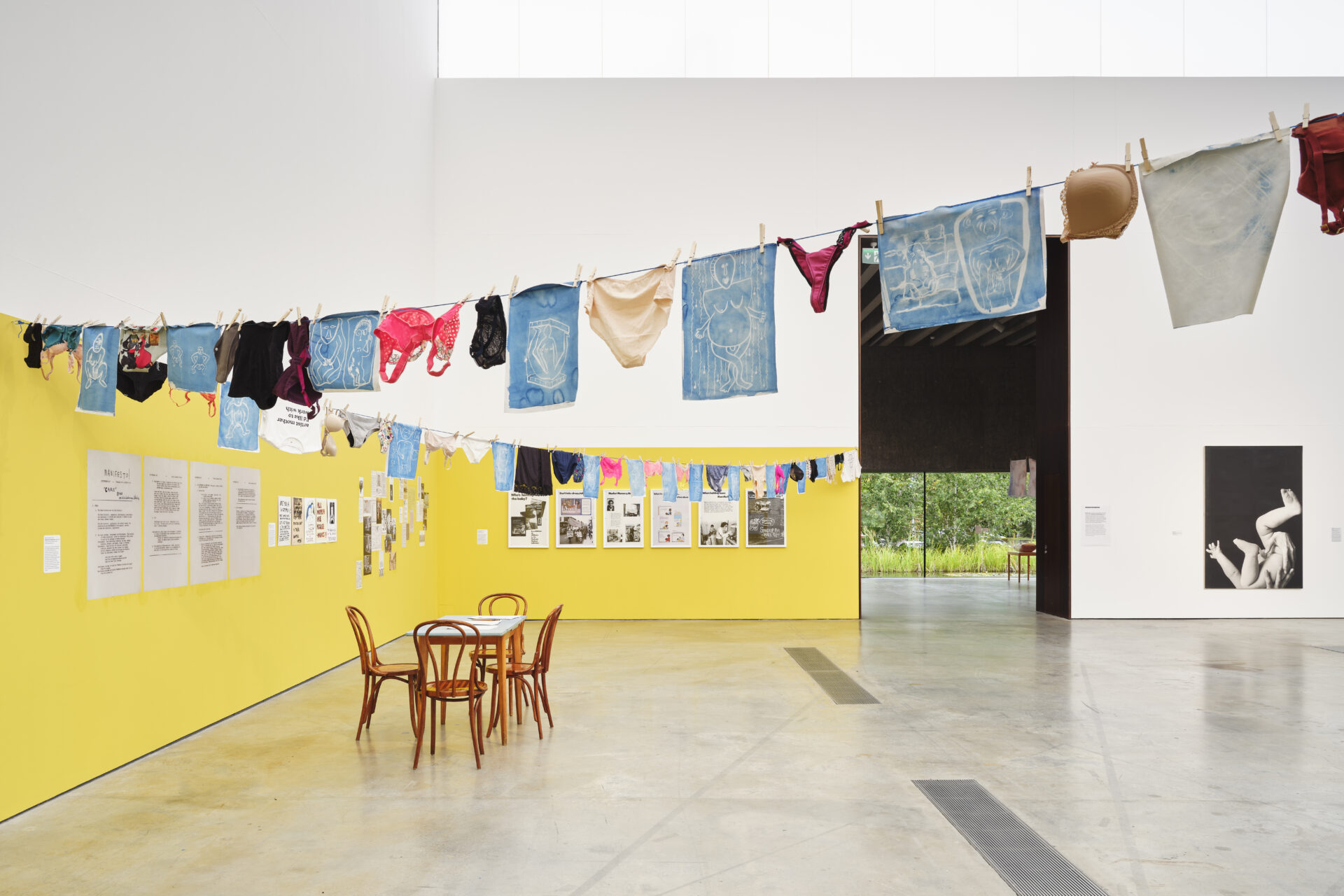
In Maintenance, named for Mierle Laderman Ukeles’ Manifesto for Maintenance Art (1969), the labour and responsibilities of motherhood become a generative force. The stunning, large-scale images of Clare Gallagher’s photographic series, Second Shift (2019), elevate the mundane daily minutia of domestic care. Billie Zangewa’s exquisite hand-stitched collage of a sleeping child, Temporary Reprieve (2017), is a moment of quiet beauty amidst the chaos of childrearing. Rachel Fallon’s Maternal Chain of Office – Order of Our Blessed Lady of the Food Bank (2018) raises issues about class and the impact of economic austerity on mothers’ abilities to provide their children basic necessities. The absent body of the child from Cassie Arnold’s school uniform, constructed from bulletproof vest material, calls to mind maternal fears for school-attending children in the United States, where gun violence is sadly normalised. Alongside this, Christine Voge’s black and white images in the sanctuary of a women’s shelter contemplate mothering in difficult circumstances.
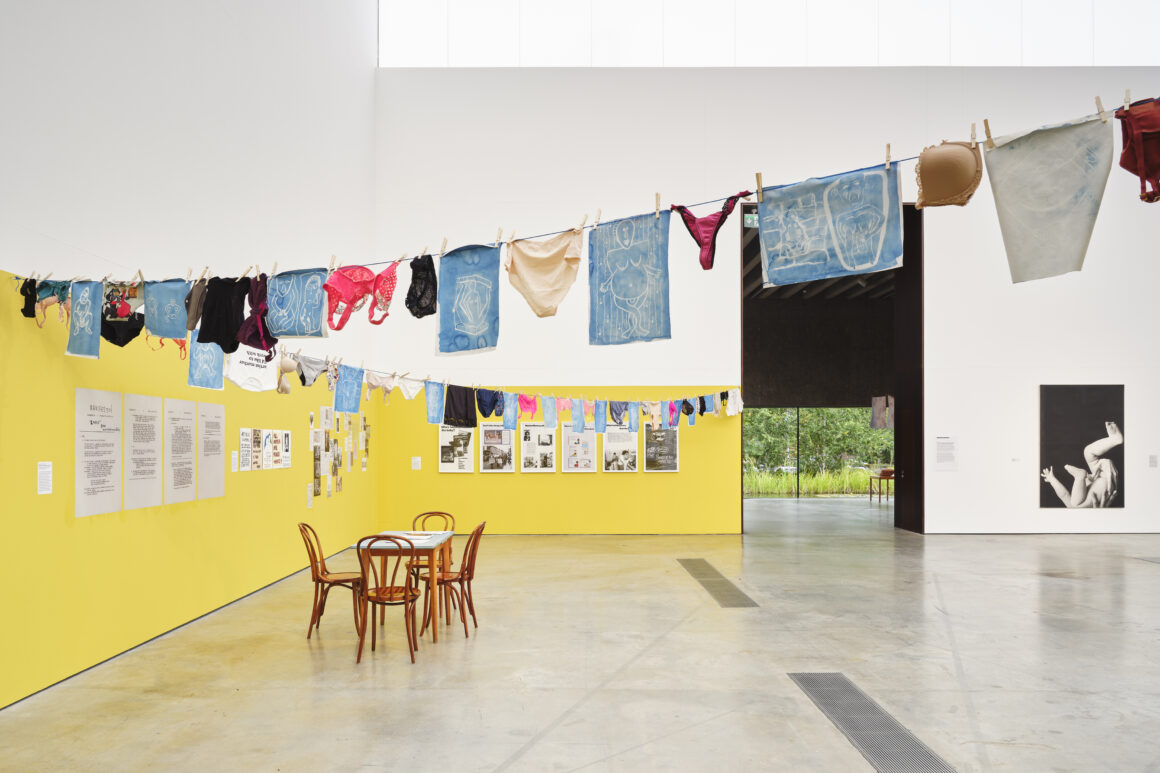
The ‘kitchen table’ area in VISUAL’s main gallery space suggests a matricentric activism, reframing the mother as a force for societal change. The archival documents and photographs that represent the interventions of second wave feminist collectives, like The Hackney Flashers and Polvo de Gallina Negra, scrutinise the conditions of artists and mothers in the 1970s and 80s. However, this section may have benefitted from the inclusion of a contemporary feminist art collective, to give a sense of current maternal art activism. Situated at waist height, the small touchscreen displaying Bobby Baker’s Timed Drawings (1983-84) offers glimpses into brief moments in which an artist mother must eke out her creativity. Marlene Dumas’s collaborative mother-daughter works subvert the separation between art and life, the parent-child relationship becoming a creative, artmaking force.
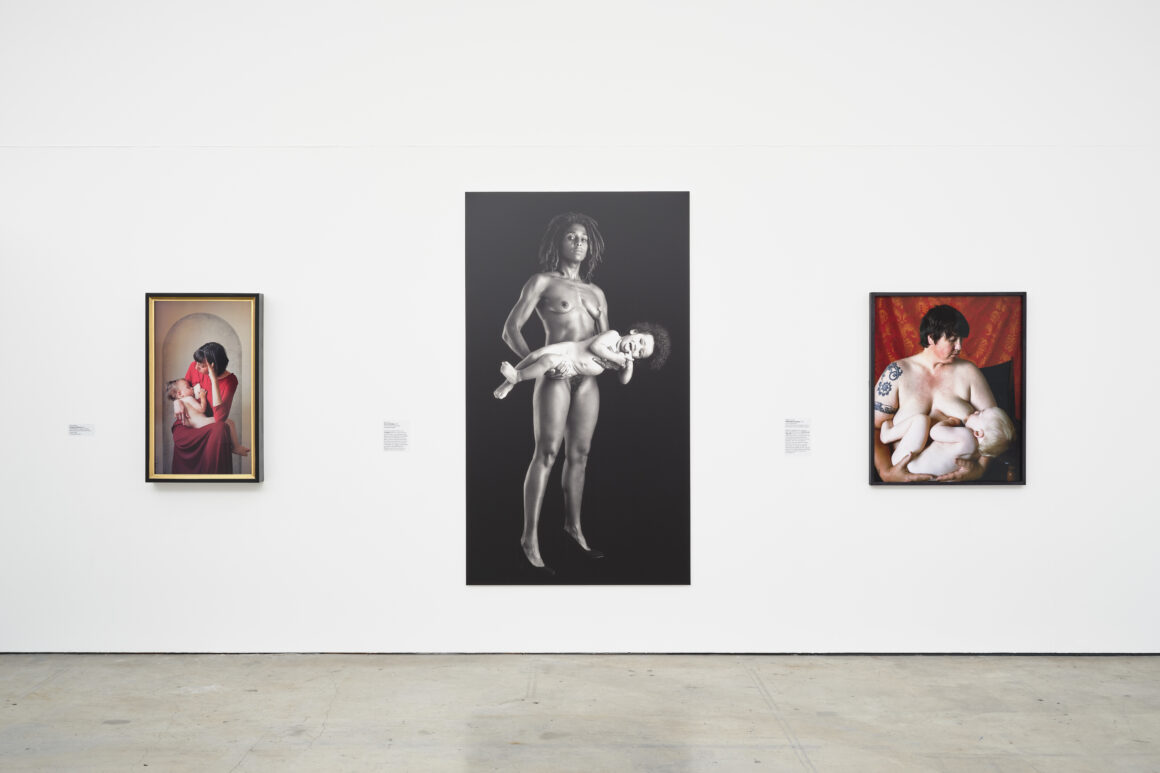
The Temple offers sensitive and nuanced self-portraits of motherhood. Renee Cox’s portrait of Black maternal power, Yo Mama Series (1992-94), is flanked by Leni Dothan’s Sleeping Madonna (2011), and Catherine Opie’s Self-Portrait/Nursing (2004), upending classical Madonna and Child imagery and complicating dominant notions of motherhood. The composition of Ishbel Myerscough’s family portrait, All (2016), is evocative of nesting dolls, its intimacy and realism revealing a mother’s emotional labour, just as Trish Morrissey’s Eupnea (2023) entwines memories and dreams with maternal hopes and anxieties by focusing on breath. It highlights the fragility of life, and for this writer, it recalled the intense realisation of the impossibility of protecting a child from every potential harm. Overall, this exhibition complicates patriarchal or simplistic understandings of motherhood, instead offering numerous thought-provoking and challenging engagements with the messiness of art and motherhood.
Dr Kate Antosik-Parsons is a contemporary art historian and a mother of four, who writes about reproductive justice, feminist art and embodiment.
kateap.com
1 Past exhibition tour venues and dates: Dundee Contemporary Arts (19 April – 13 July 2025); Millennium Gallery, Sheffield (24 October 2024 – 19 January 2025); Midland Arts Centre, Birmingham (22 June – 29 September 2024); Arnolfini, Bristol (9 March – 26 May 2024).