
AOIFE DONNELLAN INTERVIEWS CURATOR NÓRA Ó MURCHÚ.
Based between Berlin and Ireland for the last four years, curator and researcher Nóra Ó Murchú’s practice examines digital culture as well as the effects of technological developments on social systems. During her time as artistic director of transmediale festival in Berlin, Ó Murchú commissioned work from a number of international as well as Irish artists, including Bassam Issa Al-Sabah, Jennifer Mehigan, Jennifer Walshe, and Alan Butler, among many others. As the first female director in the festival’s 37-year history, Ó Murchú’s programming aimed to centre previously absent voices, specifically in relation to decoloniality. We spoke about building a career abroad, her curatorial practice, and her experience of engaging with the Irish art scene from Berlin.
Aoife Donnellan: Having worked extensively internationally, both as a curator and a researcher, what has your experience been in building your career abroad?
Nóra Ó Murchú: With the topics that I work on in my own research, it’s been primarily bigger countries that had a larger portion of people interested in tech, but I do think that’s really changed. I was based in Ireland until 2020, so had a few different things that I was doing. For example, when I was working on my PhD, I started a digital art festival in Ireland and was building up my network through inviting people and attending events. Then, as I began to have a larger network and meet different people, I started getting invited to curate different things. Simultaneously, I was also working as an academic at the University of Limerick. I was writing about digital art and technology, and I was publishing at the same time as attending conferences and art events. I have tried to grow my practice through those approaches.
AD: Your work examines how people engage with and build socio-technical systems. Does it benefit particularly from international collaboration?
NoM: Yes, of course, but that wasn’t the main priority. When I first started out, technology wasn’t something that a lot of artists in Ireland, or artists generally, were exploring. Over time, what we have seen is that more and more artists have started to occupy and work with the medium and format. I never studied art – I come from a technical engineering background. However, when I was in University of Limerick doing my Masters, I got very into research on digital art, and then realised it was something I wanted to investigate. I was always interested in curation, and my PhD looked at curatorial methods in the context of digital art.
AD: While you were artistic director at transmediale, you commissioned a number of Irish artists. How did you find the process of collaborating with Irish artists from abroad?
NoM: One of the main things I wanted to do, while I was there, was to highlight Irish artists who are working in this space. The previous directors were all male, and they were all either German or Swedish. The last director, for example, presented a lot of American and British artists and researchers at the festival. Going into transmediale, I knew I was really interested in decolonial practices; that was one of the things I was determined to show and exhibit, by inviting people from those contexts and with those types of practices into the festival.
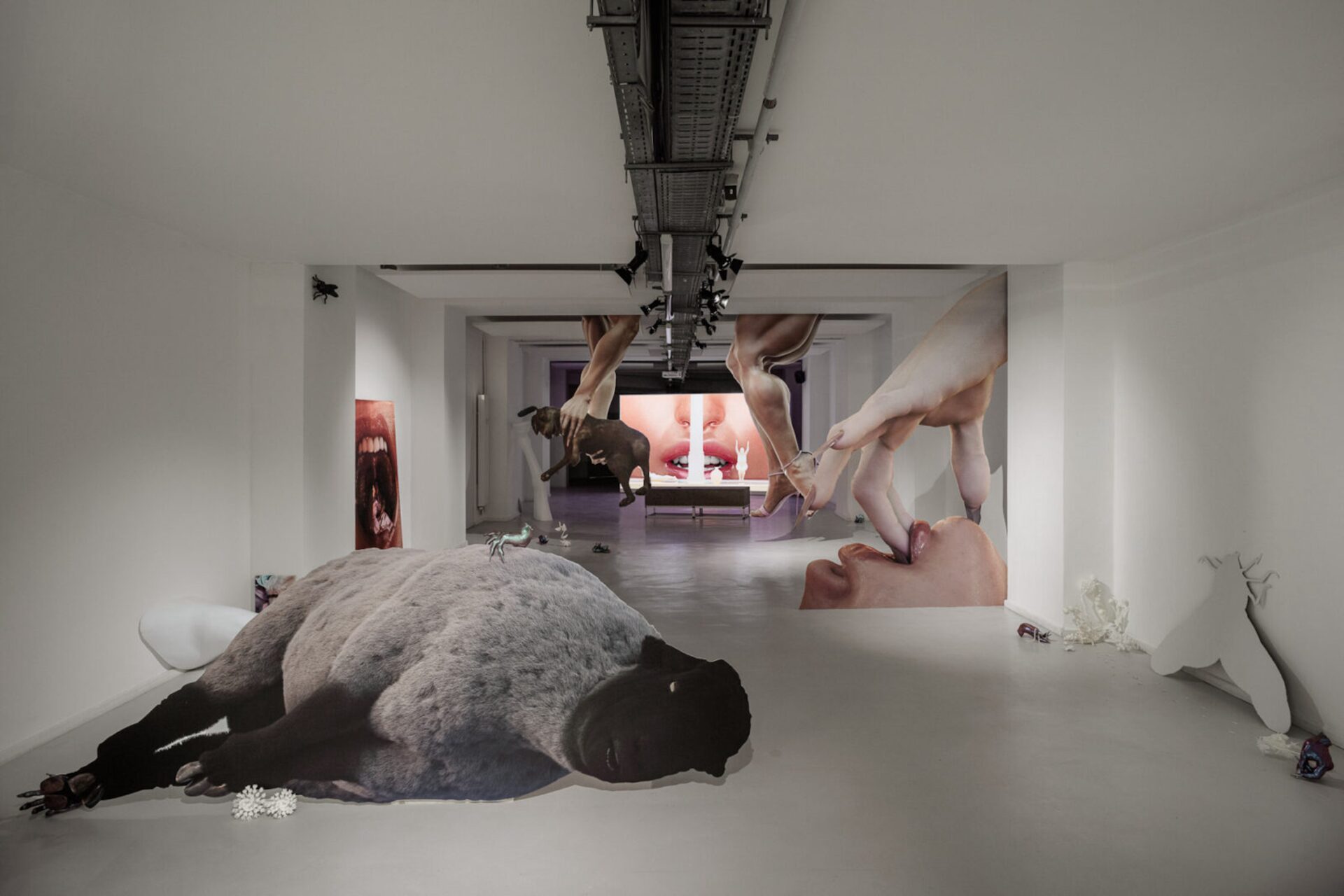
I also wanted to push away from the very screen-heavy, tech-heavy emphasis on what technical practices or digital art can and should be. I was very interested in the poetics of software, sculpture and materiality. It was really important that the artists I selected were also thinking through some of these lenses as well. Coming from an Irish context, I wanted to highlight that – it’s the place where a lot of my thinking originates, about what decolonial technology is and how it has been formulated. I’m a by-product of a geographical space, of history, of memory and of lived experiences, and so I wanted to ensure that Irish artists were part of that discourse.
AD: What was your curatorial approach to these collaborations?
NoM: I had this unspoken agenda to include Irish artists while I was there, and then I also shared my research with them as I was progressing. For example, the work I was developing that resulted in a commission with Alan Butler in 2023 – I would share that research with him, and we would have many conversations back and forth about the same themes, ideas and topics. This dialogue would inform my writing or thinking and likewise his. I generally try to develop very reciprocal relationships with artists. When it comes to commissioning work, I have different relationships with different artists. My objective is to support artists in what they’re making, and then I would have as many conversations as they would like, in order to talk about the commission or the work.
AD: Finally, what are you working on at the minute?
NoM: Right now, I’m focused on a few different projects. I’m working with Aksioma Institute for Contemporary Art (aksioma.org) which is a project space in Lithuania, to look at my concept of unusable politics. I will be doing a piece of writing, defining what this is, and we’re going to build a small discursive and exhibition programme that will stem from this research. A lot of it is raising questions about what software is, how it has evolved, and the impedances to new collective forms of action at various levels in society. How do you reorganise or rethink what collective action is online, as increasingly, technology encroaches on your day-to-day? It’s thinking about those things.
Aoife Donnellan is a researcher, art writer, and curator from Limerick, based between London and Berlin.
@aoife_donnellan_
Nóra Ó Murchú is a curator and researcher who examines the intersections between fields of art, design, software studies, and politics.
noraomurchu.com

