THOMAS POOL REPORTS ON THE OPENING OF THE NEW O’CONNELL STREET ARTIST STUDIOS, A JOINT VENTURE BETWEEN VISUAL ARTISTS IRELAND, DUBLIN CITY COUNCIL, AND QUANTA CAPITAL.
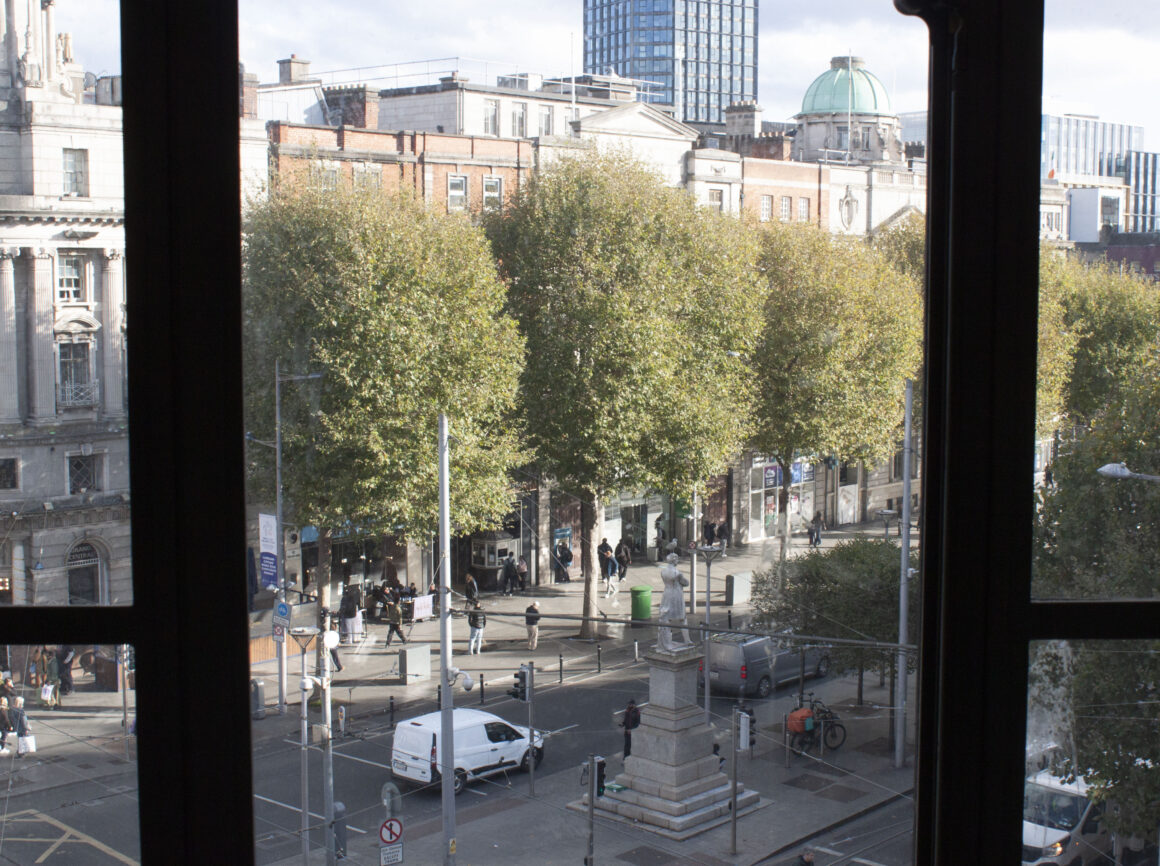
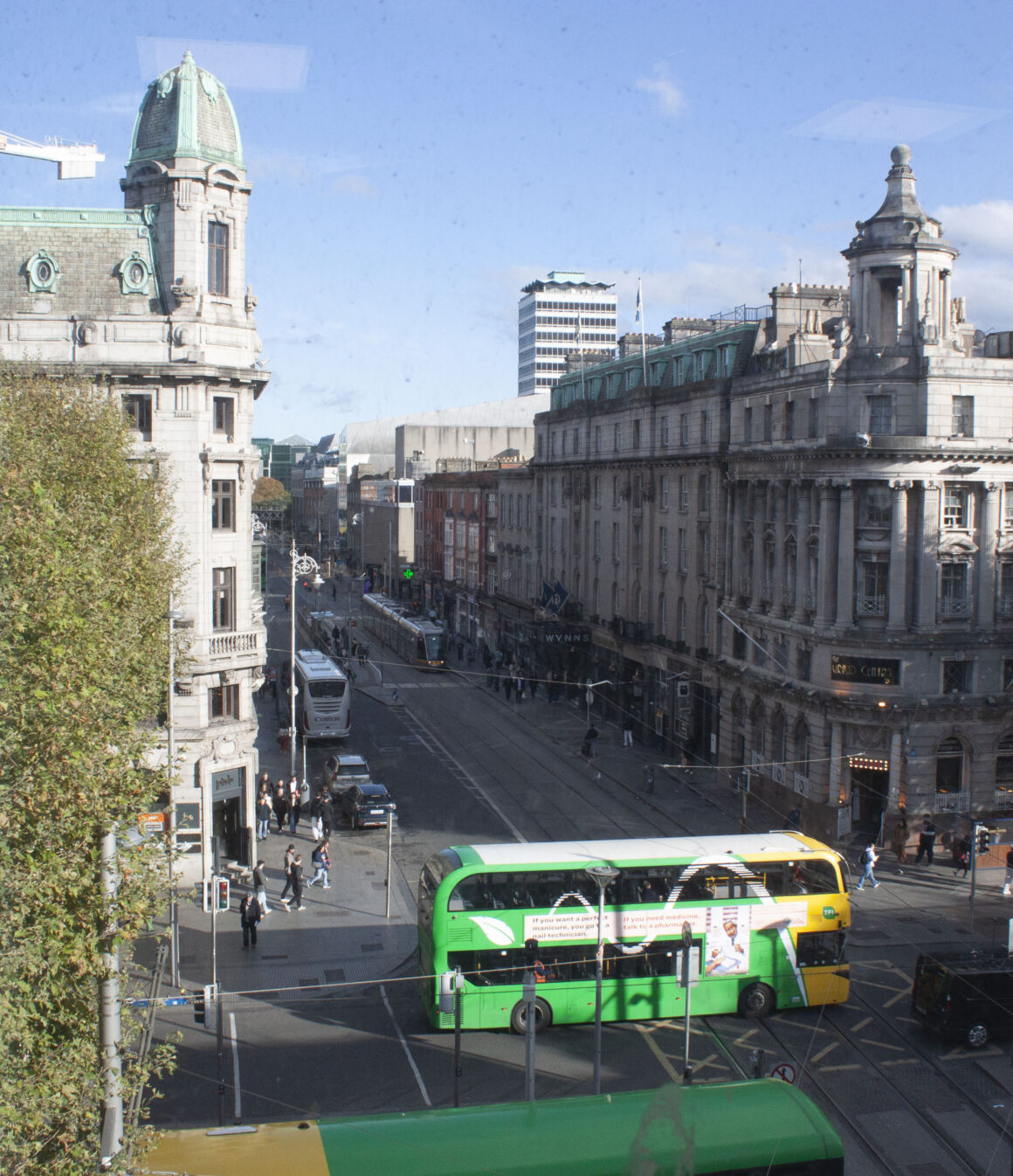
The cool damp of October had well and truly taken hold, and the leaves of the trees lining O’Connell Street had just begun to turn a yellower shade of green. The tourist couples sharing a flimsy umbrella, the old diesel buses sputtering up the road, the shoppers, the street preachers, the running-late commuters, the dealers on e-scooters playing cat-and-mouse with the guards in their electric-yellow jackets, the tinny chime of the Luas. All of this can be observed with an Olympus-like remove from the windows. It’s what some of the artists, including Conor Horgan, love most about their new studios: the windows. Inside, the kitchenettes, the hallways and stairwells, and the studios were filled with a scrum of reporters, local officials, business leaders and lawyers, artists, and the Lord Mayor of Dublin and his entourage, everyone there for the opening of O’Connell Street Artist Studios.
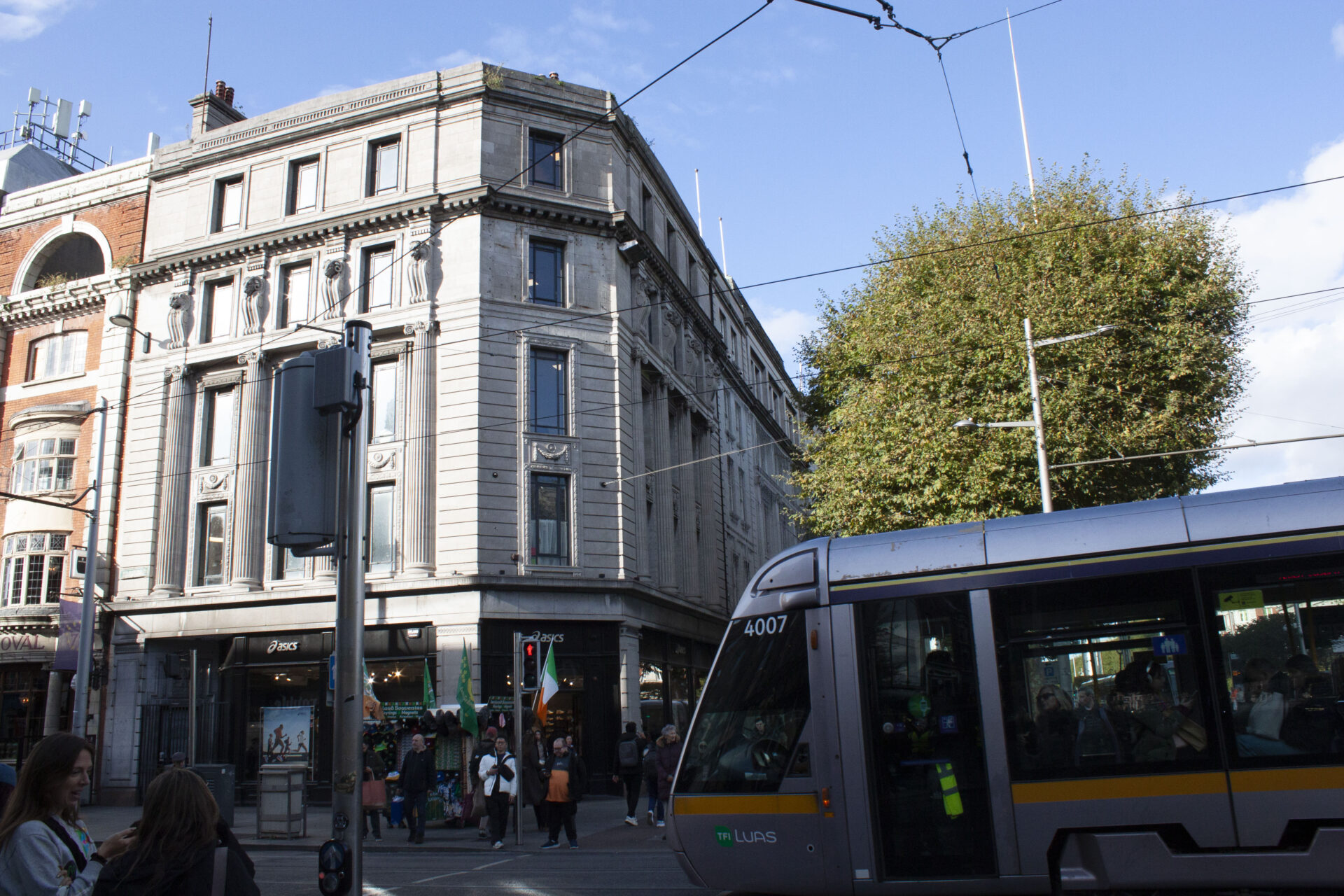
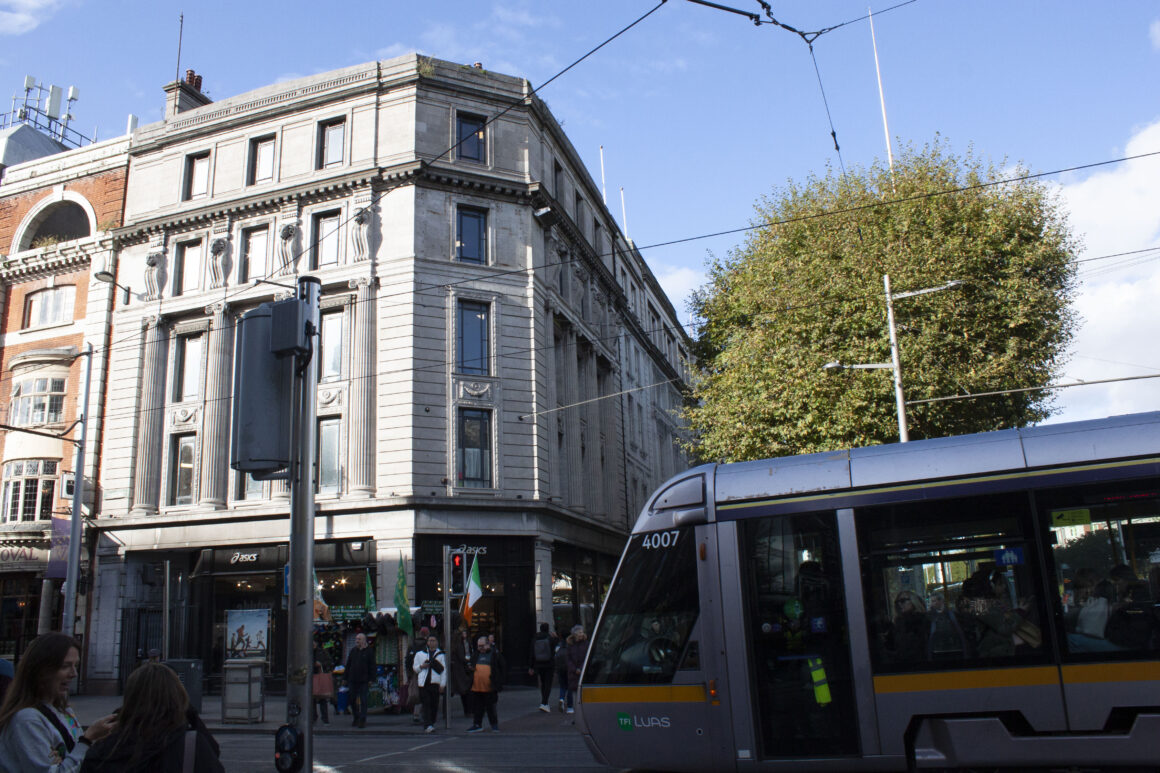
O’Connell Street Artist Studios is located on the northwestern corner of O’Connell Street and Abbey Street, in an old four-storey, Victorian-era shoe factory, above the Asics shop. Developed in response to a shortage of sustainable studio space for artists, particularly in Dublin, the pilot project is a labour of love from all of us at Visual Artists Ireland, delivered in partnership with Dublin City Council and Quanta Capital. The building now houses 22 fully functional studios, instantly making it one of the largest and most affordable artist workspaces in the capital. With the recent closure of The Complex, and with various studios and artist spaces across the island currently facing increasing economic pressure, the opening of the studios on 15 October was seen as a welcome relief by both the selected artists and the wider public, appreciative of a vacant building being turned into a cultural hub, and the much needed investment into the country’s main thoroughfare. Indeed, with the chief political concerns of our time being the cost of living crisis, the right to work for a living wage, artificial intelligence and its impacts, and space to live and work and create, the importance of such an opening was palpable among all in attendance.
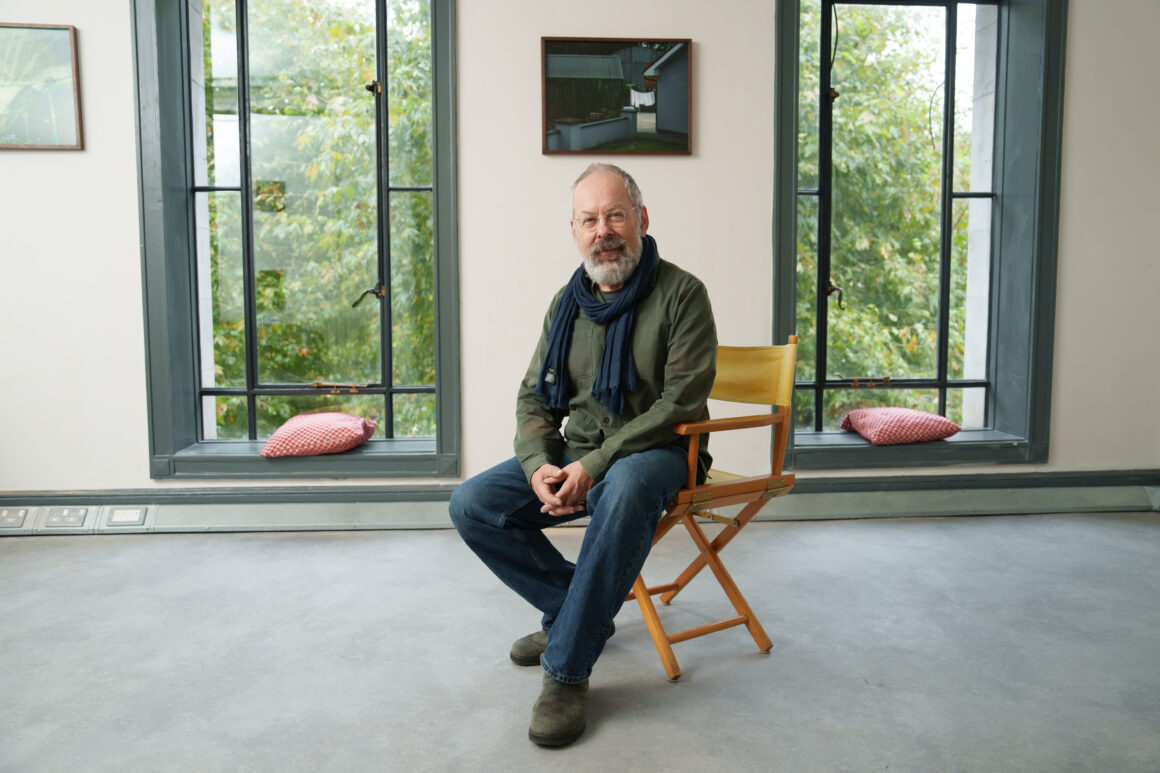
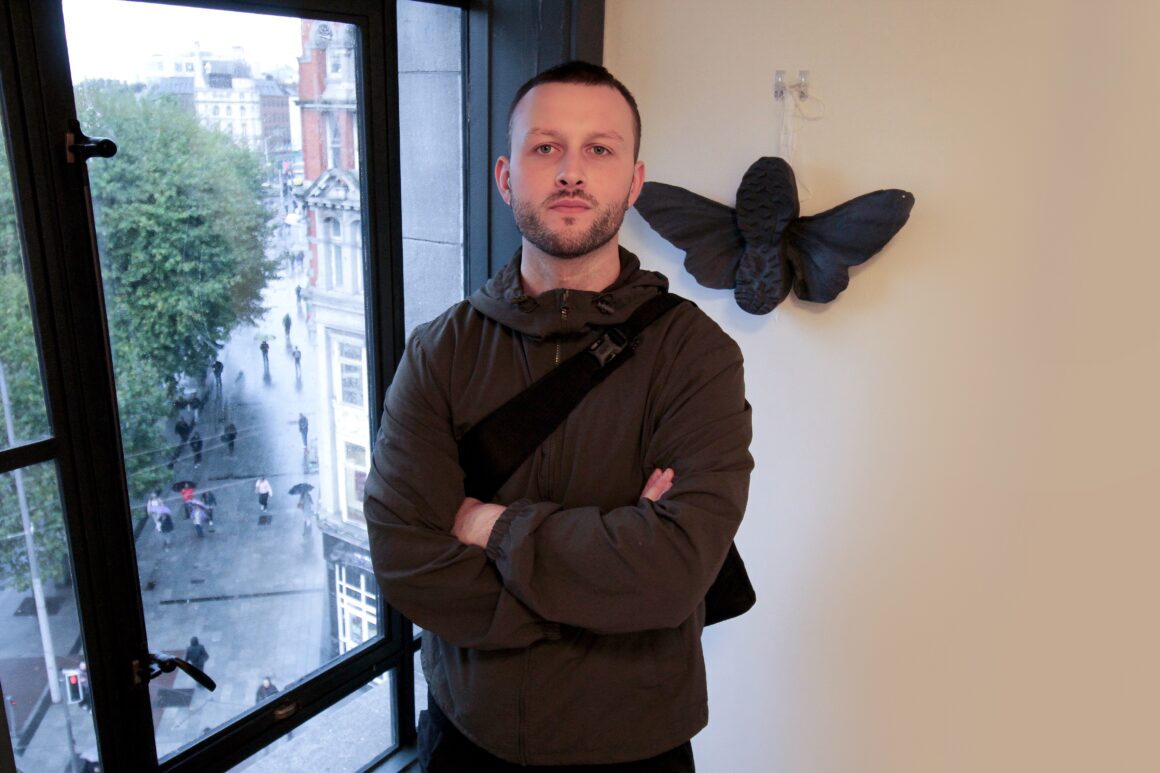
“It was overwhelming at first,” the self-described polymorphic artist, Beata Daly, told me. She had missed being able to make large-scale paintings or sculptures. But now she has somewhere to work bigger, to think bigger, to disengage from the outside world, and to focus on expanding her practice. She noted that one of her pieces, which had seemed quite large in her former home studio, actually looked quite small on the large studio wall; she welcomed the freedom to now experiment with scale [beatadaly.com]. Beata shares a wing of the building with Conor Horgan, the photographer who enjoys gazing out the window onto the bustling street below – a welcome opportunity, as most artists and makers know, to let one’s mind wander and stumble across new ideas. These accidental finds are often the most fruitful. In the corner of the studio, Conor had constructed a ‘joke’ sculpture – a gracefully composed plinth of photographic equipment that he built to fill the vast studio space [conorhorgan.com]. Multi-disciplinary artist, Ryan Egan, also welcomed the space to mentally expand. Having felt stuck in his sketchbook for a long time, the ability to have a community of peers who he can bounce ideas off is, for Ryan, the most important aspect of the new space [@rygan0].
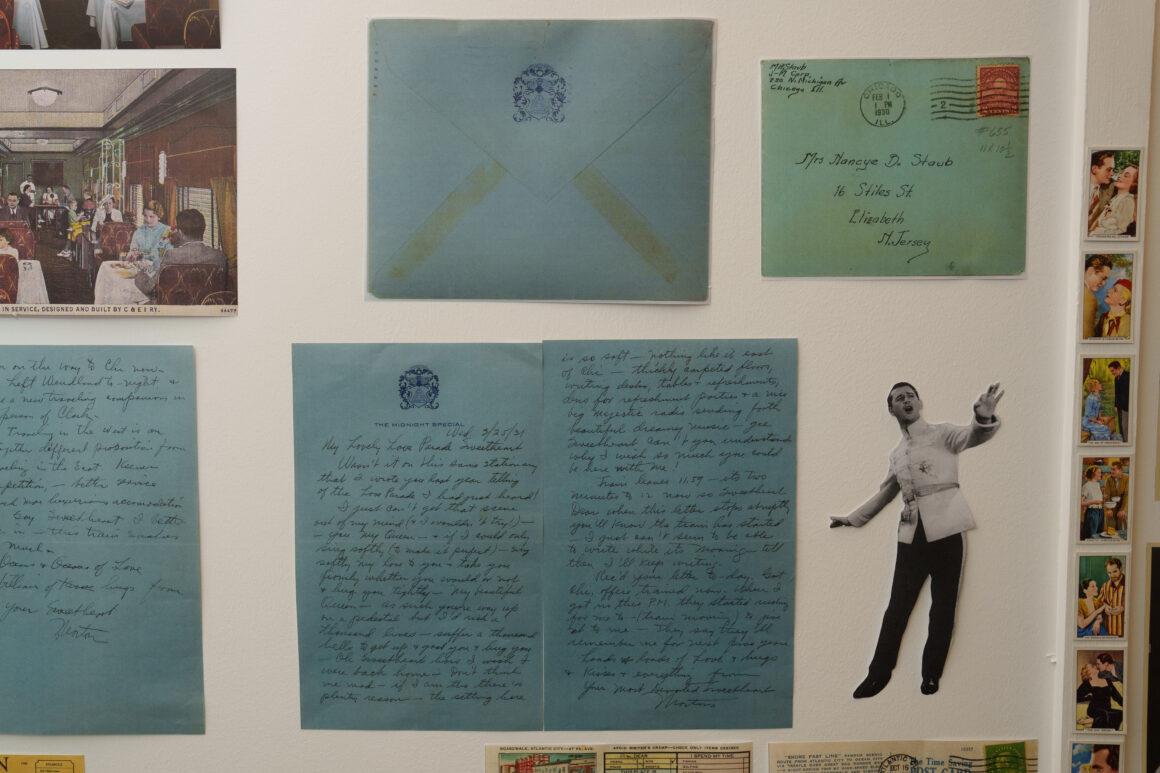
Joanne ‘Betty’ Conlon found a level of concentration in the new space that she hadn’t had before. She is now able to “walk straight in” and get to work. Currently creating a project involving cigarette cards – inspired by an old American love letter that she found in a flea market from a man to his wife in the 1930s – the space has allowed her to work bigger, and to take the project in the direction it needs to go [joanneconlon.com]. Róisín White, a sculptor and photographer, previously had to work almost exclusively in photography, due to the lack of room to create. She savours the ability to take her work in new directions, and her new space allows for these changes to occur [roisinwhite.com].
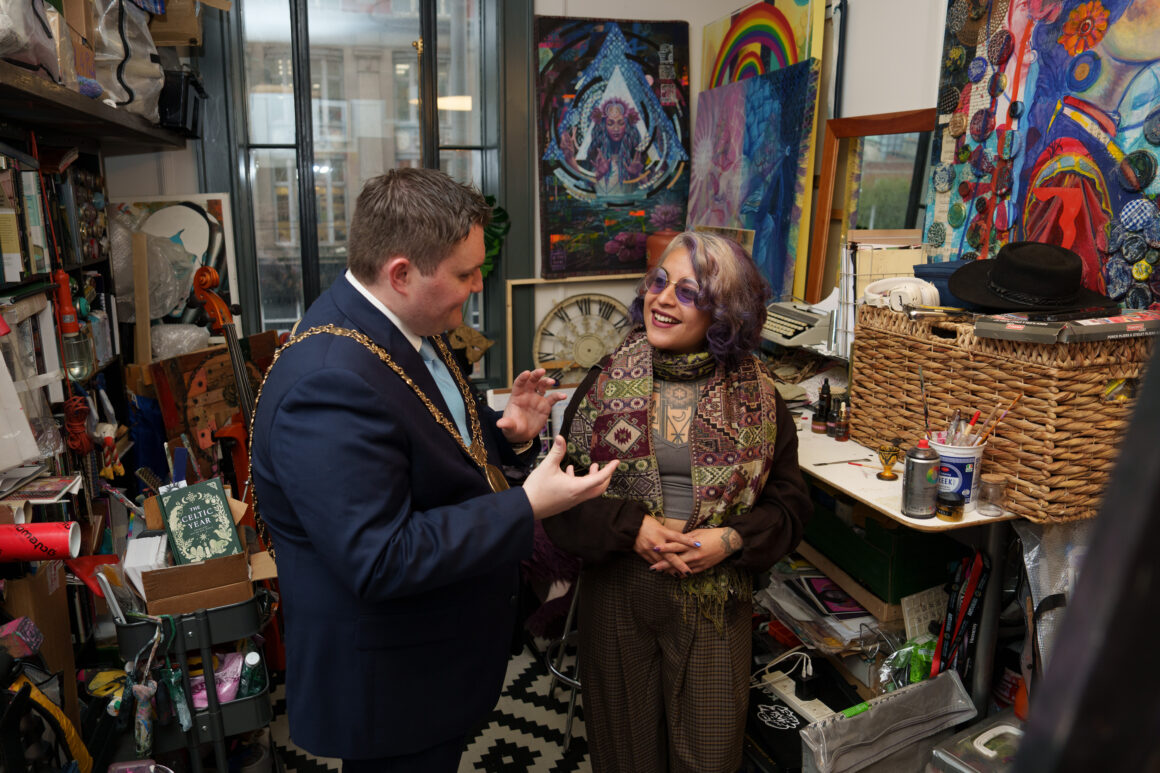
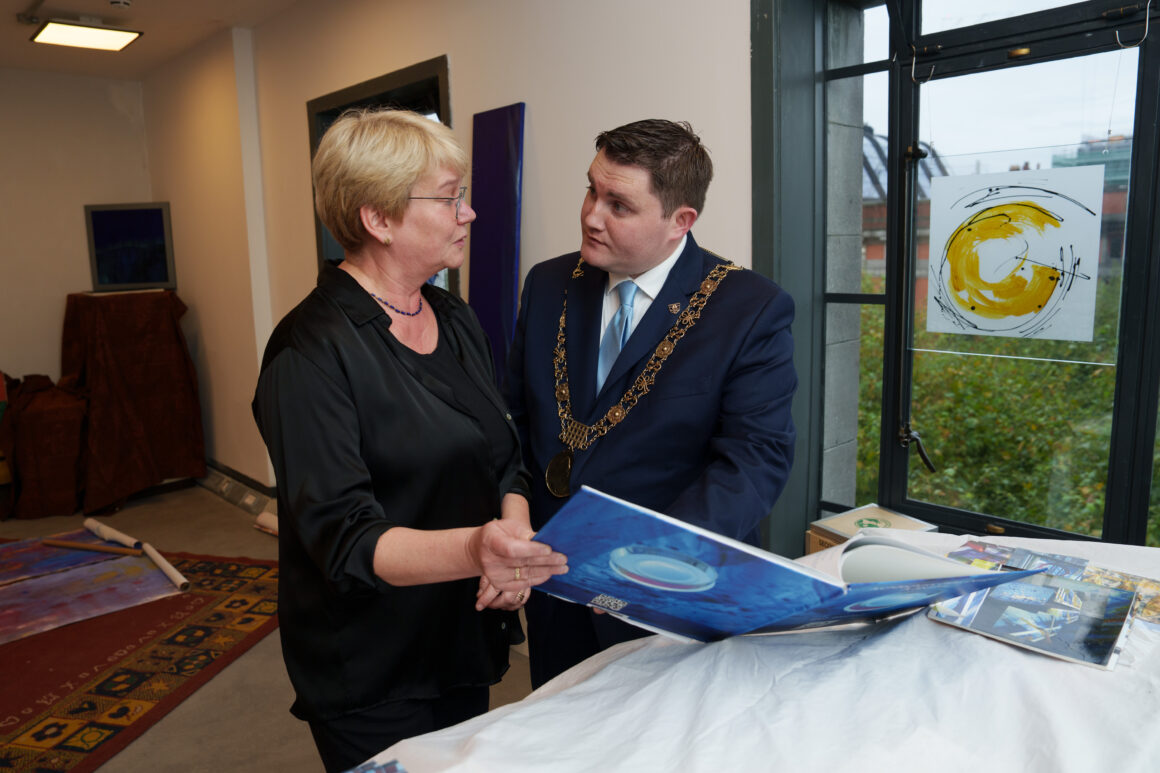
While the studios are managed by Visual Artists Ireland, the artists’ rent is subsidised by Dublin City Council, and Quanta Capital invested a significant sum in the refurbishment of the property. Quanta CEO Mel Sutcliffe is proud of the work that went into the building and even contributed an idea to the renovation: that an old indoor Posts and Telegraphs phone booth be preserved and integrated into a studio space, its deep green trim and cream body retouched, as well as its distinguished, romantic font from the post-Independence era. Lord Mayor of Dublin, Daryl Barron, was given a tour of the building and the studios within. I asked him what he thought of this new space and he told me that it is “fabulous to have here,” and that Dublin needed more spaces like this. “People have nowhere to go,” he said. He is currently working on creating more spaces like this in Dublin and is looking especially at vacant spaces.
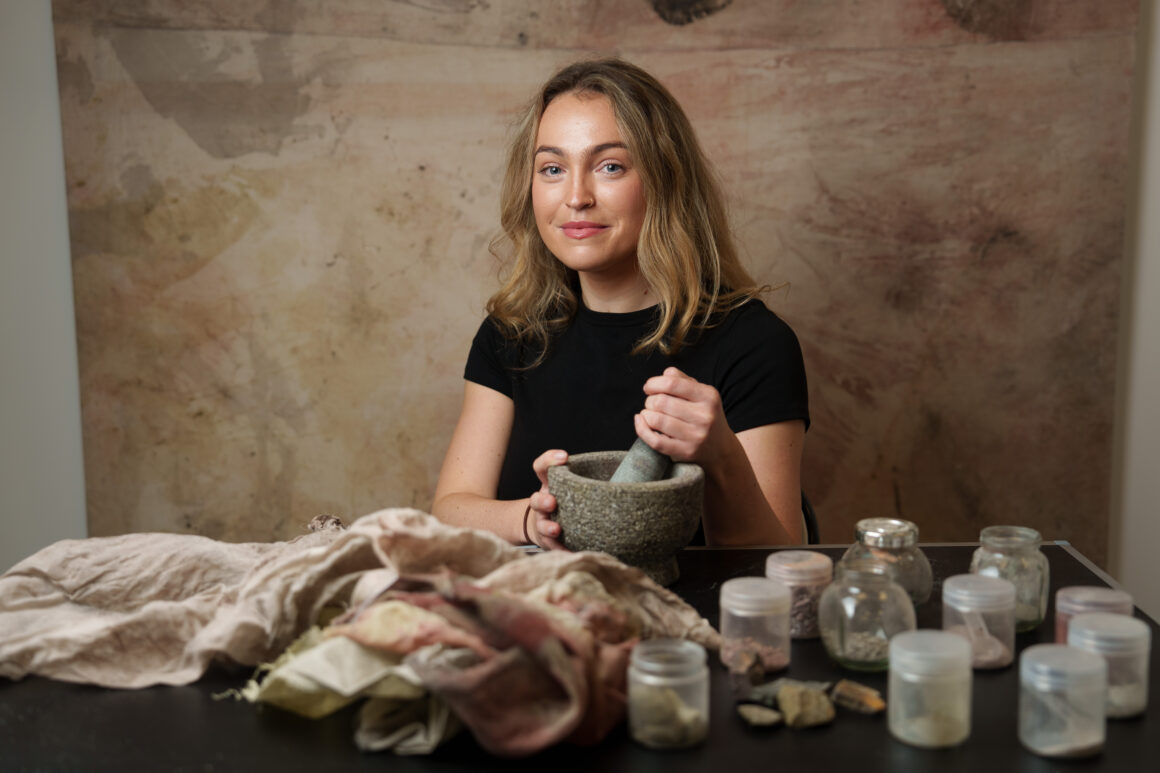
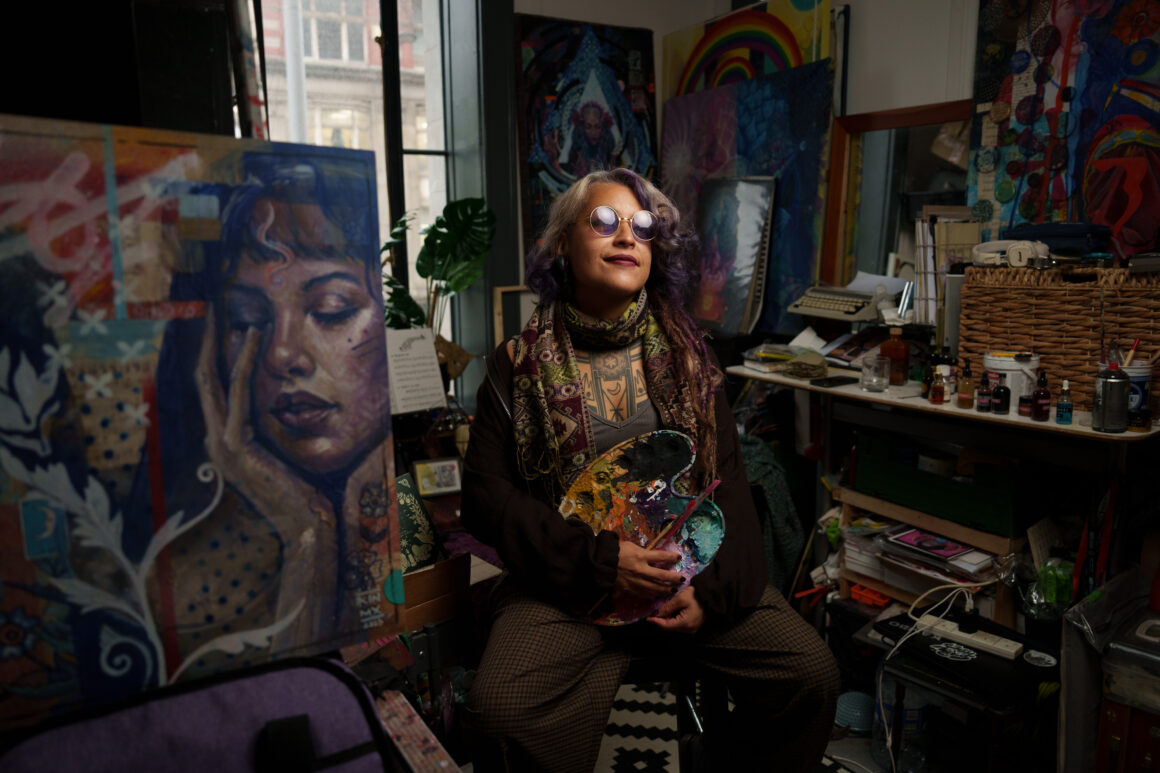
Vacancy and dereliction have come to be seen as especially egregious sins against the city and its inhabitants. With an unabating housing crisis, from which seems to stem so many other issues in contemporary Irish life, the derelict properties that can be found on almost every street in Dublin feed directly into the pressure on people of all ages to emigrate, even those who wish to stay or want to come home. Artist Áine Osborne had been living in London, unable to return to Ireland, as doing so without a studio space would mean giving up or curtailing her practice. Getting a new workspace in O’Connell Street Artist Studios has allowed her to move home. The affordability of the studios, and the network of artists that come with it, have allowed her to continue her site-specific practice, in which she makes her own pigments by grinding down materials with mortar and pestle, and then binding them with linseed oil. The gathered rocks and other materials from the landscape fill her studio [aineosborne.com]. Similarly, Mexican-born artist, Kathrina Rupit, who arrived in Ireland 20 years ago, was preparing to move to the UK, when the call came that she had been awarded a studio. She had her previous studio for 11 years before the landlord sold the property and evicted her. In no time at all, the walls of her new space were filled with her work. Primarily a street artist, she is also a founding member of the all-female Minaw Collective, and is interested in promoting cultural diplomacy [kinmxart.com].
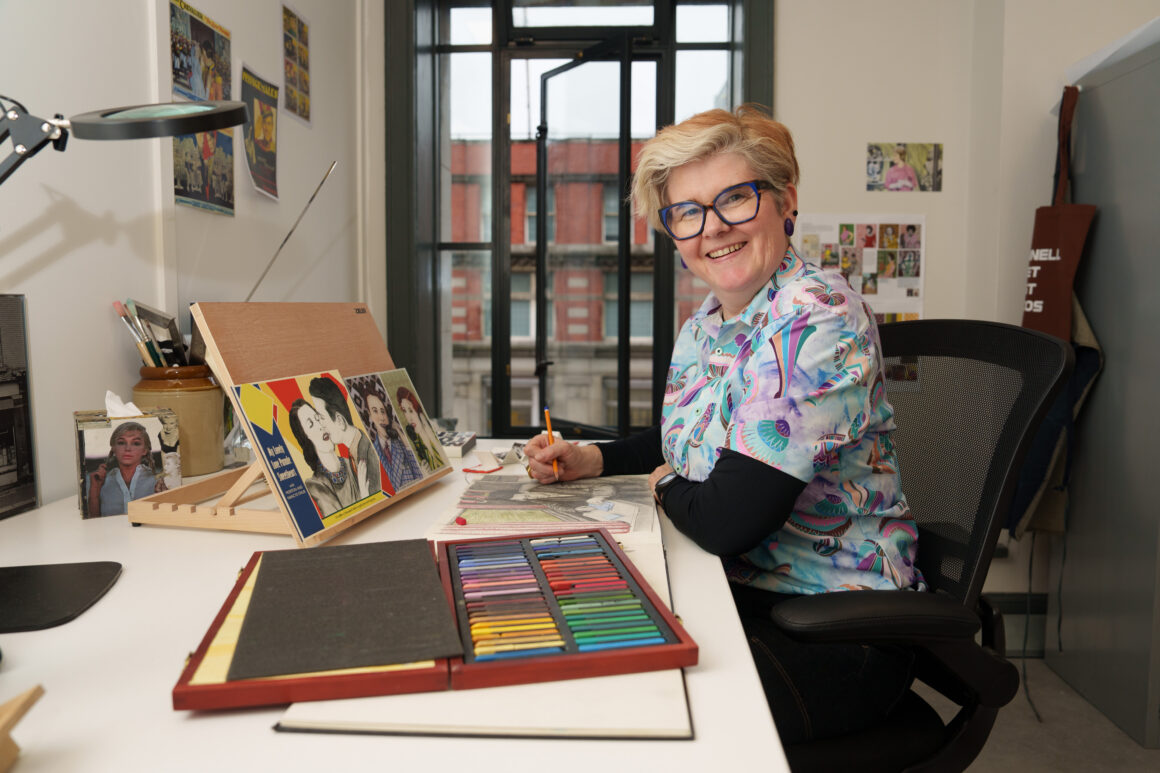
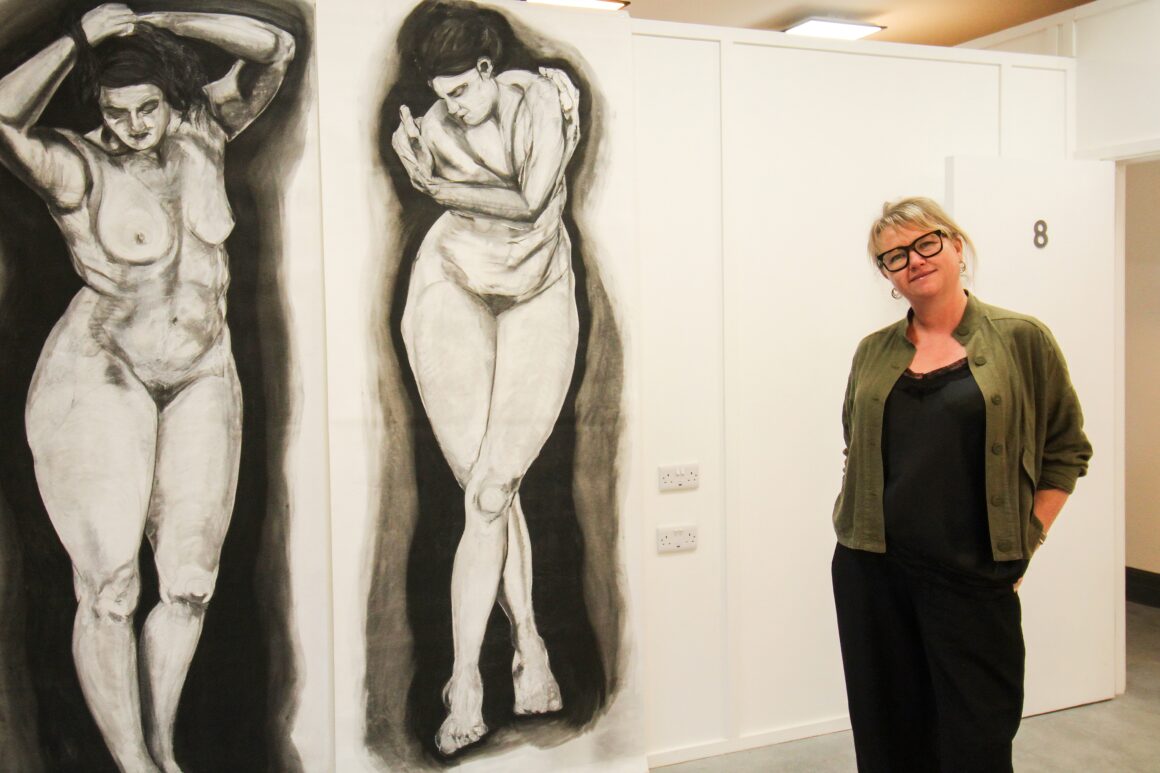
Ceramic artist, Jen Donnery, moved to Dublin just for this new studio. “It’s the dream,” she said. Her figurative work, which focuses on the female form and involves drawing and sculpture, requires space to create, both physical and mental. Her latest project, which she discussed with me, responds to ideas of newfound freedom. Across from her desk sits the object of her inspiration, the idea for the work continuing to percolate. “It’s the best thing that’s happened in a long time,” she said [jendonnery.com].
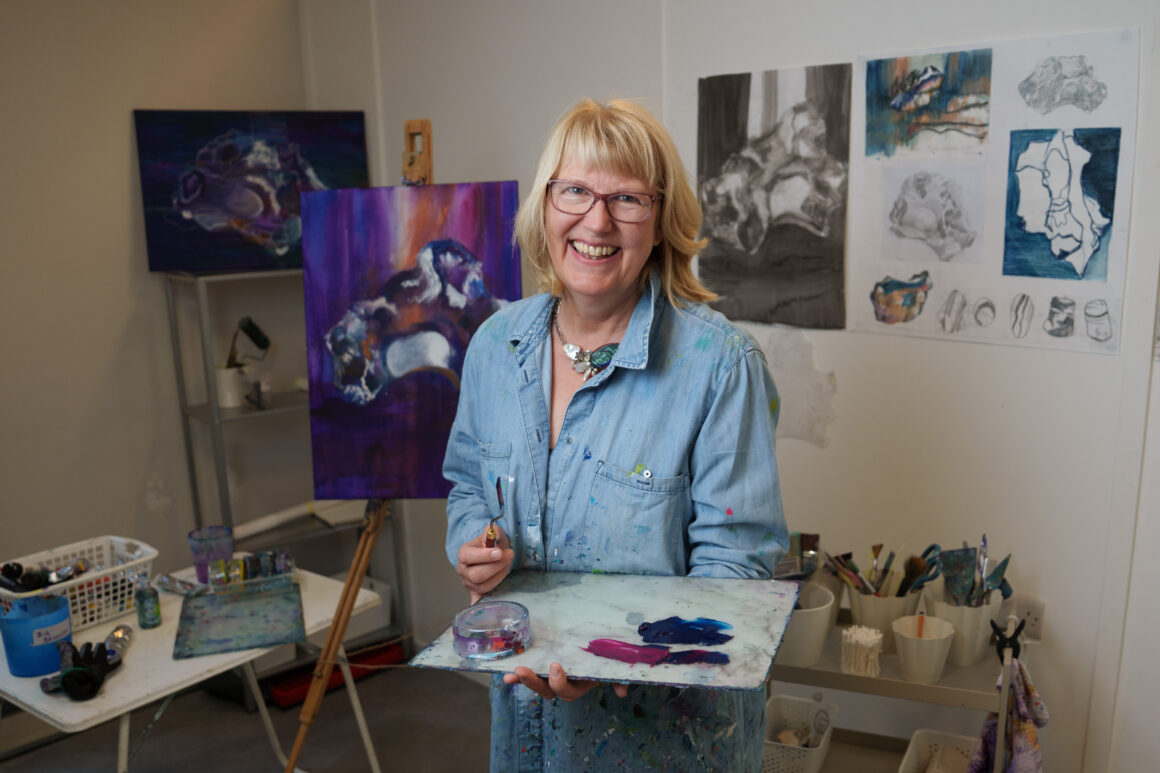
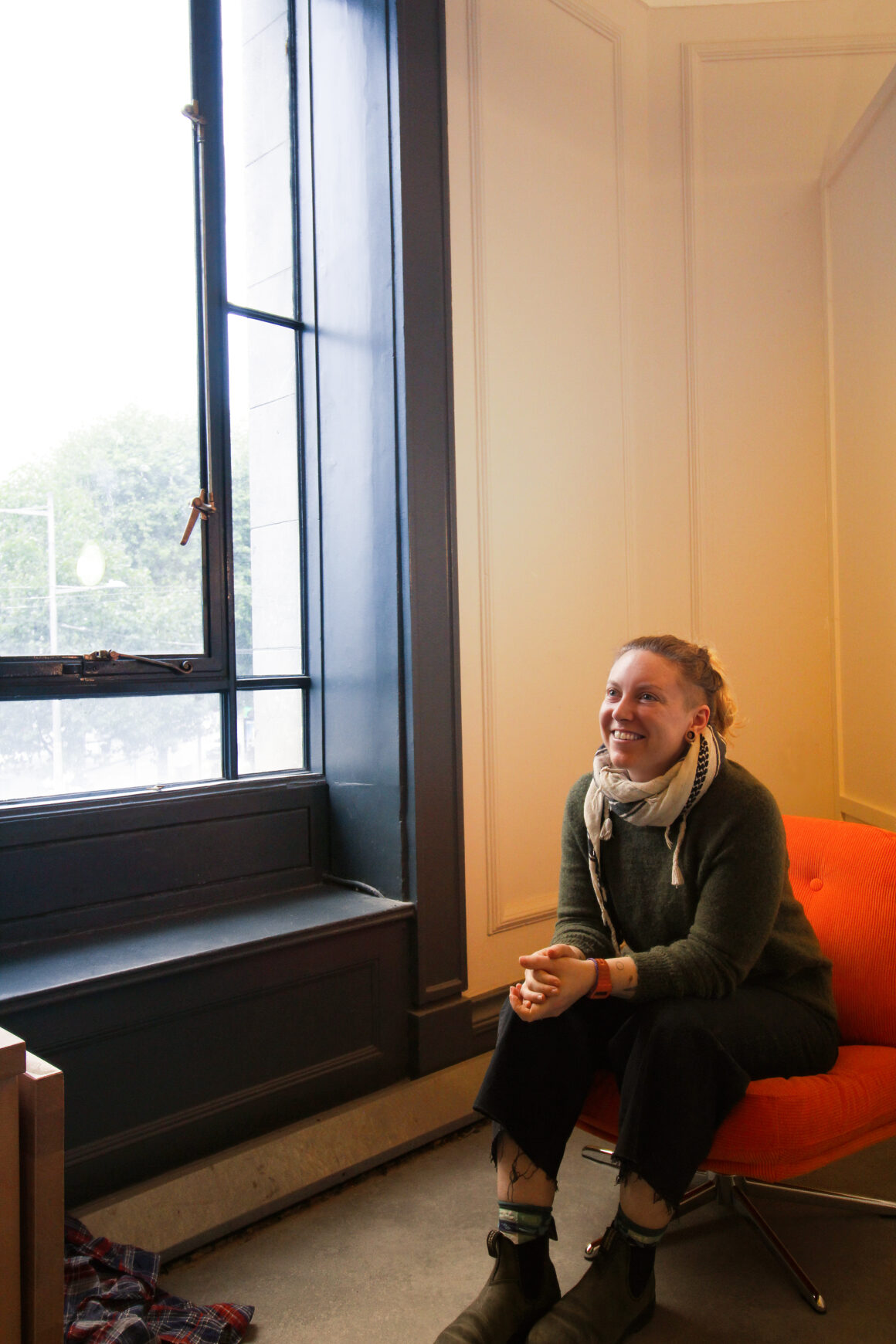
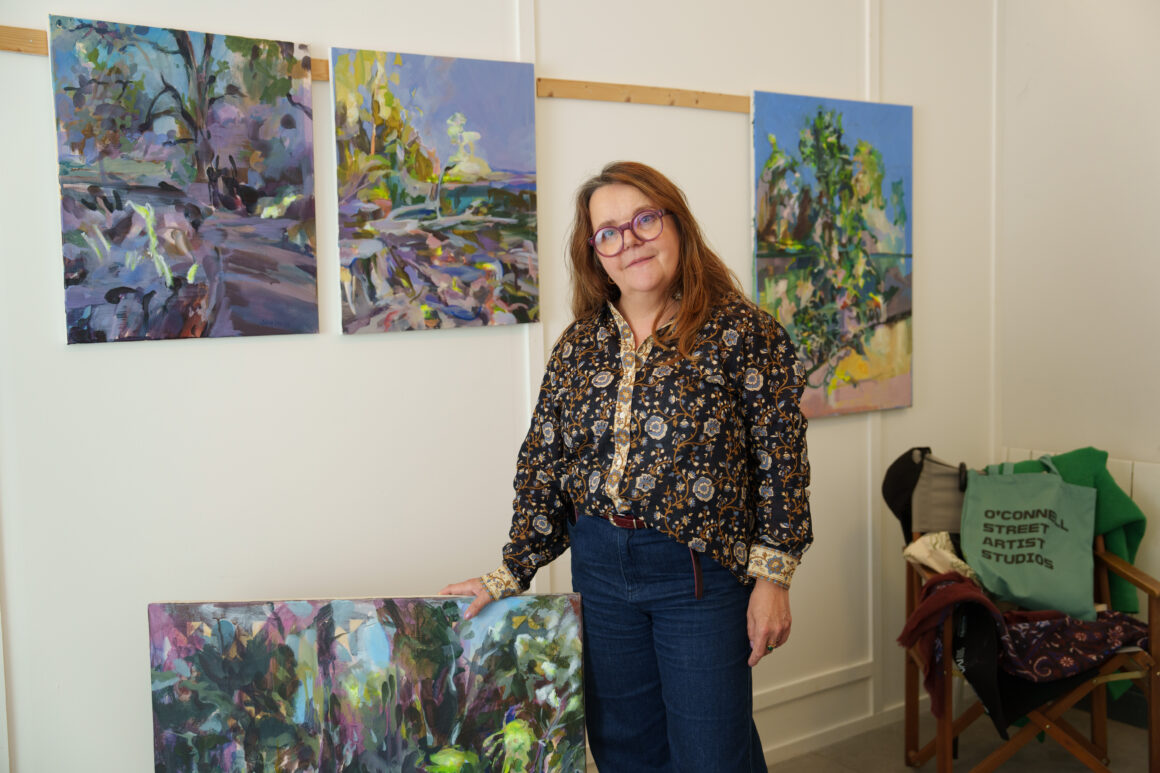
In terms of earning a living, artists have never had it easy. It’s a hard slog, often with very little reward. In the age of Artificial Intelligence – which sees graphic designers, photographers, illustrators, and more, having to compete with free and instantly accessible tools – to live as an artist takes a particular bravery. Painter and sculptor, Margaret Farrell, told me that she feels as if her “whole life had been leading to this moment.” She had given up her teaching career a decade ago to become an artist. Now, with the new studio space, she has a likeminded community to work alongside. And, more importantly, it has given her a sense of affirmation: “Now, I feel like my art is taken seriously,” she said [margaretfarrell.ie]. This was echoed by glass artist, Elke Westen, who said that her new studio on the top floor means “Life. To have life back, to have creative life back” [elkewesten.com]. Working on large canvas sheets, she brainstorms new ideas for glass paintings, which she says is like “painting with light.” She points out to me her pieces hanging in the window, illuminated by even the dreariest of overcast October skies.
Thomas Pool is the Commissioning Editor of the miniVAN and the Content and Production Editor of The Visual Artists’ News Sheet.