RICHARD MALONE REPORTS ON THEIR RESIDENCY EXPERIENCE IN THE BRITISH SCHOOL AT ROME.
The Derek Hill Foundation Scholarship is a residency in the British School at Rome – one of a number of historical research institutes offering residencies around the city. The BSR application opens annually in late November and is open to Ireland and UK-based artists. The scholarship is for painting and drawing, but this can be broad, experimental, and far reaching. Applicants are shortlisted and the final selection is made by a panel of museum directors, curators, and the foundation. The residency award comes with a monthly stipend, a large studio, three meals a day (and afternoon tea), 24-hour library access, and access to libraries and archives in Rome and around Italy.
I was surprised (and excited) to win the scholarship, as I had understood such institutions to be quite formal in how they commission and categorise research, and conservative in their approach to art, often grounded in classical frameworks that, in turn, are heavily intwined with colonial and patriarchal ideals, with Rome historically being the epicentre of these structures. My research is centred on the invisible – markers of gender, class, and queerness, which share commonalities in often being marginalised and overlooked. I’m interested in how we participate in a hierarchy of material values – grounded in principles of patriarchy, patronage, and policing – of taste, class, material culture, the body, and so on. It is a rigid system that persists to this day through education, access, language, and what is deemed valuable. How do we create ideas of truth? How can we trust historical accuracy when women, queer people, and the working class continue to be silenced, censored, and erased?
As well as the artists, there are numerous doctoral, post-doc, and research candidates on residency in BSR, mainly from prestigious universities. It is interesting how much time is spent referencing discoveries and texts written during the Victorian era by privileged white men on grand tours. One example in a museum was Etruscan burial vessels, containing ‘couples of note’. In one urn was two women, which the archaeologists deemed high priestesses or witches, as opposed to a couple, like everyone else. This speaks to Victorian morals imposing meaning based on a limited imagination and experience. When we have a homogenous demographic responsible for the discovery, interpretation, and classification of artefacts, we are left with dogmatic readings and understandings of history.
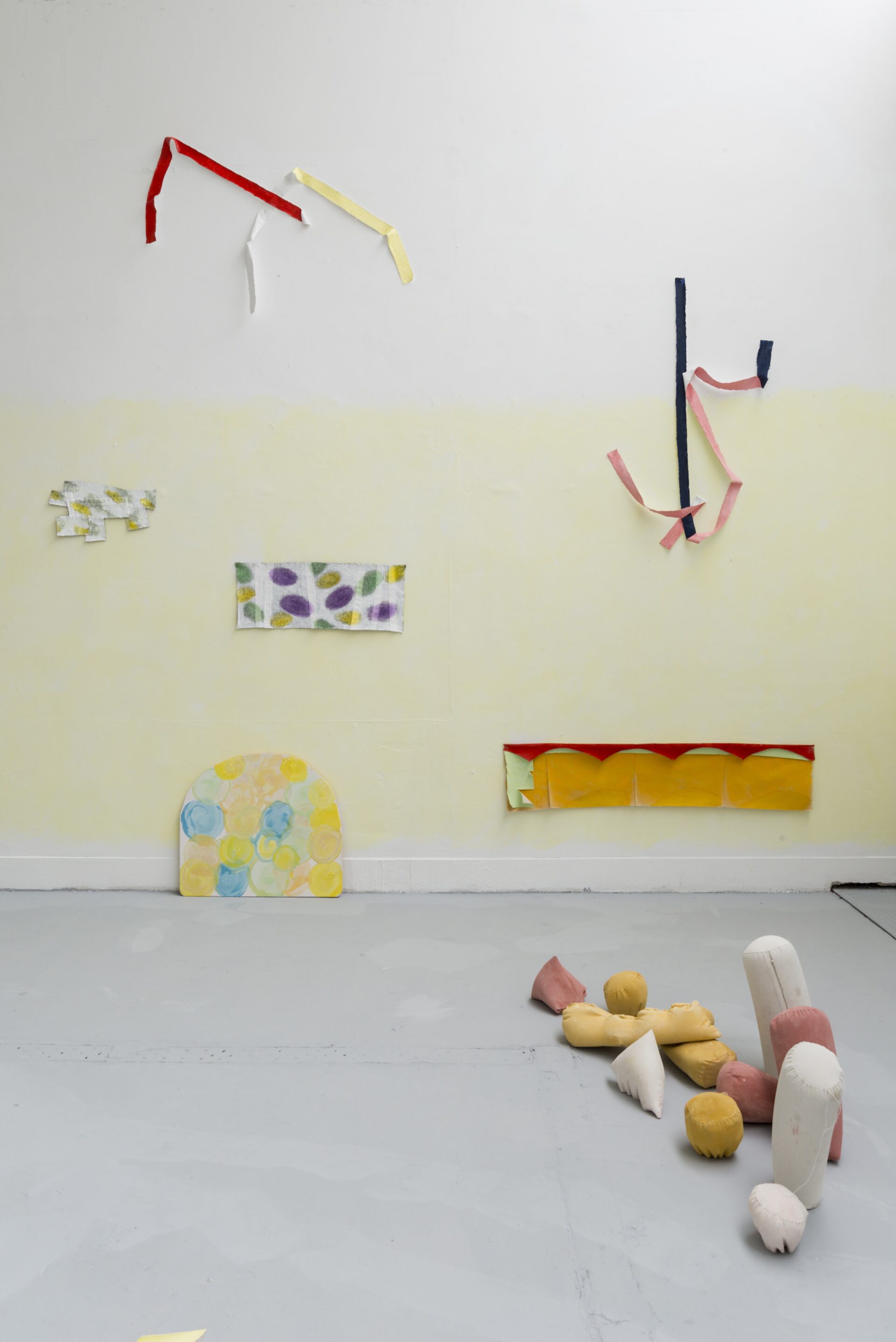
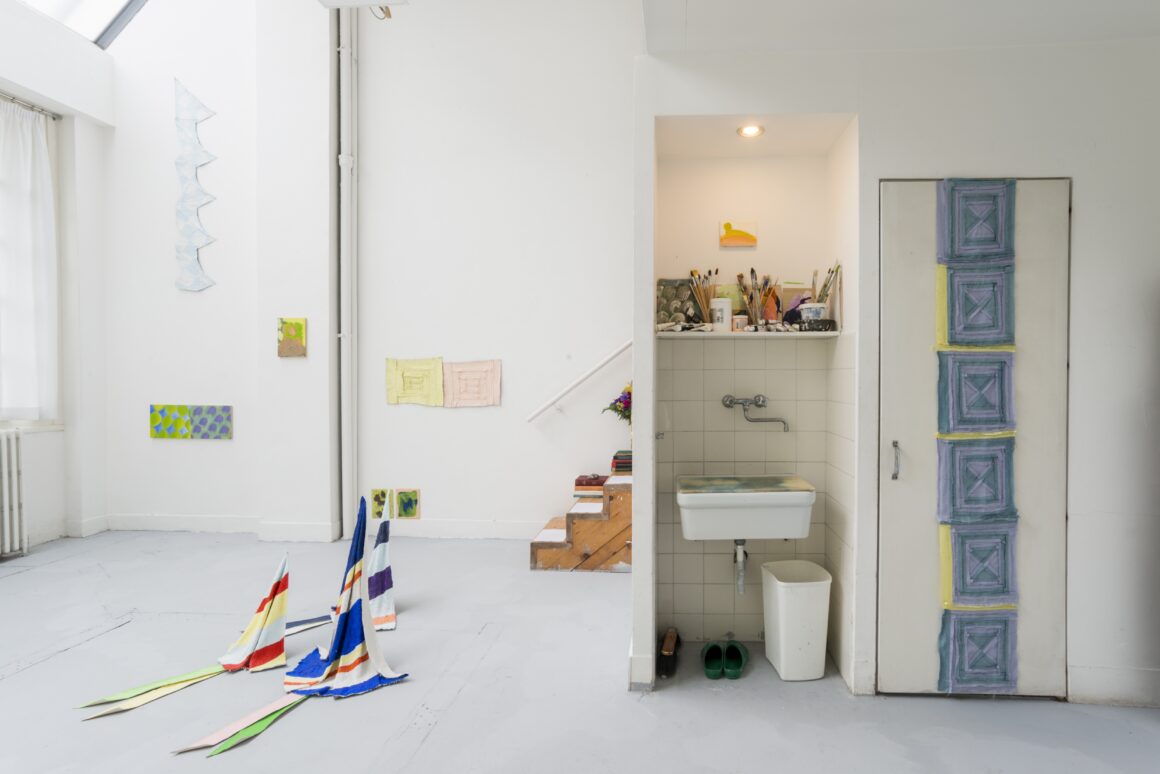
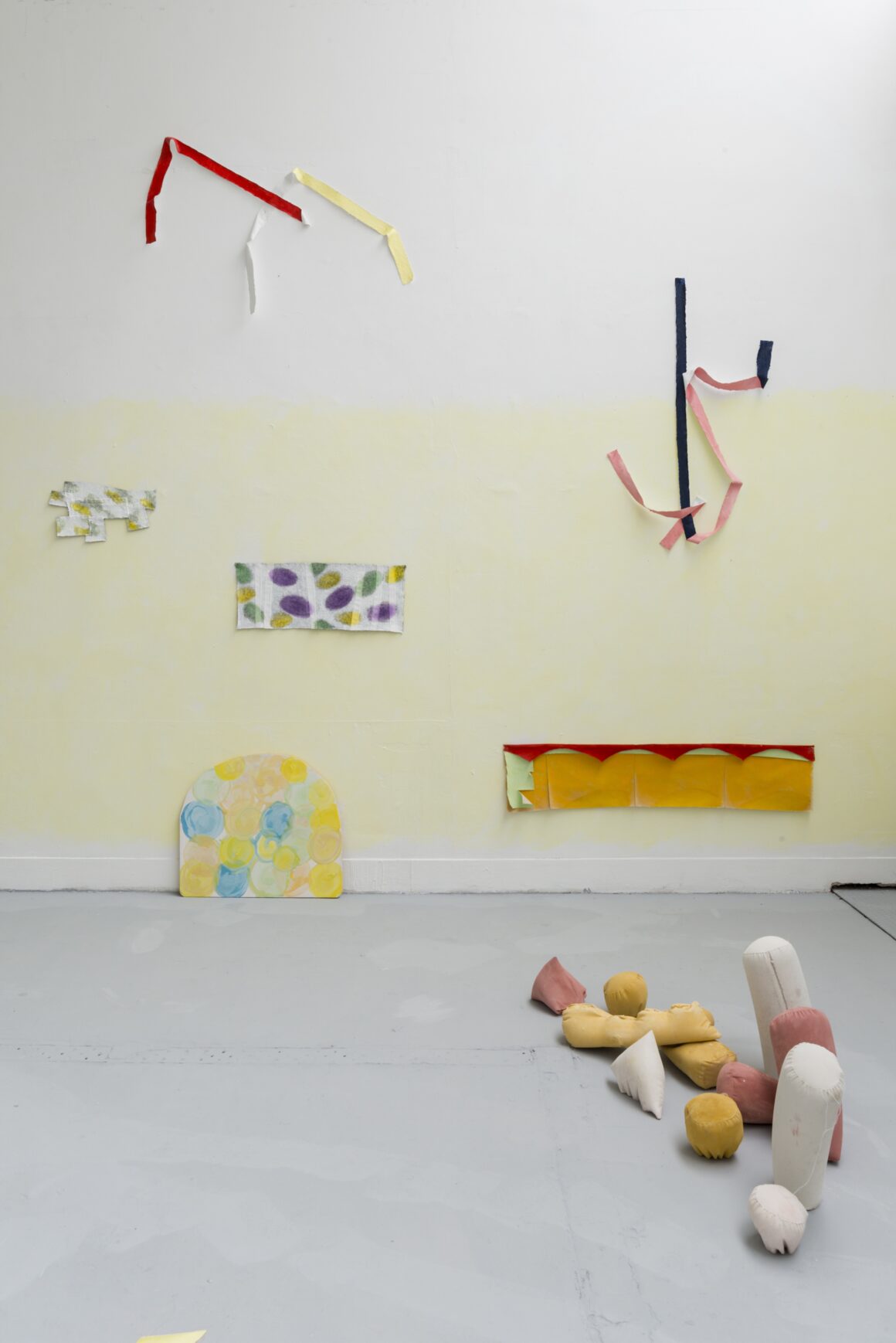
In the BSR studio, I explored combinations of painted surfaces, creating quilts and stitched cloth to paint on, or found board and detritus drenched in oil paint. I painted on moving blankets, cast cloth with masonry paint, created installations out of samplers, applied pigment directly to the wall. Much of my works were made in conversation with one other. The work sat like questions, as if to challenge understandings of tasteful art or exclusive histories. I loosely painted patterns, including the striped or harlequin forms used to identify the heretic, the witch, the queer, the jester. I explored ideas and representations of the ‘other’ using forms that challenge the nature of a painted object or value systems applied to the painted surface.
The BSR residency is stimulating, direct, open, inquisitive, and genuine. The studio is fantastic, as are the other artists. It is a credit to the team to select such a diverse range of practices in just seven artists. We arranged studio visits with each other and prepared collectively for open studios. It felt like an art school from another time, in which space, thought, and work were prioritised. Debate was encouraged and not polarising. We worked hard, had drinks on the roof in the sun, took trips to the countryside, or visited sites we wanted to see. We stayed up together before open studios to make sure everyone got over the finish line in time, having ice cold limoncellos while stretching canvasses and prepping studio walls. I can’t recommend this residency enough as a space for creative and inquisitive practices. I urge everyone to apply and to discover Rome as a layered, political, and enriching city that is everchanging, yet never moving. The BSR residency has opened a dialogue and raised questions that will stay with me for a long time.
Richard Malone is an artist based between Wexford and London.
richard-malone.com