International Centre for the Image
17 July – 14 September 2025
‘Foreword’, the inaugural exhibition at the new International Centre for the Image, operated by PhotoIreland, comprises an expansive sweep of work by 17 artists who each grapple head-on with the political, material, and visual culture of western capitalist hegemony. While resistance and critique connect their work, their collective interests are less about struggle for change and more about anticipating a cathartic tipping point – the ultimate disintegration brought about by the Anthropocene age.
‘Foreword’ aims to highlight the curatorial priorities of the new centre and the critical role of the still and moving image within arts discourse and broader society. The exhibition presents a broad spectrum of works which are curated to maximum capacity in the relatively small, darkened exhibition space.
Penelope Umbrico’s vast grid of over 1500 sunset photographs creates a pixelated burst of intense colour. Harvested from Flickr, each image places the subject facing the camera with their backs to the sunset, obscuring them into darkened silhouettes. Umbrico has produced multiple iterations of this work, revealing the scale and ritual of this human impulse, perceived as simply another form of consumption.
Nearby is a selection of work from Alan Butler’s ongoing photographic project, 100 Years of Solitude, which documents landscapes from video games, set in the 19th century. Butler reproduces these digital landscapes using wet-plate collodion on black glass – a very early chemical photographic process from the 1850s. On his website, Butler emphasises how the “subject/images relate to the medium’s materiality,” which could be described as a major understatement of their aesthetic appeal. Their size and proportion, deep framing and industrial feel, as well as the enigmatic quality of the image that hovers between painting, print, and photography – sustained even in the larger pixelated images – are extraordinary.
Juxtaposed in ‘Foreword’ are works by Anna Ehrenstein and Anna Safiatou Touré, female artists of Albanian-German and Malian-French heritage respectively. Ehrenstein’s work, Melody for a Harem Girl by the Sea (2023), combines sculpture and collage featuring archival images of Muslim women. The work was made in response to the west’s preoccupation with the hijab, which she views as a smokescreen for ignoring the actual contribution of Muslim women to science and the arts. The collages are framed in expanding foam, giving them a raw and anarchistic beauty, somewhat reminiscent of the work of Frida Kahlo. Meanwhile, Touré ridicules western society’s misappropriation and shallow fetish for African Masks by casting their interiors, resulting in crude disfigurations that would likely be unpalatable to western tastes. The nine crisp, monotone photographs are accompanied by a very sweet videogame that can be played by visitors, involving insects finding existential meaning in a post-apocalyptic desert.
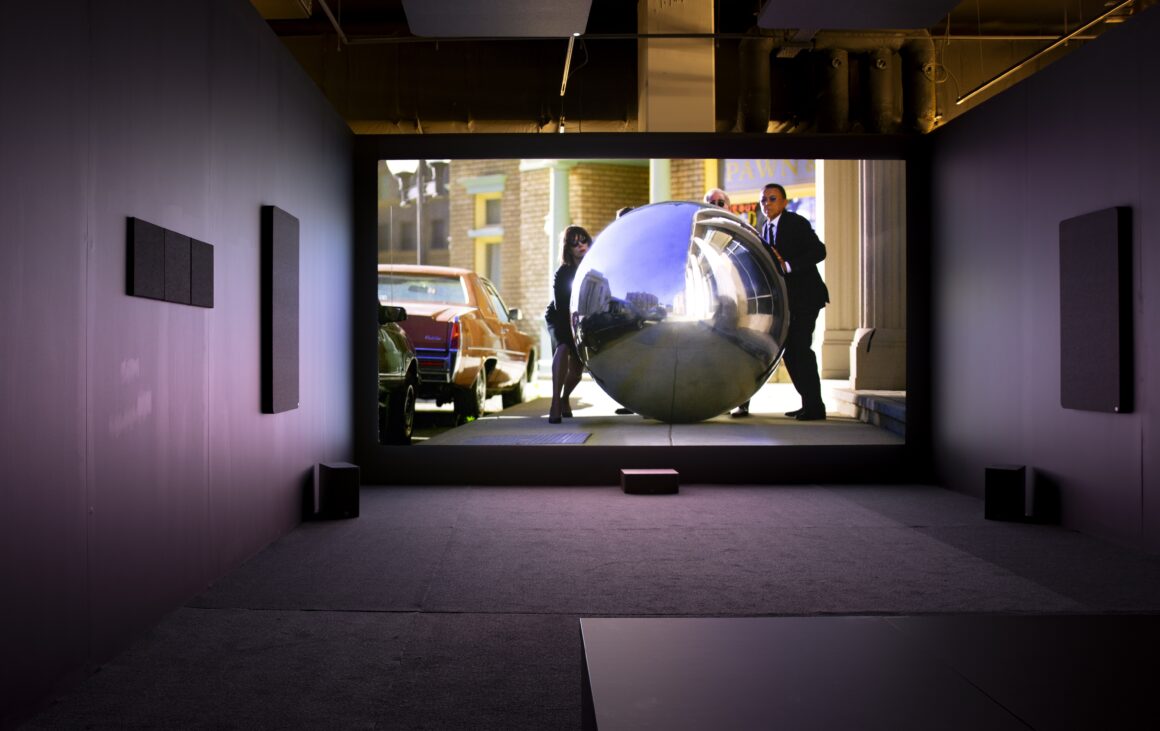
Moving image works by Alex Prager, Ana Zibelnik and Jakob Ganslmeier, and Bassam Issa Al-Sabah and Jennifer Mehigan occupy just under half of the gallery space. Having these three videos in close proximity, with voice-over, narration and dialogue in addition to soundtracks, creates quite a demanding sensory environment for the viewer. Bassam Issa Al-Sabah and Jennifer Mehigan exhibit Uncensored Lilac (2024), a compelling 30-minute computer animated saga, chronicling the journey of a group of goddesses and their companions. Narrated by a hypnotic female voice, emanating from a shimmering floating protagonist, the work is both voluptuous and strangely one-dimensional, while simultaneously fun and absorbing.
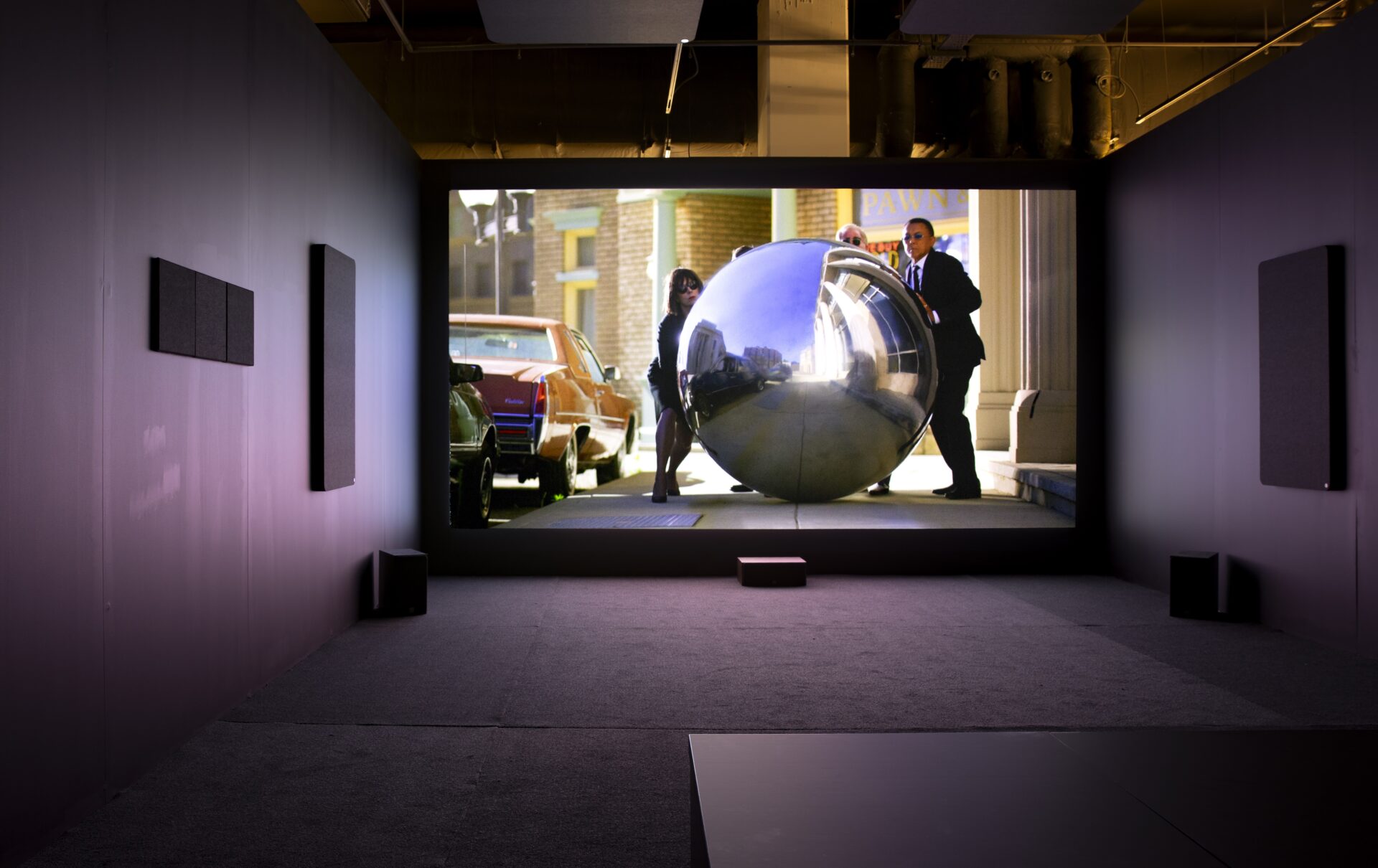
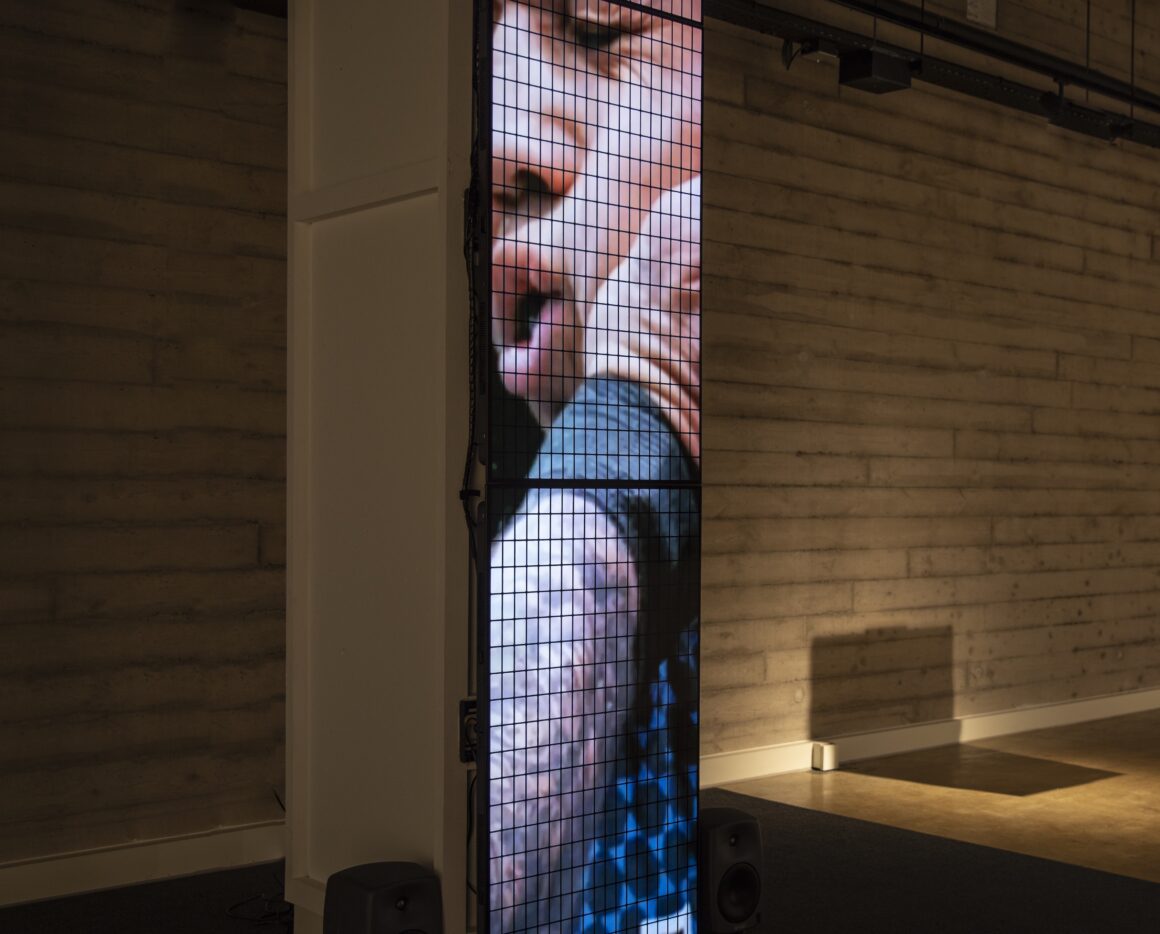
Ana Zibelnik and Jakob Ganslmeier’s Bereitschaft (readiness) (2025) examines the phenomenon of male self-discipline and fitness movements and their alarming alignment with fascist and sexist ideologies. It effectively mixes a kinetic montage of video clips with urgently voiced personal narratives. Meanwhile, Alex Prager’s high-quality, Technicolour film, Run (2022), is made in the cinematic style of 60s spy-fantasy dramas, such as The Prisoner and The Man from Uncle. Its material quality and narrative action are incredibly seductive but felt a little out of place here.
In the same area of the gallery, Abigail O’Brien’s sublime, high-resolution photographs capture Aston Martin cars at vulnerable moments in their production, in a clever and funny emasculation of James Bond. Colin Martin’s astonishing yet not-quite photorealist paintings withstand the pressure of the lens-based environment, holding their position with integrity, while Eamonn Doyle’s contribution offers an interesting preview of a major project, due to be presented in the gallery in 2026.
Informed by her extensive knowledge of the dye transfer printing process, Jean Curran’s new work, Spring: Begin Again, demonstrates an interesting departure from previous Hollywood-themed photographic series like The Vertigo Project and Godard Bardot – though work from those projects would have worked equally well in this exhibition. Mishka Henner’s Words and Pictures comprises a mock gallery environment with a slideshow of artworks, exploring the conventions of exhibition making. Other artists included are David Farrell, whose personal experience of losing his entire archive during a flood in Italy is illustrated in the presentation of prints from flood damaged negatives, and Dominic Hawgood, who combines innovative CGI photography with hand-fabricated sculpture.
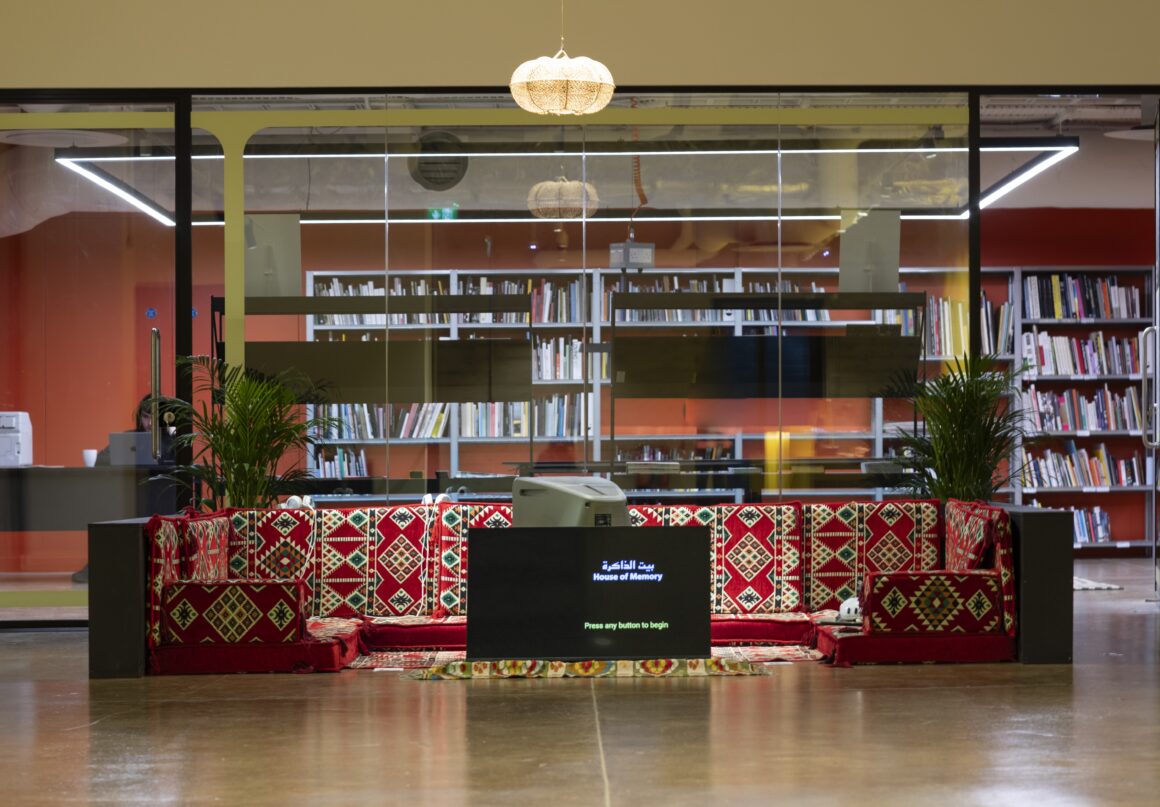
Located outside the exhibition space in the reception, Basil Al-Rawi’s House of Memory (2022-ongoing) comprises a traditional Iraqi floor-based seating area, upholstered in vibrant red with dynamic geometric patterns. In a short video of still images, screened on a small television, a man and woman (perceived as Al-Rawi and his mother) recall the mixture of sadness and joy of crossing the border from Iraq into Jordan by car, following the American invasion in 1991. The power in this work is in its testimony to human endurance, providing a suitable endnote to the show.
Carissa Farrell is a curator based in Dublin.