THOMAS POOL DISCUSSES KELLY REICHARDT’S NEW FILM, THE MASTERMIND, PREMIERED IN IRELAND BY THE HUGH LANE GALLERY, IN CONJUNCTION WITH VOLTA PICTURES.
“Don’t try this at home”, Barbara Dawson, Director of the Hugh Lane Gallery, said as she launched the Irish premiere of a new art heist film, The Mastermind, at Dublin’s Light House Cinema on 14 October. The latest film from director Kelly Reichardt, The Mastermind centres on J.B. Mooney (played with hapless charm by Josh O’Connor) – an art school dropout, under-employed artisan carpenter, father of two young boys Tommy and Carl (played by Jasper and Sterling Thompson), and husband to Terri (played by, a frankly underutilised, Alana Haim). The Irish premiere was presented by the Hugh Lane Gallery in conjunction with Volta Pictures. This was the first event of the gallery’s new outreach programme, being delivered while it is closed for major renovations (including the building of a new city library) over the next three years.
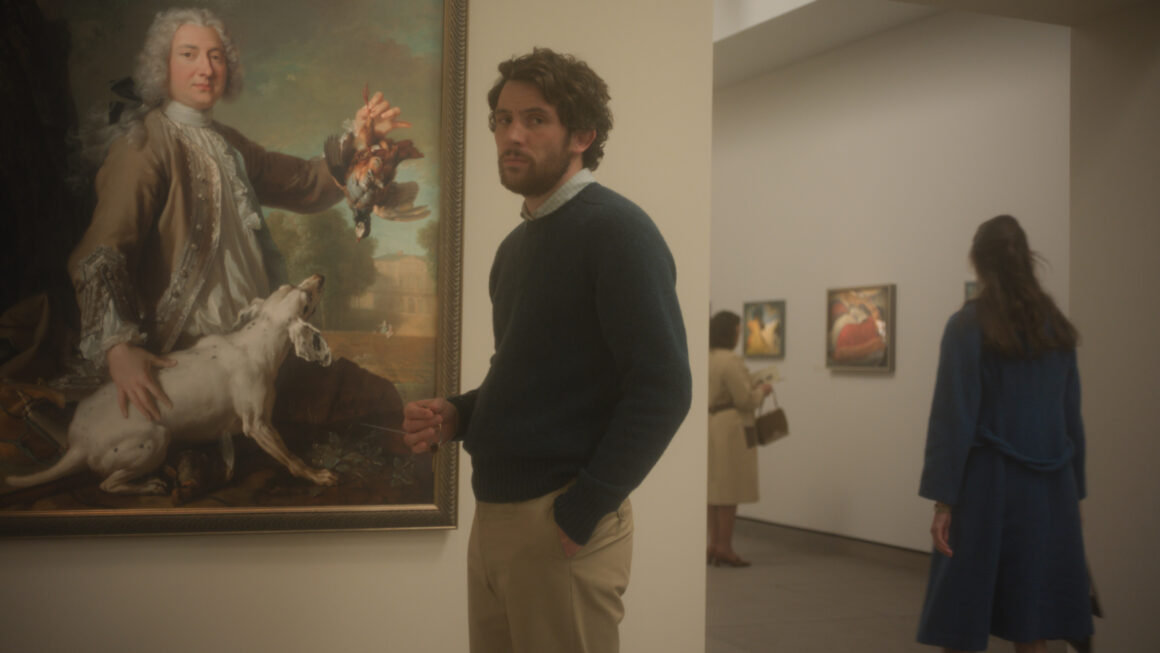
For a heist film, The Mastermind is as surprisingly wry as it is political. The film opens, and mainly takes place in, the picturesquely suburban Framingham, Massachusetts. The first scene sees the family visiting the local art museum, the fictional Framingham Museum of Art. The kids prattle on in childish disinterest, while their mother, Terri, sits on a bench observing some unseen painting. With one blabbering child in tow, J.B. paces around the room, purveying the distinctly New England folk-art.
As the percussion-heavy, itchy jazz of Rob Mazurek’s score picks up, we realise he’s casing the joint. Noticing a sleeping security guard, lack of cameras, or any potential witnesses, J.B. seizes the opportunity to snatch a small wooden figurine from its display, storing it in his glasses case, and sneaking it out in his wife’s satchel. Here, we first get the sense of exactly who J.B. is, when he pauses to tie his shoelace in front of the security guard at the exit, while his wife and children leave the museum, unknowingly smuggling out the stolen figurine. Thus, the plot is hatched.
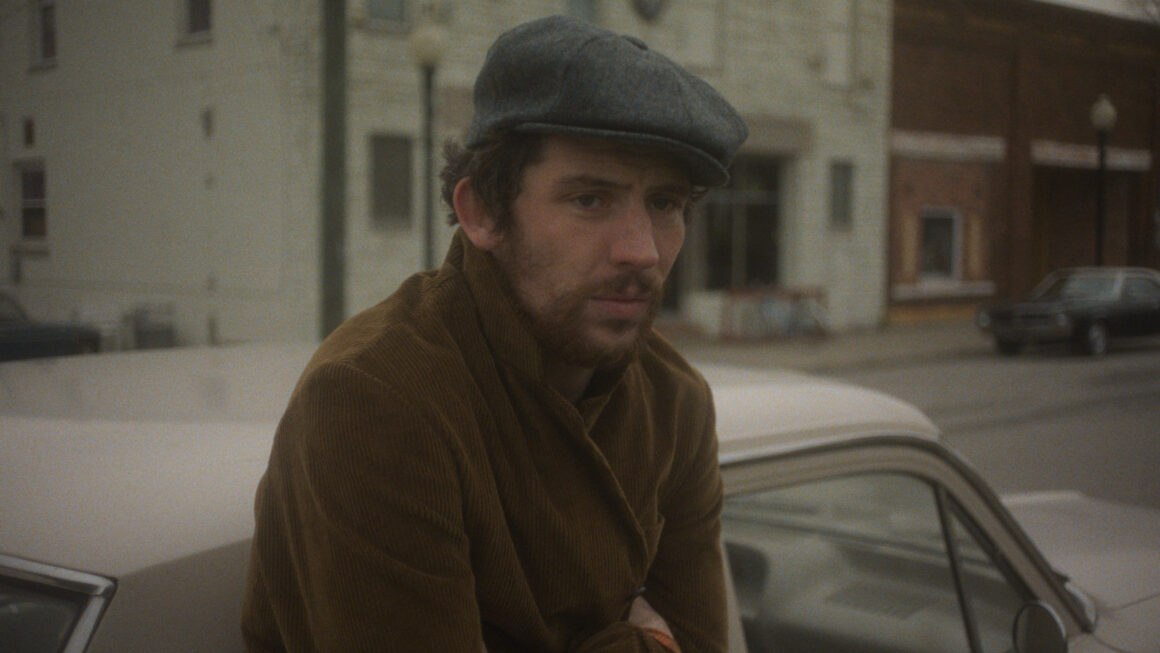
Set in 1970, we are instantly drawn into the time period by news reports of a foreign war spiralling beyond its original borders, the crackdown on student protestors by overzealous police, and the right-wing President’s denunciation of the anti-war movement. Sound familiar? The exceptional production design by Anthony Gasparro grounds us in the malaise of the 70s, along with the costuming and Reichardt’s earth-tone colour palette and expert use of pale winter sunlight.
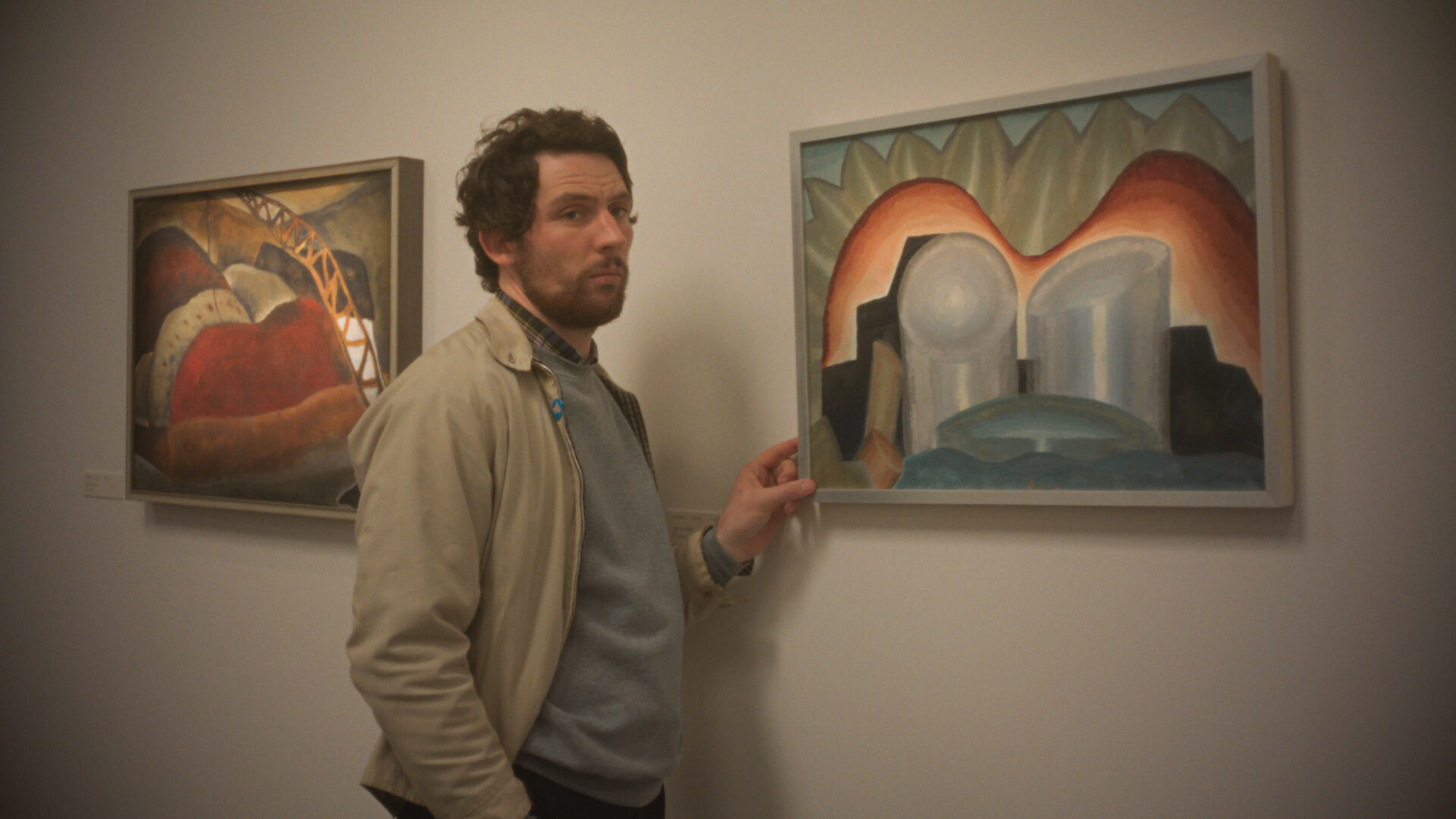
Enlisting a few friends, J.B. convinces them the heist will go off without a hitch. Their plan is to steal four Arthur Dove paintings: Tree Forms (1932), Willow Tree (1937), Tanks & Snowbanks (1938), and Yellow Blue Green Brown (1941). They steal a car, swap the plates, set up another car to transfer the stolen art, and create a special box to store the precious loot. Nylon stockings are procured for masks, and Terri sews pillowcases into sacks to stuff the art into.
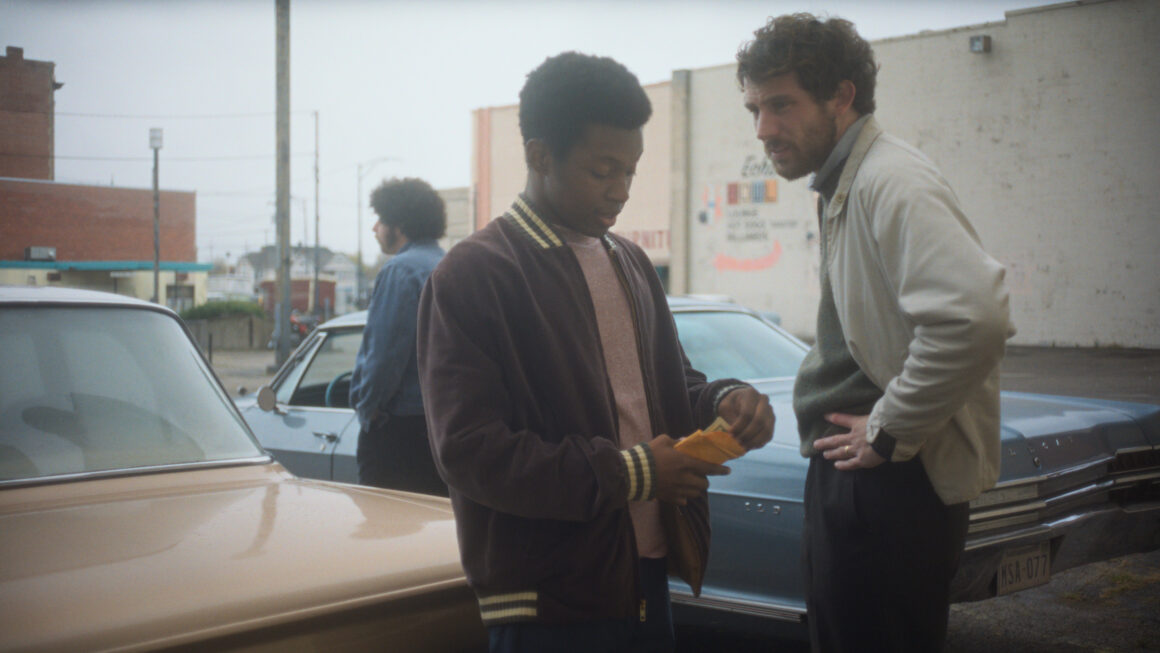
How much or how little Terri knows of her husband’s activities is not fully revealed. The breadwinner of the family, she seems frustrated by her husband’s lack of productivity, especially on the day of the heist, when J.B. attempts to drop the kids off at a closed school. She tersely tells him on the phone that it’s not an emergency and hangs up. This is the first stumbling block for our mastermind, as he sets his kids loose on the street with petty cash and tells them to meet him back in the parking lot later in the afternoon. He speeds away and picks up his pals, one of whom is armed, against J.B.’s wishes. The heist itself goes mostly according to plan, until a teenage girl practicing her French walks in on them. The heist and its consequences then continue to spiral out of control and threaten to unravel J.B. and his family.
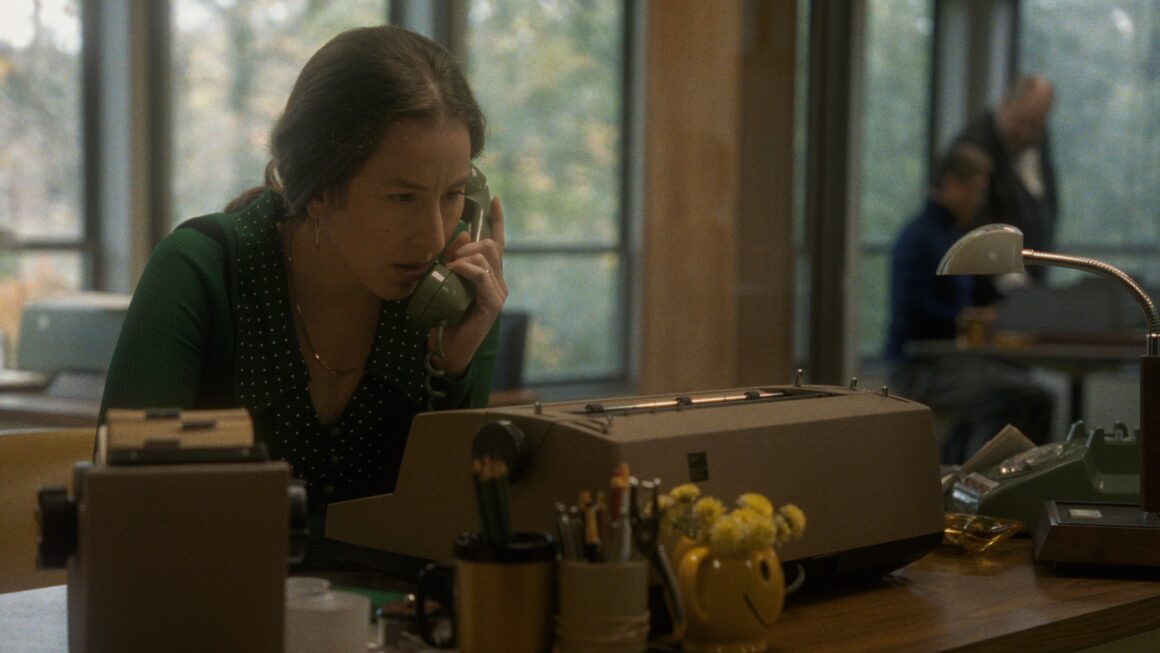
Reichardt’s distinct cinematographic style allows for slow, contemplative shots, which if rendered into stills, would not look out of place in a photography museum. Hopper-esque scenes of cafés, streets, and rural towns, imbue the viewer with the dozy milieu of the American suburbs and countryside during the Vietnam era. One scene I found particularly visually eloquent depicts J.B. on a night bus, watching a sailor on leave playing with his infant child, as the baby’s mother looks on adoringly. When J.B. awakens in the disorienting morning light, the sailor is gone, and the baby and mother stare stoically ahead, not even glancing out of the window as the world passes them by.
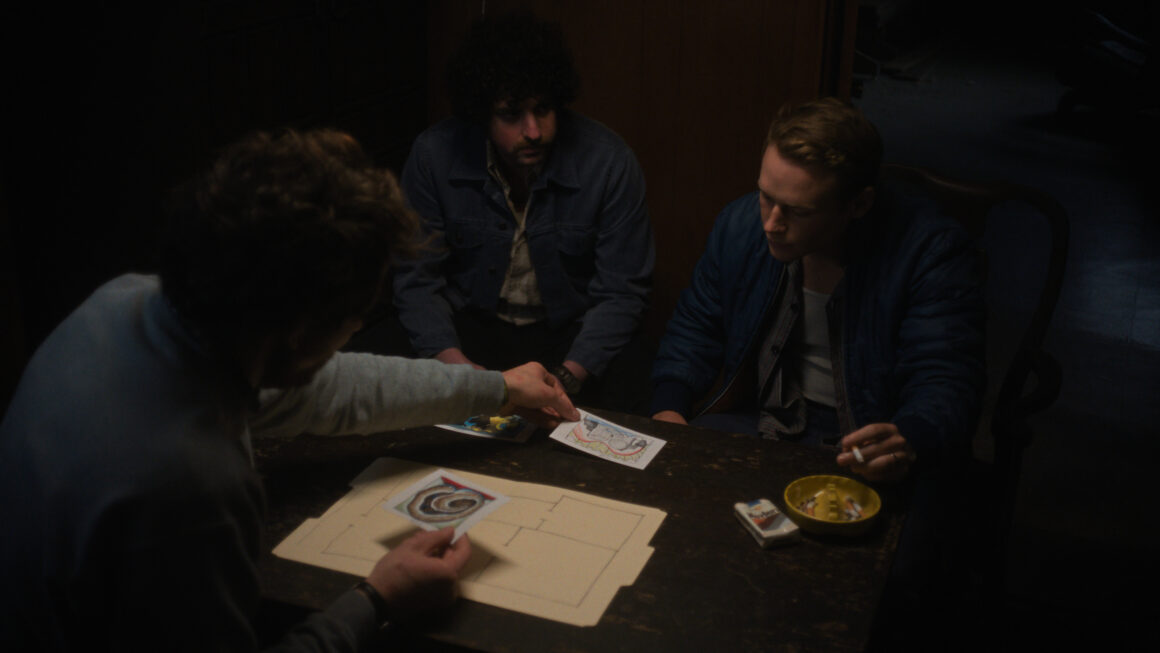
The movie leaves much unsaid, and the cinematography is loaded with inferences: an abandoned passport, a Nixon poster, New England Americana, a TV sputtering out the sounds of helicopter rotors and machine gun fire, an FBI agent’s colourful, out of place shirt, the marvellously detailed cards on which J.B. had illustrated the paintings to show his co-conspirators – a brief but concise history of a man whose talents have been squandered.
The Mastermind follows a long line of art-heist films but differs from the genre by tackling the enigmatic core of what art means to us as individuals. Perhaps not since The Train (1964) – in which the French Resistance thwart the looting of France’s most cherished artworks by a Nazi general and art-lover on the eve of the liberation of Paris – has a genuine love of art been so clearly the motivation for the crime.
The idea of being a hunted man seems to be something that sits well with J.B. – low on cash and on the run across the country, he seeks shelter with old art school friends. Here, the politics of the era, disguised as mere set-dressing until now, are pushed to the forefront. Canada, a refuge for “draft dodgers, radical feminists, dope fiends… nice people”, as his friend tells him, is his only way out of an America that seems to be collapsing in on itself. The realities of state violence, political divisions, and the idea of fleeing one’s country become increasingly familiar to the politically disinterested J.B.
In the immediate aftermath of the heist, J.B., alone at home, carefully takes down a framed floral print, and places one of Dove’s stolen works on his living room wall. The camera pauses, as we see J.B. admire a painting that means so much more to him than we are allowed to know – a familiar, reverent feeling, to sit with something true to ourselves, which we won’t readily share with others. Reichardt’s love of art for what it elicits in us is also clear, both within the film and in her broader oeuvre, which has long featured forlorn creative types, and the many contradictions and complements of art. What art means and how we value it, differs from person to person throughout the film. J.B.’s unyielding father, a judge, remarks “It is inconceivable that those abstract paintings would be worth that much trouble,” while the local mob becomes curious about the stolen works, and makes J.B. acutely aware of their interest.
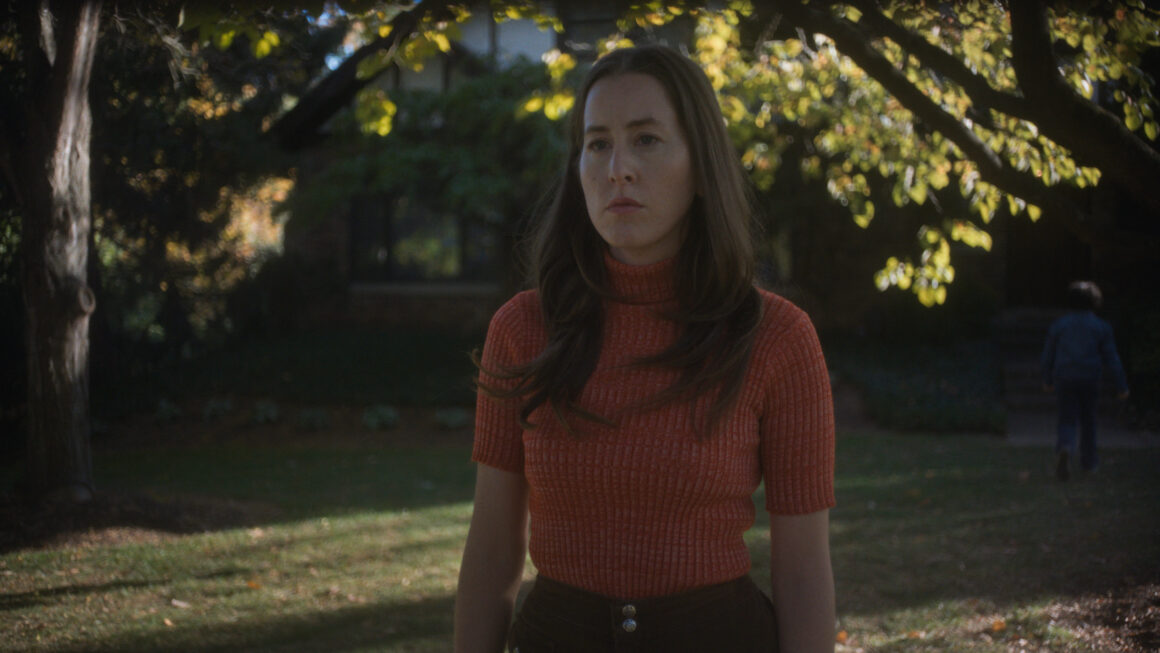
The Mastermind is unsentimental about the theft, unlike other art heist films, where the thieves are either downright villainous, or eventually won over by the populist battle cry à la Indiana Jones: “It belongs in a museum!” To steal art, to take it away from public view, evokes a sense of ancient injustice, like Zeus stealing back the flame, gifted to humans by Prometheus. So, we are relieved when J.B. picks up a discarded newspaper, stating that the work has been recovered; we sense that perhaps J.B. is relieved as well. On the lam, J.B. tells Terri over the phone that he did it for her and their kids, but sheepishly adds that he did it for himself, too. A nod, perhaps, to how the supposedly admirable man-commits-crime-for-family trope was forever dashed by Bryan Cranston in the series finale of Breaking Bad.
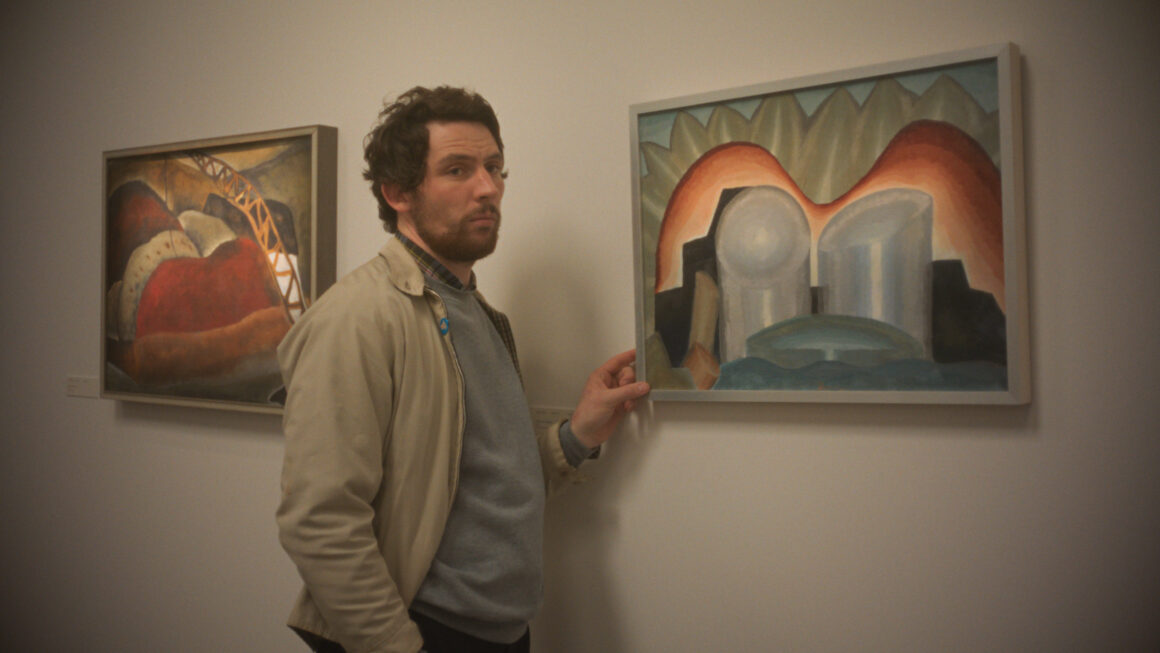
The nexus of art and money is complex, messy, and often unspoken. On the face of it, the rationale for J.B.’s bumbling heist is financial, while the motives of his co-conspirators don’t seem to go deeper than cold hard cash. The selfishness of J.B., and his wish to bring his life out of the mundane and into the exceptional, is the core of his motive. Ultimately, Reichardt cuts a middle path for J.B., who is neither an irredeemable fascist art looter, nor a master thief with a heart of gold; he’s an art school dropout, a common man who hates his commonness, desperate for a taste of the world he missed out on because of his own inaction, unable to enjoy the quiet fulfilment of family life. The film’s end, which so shockingly and unexpectedly fits his commonness, set off a ripple of dry laughter when the screen cut to black and the credits rolled.
The Mastermind opens in cinemas nationwide on Friday 24 October 2025.
Thomas Pool is the Content and Production Editor for the Visual Artists’ News Sheet and Commissioning Editor of the miniVAN.