HOLLIE KEARNS DISCUSSES A NEW ARTIST’S DYE GARDEN AND ASSOCIATED WORKSHOP PROGRAMME AT WORKHOUSE UNION.
In December 2024, friends of Workhouse Union gathered in a community meitheal to clear a small section of an adjacent paddock. It was the first public moment of the Colour Field – an artist’s garden cultivated to nurture colour-giving plants for use in art and textile practices. Many plants that we know as pervasive weeds are in fact colour-giving and medicinal companions that our ancestors would have been in relationship with. The Colour Field is already home to dock, nettle, willow, hawthorn, and yarrow plants, and our plan was to enhance the plot with an abundance of colour-giving plants.
The Colour Field weaves many long threads of practice and connection together; environmental, community, art, and practices of place. Workhouse Union is home to PrintBlock Callan, established there by Liz Nilsson. Last year, artist facilitator Michelle McMahon, Rosie Lynch (Creative Director) and Noortje van Deursen (Creative Producer & Co-Design Facilitator), were rethinking the ongoing Pattern Makers programme, and ways to reduce toxic art materials, when the idea of the Colour Field emerged. I was invited to develop the Colour Field and to share my personal practice in natural dyeing, textiles and nature connection. I am, by training, an art historian, but natural dyeing has always felt close to alchemy, combining my research into the colourful, pre-colonial, textile history in Ireland, with intuitive nature connection and just the right amount of scientific process to achieve strong colours from plants on cotton and linen.
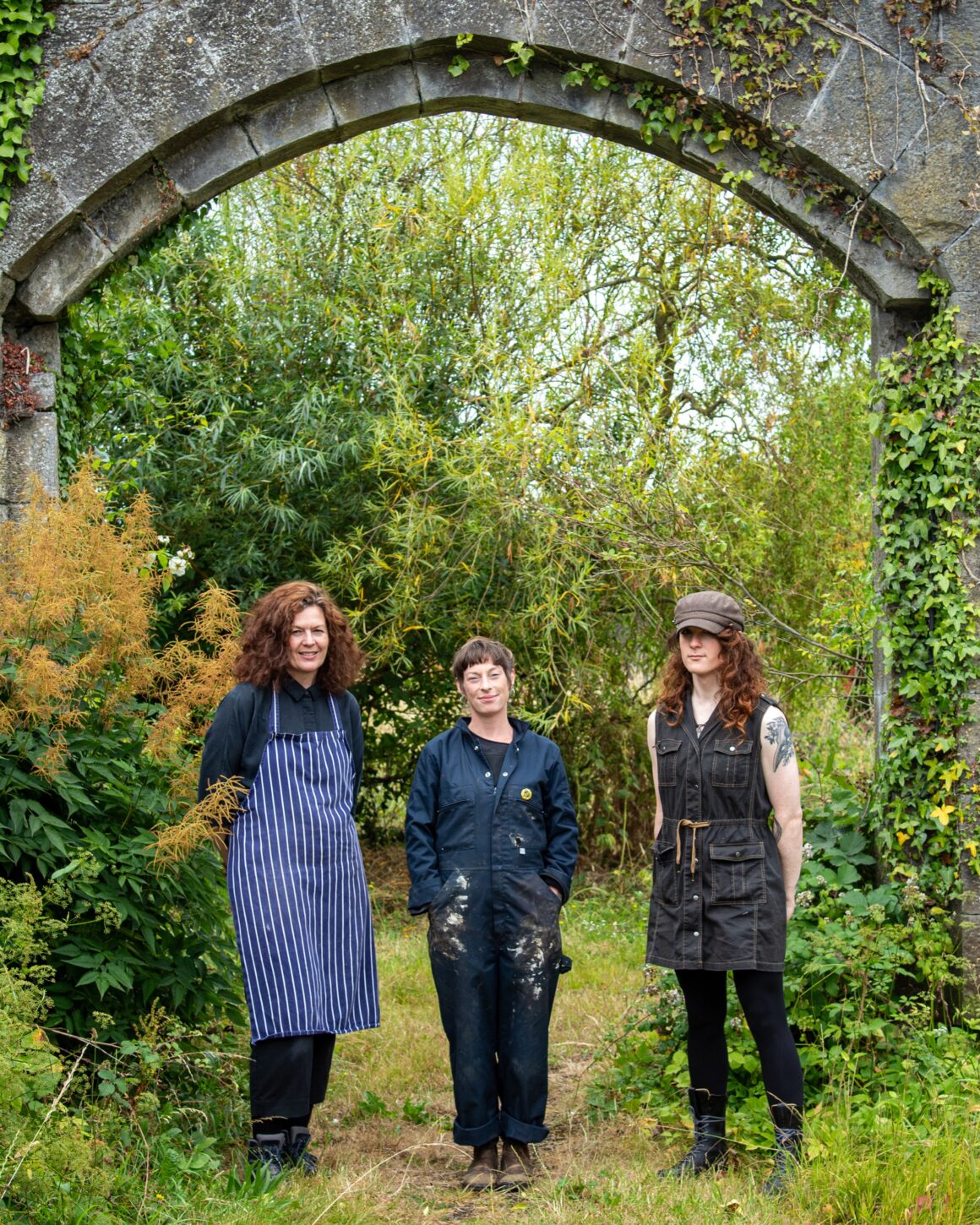
Luke, a young grower in our community, grew the plants from seeds which we sourced from Irish companies and friends. Our plant list is long but includes traditional dye plants such as woad to make blue, weld to make yellow, and madder and Lady’s Bedstraw to make red. We are growing introduced plants, such as Dyer’s Coreopsis and Dyer’s Camomile, and lesser-known dye plants, such as native medicinal St. John’s Wort, and novel colour-making plant, Black Knight Scabiosa.
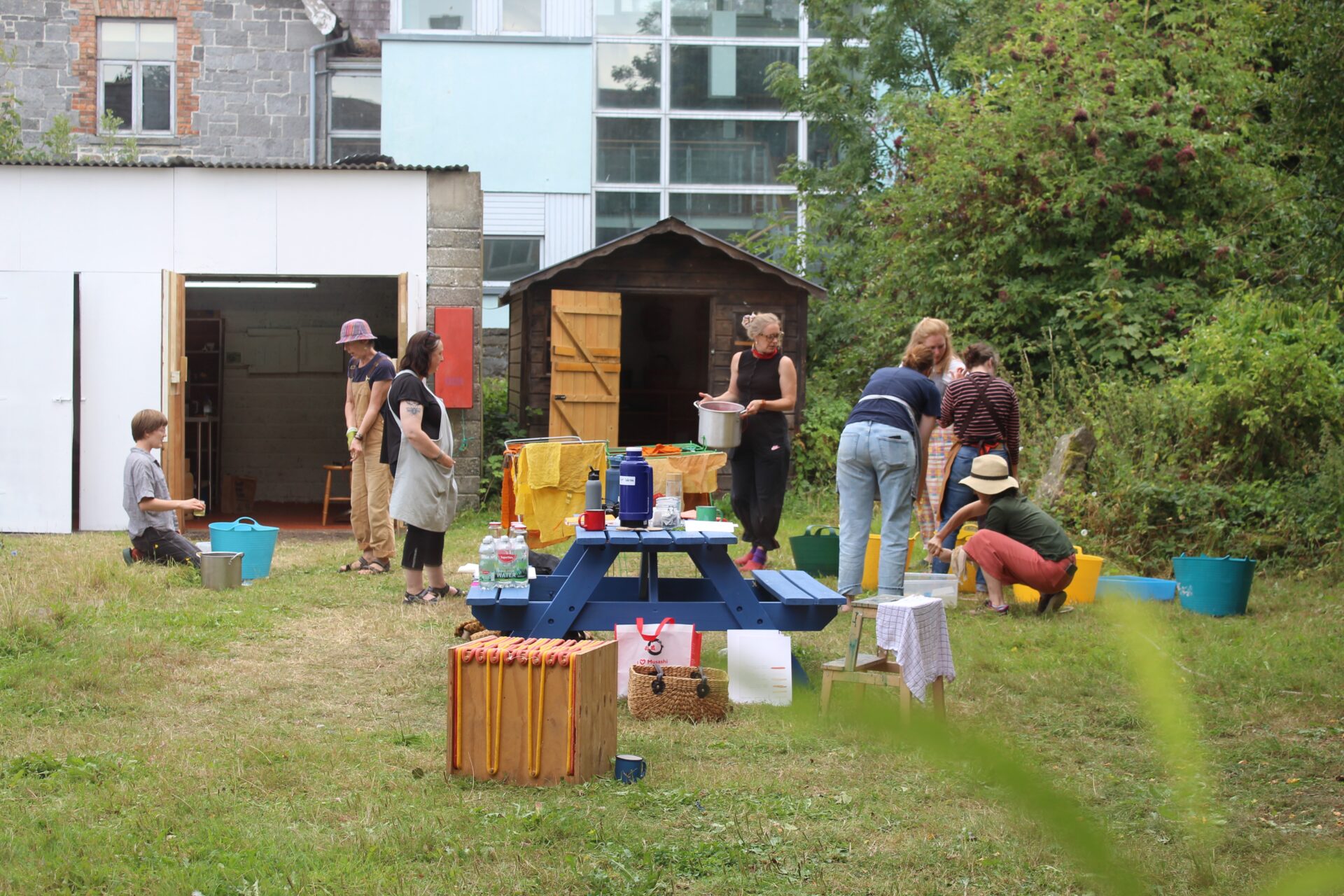
A free public workshop programme launched in April 2025 with GREEN, a full day spent with nettle. We gathered, drank and ate nettles, dyed on cotton, and embroidered nettle motifs with naturally dyed threads. The response to the programme launch was immense, and we have been blown away by the diverse and engaged participant group across the year. The natural dyeing process is long and slow, and the workshops were intended as introductory skills for working with natural colour on textiles.
Workshops in RED and YELLOW in May and June explored further printing and dyeing techniques with madder, weld, onion skins and fresh flowers. Finally, at Skill Share in September, Michelle and I finished the public programme with BLUE, a two-hour workshop using fresh indigo leaves, which thrived in our polytunnel, to achieve a range of turquoise and teal on lengths of silk. Throughout the workshops, our conversations explored the plant connections that can inform contemporary artworks. The process of producing colour on textiles has been a sacred practice across cultures and across time until the exploitative fashion industry practices of the last 150 years took hold. What layers of meaning can natural colour produce in a contemporary cultural context?
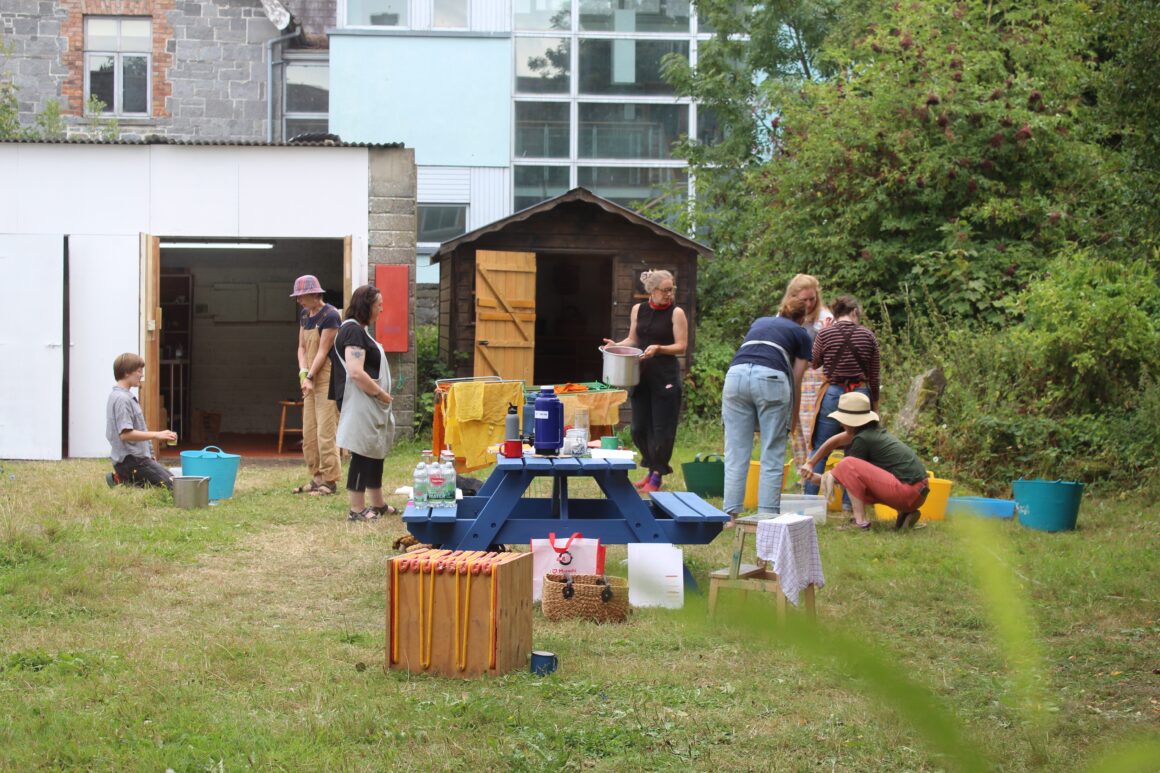
Making Colour was an open-call supported residency programme last July. Marielle MacLeman, Annie Hogg and Sylvia Maher undertook a week of rich and experimental dye research in the new outdoor dye studio, exploring deep questions of process, labour, and care. In August, I led the Open Studio Workshop, a three-day collaboration with six artists, which allowed us to go through the process from preparation of fabric to finished dye together. We chose three plants to work with: madder, dock seeds, and dyer’s camomile, which we then modified with iron, alkaline, acid, and copper solutions. By the third day, we laid out a beautiful spectrum of strong colour on cloth.
Many dye plants in the Colour Field will take a few years to mature – a natural cycle that ensures a long-term commitment to the place and the practice. For the coming year, we have commissioned two artists to make new work which will explore plant colour stories and support the development of the garden. Our workshop and event programme will deepen our connection with natural colour and the sacred, ancient, and innovative potential of plant-based colour for artists. More information can be found on the Workhouse Union website.
Hollie Kearns is Co-Founder of Workhouse Union and an independent curator.
workhouseunion.com