RACHAEL GILBOURNE INTERVIEWS ALBERTA WHITTLE ABOUT HER TWO-PERSON EXHIBITION WITH CAMILLE SOUTER CURRENTLY SHOWING AT IMMA.
Rachael Gilbourne: When we first met in 2019, we spoke about our shared experiences of caregiving, and the difference between empathy and compassion. Your work carries this too – a deep sense of healing and hope in a brutal world. How do you speak about trauma and violence through your practice without it sinking into despair?
Alberta Whittle: Thinking of that time reminds me how lonesome being an artist can be, but also how global crises can bring people together in affinity and hope. My heart was sore then, and I was trying to figure out my voice. I was disturbed by the grief and rage of that socio-political landscape, which in hindsight, seems much calmer than today. I am the child of two trade unionists, and I’ve learned that community is what stops me from sinking into despair. Community can come from kith and kin, or from the chosen family I am lucky to work with. Isolation can narrow one’s thinking, and we need people to remind us of what is at stake when we lose touch with our individual softness. Togetherness keeps us intentional.
RG: You’ve previously mentioned that you think of yourself as a self-taught artist. How do you reconcile academic achievement with your authentic, organic, and intuitive approaches to making?
AW: Whilst I think art education is an indispensable place of thinking and community-building, I am a reluctant student. Academia and education in the UK, Europe, and North America is incredibly colonial, and insists on following conservative parameters of judgement and curricula that ignore and obfuscate the global majority’s experience. The systems of education I participated in rarely fit my needs. Coming from a family of excellent teachers and artists, I am aware of their tremendous role as pastoral caregivers, questioners, and educators. However, we still need to change the system itself. I look forward to reimagining arts education as a lecturer or teacher myself someday. For me, education has always been a foundational instructive space, but the important work can happen outside of these environments.
RG: How representative is the selection of your works within ‘Fisherwoman, Fisherwoman’, your two-person exhibition at IMMA with Camille Souter (1929–2023)?
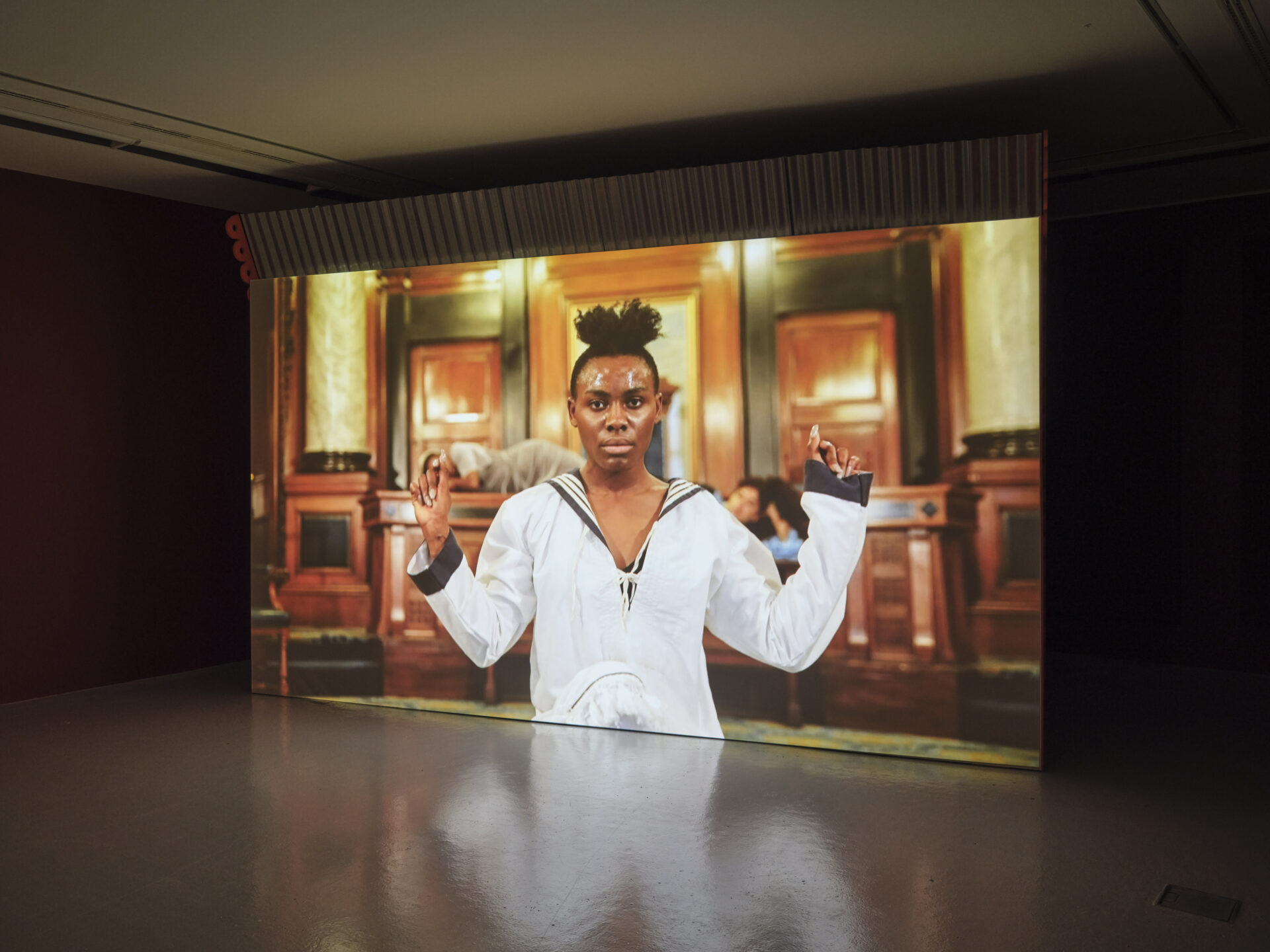
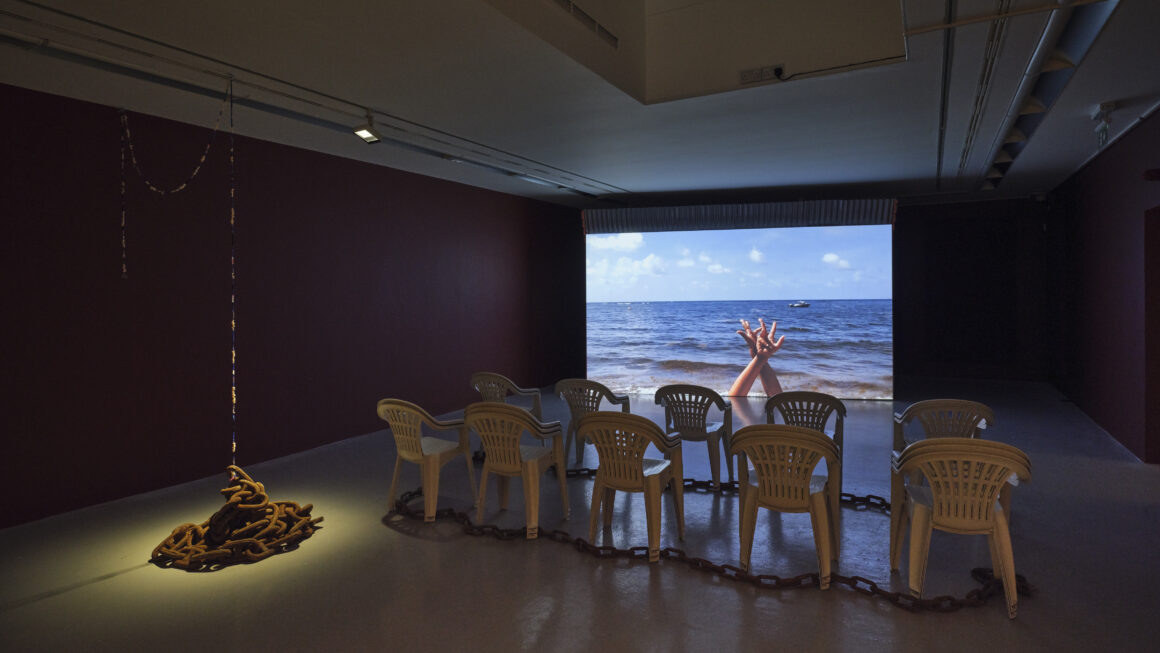
AW: I am always curious about what will unfold when working with a new curator and institution. I’m genuinely delighted with how you have brought works into conversation with one another for the first time. For instance, it’s exciting that the RESET installation sits alongside key watercolour suites. I think the exhibition gives a good flavour of my practice, while also speaking to Camille’s work. This is very much a two-person show, and it’s been intriguing to see how the pairings of our works complement and ask different questions. It speaks very clearly on our shared concerns of environmental catastrophe, whilst also thinking about grief, family, and other healing practices.
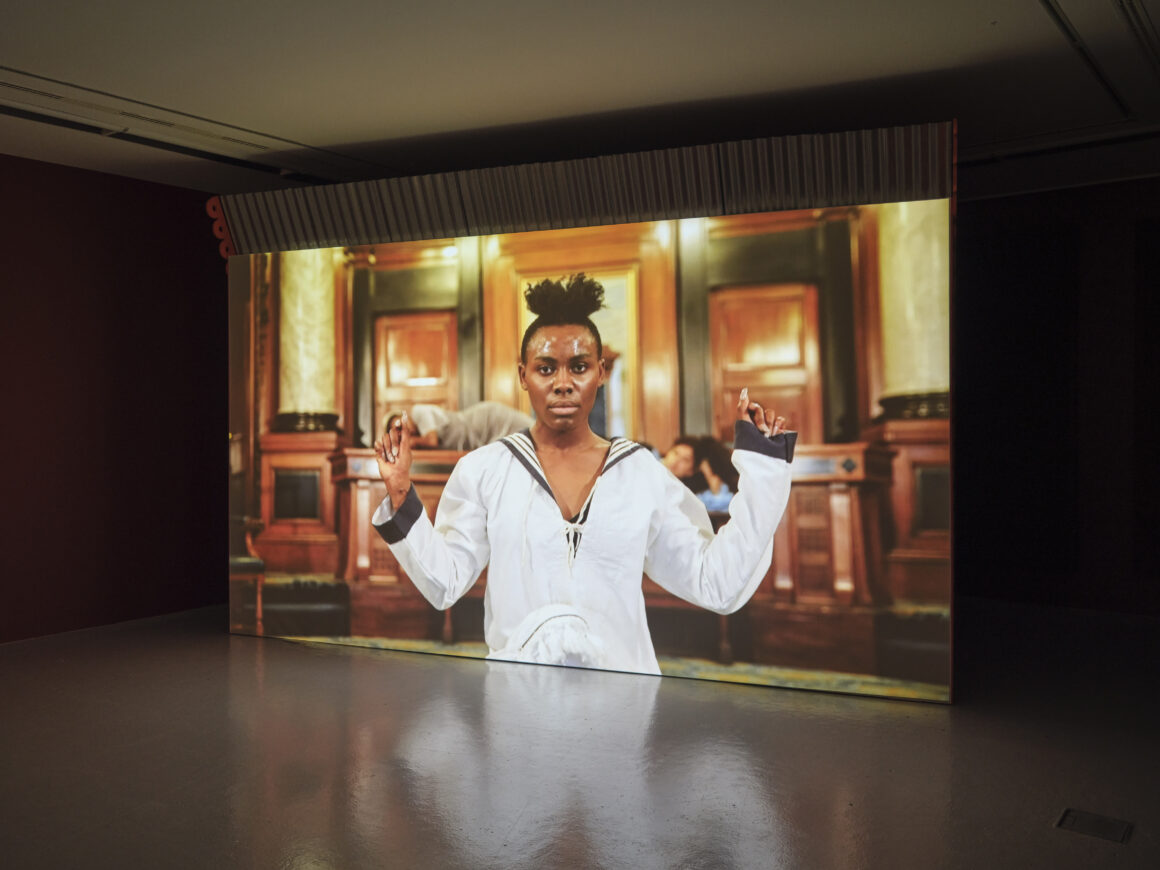
RG: The works of key thinkers and philosophers have been significant in the development of your practice. Can you share some of those research influences with us?
AW: Studying for my PhD was indispensable in encouraging me to balance my making practice with researching thinkers and philosophers like Edwidge Danticat, Kamau Brathwaite, Christina Sharpe, bell hooks, Maud Sulter, and Saidiya Hartman. Crucially, this taught me that the humanities are indispensable for imagining different futures and opened my eyes to my responsibility as an artist. For instance, reading Maya Goodfellow’s Hostile Environment: How Immigrants Became Scapegoats (Verso Books, 2019), was important in understanding the fundamental structures of racism and anti-blackness that have continued to stoke the fires of British imperialism and fracture the safety of global majority folk. I see the traces of this book in my Autumn Equinox paintings and in the wateriness of my coil sculptures.
RG: Your beaded works, referred to as ‘coils’, are woven hanging sculptures with cowrie shells, pearls, bells and other materials, streaming vertically from ceiling beams to the handcrafted frames of your paintings. In ‘Fisherwoman, Fisherwoman’, you’ve created your longest coil sculpture to date, at over 11 metres. Can you speak about coils as a recurring form in your practice?
AW: I first began making coils as a response to the collective reading of Audre Lorde’s 1978 essay, ‘Uses of the Erotic: The Erotic as Power’. I was part of a wonderful interdisciplinary group exhibition, ‘Sex Ecologies’ at Kunsthall Trondheim curated by Stefanie Hessler in 2022, and by reading Lorde, I found myself gravitating to the power of pleasure and inter-species love. It still feels like a massive change in direction to remember how this manifested. The coil is a way for me to think about intergenerational connections, but also interspecies relations. It is a naval string; a line from the land to the bottom of the ocean. It is a transmitter of intertidal knowledge as well as memory work. When I string the beads, I count them and order them in particular permutations linked to prime numbers. Threading these beads into a coil becomes an act of meditation and a way to remember.
RG: This is the first time your work has been shown in Ireland. What has become apparent for you, in thinking about audiences here?
AW: Whenever I am invited to show my work in new contexts, I always try to imagine what existing conversations I am entering into, but also what knowledge might be missing for my audiences. I don’t take my audiences’ knowledge or instincts for granted and try to give them clues into my thinking. This is the first time I have been able to work with a curator to develop such a full-some timeline of my work. Some of these details are intensely personal, such as my parents’ reasoning to return to the Caribbean to raise their children family. Other details reveal the historical, social, and cultural issues I am drawn to in my work. I wonder whether audiences here will be interested in the interlinking colonial histories between the Caribbean and Ireland.
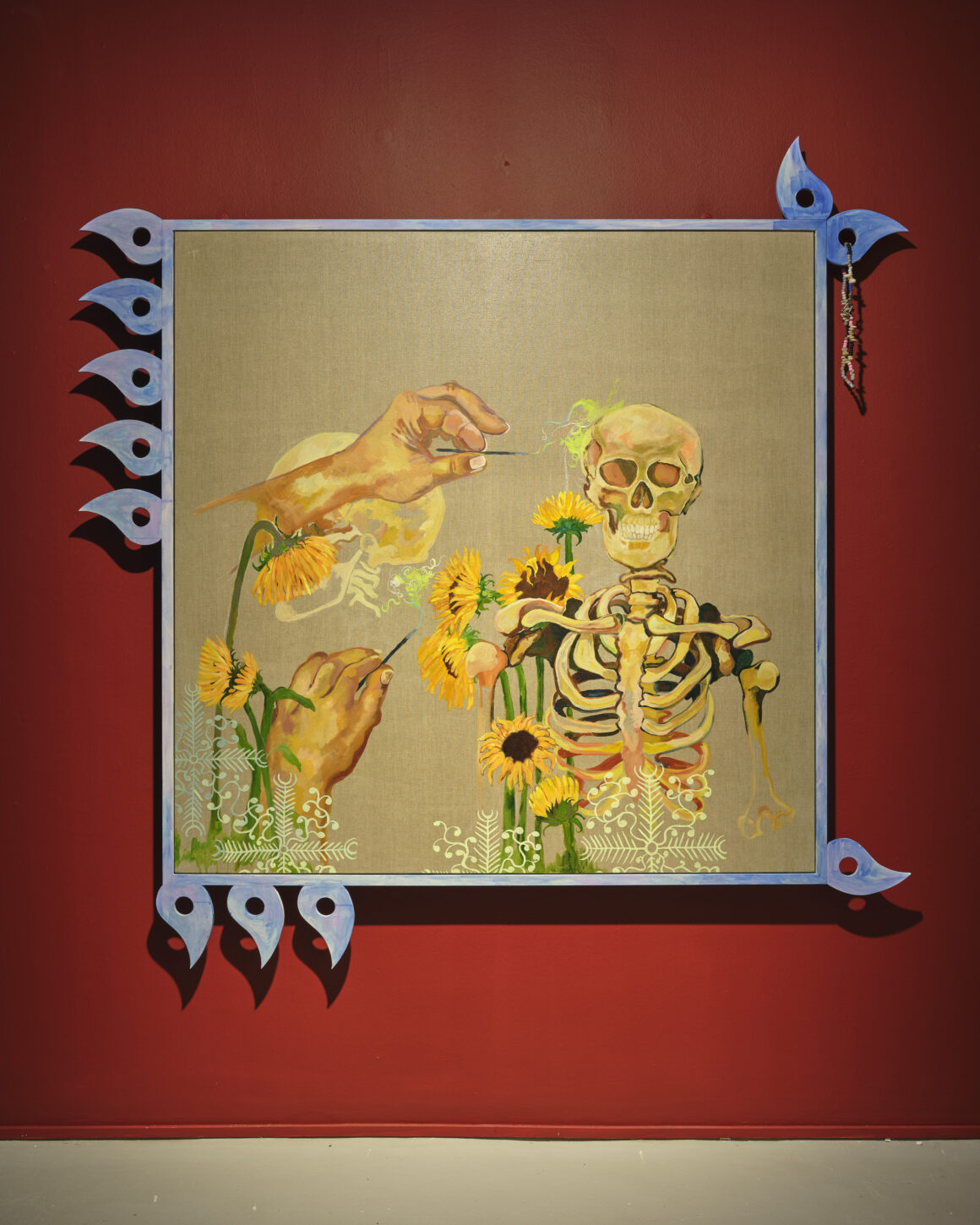
RG: Can you share your experience of working on ‘Fisherwoman, Fisherwoman’?
AW: It has been an honour to get to know Camille’s two children, Tim and Natasha, who have shared time and personal stories with me. In particular, it was so special to visit her studio in Achill with you and Natasha, and to toast her with a wee whiskey. Since returning to my studio in Glasgow, I’ve kept thinking of Camille and her vigorous practice, pushing me on as part of a new generation. But one of the most special times, in preparation for this show, was working with Camille’s son, Tim Morris (and his assistant Gem) in his foundry, on Summoning Spirit – Experiments in Alchemy. There was something so magical about the process. We talked about so many things, from Benin bronzes to memories of Camille, to love and grief – it’s all present in those bronze sculptures. This making process became a bit of a rebirth for my practice, to try something completely different, while emphasising the presence of love, friendship, and labour in this collaborative work. I am forever changed. Thank you.
Alberta Whittle is a Barbadian-Scottish multidisciplinary artist based in Glasgow.
albertawhittlestudio.com
Rachael Gilbourne is the curator of ‘Fisherwoman, Fisherwoman’ and Assistant Curator: Exhibitions – Projects & Partnerships at IMMA, where ‘Fisherwoman, Fisherwoman’ continues until 13 September.
imma.ie