Goethe-Institut Irland
16 May – 21 June 2025
‘Sedimented Tactilities’ is an exhibition at the Goethe-Institut Irland by Doireann O’Malley and the artist duo STRWÜÜ (Jo Wanneng and Lukas Fütterer). Here, we harvest the fruit of the artists’ time at Glenkeen Garden in West Cork. Conceived by photographer and psychologist Ulrike Crespo and her partner Michael Satke, Glenkeen Garden hosts artist residencies with an emphasis on scientific collaboration, facilitated with the Environmental Research Institute at University College Cork and Frankfurt’s Senckenberg Research Institute. ‘The Glenkeen Variations’ exhibition series, curated by Ben Livne Weitzman, illustrates the life cycle of these residencies, of which ‘Sedimented Tactilities’ is one.
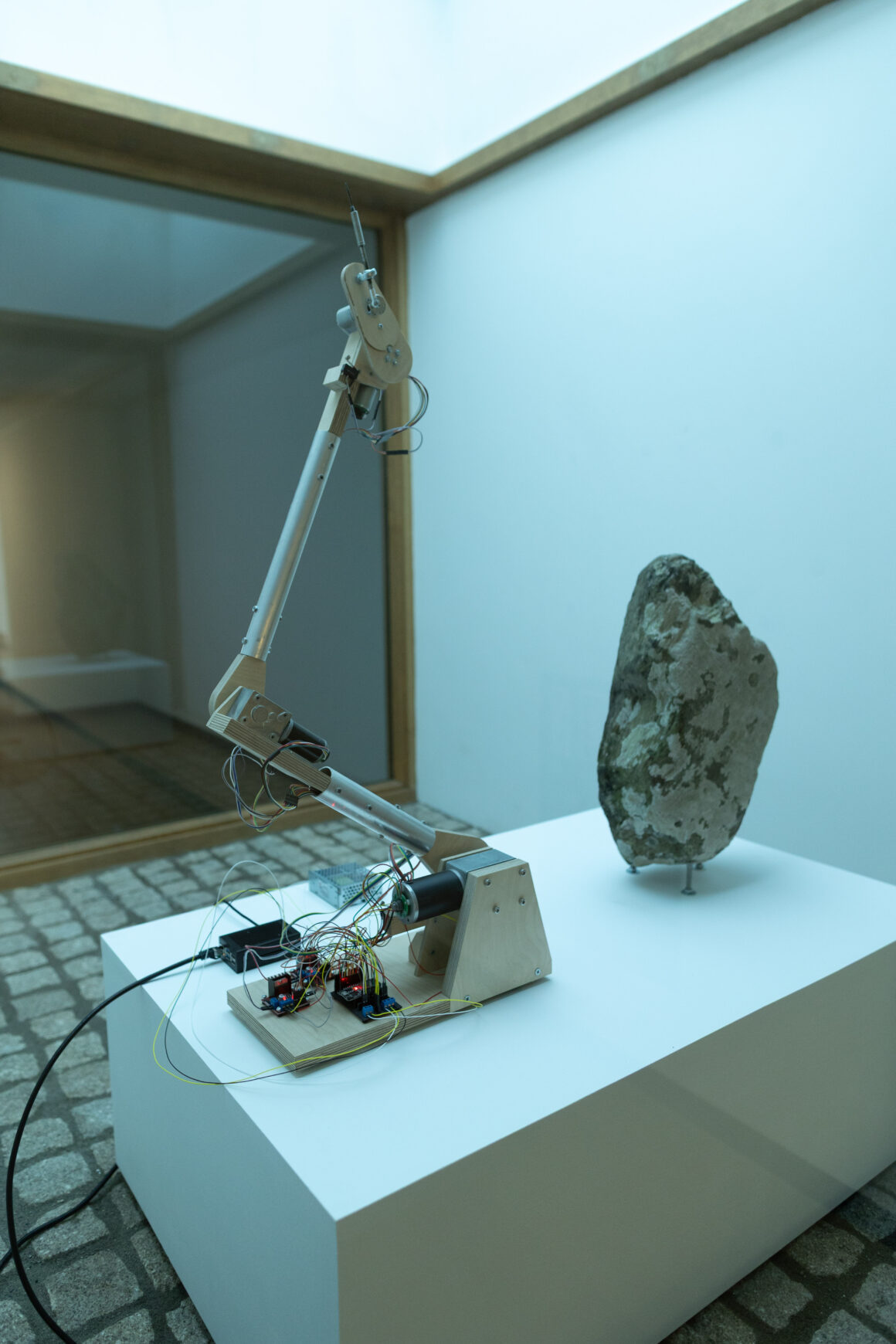
Displayed in the first space is a sculptural installation by STRWÜÜ called The Melancholy of Bricolaged Differentiation of the Post-Neolithic Larva (2024). Behind glass, wires cross like a constellation of stars along a robotic limb. Attached to the end of the arm is a shank-like appendage, picking at the surface of a boulder like a scab. The boulder, retrieved from Glenkeen Garden by the artists, is referred to as ‘The Protagonist’. The arm has character too, if only in the mindless curiosity of its endless scratching. Here, the Sisyphean stand-in does not carry the boulder, nor does it laboriously climb towards anything – rather, our attention is turned to the stone itself, as though the answers lie within.
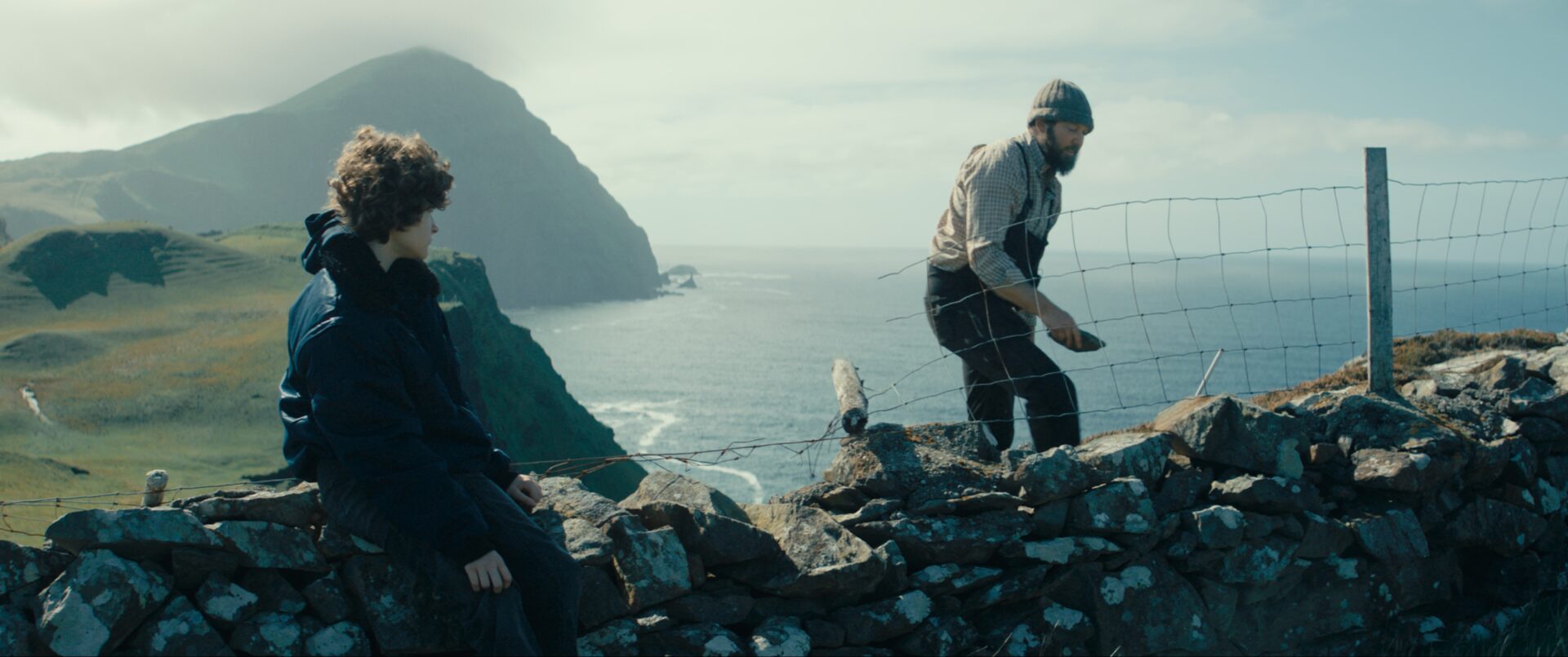
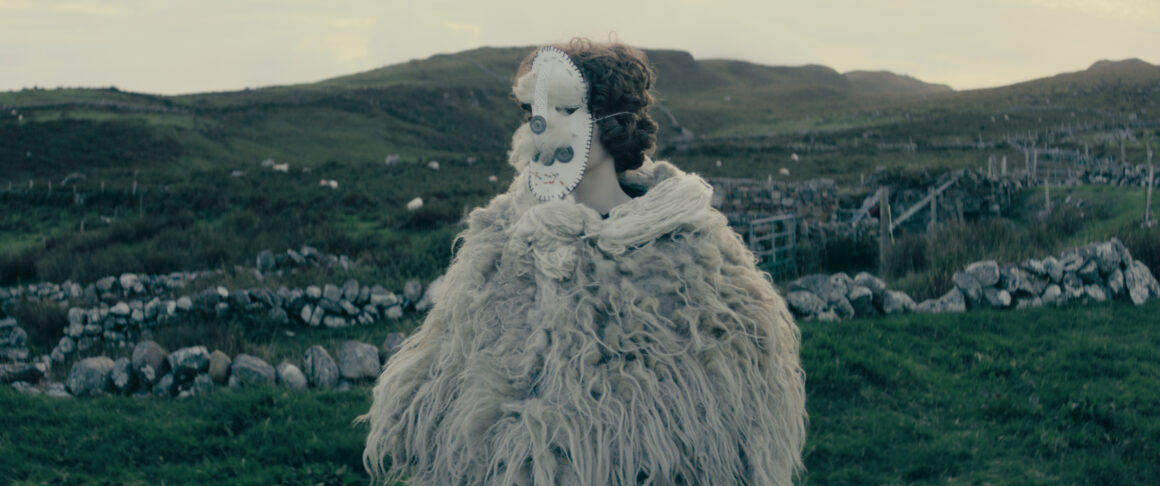
In the Return Gallery, Doireann O’Malley’s moving image work, Maolaigh (2025), plays to the darkness. A masked figure in sheep’s wool towers over a bonfire. We see O’Malley’s speculative younger self, named Maolaigh, onboard a boat, steered towards Clare Island – a mountainous island located at the entrance to Clew Bay in County Mayo. This is this place that Gráinne Mhaol, the legendary pirate queen, is said to have once called home.
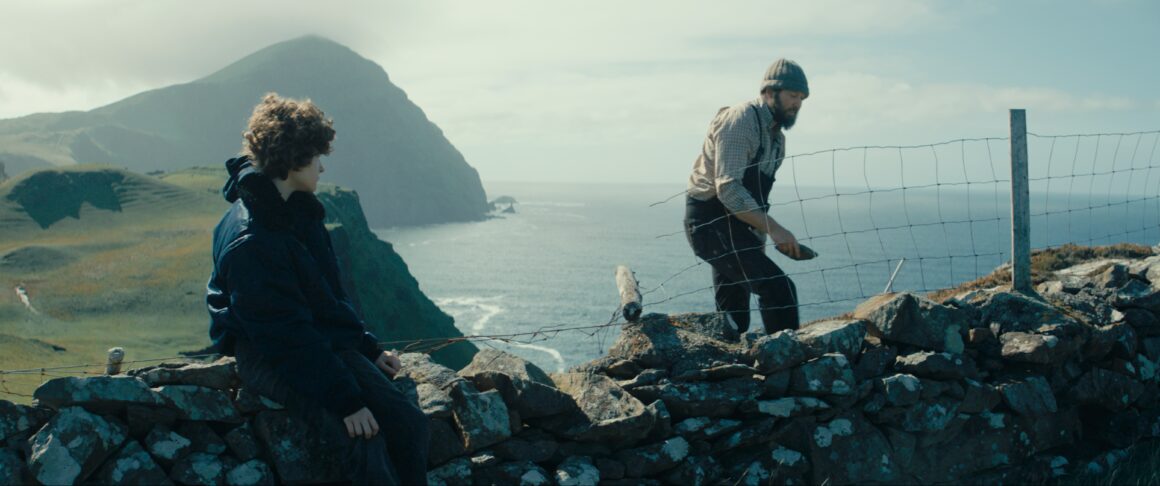
Maolaigh, searching for a job, is greeted by Joseph, a local farmer who introduces them to the landscape. We watch the pair driving through winding country roads, observing a sheepdog’s training, and walking through the rain as red-stained sheep interlock horns all around them. At one point, hammering a rock flat in the wilderness, Maolaigh asks: “What is creation?” “It’s the land”, Joseph says, before passing the tools to them, and then they, too, begin to cut at it. Intermittently, the accompanying subtitles seem to run away with themselves, extending beyond what is said aloud to various definitions as Gaeilge, the pale typeface punctuating the silence between bodies. The subtext speaks.
From scene to scene, an old woman in a white raincoat haunts the frame, possibly representing Grainne Mhaol or simply the latter stages of womanhood. Eventually we cut to Maolaigh waking from fitful sleep in the middle of the night. Menstrual blood now stains their bedclothes, as time makes itself known on a body assigned female at birth. Sheep fill the hallways of the house. The old woman pieces together a broken vase in the kitchen. The camera drifts through an empty library. A naked Maolaigh tilts on the surface of the sea. We see the scars of gender-affirming surgery. Reality and dreams crosspollinate, like technology and nature, from frame to frame.
The longing to return is deeply felt. It is among the very root griefs of life that we should lose time, in all its discreet forms, however linearly they appear to transpire. We all eventually lose home to change, if we are lucky to have had it in the first place. Perhaps, more than revisiting any specific space or time, we long simply to return. Return is not a destination but an orientation. It determines the way one walks and talks when going home – the character the body plays; the score from which the body reads. Home, therefore, is not a static place, but a durational process; home is a verb.
The two artworks are separated by the building’s ground floor – STRWÜÜ underground at the basement level, and O’Malley two levels above. Beyond the accompanying signage and literature, the kinetic sculpture and moving image are mutually isolated and do not interact. However, as the viewer leaves, each work lingers in the mind, and it is here that they meet, having left the garden that they grew from – not cast out, but released like seeds into the world.
Day Magee is an artist, performer, and writer based in Dublin.
@daymagee