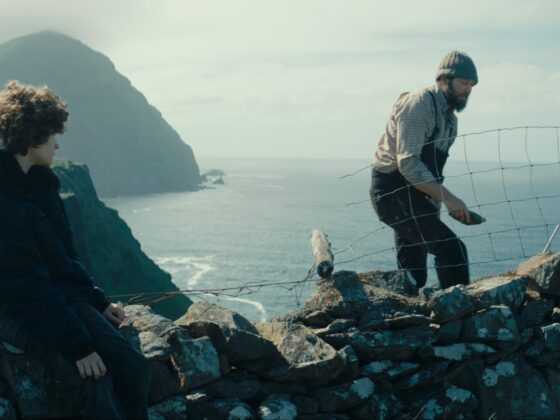
MIGUEL AMADO INTERVIEWS BARBARA KNEŽEVIĆ ABOUT HER NEW TOURING EXHIBITION.
Miguel Amado: Your exhibition ‘Gvozdene Kapije / The Iron Gates’ presents a film of the same title and a group of corresponding sculptures, influenced by Lepenski Vir – an ancient settlement on the banks of the Danube River in eastern Serbia. Your encounter with this culture has triggered reflection on your European heritage and upbringing in Australia. What is the framework that informs these works?
Barbara Knežević: This is the first time that I am engaging with notions of identity in my practice. Yet I am not claiming to have a unique position – this is not a story specific to me, but an Australian story of displacement after the Second World War, a story of the Balkans and a story about migration. We live in an era defined by people migrating globally, and so my subjectivity is one that is shared widely. My focus is on what happens when people are forcibly relocated and re-establish themselves somewhere else. I am interested in the diaspora, namely in first and second generations of people born to migrants.
MA: You want to reclaim your diasporic experience?
BK: Yes. I made a couple of decisions – minor things, but nevertheless powerful – that helped me in that undertaking, for instance to put the diacritic marks on my surname and to learn the jezik (language or tongue), or what is now known as Bosnian-Croatian-Montenegrin-Serbian.
MA: This is your first film – a feature, 48 minutes long. What led you to choose this medium? Was there a storytelling aspect that you felt was required to examine such complex themes?
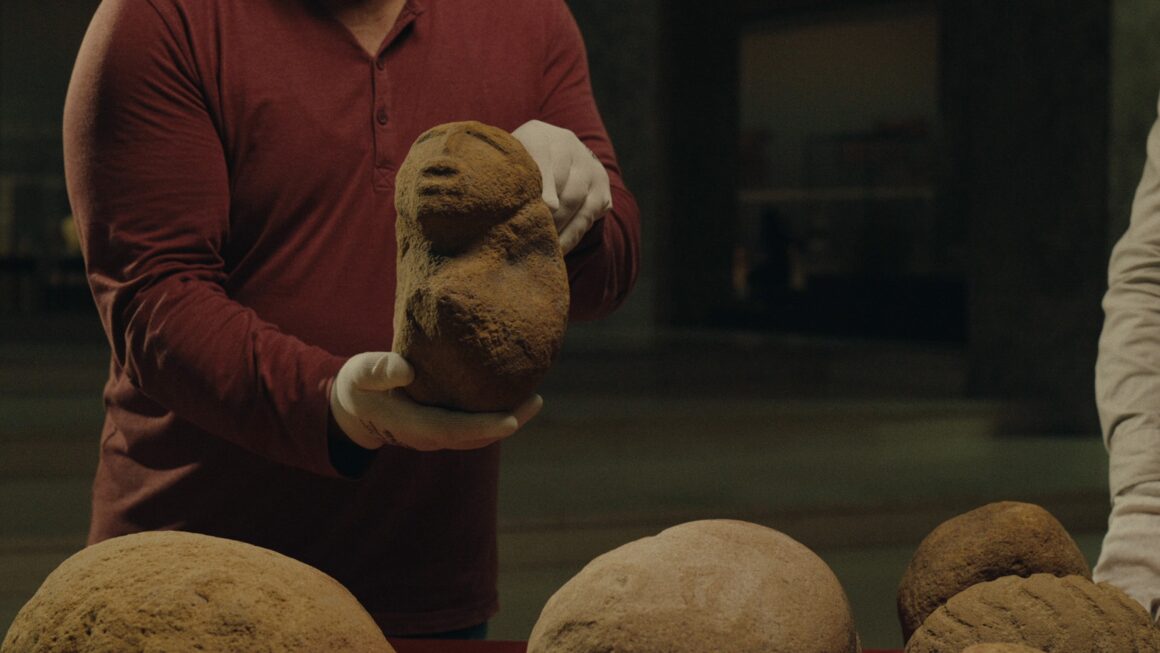
BK: I wanted to explore the narrative potential of sculpture. I had been researching votive objects from Europe, mainly Greek, Roman and Etruscan traditions, and then I cast my eye a bit further back and came across the sculptures of Lepenski Vir, which were found along a stretch of the border between Serbia (then Yugoslavia) and Romania during the construction of the Iron Gates, a dam on the Danube River, in the 1960s. There are three reasons why these sculptures interested me. Firstly, there is a claim by the archaeologist who discovered them, Dragoslav Srejović, that they are the first monumental sculptural forms in Europe. On the other hand, they are part of what archaeologist Marija Gimbutas conceptualises as a culture structured by matriliny. Finally, the inhabitants of Lepenski Vir lived alongside the sculptures in their dwellings, and there is some evidence that they produced them over a series of generations.
MA: Aesthetically, the sculptures are unique; they are carved in sandstone and express a hybrid of human and a certain fish that is common in the region. The fish (Moruna) is one of the five characters in the film. The others are one of the sculptures (Water Fairy), the mountain (Treskavac), the river (Danube) and the dam (Đerdap), who each materialise through voiceover.
BK: The characters were all written from a first-person perspective, describing their experiences and relationships to one another, in a polyphonic arrangement. I had accumulated a vast amount of visual and written material, and realised I could not ‘translate’ all this research through a single perspective, nor use a purely documentary approach. I had to employ the device of fiction, and these characters were what facilitated that.
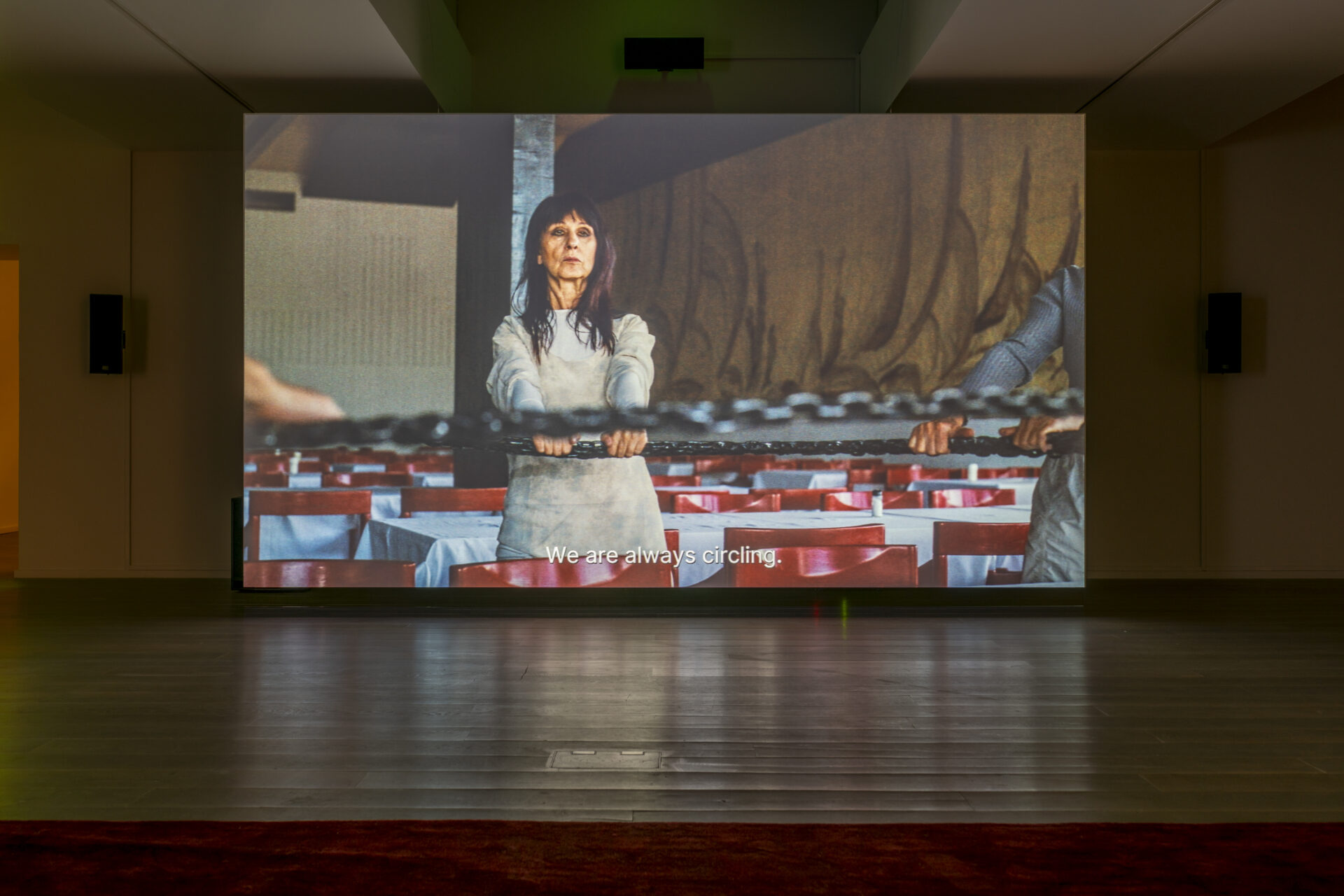
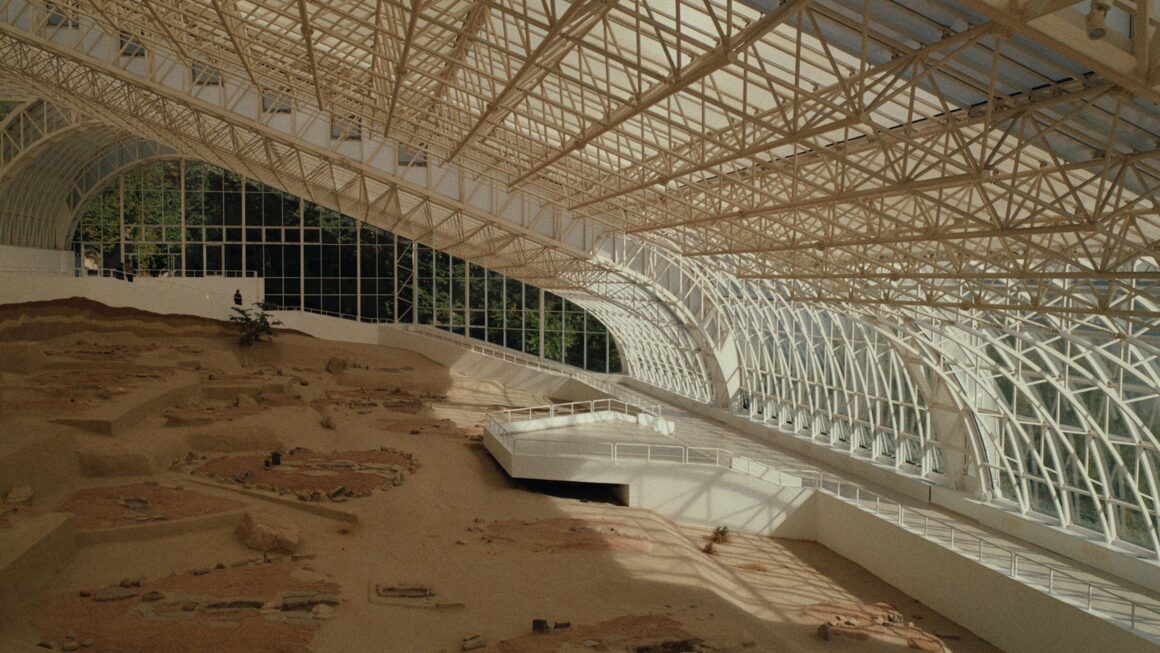
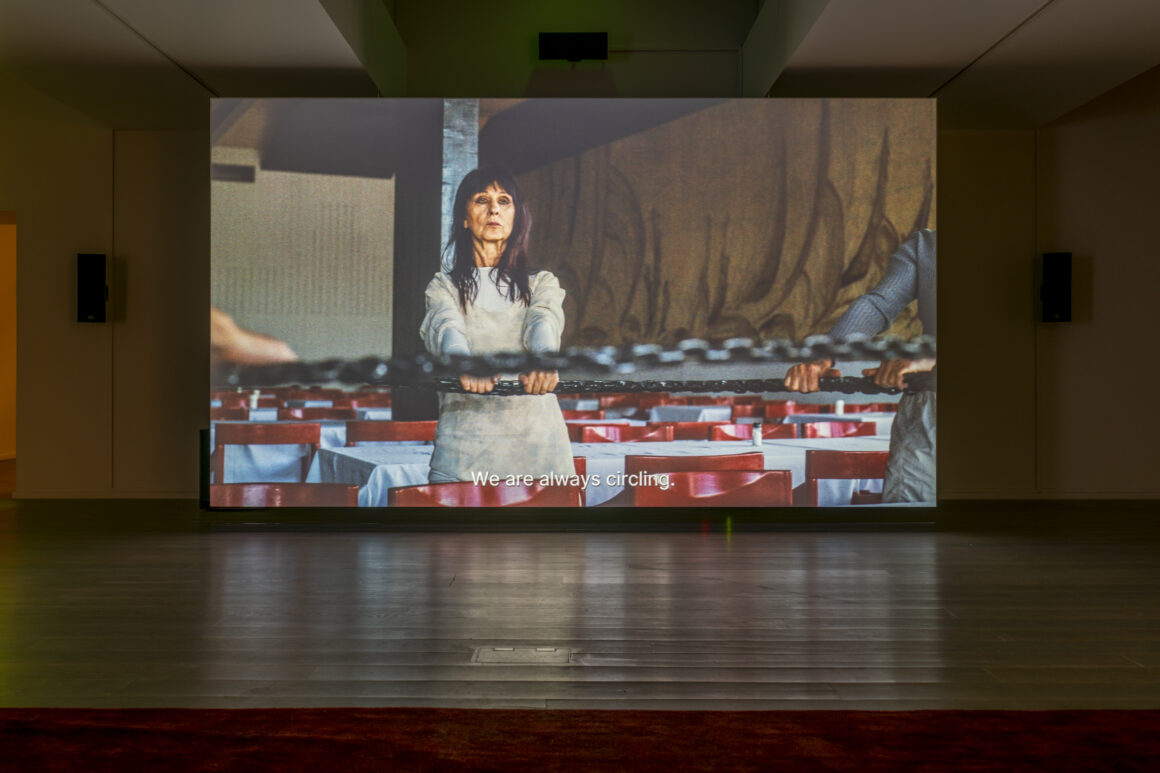
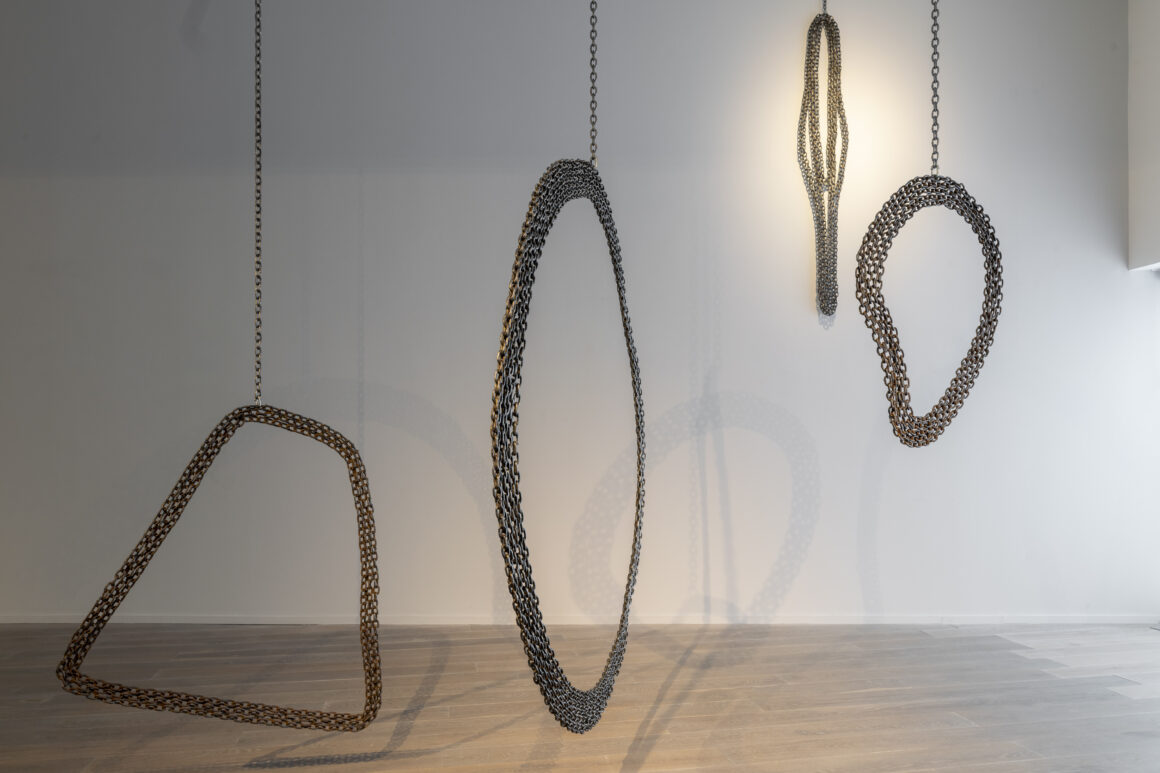
MA: This fictional dimension is mainly complemented by three types of imagery: speeches-to-camera by experts, who offer explanations of the sculptures; archival footage, associated with the construction of the dam by the Yugoslav and Romanian governments, which provides a political context; and the dance sequence, in a hotel situated in what became the Lepenski Vir archaeological site, interspersed with views of welded-steel-chain tapestries, specially produced for the site by artist Zvonimir Šutija, from which you got the inspiration to create a sculpture that the dancers manipulate.
BK: The archival footage, which includes former Yugoslav president, Josip Broz Tito, and ordinary citizens of both Yugoslavia and Romania, helps me navigate temporal shifts, in line with the methodology of the essay and experimental genres in cinema or journalism. The choreographed element is a way of articulating the link between people and matter via embodiment and, through that, feminist discourse.
MA: Is this why the performers are all women?
BK: Yes, in allusion to Gimbutas’s reading of the Lepenski Vir culture as matrilineal. Each performer embodies a character, whose voice is also female.
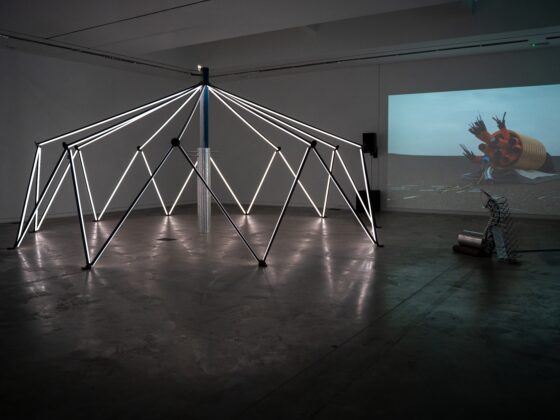
MA: The sculpture you created has a circular shape, referring to cyclicality, collectivity and spirituality.
BK: The sculpture evokes the whirlpools common in this part of the Danube River, as well as the dam’s turbines. This motif represents spinning into something one cannot escape. I fabricated and welded the piece myself. This was quite labour intensive and emotional, and related to the life of my grandmother, who was forced to make munitions in a German factory during the Second World War.
MA: The various registers are brought together in a scene where you appear, reflected in a hotel room mirror, slamming down clay and speaking in jezik, like the other characters. The scene gives the impression of both dislocation and introspection, even psychological charge – there is a ‘fantastical’ atmosphere that suggests a spectral presence, which points towards memory and civilisation. This allows you to simultaneously insert yourself into the past and distance yourself from it – particularly concerning your grandmother, who was deported to Germany and a victim of forced labour.
BK: This scene is the punctum – it breaks the fourth wall (which also happens at the beginning and the end, with the crew and the cast for the characters) and empowers me to revisit and interpret the sculptures of Lepenski Vir through the lenses of my family’s condition and movement from Europe to Australia. My position as author is that of both insider and foreigner, a liminal space occupied by someone between geographies and histories.
Miguel Amado is a curator and critic, and director of Sirius Arts Centre in Cobh, County Cork.
siriusartscentre.ie
Barbara Knežević is an artist based in Dublin. Gvozdene Kapije / The Iron Gates (2025) was commissioned by, and presented at, Solstice Arts Centre (29 March – 30 May 2025) as part of a tour that includes Sirius Arts Centre in 2025, and Wexford Arts Centre and Regional Cultural Centre in 2026. The tour is curated by Rayne Booth with support from Sirius Arts Centre.
barbaraknezevic.com