CAILEIGH RYAN REVIEWS THE JAPANESE-LANGUAGE FILM, EXIT 8, AT THE DUBLIN INTERNATIONAL FILM FESTIVAL.
When someone gives you a Japanese horror film recommendation, it’s one of life’s greatest treats. Japanese filmmakers do it right and do it different, and the Dublin International Film Festival understands this. The Lighthouse Cinema was packed for the sold-out Irish premiere of Exit 8 (2025).
From the hubbub in the queue, it seemed the majority didn’t quite know what we were about to step into: “I don’t know, man, not sure what it’s about, but it’s based off a Japanese video game, I’d say it’ll be good.” The best way to view a new release. No hints, no expectations, just trust.
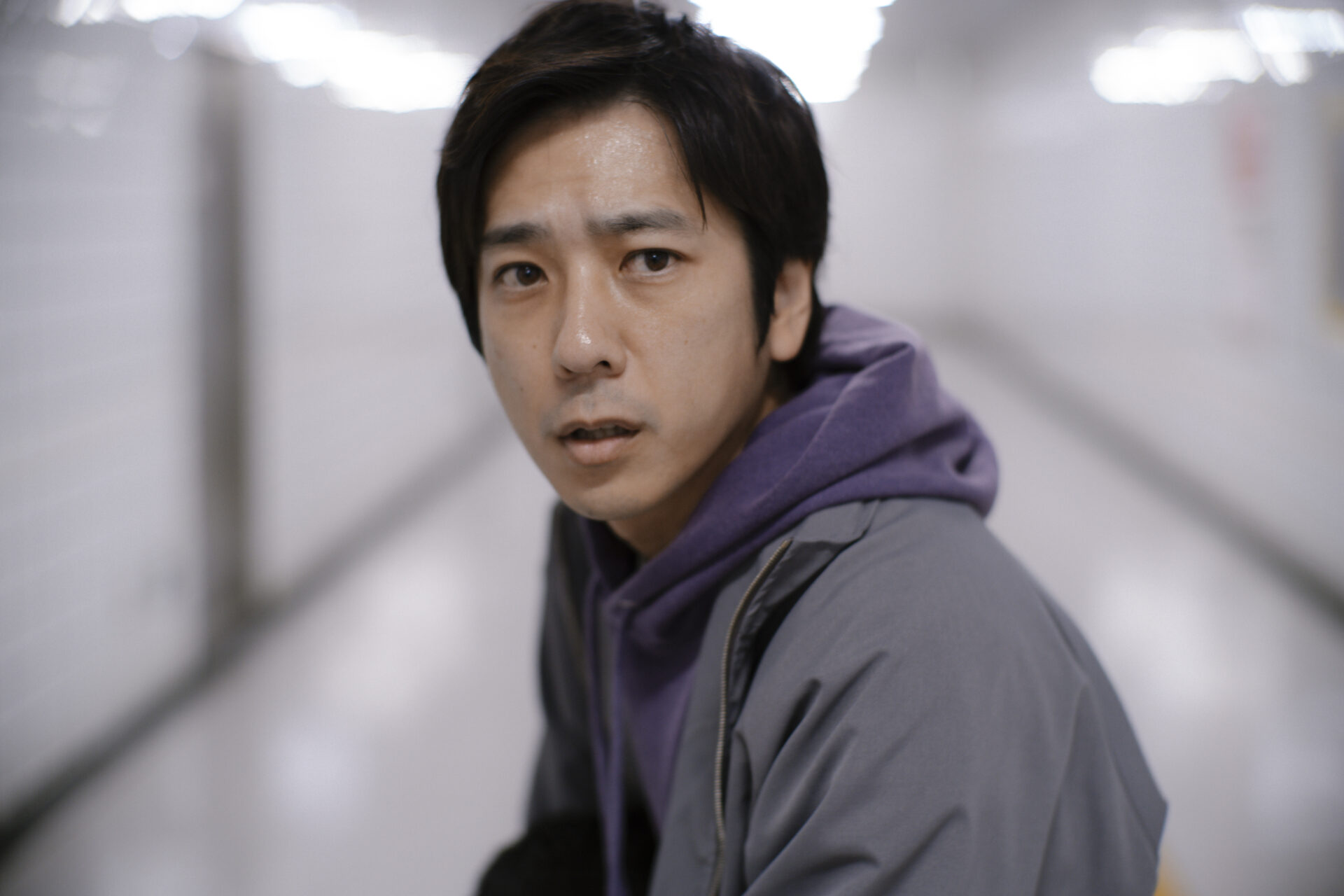
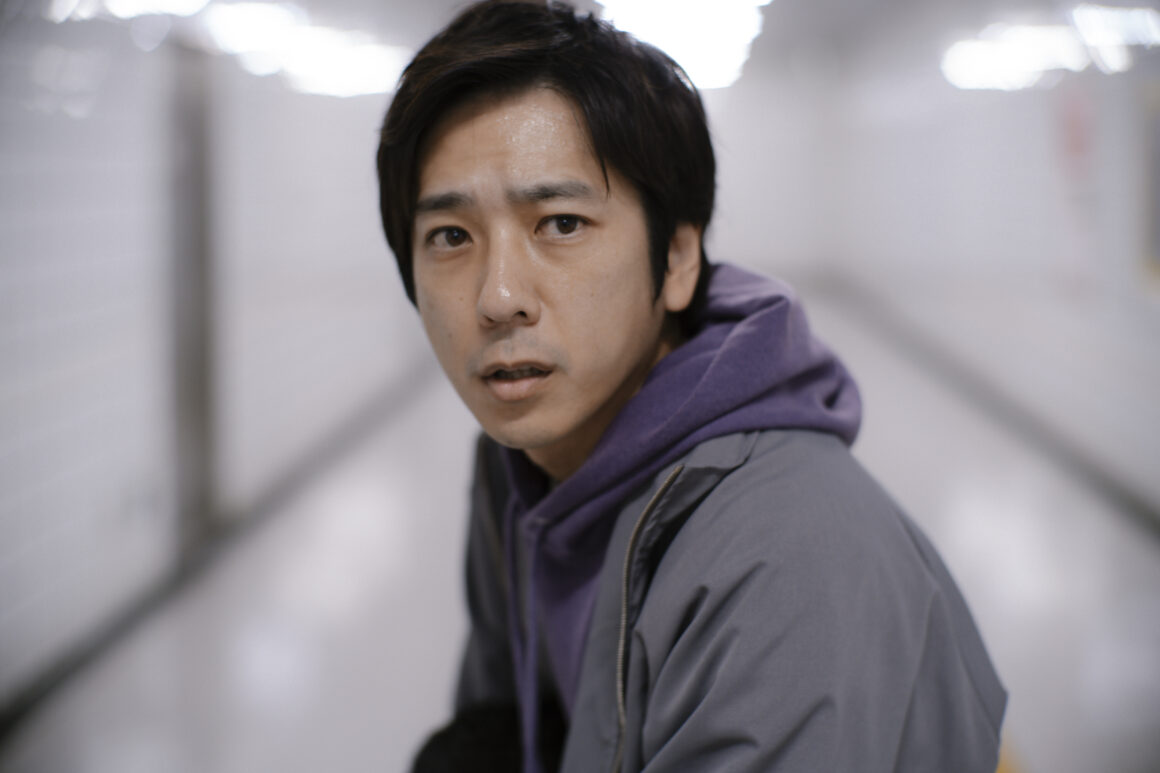
Public transit can be quite annoying at times. The noise of chatter, the too-hot discomfort of an overcrowded carriage at rush hour, the baby wailing in the background, the screech of wheels on tracks – until it all becomes too much and you blissfully mute the clamour by inserting a pair of earphones into your ears. Maybe you answer your phone when it rings, just to escape the background noise. Our protagonist, The Lost Man (Kazunari Ninomiya), lives this same universal commute and does the very same thing. Exit 8 utilises everyday sounds as aural horror in a way I have never before experienced in film. We find welcome relief, silence and solitude as we follow The Lost Man off the train and into the quiet exit corridor, where he loses phone signal during a difficult and life-altering phone call. The relief lasts until we realise that we cannot exit easily. The use of noise was made horrific in such an impactful way, that I found myself reaching for the volume button on the remote I didn’t have. A cacophony of harsh, grating noises really intensified the uneasiness of the film.
Exit 8 is a film adaptation of the popular video game of the same name. You can complete the game quickly, or it can go on for a while. The duration of your journey to the exit depends entirely on how astute you are (and how well you can sit with feelings of uncertain anticipation and unease). The premise of both the film and game is the same: in order to depart the underground subway station, we must leave through Exit 8. To reach Exit 8, we must traverse a number of corridors that visually replicate each other, right down to the advertisements on the walls. We begin at Exit 0. What should be a straight-forward journey to Exit 8 is disrupted constantly by the rule: if you notice an anomaly, you must turn back. If you fail to notice an anomaly or fail to turn back, you find yourself back at Exit 0, and must repeat the process again, not knowing what to expect this time around.
This same intense, psychological second-guessing and maniacal determination to find intentional anomalies culminates in a film that leaves the viewer as invested as our protagonist, fearing what’s to come next, and doubtful that we will ever get out. The psychological tension throughout this film is intense.
I found myself so drawn to The Lost Man, despite his lack of dialogue. Ninomaya delivered an acting masterclass in this one. I empathised with him, grew frustrated with him, rooted for him, hoped for him, and walked with him. And walked with him some more. I walked with him for an hour and a half, actually. Not only do we walk with The Lost Man physically, but we also walk with him as he laments the possible outcomes of that life-altering phone call. At the beginning of this walk, I’m as undecided as he is, but find myself hoping that by the time we make it out of the exit, we’ll have figured it out. What a concept, to lament your next step. I didn’t sign up for a philosophical exercise, yet here I was, with The Lost Man, doing just that and enjoying it too.
I found myself hoping for fright on each corridor, though it wasn’t to be. Ultimately, the few slices of visual horror in this film when done, are done so well. At the same time, though, I can appreciate that director Kawamura did not rely on visual horror alone to create the uneasiness. He could have taken the easy route, but he didn’t. To satisfy horror fans, there were some much appreciated, but subtle, visual parallels between Exit 8 and Kubrick’s The Shining (1980). We turn a corner to find a lost little boy at the end of the corridor. He has ‘the shine’, to borrow from Kubrick; he has been through this before, and has to fight his corner to convince us of anomalies. Sometimes you just have to trust the kid. Around another corner we find a flood gushing toward us at a speed we can’t run from. Sometimes we find solace in our favourite tropes, particularly when we don’t expect them.
The concept of making one’s way down never-ending hallways really robs both our protagonist and the audience of any sense of autonomy. We are at the mercy of the rules. We cannot control what is to come, or why. The path to Exit 8 is a purgatory of sorts – a passage through to the next place that propels us towards some sort of reckoning that we haven’t anticipated or signed up for. No autonomy, no control, no idea how it’s going to end – or if we can even escape. Isn’t that what good horror does?
Exit 8 is slated for Irish general release on 24 April 2026.
Caileigh Ryan is a writer and critic living in Galway. Her fiction has appeared in Tír na nÓg literary magazine, and she appeared as a guest on the poetry podcast, Sharpen Your Tongue.