PAUL DUNNE REVIEWS THE MANDARIN-LANGUAGE FILM RESURRECTION AT THE DUBLIN INTERNATIONAL FILM FESTIVAL.
The science fiction drama, Resurrection (2025), is a fantastical, psychological exploration of the power and history of cinema. In the world of the film, dreaming has been made illegal, and as a result, everyone is now immortal. However, there are a select few, called deliriants, who choose to dream anyway, and are able to travel through time. At the risk of losing the reader in this complex synopsis, these bounds are simply a framing device that allows director Bi Gan to showcase, reflect, and comment on the role of cinema – and storytelling more broadly – in our lives.
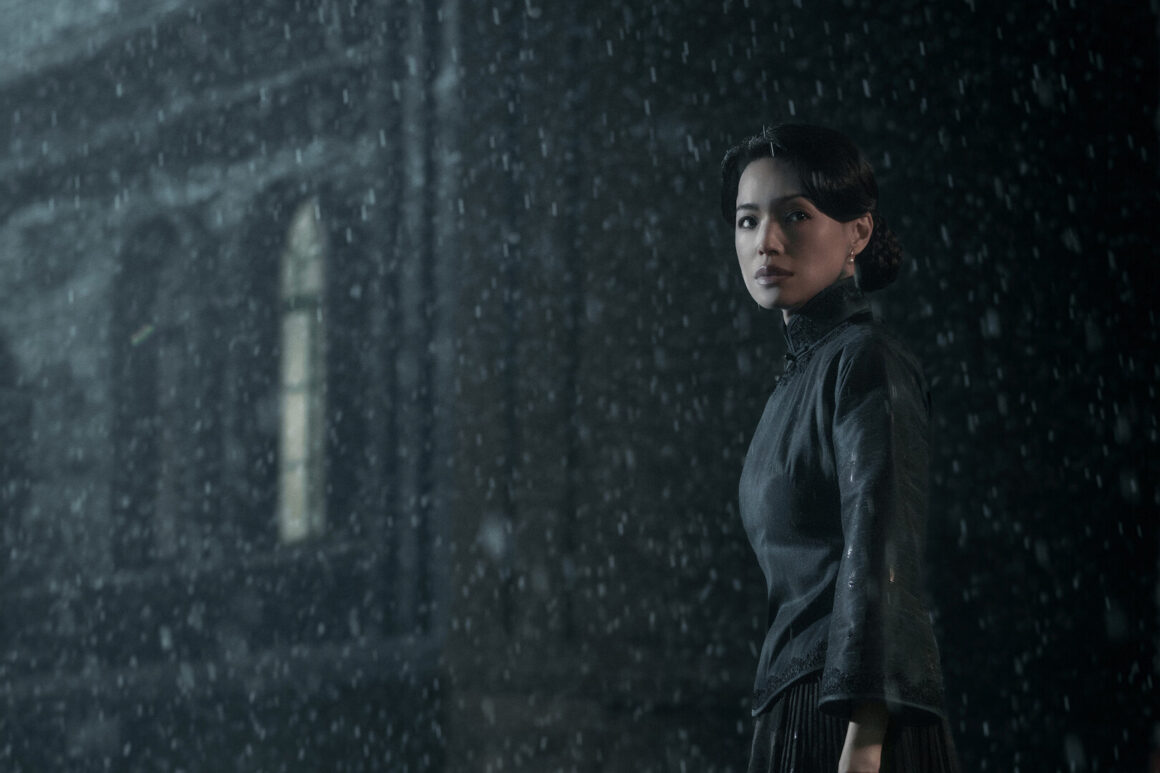
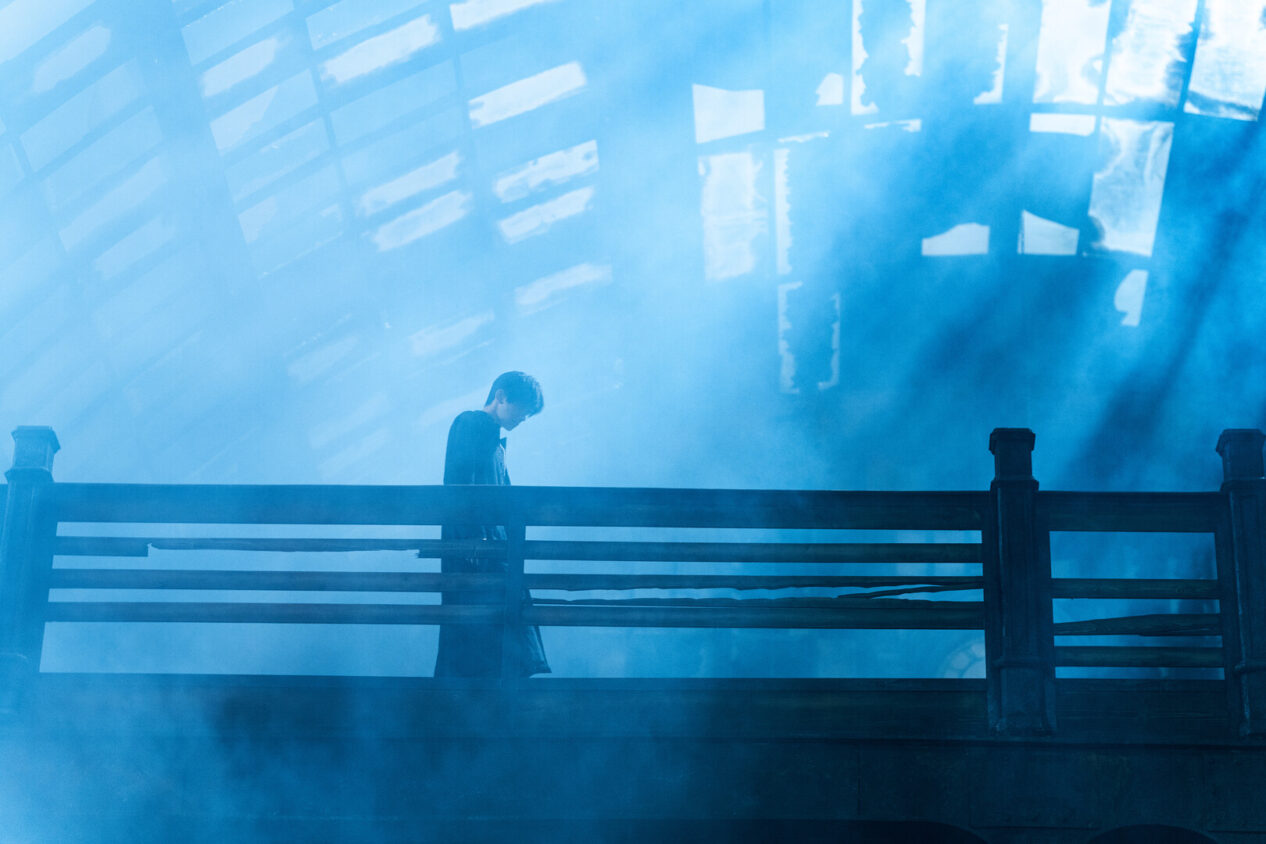
Bi Gan chooses a fractal mode to convey a series of six sequences across five distinct settings. This includes mundane locations such as a busy train station, a dilapidated Buddhist temple, and a dockyard controlled by a criminal gang. There are four vignettes, or ‘dreams’, as we are invited into the minds of several deliriants, who use film to hide from the authorities that have outlawed dreaming. Each dream serves as a separate but connected parable in which the tenets of Buddhist thought are explored: sight, hearing, smell, taste, touch, and mind. There are various humorous moments that break the fourth-wall, reminding us that this is just a film, as wondrous and epic as it may seem. Bi Gan never forgets the pure, essential essence of cinema as a tool through which to delight, deceive, distract, and reflect us back to ourselves.
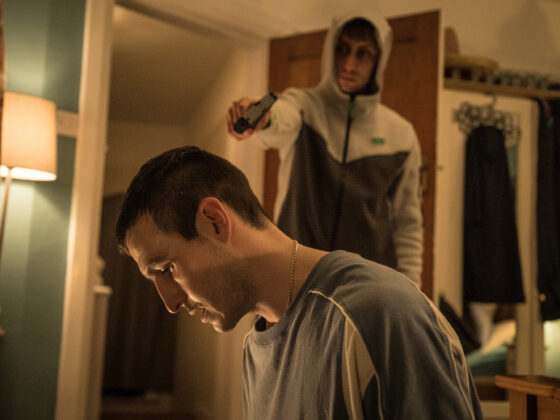
Each of the six sequences has its own visual and sonic identity that reflects cinematic innovations across history. We begin in the silent film era, with title cards and a grand orchestral score; there is no dialogue or colour. We then move to a grainy film reel, featuring cascading shadows and multiple shots within mirrors. In the second-last sequence, a 30-minute hand-held tracking shot follows the characters as they move through a world bathed in neon light, to the sounds of a distant rave on New Year’s Eve at the turn of the millennium, all choreographed with gritty perfection.
Dong Jingsong deserves special mention as the cinematographer. In charting the history of cinema, his deconstruction and re-construction of cinematic techniques and language is as bold as I have ever seen. He masterfully and gracefully handles techniques of surrealism, magical realism, stop-motion, and time-lapse as deftly as he does simple two-shot framing devices. It all feels truly collaborative, involving a high-level reading and understanding of Bi Gan’s direction, Zhai Xiaohui’s ambitious script, and the strong and subtle performances, which combine to make this a truly special film.
Resurrection is akin to other seminal works of speculative fiction, such as Stalker (1979) or Children of Men (2006), which portray how humanity survives an imminent dystopia, filled with meaningless wars, fascist bureaucracy, and cultural erasure. However, Resurrection is laden with a lightness, playfulness, well-timed humour, and narrative depth, to create intermeshed layers. This material is challenging yet inviting, experimental yet relatable, and there is a Lynchian quality to it all. For a film as intellectual and metatextual as Resurrection, I found it astonishingly enjoyable.
After seeing Resurrection, I am reminded of two quotes. The first from Bong Joon Ho as he won the Best Picture Oscar® for Parasite (2019): “Once you overcome the one-inch-tall barrier of subtitles, you’ll be introduced to so many more amazing films.” The second from David Lynch: “Now if you’re playing the movie on a telephone you will never, in a trillion years, experience the film.” Resurrection is a film that you really should see in the cinema. Yes, you must read the subtitles. And yes, the film is 2 hours and 40 minutes long. However, after ten minutes, you will melt into it. With each ‘dream’ being roughly 40 minutes, you are never far from a change of pace or direction. Resurrection is cinema-as-spectacle, and a fun and fitting tribute to the medium of cinema. In a time when streaming platforms and short-form algorithms have changed how we interact with all media, Resurrection is an epic worth seeing in a dark cinema, surrounded by fellow movie lovers.
Resurrection is slated for general release on 13 March 2026.
Paul Dunne is a writer and a critic based in Dublin. His writing has appeared in The 32: An Anthology of Irish Working-Class Voices (Unbound, 2021), edited by Paul McVeigh.