PAUL DUNNE REVIEWS NO ORDINARY HEIST AT THE DUBLIN INTERNATIONAL FILM FESTIVAL 2026.
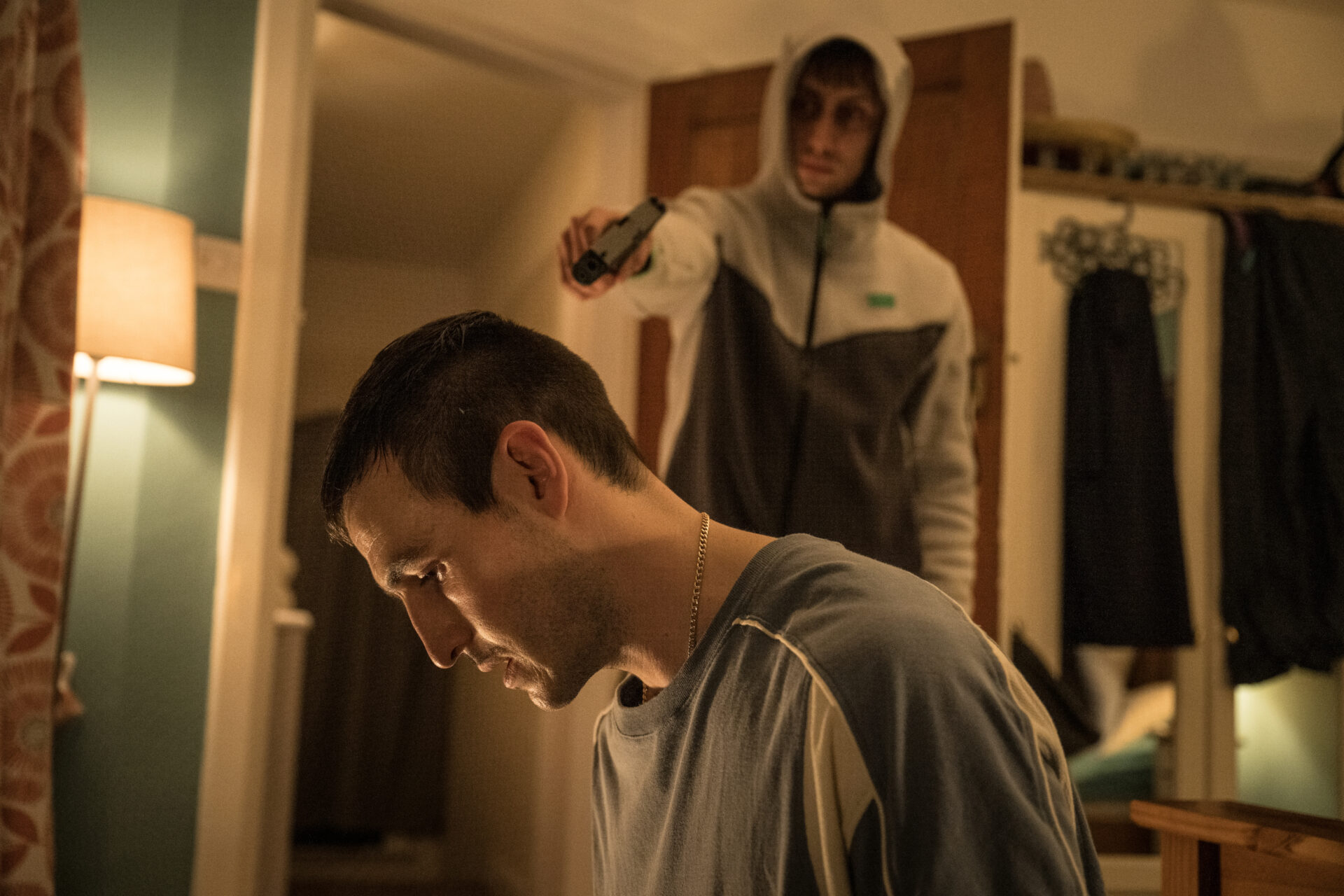
Directed by Colin McIvor, No Ordinary Heist (2026) is a heist movie of small, deep settings with large stakes. Eddie Marsan and Éanna Hardwicke face off against each other as the film’s protagonists – Richard and Barry, respectively, who grew up on the same street, and whose fathers had a history. Now, Richard is a bank manager, while Barry is at the bottom of the corporate ladder, though crucially, he holds the keys to the bank vault. A drunken conversation in a seedy pub with a local criminal turns Barry and Richard’s worlds upside down, as their families become kidnapping targets, forcing the pair to pull off the heist.
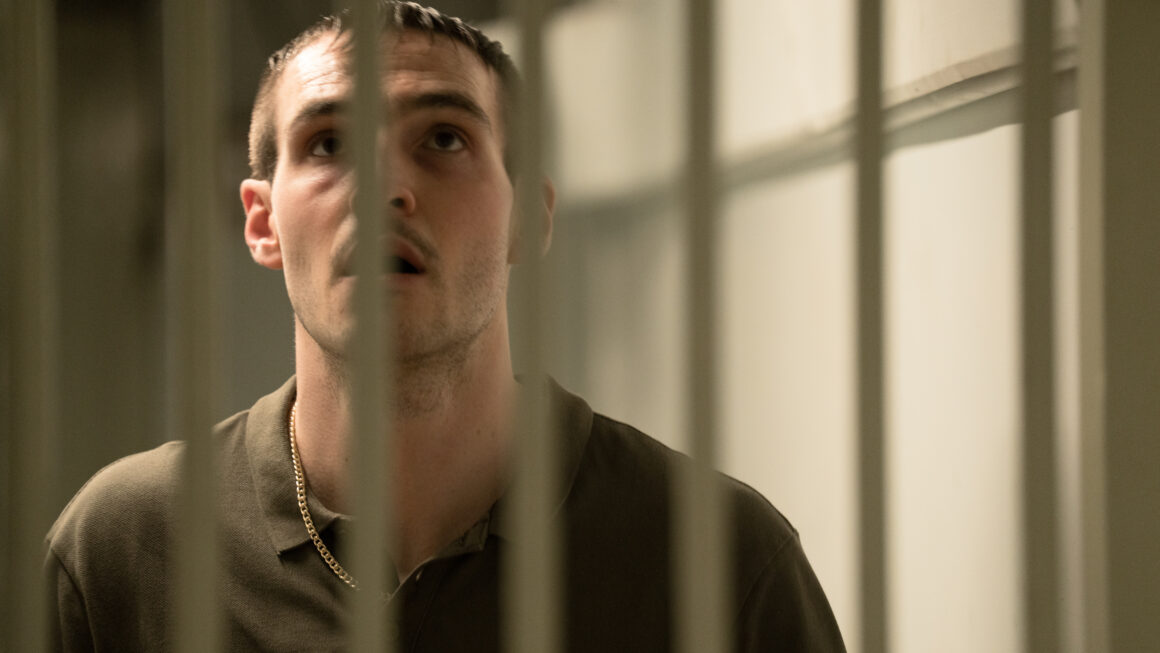
No Ordinary Heist excels in its exploration of the human cost of criminality, and the set of conditions that would lead people to treat each other with hostility. The negative effects of capitalism, in which individuals feel they must compete for a dwindling pool of resources (in this instance, cold hard cash in the lead up to Christmas) are foregrounded and echoed by a bank robbery (based on a real event), set in Belfast in December 2004, just after the end of The Troubles.
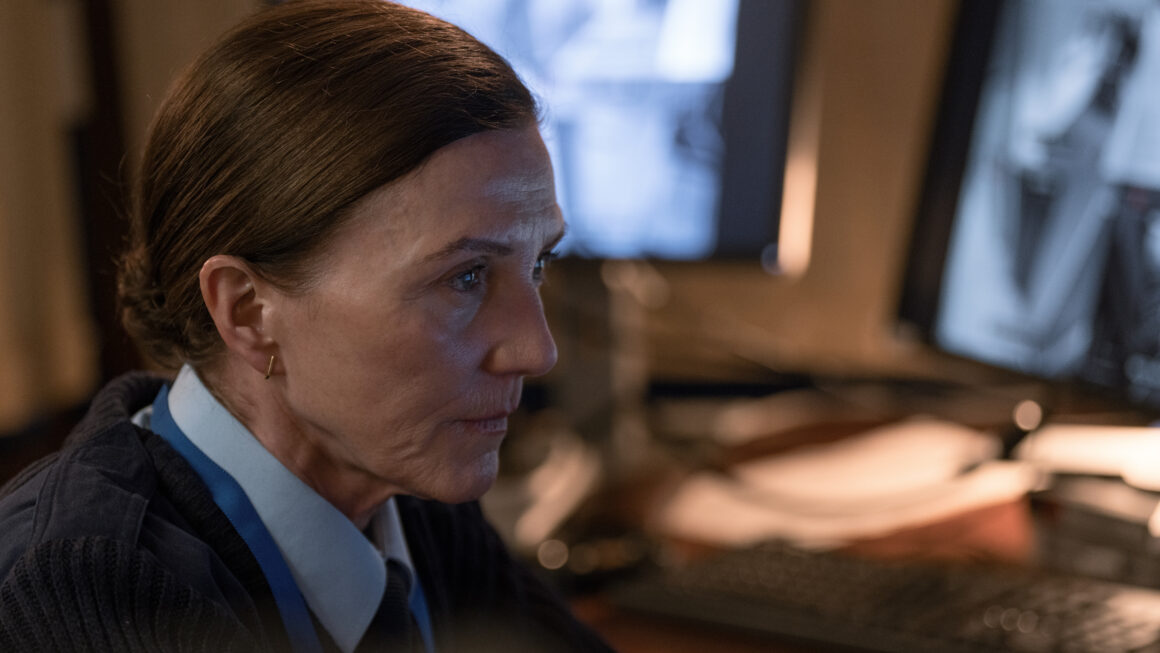
This feeling of discomfort and desperation at the hands of an uncaring system ripples beyond the heist itself. Head security guard Mags (expertly portrayed by Michelle Fairley) is in a constant state of surveillance, not only over the safety of the bank, but her own job security. Meanwhile, Barry struggles to collect subs for his GAA team and Richard must decide who will lose their job just before Christmas. The Australian CEO of the bank doesn’t care who is sacked, whereas Richard must reckon with firing someone he sees every day.
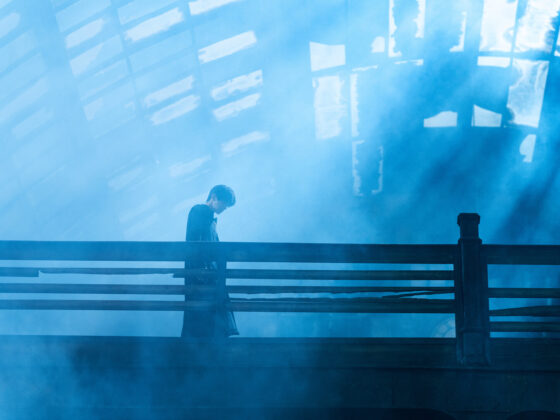
There is a coldness that Director of Photography Damien Elliot exemplifies through long distance, aerial views of Belfast’s skyline and city streets. Fluorescent, blueish, artificial light floods most scenes set in office spaces. The mise-en-scène of each frame exudes feelings, more often than not, of tension and fear. McIvor contrasts homely, domestic interiors with the sterility of the modern bank. We are invited into the homes of Richard and Barry, where love and love-lost both flourish. The Troubles pervade these private settings, exposing the harsh and enduring impact of the conflict on many Northern Irish citizens. Not everyone gets the opportunity to rise up the corporate ladder, and not everyone has a loving home to return to; there are those for whom criminality is the only way to earn a living.
That is not to say that the film attempts to elicit sympathy with the bank robbers; rather that McIvor and Aisling Corristine’s script allows us to access broader, deeper depictions of Belfast beyond its bombings and headline-grabbing tensions. The everyday is at the forefront of this film. The routines we all go through to put food on the table get turned upside down by the bank robbers, as Richard and Barry must cooperate with evil and with each other – and at times, that proves to be the greater challenge. Richard is sceptical of Barry’s presumed innocence or potential involvement in the heist. Prejudice and discrimination linger, even though at the key moments of the film, Barry is the only person who can understand Richard’s predicament.
The decision to include an onscreen countdown and ticking clock in the film score provide constant reminders of what is at stake. Outmoded technology (such as old-school Nokias and landline telephones) tie both Richard and Barry to the bank robbers, while constant worry about phone signal pervades key moments, racketing up the tension.
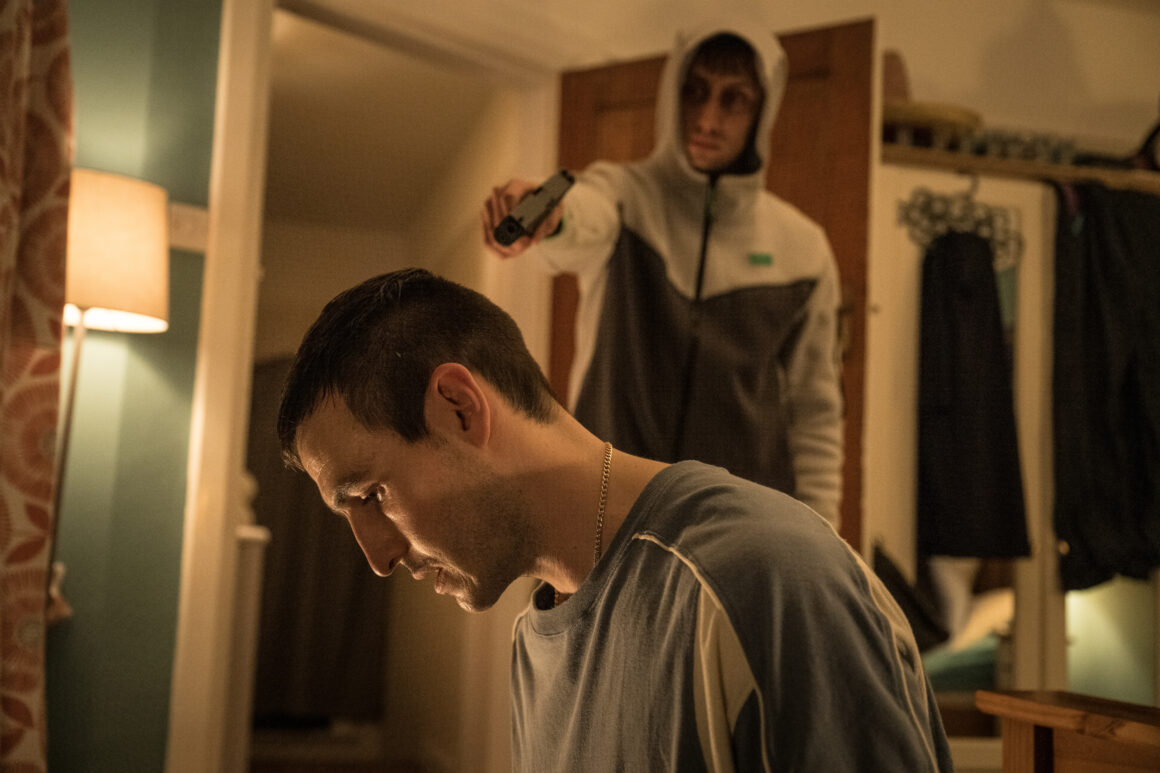
One is reminded of films like Dog Day Afternoon (1975) or Collateral (2004), in which ordinary citizens get mixed up in extraordinary circumstances. Some find the ability to rise and deliver under pressure where others falter. The desperation of the bank robbers fuels their ingenuity to devise a heist where they never even enter the bank. There is something to admire in this creative and precise plan, which sits in contrast to typical plots of the heist genre, in which we often we see larger-than-life characters, wielding even larger guns, shoving stacks of money into gym bags before peeling off in a stolen vehicle. The calmness of execution and anonymity of the criminals (who are still at large to this day) is particularly appealing and fresh.
No Ordinary Heist is slated for general release on 27 March 2026.
Paul Dunne is a writer and a critic based in Dublin. His writing has appeared in The 32: An Anthology of Irish Working-Class Voices (Unbound, 2021), edited by Paul McVeigh.