MAEVE CONNOLLY CONSIDERS THE VALUE AND ACHIEVEMENTS OF PALLAS PROJECTS/STUDIOS AS THE ORGANISATION CELEBRATES 30 YEARS.
Pallas Projects/Studios (PP/S) is 30 years old this year. Established by artists Mark Cullen and Brian Duggan in 1996, with Gavin Murphy joining ten years later, its first home was the former Pallas Knitwear factory on Foley Street in Dublin. Since 1996, PP/S has moved many times, occupying 16 different premises around the city, and running off-site projects across multiple locations.1 A long-term lease was finally secured on an old school building in Dublin 8 in 2012, where Cullen and Murphy now lead the organisation, with Eve Woods as curator. In addition to the gallery and studios in The Coombe, PP/S now encompasses studios in The Digital Hub and a community and workshop space in Newmarket Yards, due to open in early summer.
In his introduction to Artist-Run Europe: Practice/Projects/Spaces, a collection of texts published to coincide with 20 years of Pallas, Gavin Murphy highlights the struggle for space in the counter-cultural movements of the 1960s and 70s. Arts organisations, he notes, “opted to locate themselves as groups in spaces: spaces for production, thought, exhibition, and debate, and spaces which lay outside commercial or cultural zones […] situating themselves in run-down inner-city areas […] largely ignored by commercial, cultural and political interests of the time.”2 This history of run-down spaces repurposed by artists is also a history of profit accrued over time through land ownership, inaccessible to artists and other tenants.
Exposed to the ebb and flow of public funding, artist-run organisations cannot always afford to ignore the temporality of capital investment and return. As observed by UK-based arts consultant Sarah Thelwall in 2011, small-scale visual art spaces often support the early practices of artists who go on to achieve career success, but the “artistic, social and societal value” generated by this investment is not realised until much later.3 Thelwall describes this delayed return as ‘deferred value’, a term used in financial reporting when profits fall outside reporting cycles, and she advocates a shift from annual comparisons to lifecycle assessments.4 While this might be transformative, it would require an ongoing commitment to tracking and reporting, alongside the demands of everyday operations.
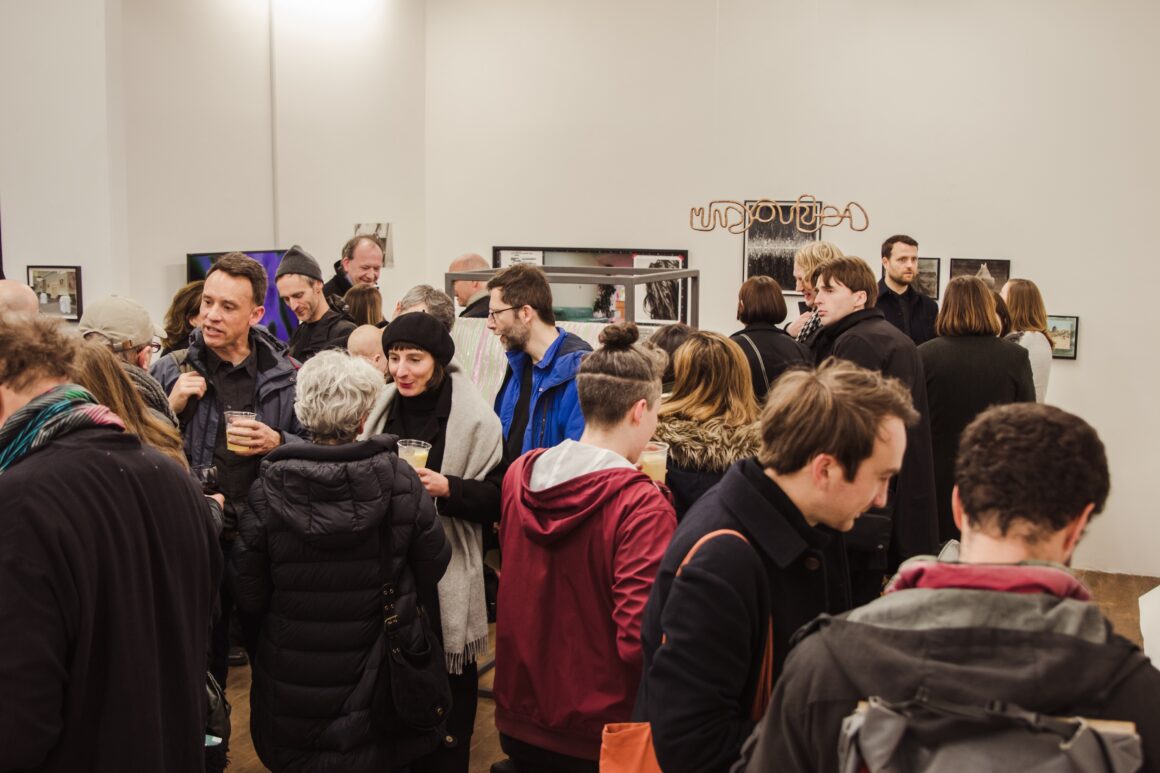
Despite modest resources, PP/S excels at its everyday operations, with a programme that maximises the gallery’s potential for events and exhibitions. While larger institutions have extended the duration of their shows, Pallas maintains a brisk pace, especially in the case of the Artist Initiated Project (AIP) programme. But the rhythm of artist-run time at PP/S is more complex than the fortnightly turnover of high quality exhibitions. In fact, Cullen and Murphy work with time in ways that are complex and distinctive. In 2011, when the gallery was briefly housed in Dominick Street, Cullen and Murphy initiated the first instalment of what has become their annual ‘Periodical Review’. Generally selected with invited collaborators, each iteration reflects on the artistic output of the previous year, or an even longer time period, with a decade of practice reviewed in ‘PR X’ (2020).
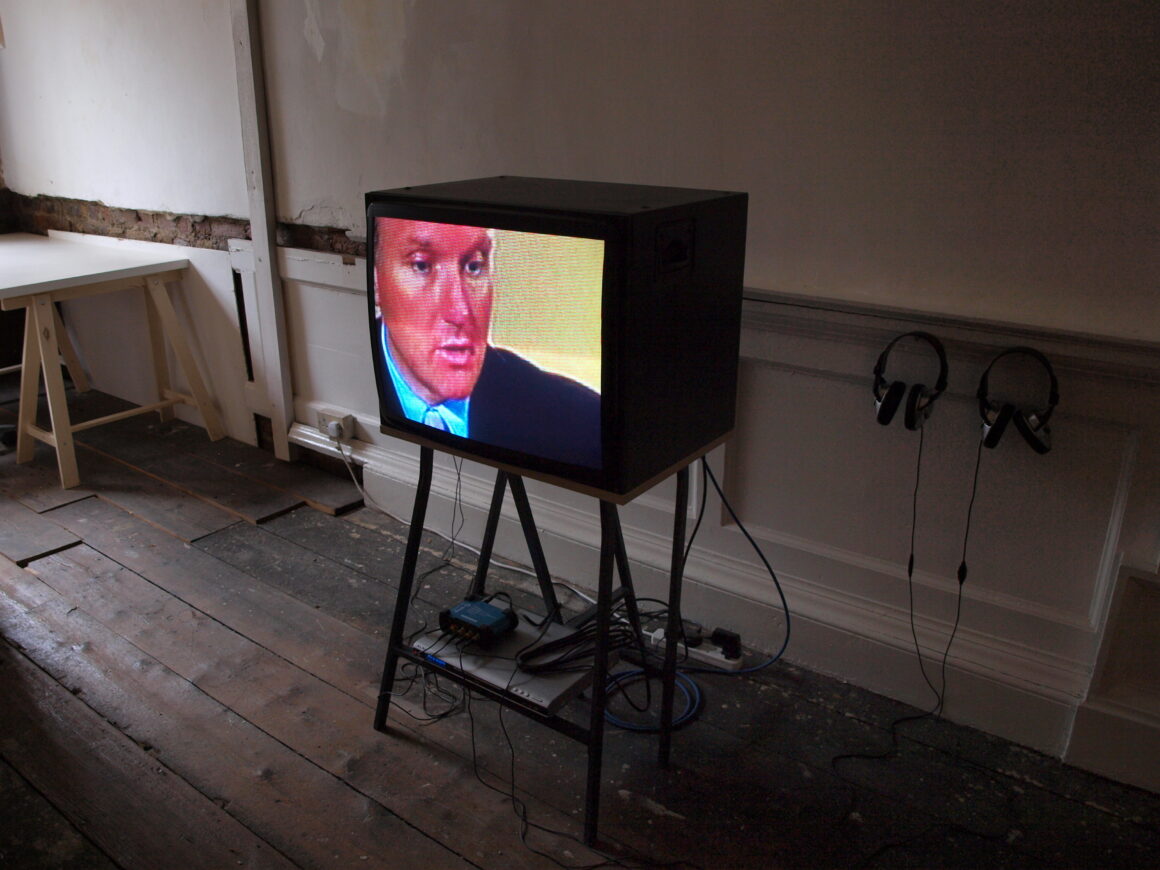
‘Periodical Review’ is an explicitly future-orientated project, described as a “discursive action, the gallery proposed as a journal, a magazine-like layout of images that speak, the field talking to itself.”5 This annual ‘discursive action’ is documented on the PP/S website, providing a useful resource for exhibition researchers.6 The website also includes details of ‘In the making’ (2015–ongoing) an almost annual presentation of work in progress by IADT BA in Art students. The form of ‘In the making’ has been revised to account both for lengthening commutes and changing patterns of social media use. In recent years, students have become more interested in the experience of being together in time and space, and apparently less interested in performing their sociality for platforms.
In her contribution to Artist-Run Europe, Valerie Connor analyses photographs of artists who appear to be at leisure but are actually at work. An image of Eve Hesse in the 1960s, featuring objects made by artist friends as well as Hesse herself, prefigures the sharing economy and the “instrumental use of down-time […] in adding value to oneself (through the curated consumption of digital media) and monetising of mass ‘browsing’ patterns.”7 Affective labour and the “work of enthusiasm” is performed by groups as well as individuals. This situation requires artist-run organisations to adopt carefully considered strategies of self-representation, and it also requires researchers to expand their analytical paradigms to include visual methodologies.8
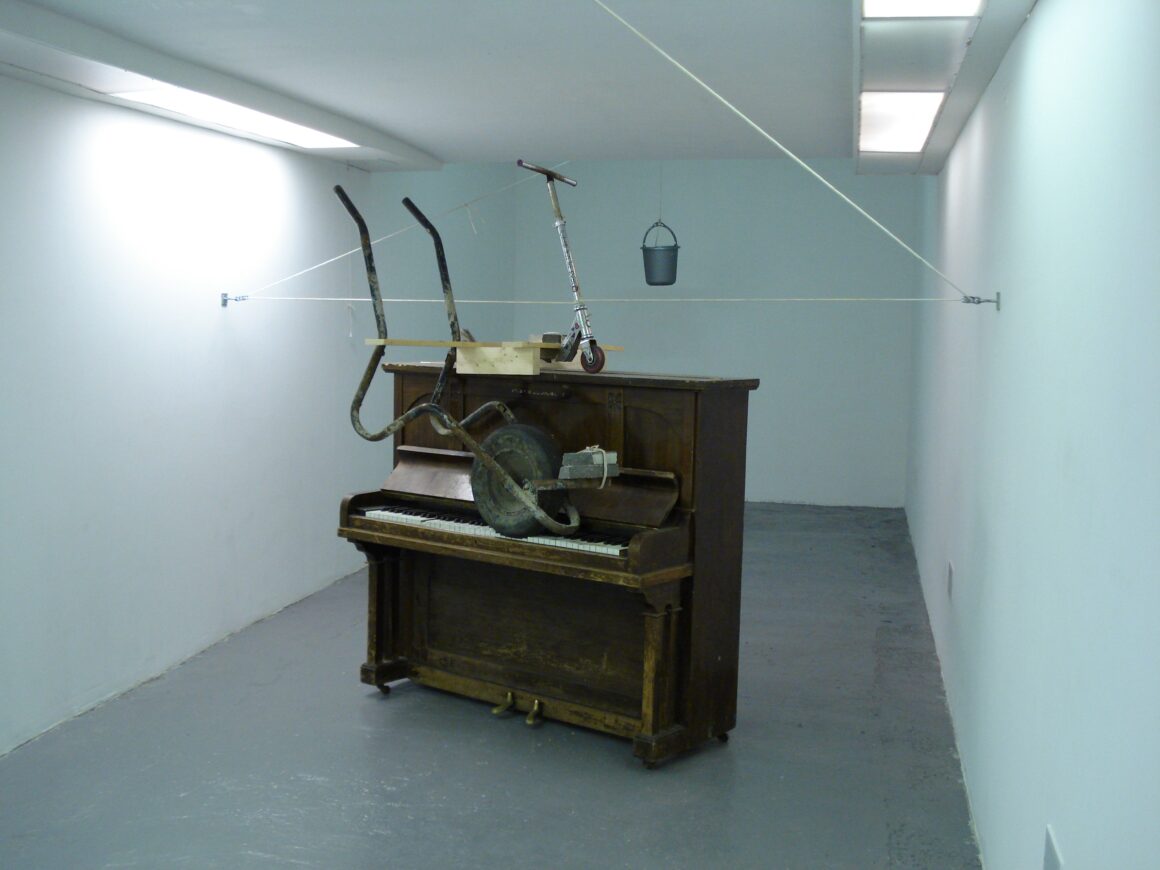
How can the value of artist-run organisations be recognised and sustained without resorting to metrics determined by platform media and capital investment? I have focused here on relations between humans, but PP/S has also explored the ‘more-than-human’ world, most recently through ‘Entangled Life’, a series of events curated over seven months by Cristina Nicotra.9 The more-than-human ‘commons’ describes a complex of relations, emphasising continuities between the material and the immaterial, the natural and the social, which are clearly of relevance to artist-run organisations. But simply categorising the work of artist-run organisations as a kind of ‘commoning’, because this work involves complex relations of care, use and conflict, does not solve the problem of visibility. As noted by Patrick Bresnihan, it is precisely the “practical, situated nature of commoning that makes it hard to see”, to the extent that it might be “recognized and valued only after it has disappeared.”10 Hopefully, in deepening its ongoing engagement with time, through the exploration of what is more-than-human, PP/S can engage others in the shared work of recognising value beyond dominant metrics, and in the process, sustain its own survival.
Dr Maeve Connolly is a Dublin-based researcher, focused on changing cultures and economies of art and media practice. She is a Lecturer in the Faculty of Film, Art & Creative Technologies at IADT.
maeveconnolly.net
1 For the full list of previous locations see pallasprojects.org and also Mark Cullen, ‘Zones of Contention – Two Decades in the life of Pallas’, in Artist-Run Europe, Practice/Projects/Spaces, edited by Gavin Murphy and Mark Cullen (Eindhoven: Onomatopee, 2016) pp56–71.
2 Murphy, ‘What makes artist-run spaces different? And why it’s important to have different art spaces’, Artist-Run Europe, p6 [italics in original]
3 Sarah Thelwall, Size Matters: Notes towards a Better Understanding of the Value, Operation and Potential of Small Visual Arts Organisations (London: Common Practice, 2011) p7. [Available at commonpractice.org.uk]
4 Thelwall, p35.
5 ‘PR X’ press release, 2020 [See pallasprojects.org]
6 PP/S has also supported archive-focused projects. See Megs Morley, ‘The Artist-led Archive: Sustainable Activism and the Embrace of Flux’ in Artist-Run Europe, pp72–77.
7 Valerie Connor, ‘‘Brown Studies’ and Artist-Led Enthusiasm’, Artist-Run Europe, p49.
8 Connor, p53.
9 ‘Entangled Life’, 14 May to 18 December 2025 [See pallasprojects.org]
10 Patrick Bresnihan, ‘The more-than-human commons: From commons to commoning’, in Space, Power and the Commons: The Struggle for Alterative Futures, edited by Samuel Kirwan, Leila Dawney and Julian Brigstocke (Abingdon: Routledge, 2016) p104.