AENGUS WOODS INTERVIEWS JOHN DALY ABOUT THE THIRTY-YEAR EVOLUTION OF HILLSBORO FINE ART.
Aengus Woods: Tell me about your background and how you came into the world of visual arts.
John Daly: I’m from Dublin – my family have lived in the same house since 1882, and I have collected art since I was about 15. Most kids were trying to buy motorbikes, but my parents wouldn’t let me, so I bought a rare print at auction in Christie’s. That was the first artwork; it was by Victor Pasmore, an English artist. I don’t know what possessed me. We had no art in the house, and my parents had no interest really. I am very academic and if I like something, I aim to read every book by that person, and I do the same with art. I first learned about modern British art and that became my collecting focus. I read all about the artists, and their lives were fascinating.
AW: How did Hillsboro Fine Art get started?
JD: Well, Hillsboro is actually the name of my house. It’s a big old house and I would use the downstairs for exhibitions. I’d open on a Friday evening and weekends for a month or two, before changing shows around. I did the first solo show in my house with Terry Frost. We would meet people in London in the Arts Club and places, and he’d say, “Oh, do you not know John? You know, he’s got the best gallery in Ireland!” He was so supportive. And all of these guys, like Howard Hodgkin, because they’re so polite, they would say, “Oh, yes, that’s right, I remember him now!” And so, they all gave me their work, but I was showing it in my house! I first moved the gallery to Anne’s Lane, then later to Parnell Square, and kept up the relationships with those important international artists. Once you get the trust of one artist, particularly if they are already well-connected, then that trust spreads.

AW: Which gallery shows have stood out in your memory over the years?
JD: When I started, a lot of the big artists, like Basil Blackshaw, Patrick Graham and Gwen O’Dowd, were already showing with other galleries. I knew a lot about postwar British art and so I approached Terry Frost first and he introduced me to Anthony Caro. I asked him to do a show, and then also John Hoyland. The art world at that level is a small one. The major international sculptors and painters all know each other. So, if they saw your enthusiasm and passion and knew it was financially okay to give you work, it would all be fine. At that stage, I began to attract artists from other galleries. John Noel Smith would have been one of the first. He had exhibited for years in another gallery, but he was living in Berlin at the time. There’s also Michael Warren. I had already collected quite a bit of his work before I even met him, but later he became one of my closest friends.
AW: Michael sadly passed away in July 2025. Tell me more about your history with him.
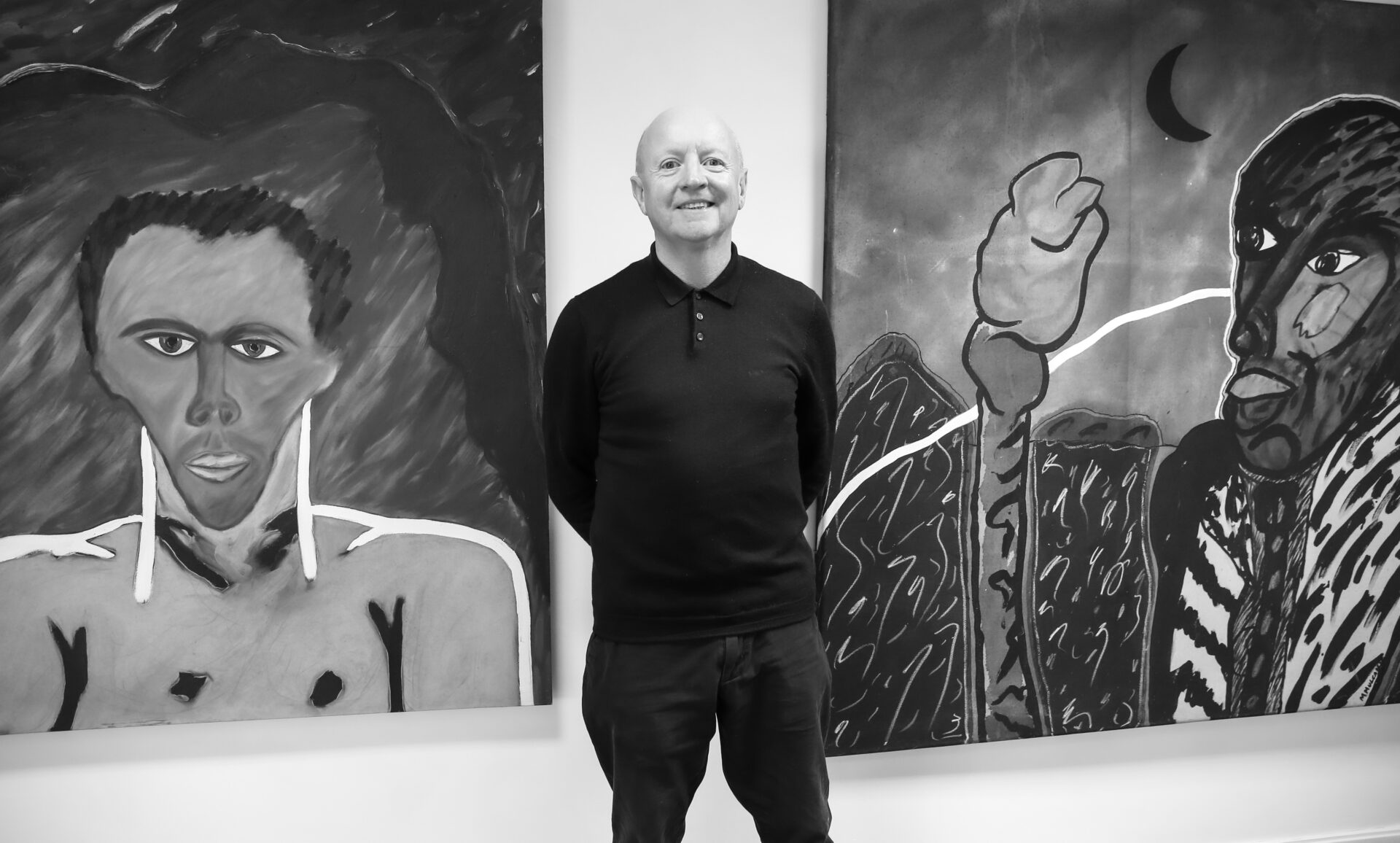
JD: We both had a very international outlook on art. He was unusual for his time, in that he studied in the Brera Academy in Milan. When Michael went there, he was hoping that Marino Marini would be his tutor, but unfortunately Marini left just the semester before. Nonetheless, Michael ended up with Luciano Minguzzi as his tutor. All this just told me that Micheal wanted to pitch himself against these people and not be confined to a small parochial environment. I appreciated that.
AW: How, then, do you understand the role of the gallery? Is there a distinction between nurturing younger artists and showing more established figures?
JD: The reason for first bringing in the more established artists was to let people know I was serious about what I was doing. It’s not necessarily a commercial thing. I mean, it has to somehow pay its way, but the word ‘commercial’ is a misnomer for most galleries in Ireland. It’s more about showing work that you believe in. When selecting younger or newer Irish artists, you’re picking them on the basis that they can sit comfortably beside the best of what is out there already. Artist Gerald Davis once advised me to only show work that I love, because I’ll probably end up with most of it! And that’s true, in the sense that I don’t show anything that I wouldn’t want myself.
AW: Are the collectors an important part of the equation?
JD: Oh, very much so. Most of them have become lifelong friends. We’d be in each other’s houses, and they would ask advice, not just about work from my gallery, but in other spaces or at auction. The main eight to ten galleries in Dublin are all serving the function of showing art that they believe in. Most of the galleries have a mix of Irish and work from elsewhere. But having the personalities of each of those people gives a different curatorial flavour to each gallery.
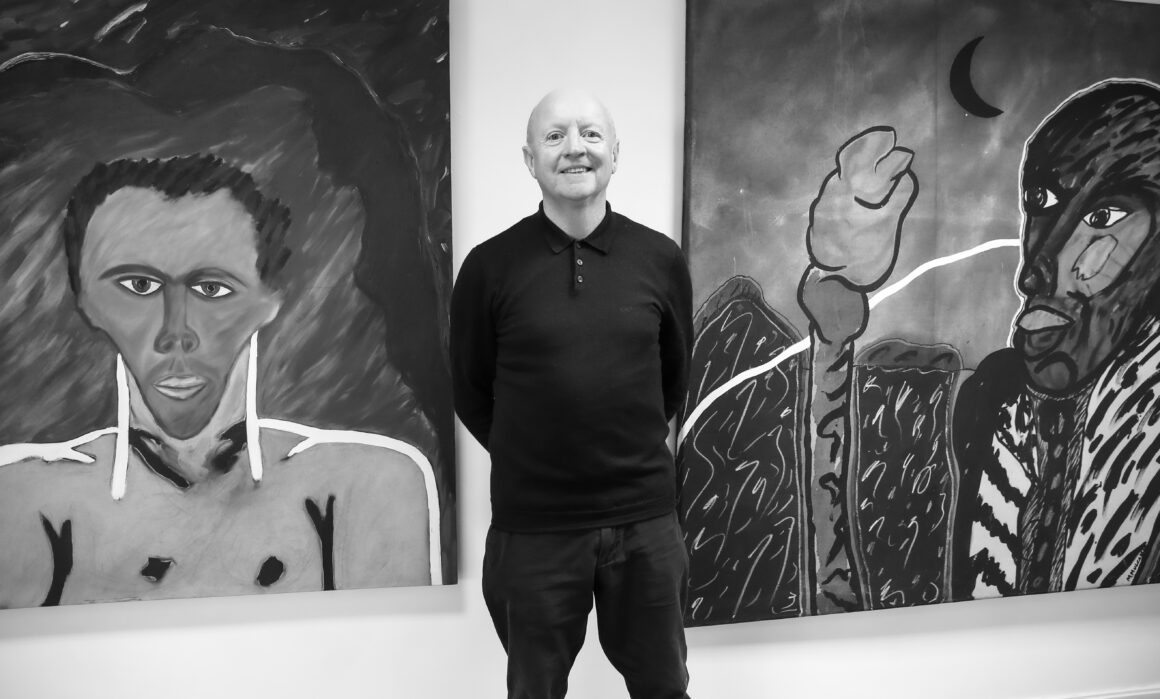
AW: What are your plans for the future of the gallery?
JD: Onwards and upwards! Some galleries have a group of 20 artists, and they just show them in rotation forever and that’s fine. But I like to inject a bit of something into it to keep myself interested. So, I will always be looking for artists. In a way, the previous exhibition, Karl Weschke ‘Painting Order Out of Chaos’, is probably the most important one I’ve done. Weschke has become a bit forgotten about, but he was a friend of Bacon and Auerbach and there are eight of his paintings in the Tate. I usually try to show at least one big international name each year. And I collect things as well with the idea of putting together thematic shows. I did that with Cecil King. I gathered a body of his work over the years, and then during his retrospective in IMMA, I exhibited those pieces. Similarly, when IMMA had their Alex Katz exhibition, I did a show with him here. I went to his studio and then carried the entire show in a plastic bag through customs – those are the fun bits!
This is a crazy vocation. You don’t do it for the money, because you’d be disappointed. However, you end up meeting the most wonderful people. Every day is different. Even though one could say I am very tied to the gallery, it’s changing all the time; every month there’s a new exhibition. Every month for 30 years – that’s an awful lot of shows. The other thing that people don’t realise is that it’s quite tough physical work. I’m not getting any younger, so at some stage, I’m going to have to only show miniatures!
Aengus Woods is a writer and critic based in County Louth.
@aengus_woods
John Daly is Director of Hillsboro Fine Art and current Chair of the Contemporary Art Gallery Association (CAGA).
hillsborofineart.com