LYNDA LAIRD REPORTS ON HER RESIDENCY AT THE FORMER HOME OF ARTIST, WRITER, AND ACTIVIST, DEREK JARMAN.
The gardener digs in another time, without past or future, beginning or end. A time that does not cleave the day with rush hours, lunch breaks, the last bus home. As you walk in the garden you pass into this time – the moment of entering can never be remembered. Around you the landscape lies transfigured. Here is the Amen beyond the prayer. – Derek Jarman, Modern Nature (Century, 1991).
I first became interested in Dungeness, a headland on the Kent coast, while researching the Sussex Emerald moth, a rare and endangered species that inhabits the shingle landscape around the decommissioned nuclear power station. Conservationists have attempted to recreate its habitat elsewhere in England to support its declining population, but without success. I was drawn to the paradox of this fragile species surviving within a landscape often described as barren or hostile, its life entangled with the post-industrial and nuclear architecture of the coast.
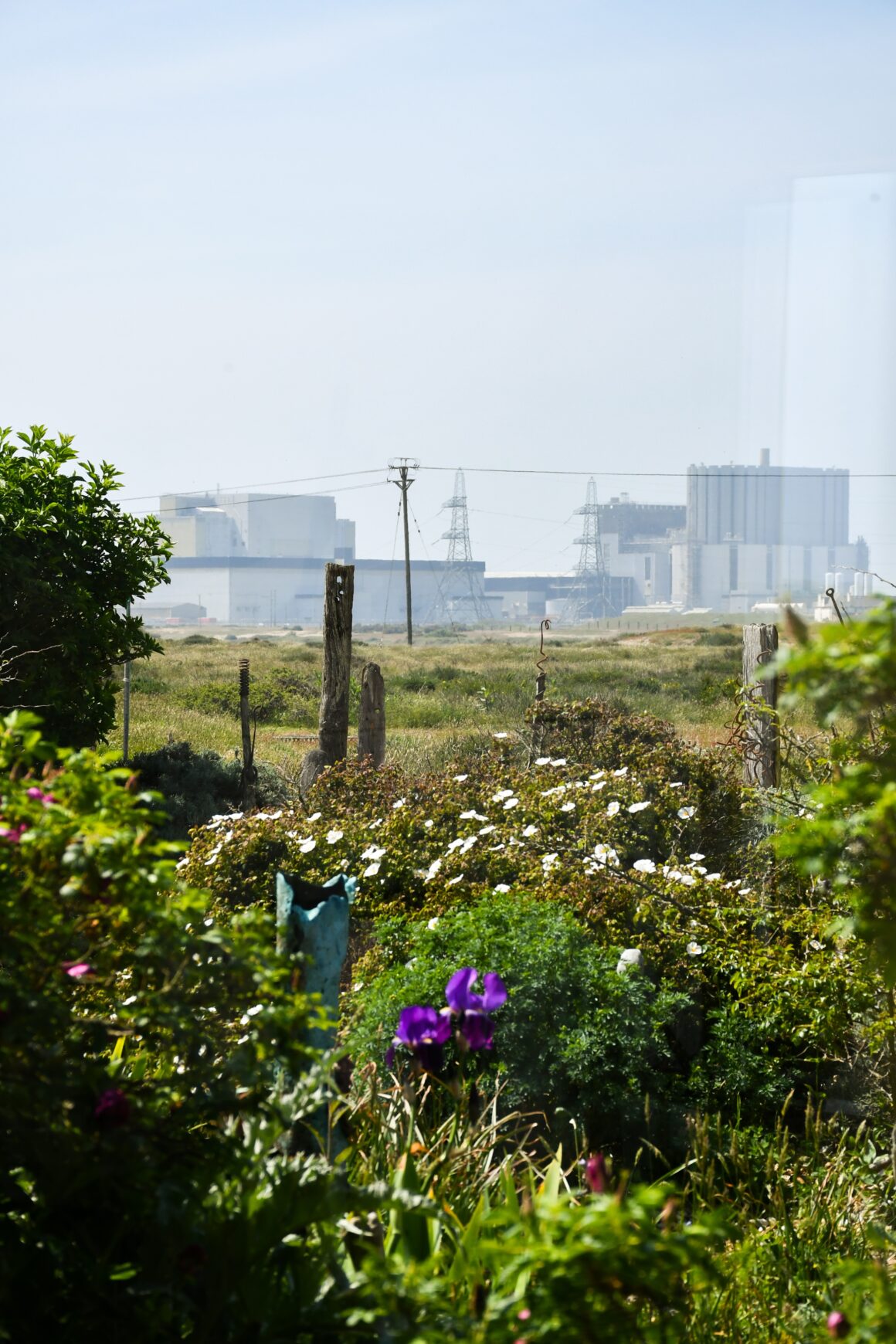
View from Prospect Cottage; photograph by George Cory, courtesy of Creative Folkestone.
Although the research had not yet developed into a finished body of work, Dungeness had already become a place I returned to imaginatively. I discovered the Prospect Cottage residency programme by chance while staying in London for a photography commission. My Airbnb host mentioned she was applying for a writing residency at the cottage, and I immediately looked up the opportunity myself. The residency felt like a convergence of interests I was already pursuing.
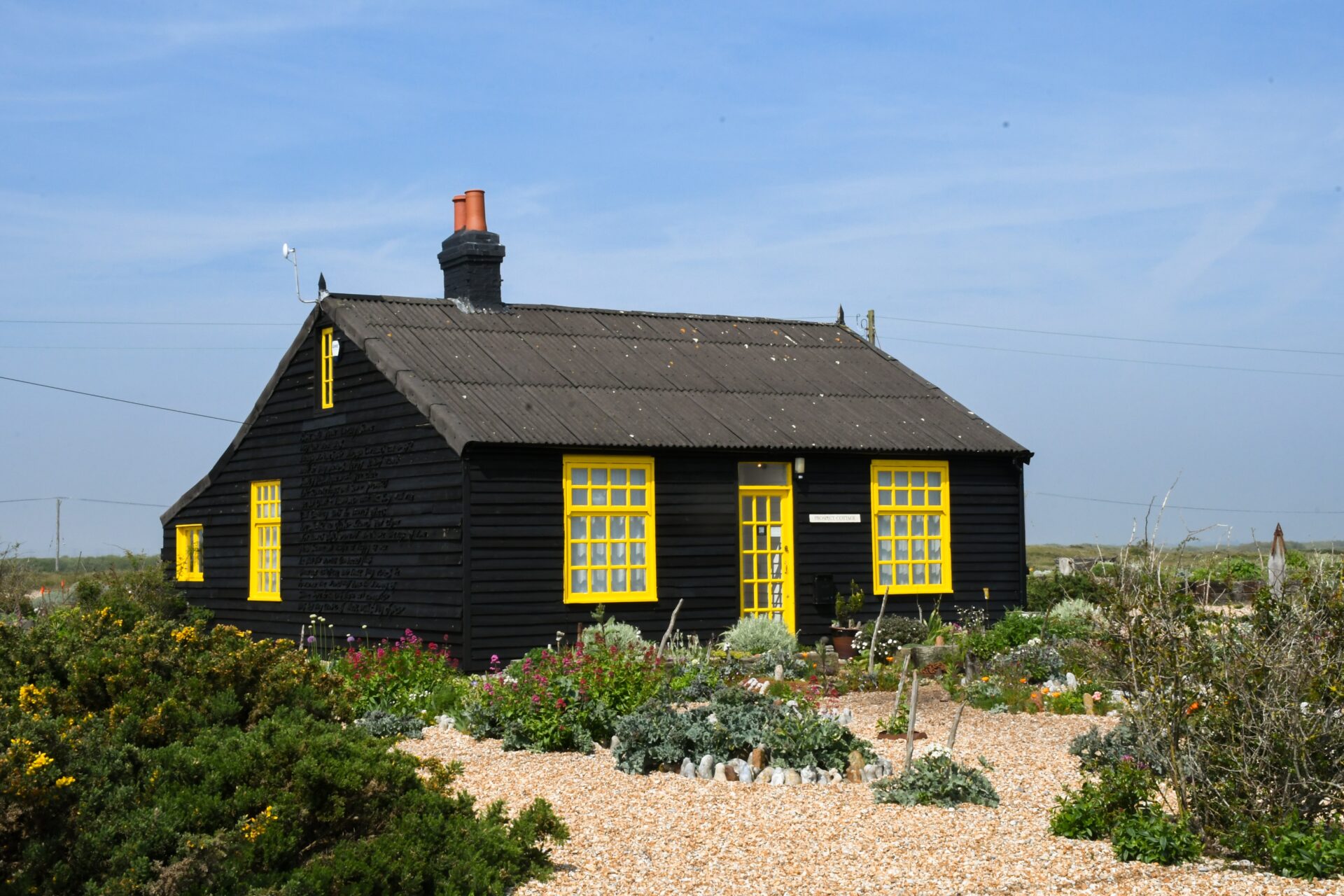
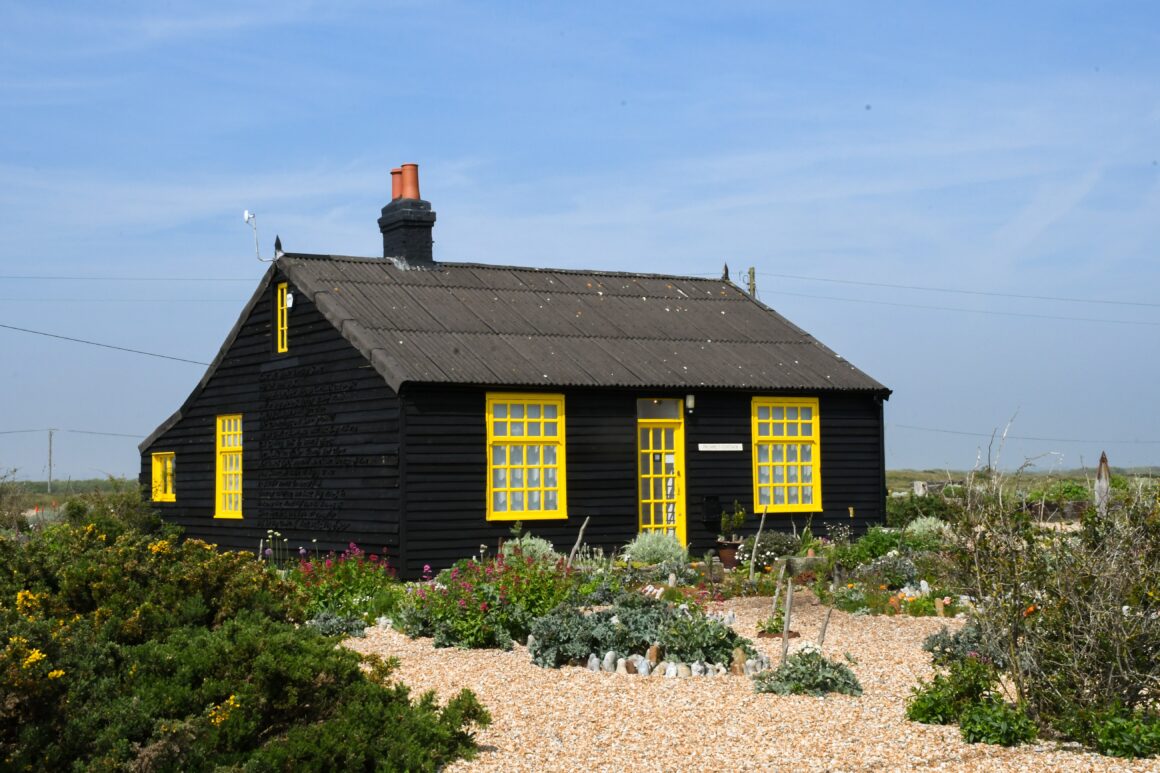
The residency programme at Prospect Cottage was established following the campaign to save Derek Jarman’s cottage after it was put up for sale in 2020. Managed by Creative Folkestone, it invites artists to live and work in the cottage, preserving Jarman’s legacy through direct engagement with the landscape and creative environment that shaped the latter years of his practice, before his death from AIDS-related complications in February 1994. The residency is funded, offered through open calls, and open to international applicants, including artists based in Ireland.
I arrived on a Saturday morning in February and was met by the cottage’s custodian, who handed me the key and showed me around. At the kitchen table, he showed me a copy of Derek Jarman’s Garden (Thames & Hudson, 1995), illustrated with Howard Sooley’s photographs. Shortly afterwards, there was a knock at the door. A visitor was standing outside. When the door opened, he introduced himself: “I’m Howard Sooley”. I could hardly believe the serendipity of the moment. It felt like an introduction, not only to the cottage but also to the network of relationships, friendships and chance encounters that orbit Jarman’s legacy.
In those first days, everything felt intensified by proximity: the garden, the shingle, the wind, the slow pressure of the sea, and the power station looming at the edge of the horizon. Prospect Cottage exists outside ordinary time. The rhythms of the garden and the vastness of the landscape invite a different kind of attention.
One of the most liberating aspects of the residency was that there was no prescribed outcome. I spent much of my time working experimentally and playfully. I made emulsions from gorse flowers to create anthotypes, built pinhole cameras from plant pots found in the garden, and developed photographic developers using materials gathered there, including santolina, lichen, rosemary, and valerian.
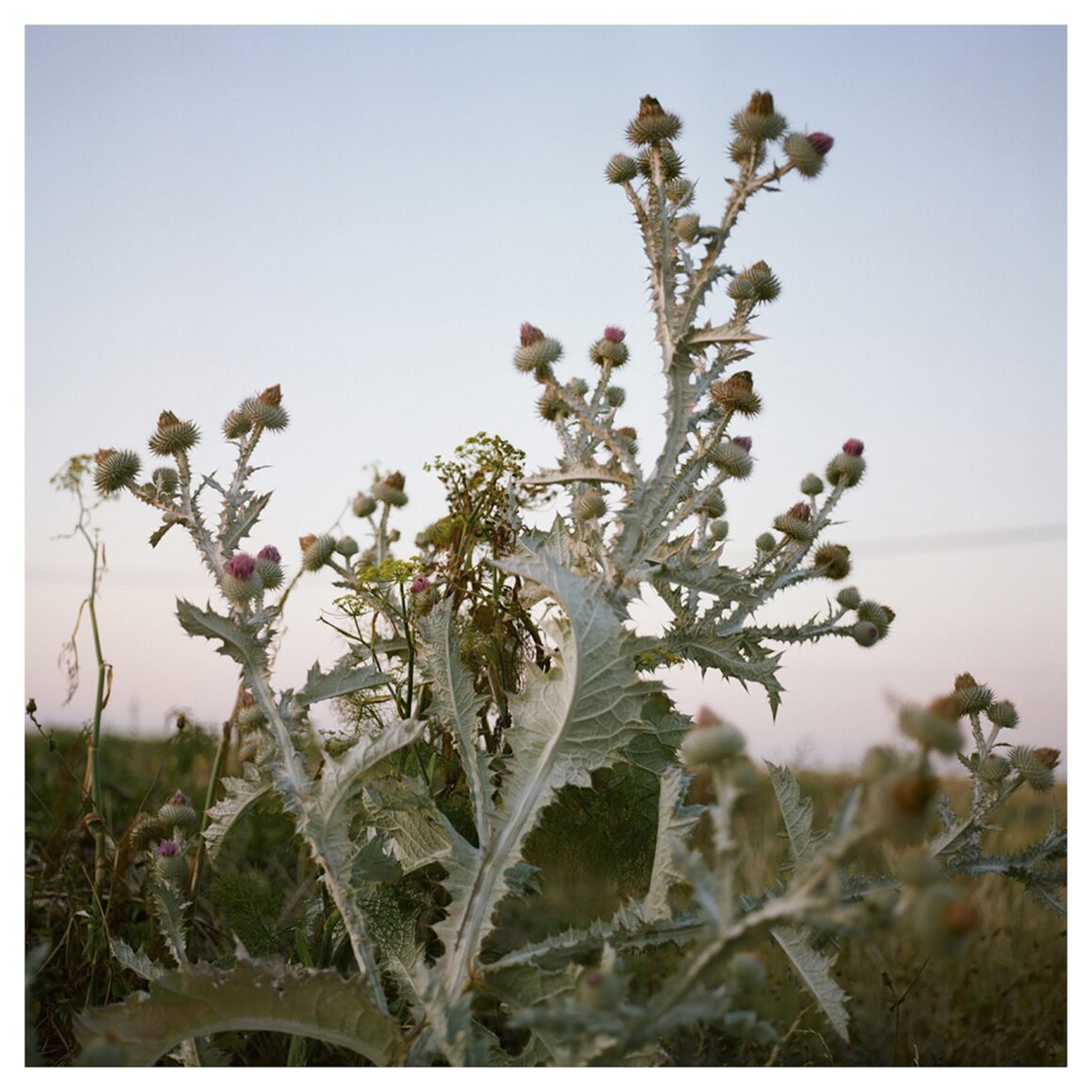
I made a series of still lifes in Derek Jarman’s study, composed of hag stones collected by Jarman and kept in a box in the cottage, alongside seed heads gathered from the garden. The work extended my ongoing interest in plant-based photographic processes and in the material relationship between landscape and image-making. By making photographic chemistry directly from plants in Jarman’s garden, the work became a form of collaboration with the site itself.
During my time at Prospect Cottage, I repeatedly returned to Modern Nature. I have since read the book several times, and it remains a deep source of reassurance. Jarman’s reflections on gardening, loss and creativity offer a way of thinking about resilience and the possibilities of making work through sustained attention and care.
The residency also extended beyond my stay at the cottage. I continued to visit Dungeness over the following year, pursuing my research into the Sussex Emerald moth. I photographed the wild carrot on which the species depends and joined a local lepidopterist on moth-trapping sessions, where I was fortunate enough to see one of these rare moths. These experiences developed into an ongoing relationship with the landscape and continue to inform my practice.
The residency initiated a body of work that I continue to develop. One image made during my time at Prospect Cottage was selected for the Royal Academy Summer Exhibition in 2025. Since then, I have continued working with the material gathered there, developing negatives in plant-based developers made from species from Jarman’s garden. I have also undertaken further research at Tate Britain, spending time with Derek Jarman’s journals, notebooks and films in the archive – research that is informing plans for a stop-frame animation, using the photographs and objects collected during and after the residency.
Lynda Laird is a photographic artist, picture editor, and lecturer based in St Leonards on Sea.
lyndalaird.com