AENGUS WOODS CONSIDERS THREE RECENT PHOTOGRAPHY EXHIBITIONS IN DUBLIN.
In 1947, having lived through the rise and fall of National Socialism, Theodor Adorno and Max Horkheimer posited that “myth is already enlightenment and enlightenment reverts to mythology.” The idea that science constituted progress or conversely, that the authenticity of cultural storytelling might provide some antidote to the scientific mindset, were both false in their view. The triumph of rationalism was just as much a tale as the wanderings of Odysseus, and both charted an equivalent obfuscation of lived experience by the forces of dogma. Put more simply, when myths run their course, we tend to just replace them with another.
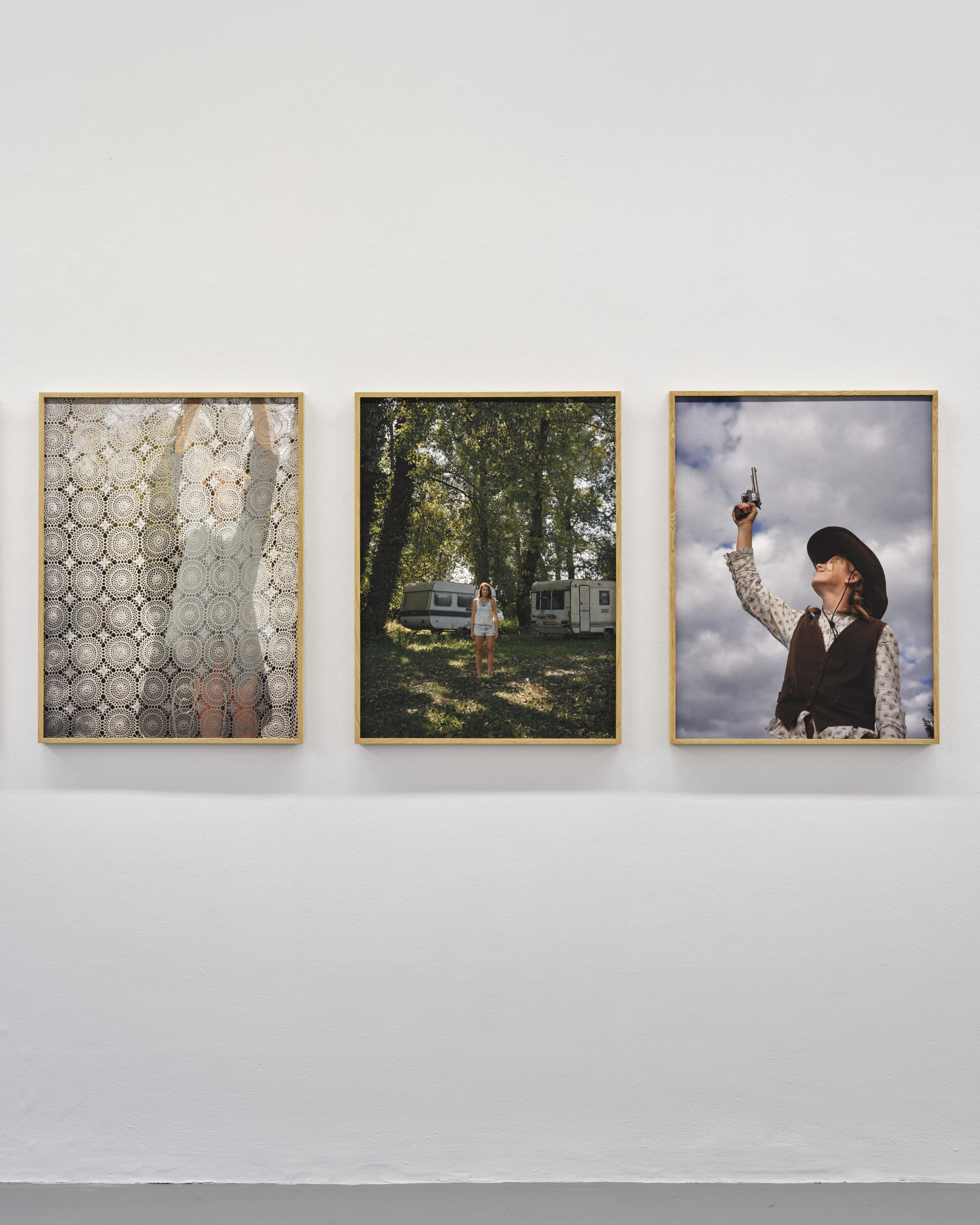
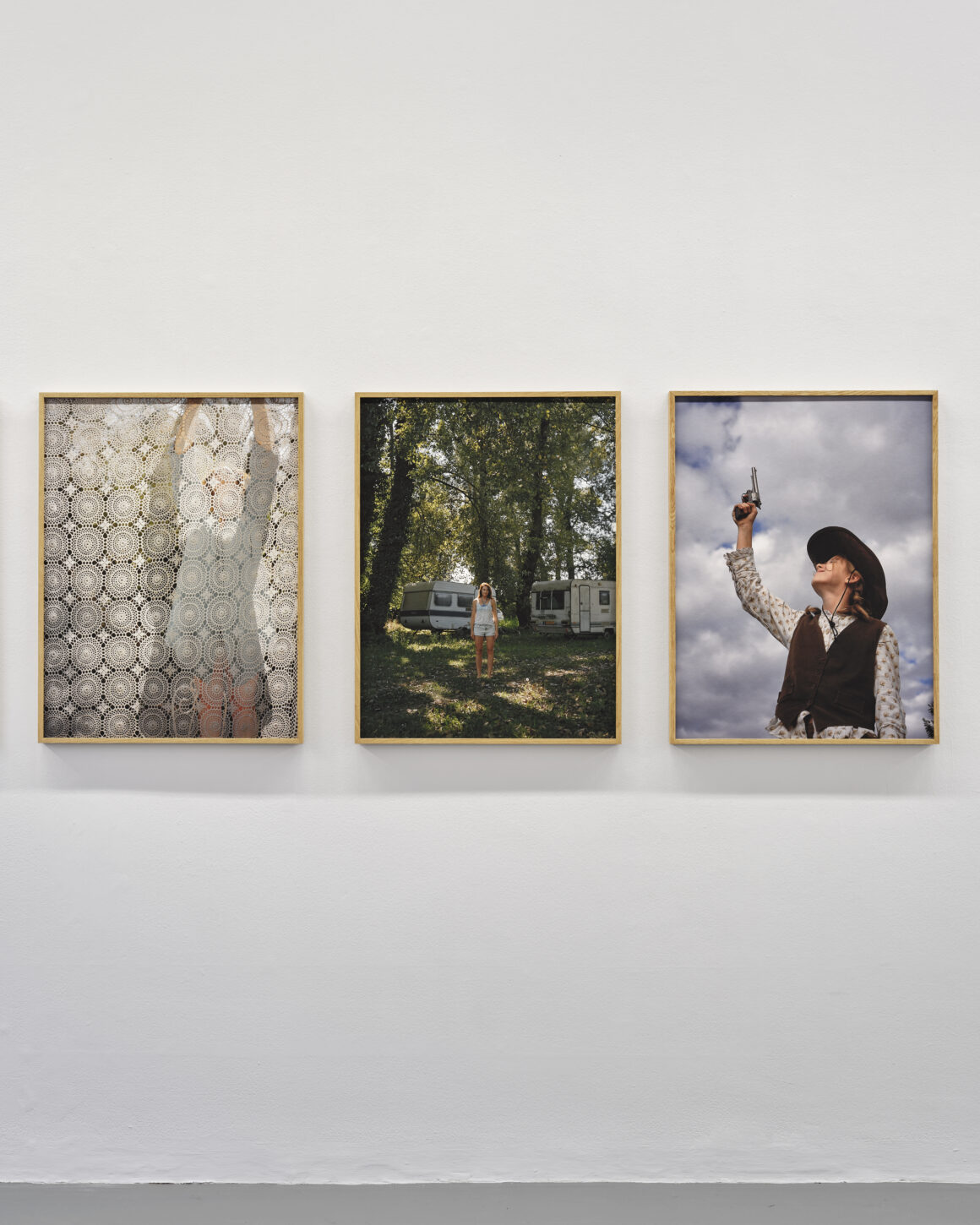
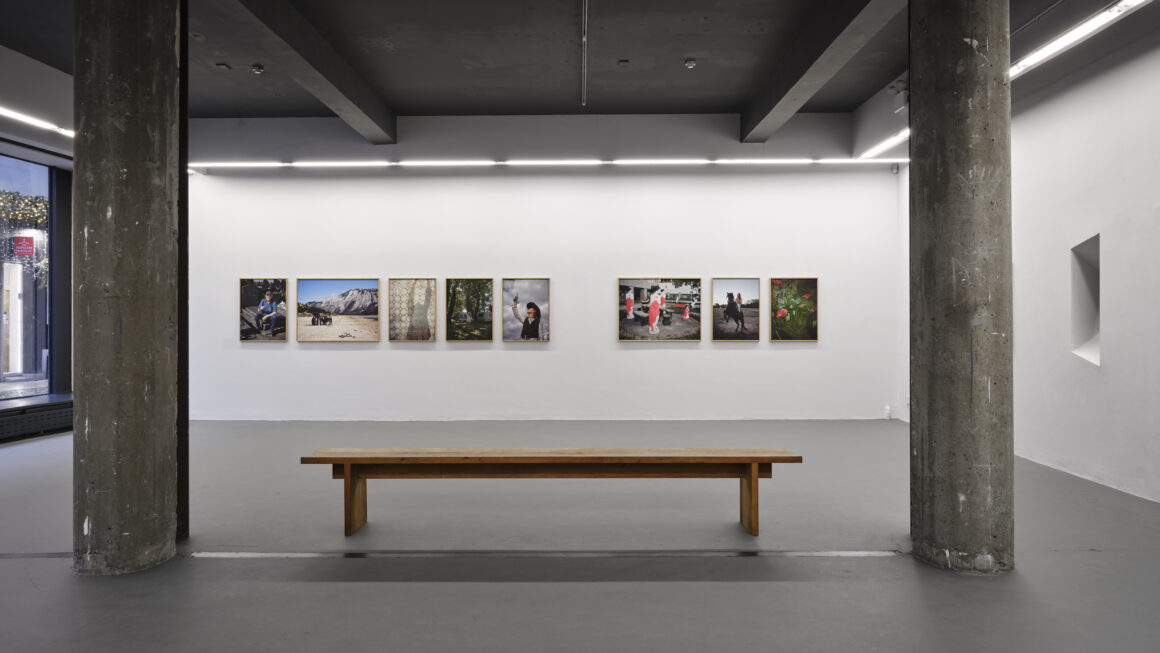
‘The Last Balkan Cowboy’, an exhibition of 23 photographs by Dragana Jurišić at Temple Bar Gallery + Studios (15 January to 1 March) seems to document scenes, locations, and characters connected to the artist’s larger project of the same name, a full-length documentary about the Yugoslavian filmmaker, Hari Džekson. A close friend of Jurišić’s father, himself a photographer, Džekson made eccentric cowboy movies in the wild landscapes of Bosnia and Herzegovina, in the manner of a Balkan spaghetti western.
Much as that filmmaker used local people as crew and cast, Jurišić populates her photographs with folk whose status as actors, locals, or passers-by are unclear. The artist herself, and also her father, appear in the images, giving us the sense that she is documenting a road trip while hunting for traces of the elusive filmmaker and the seeds of her own western mythmaking all at once. Yet there are also elegiac undertones, the sense that we are witnessing fragments of a Yugoslavia now committed to the pages of history, and in this, we see how mythologies can compete with each other – the myth of the nation and the myth of the rugged individual; country vs cowboy. Nonetheless that same history teaches us that both can perish and the remnants will look surprisingly similar. As the old Irish proverb goes: imíon na daoine ach fanann na cnoc – people leave but the hills remain.
‘Urban Myth’ at Kevin Kavanagh gallery (8 January – 7 February) brings together a disparate set of photographic works, unifying them, albeit somewhat unevenly, under the idea that the unending flow of imagery from our devices constitutes a kind of real-time folklore – an incessantly shared record of human engagement whose very sharing seems to influence the trajectory of that flow.
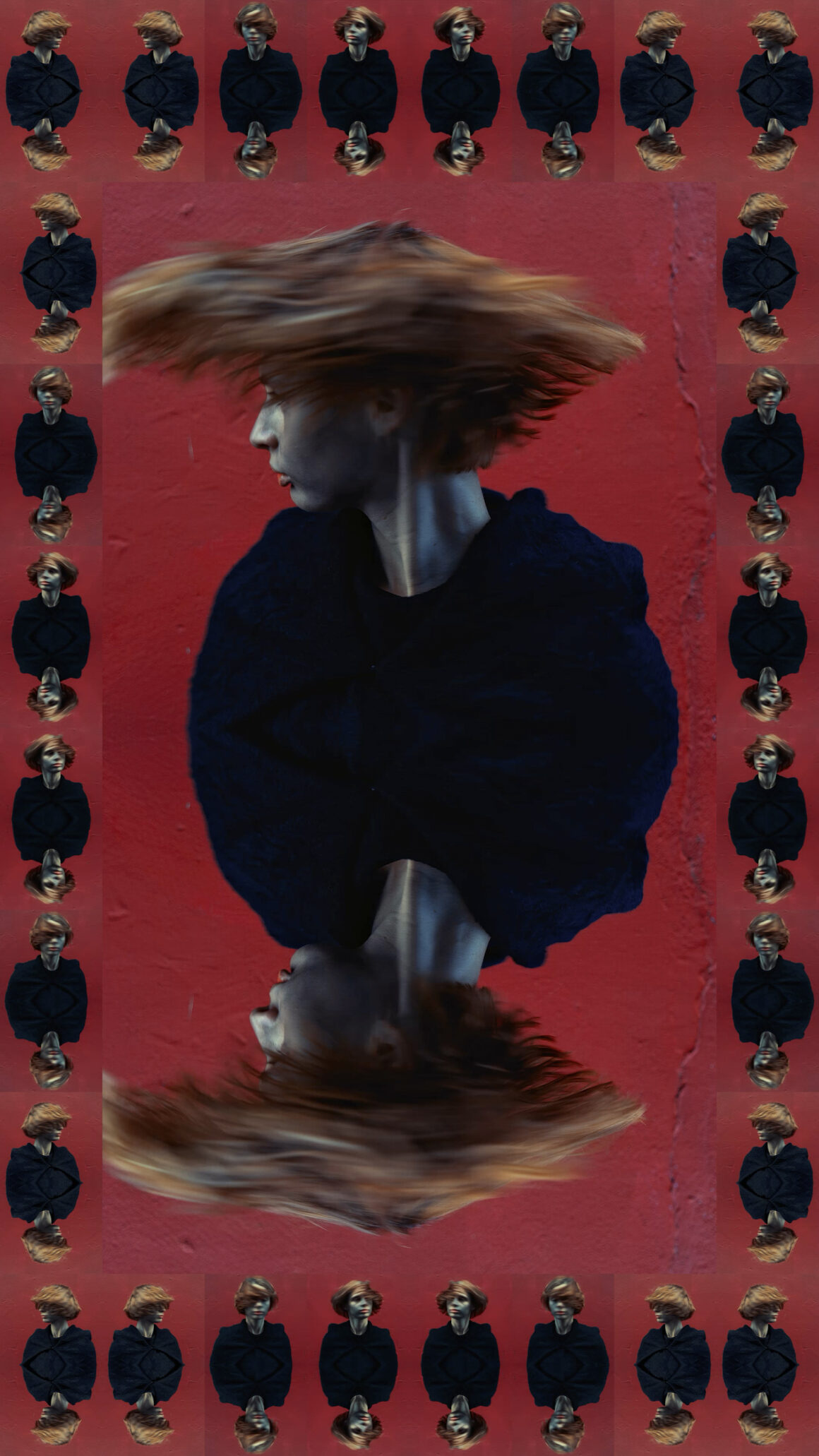
It’s a rich and provocative idea but in the context of this group exhibition, one feels that it might be more fruitfully brought to bear on a larger show that incorporated a broader range of image-making. Here, in an exhibit of tastefully presented photographs by professional practitioners, that sense of a new mythmaking seems to be confined to a general moodiness running through the works, as exemplified by the likes of Pine Needles (2021) by Adrian O’Carroll or Fog Vico Road (2005) by Gary Coyle. Nonetheless, an absorbing trio of works by Michael Boran are not so much photographic documents as they are compositions created through precise manipulations of scale and juxtaposition of imagery. As such, they point to those uncanny and unforeseen results of incessant image production where strange inlays, parallels and visual relationships appear on our screens constantly, combining and recombining ad infinitum.
In the end however, it is another trio of photographs that sit most comfortably within the thematics of the show. Sean Lynch’s enigmatic works from his 2015 project, Adventure: Capital, present three views of a half-buried steel sculpture by John Burke. Originally commissioned for and located in a Cork housing estate in 1988, the sculpture, entitled Uniflow, was eventually removed from its site due to public concern over its apparent attraction of antisocial behavior. Its final location in a dumping ground was subsequently traced and documented by Lynch. The photographs presented here, offered with little in the way of explanatory material, are, like gossip and hearsay, wonderfully suggestive and mysterious, encapsulating both the end of one story and the start of a new one.
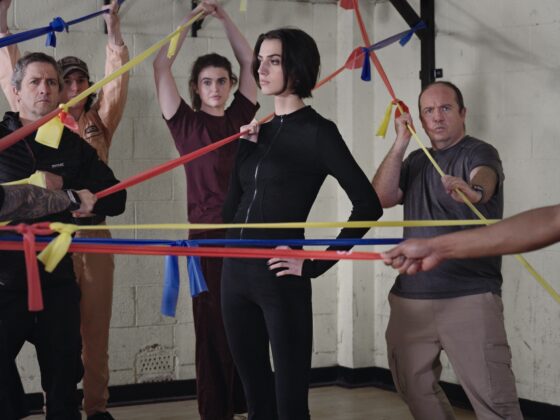
The most expansive exercise in mythmaking is offered by ‘AS IF’, a three-person collaborative show at the International Centre for the Image (6 February – 5 April). Eamon Doyle is a techno DJ and founder of D1 records, turned photographer, Niall Sweeney, is a designer and theatre-maker, while David Donohue is a composer in the broad field of electronic music. Weaving video, photography, animation, painting and text, they have created an immersive installation that is impressive in its scale and unified vision.
The viewer journeys through multiple rooms displaying large sets of framed and grouped gelatin prints, while multiple videos play, and numerous different sound sources bleed into each other. The imagery veers from stark abstractions to shots of human figures moving in restricted spaces and a series of grotesquely distorted faces. The sense of collaboration is strong, and the contributions of each artist come together in a remarkably seamless manner.
Drawing on Walter Benjamin and Guy Debord, the artists seem to present an uneasy and foreboding vision of modernity, homing in on the tensions between individual creativity and the de-individuating forces within contemporary society. However, the whole show does seem to be packaged within a particular aesthetic, reminiscent (for this reviewer at least) of late 90s electronic music – The Designers Republic record sleeves, Chris Cunningham music videos, and minimal techno clubs. From this perspective, despite the exhibition’s tense and unsettling vision, it feels infected with a certain nostalgia. Sometimes the new stories just mask a hankering for the old. Nonetheless, as a collaborative installation by three artists displaying a fine sensitivity towards each other’s approaches, ‘AS IF’ is genuinely compelling and extraordinarily well achieved.
Aengus Woods is a writer and critic based in County Louth.
@aengus_woods